


Product Introduction
In water quality management, turbidity measurement is not merely a regulatory checkbox — it is a frontline indicator of treatment process effectiveness and distribution system integrity. Drinking water regulations such as GB 5749 set strict turbidity limits, while wastewater discharge standards require continuous monitoring of effluent clarity. Traditional single-mode turbidity meters often struggle with wide-range measurement: scatter-mode instruments lose accuracy at high turbidity, while transmission-mode devices lack sensitivity at low levels. This forces operators to perform manual dilutions or switch instruments, increasing measurement time and introducing error sources.
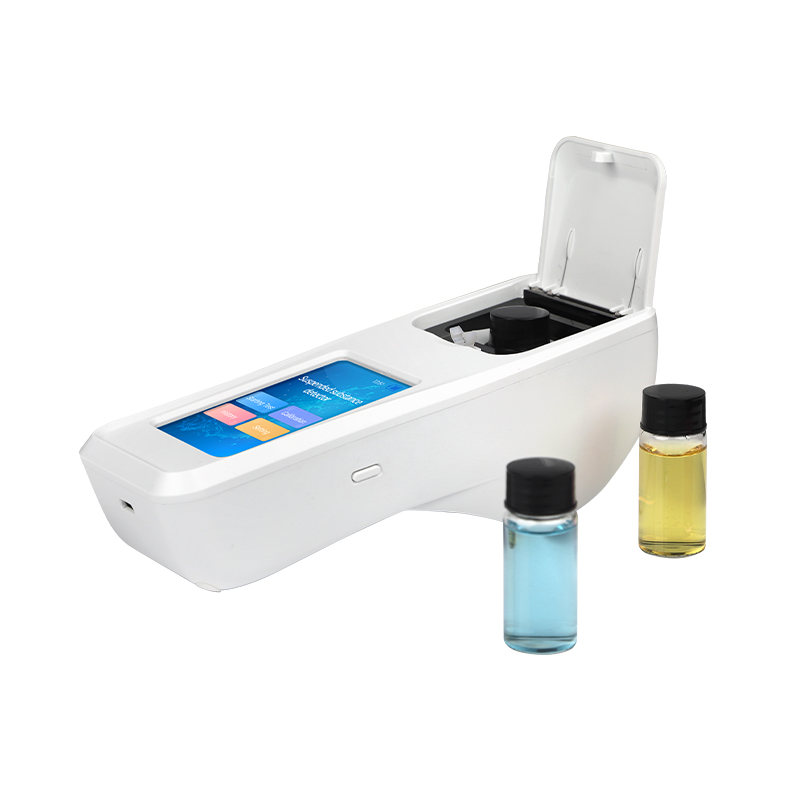
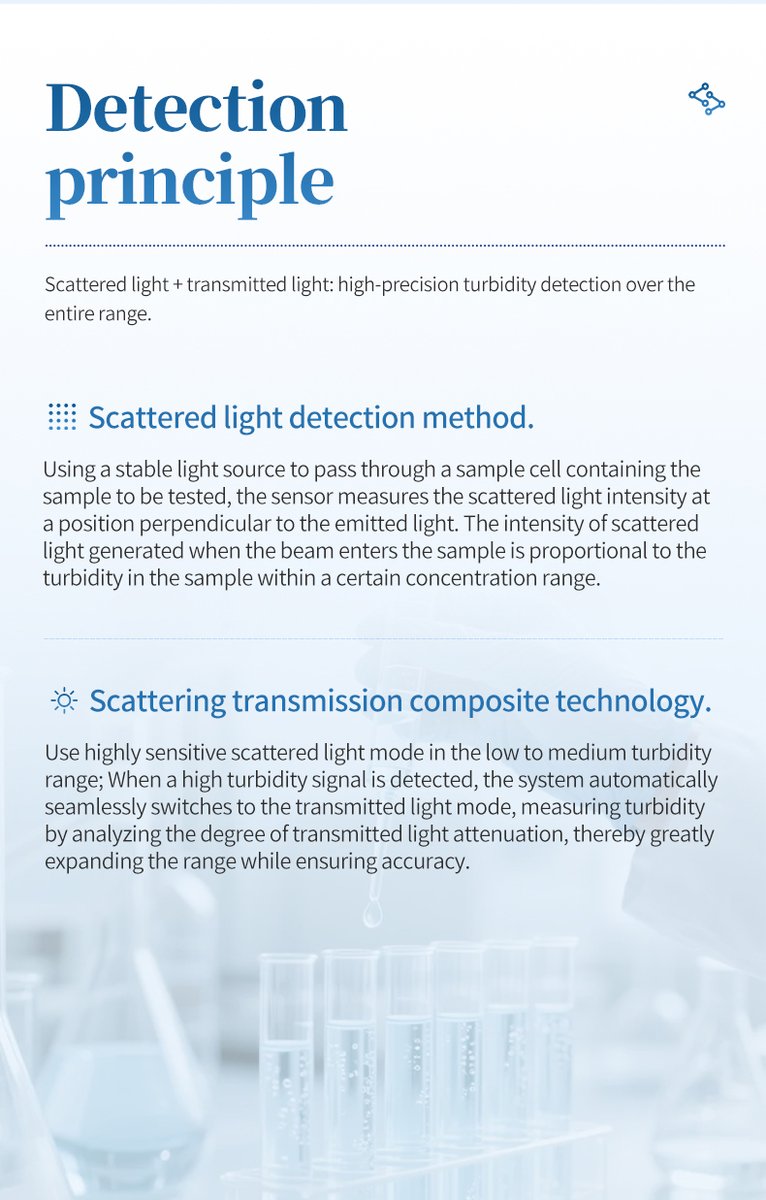
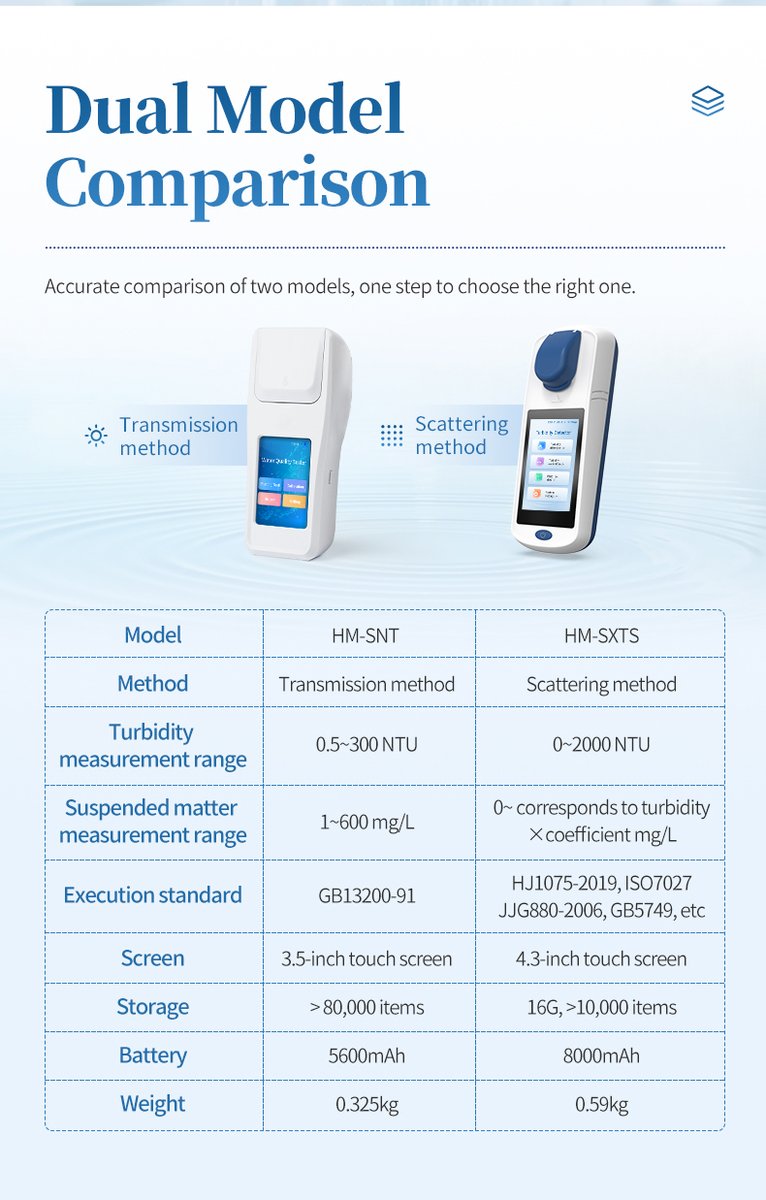
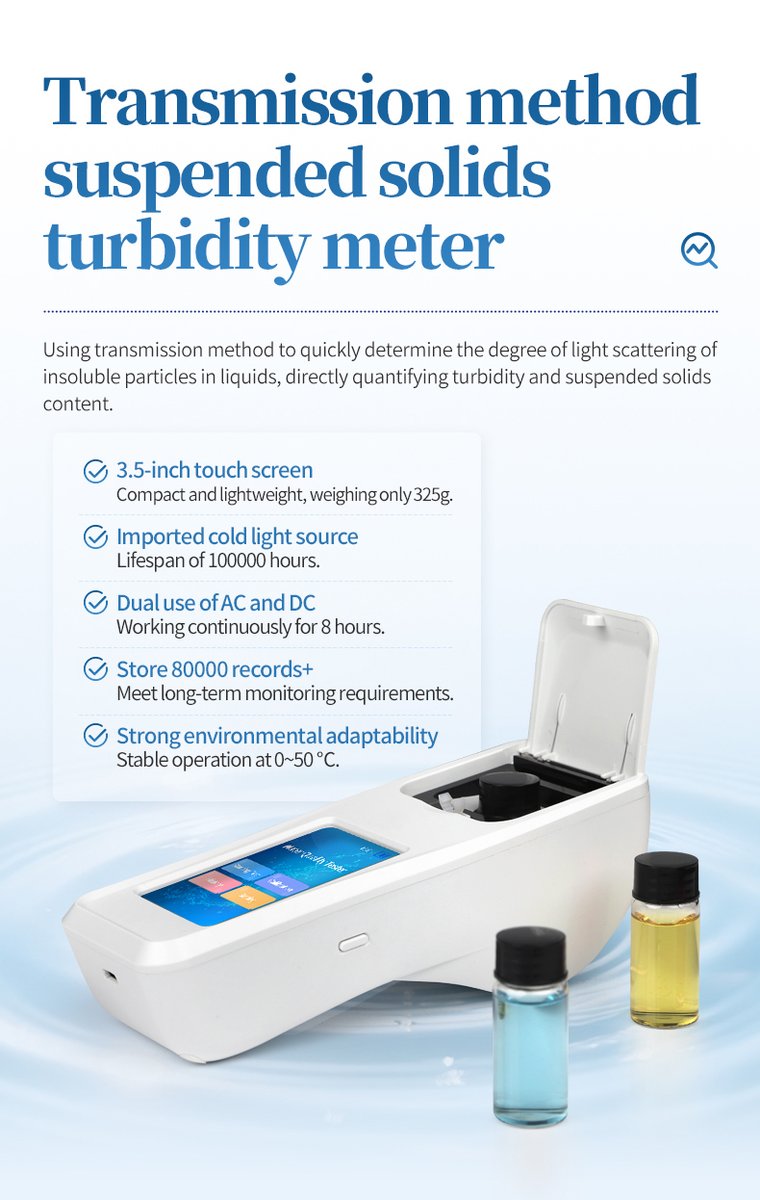
The HM-SXT2 portable turbidity meter solves this problem through its scatter-transmission composite detection system. Using an 860 nm LED light source, the instrument operates in high-sensitivity scattered light mode for low-to-medium turbidity ranges (typical of finished drinking water and clean environmental samples). When turbidity exceeds the scatter-mode threshold — common in raw wastewater, storm runoff, or process tank samples — the system automatically switches to transmitted light mode, measuring turbidity via light attenuation. This seamless transition extends the measurable range to 0–4000 NTU without operator intervention, eliminating dilution errors and reducing total analysis time.
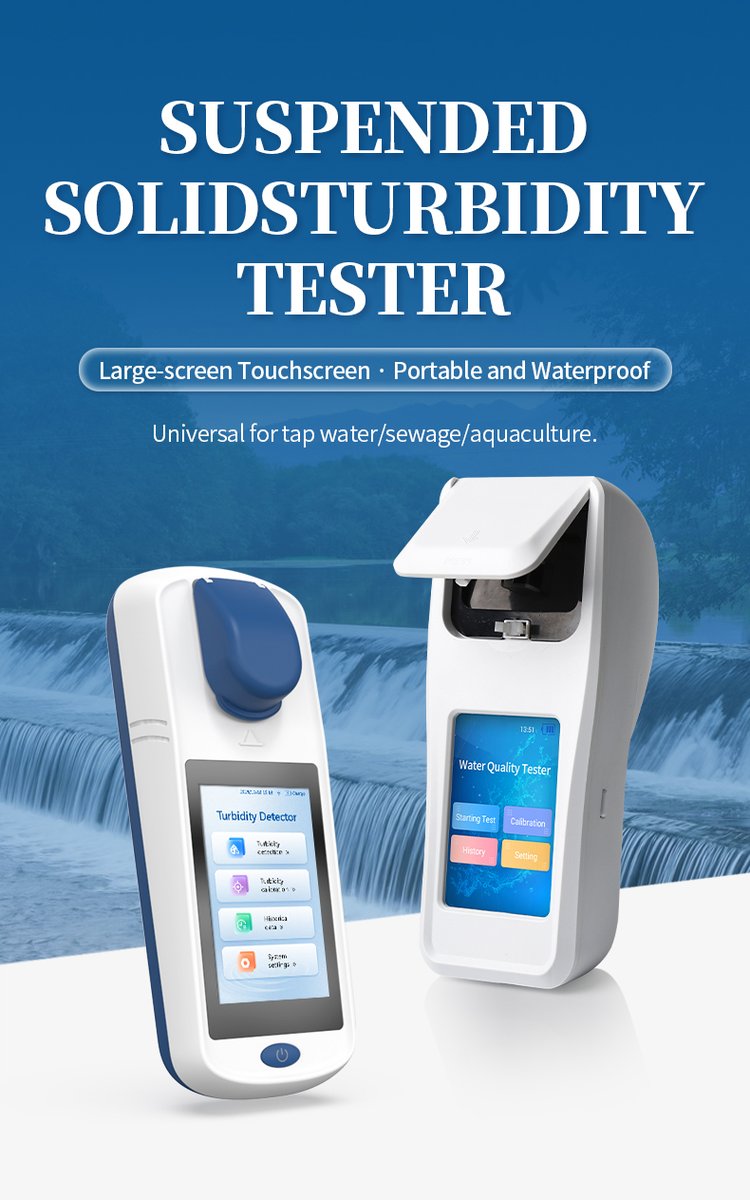
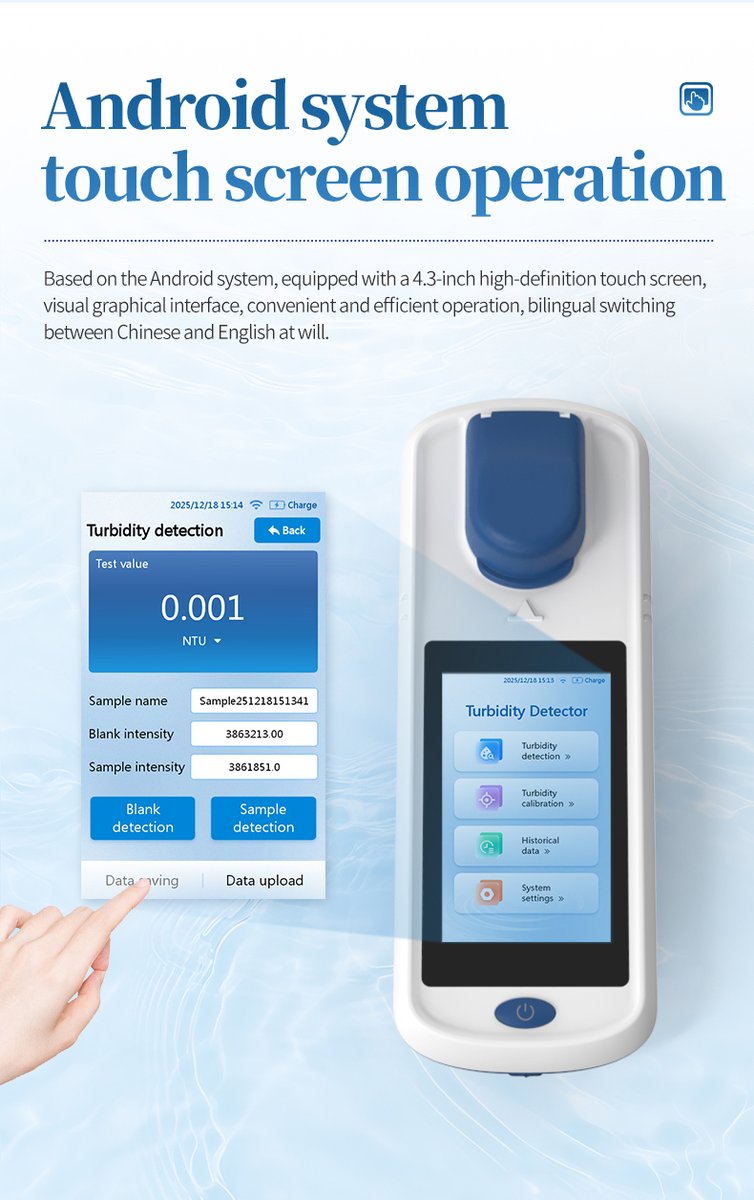
The instrument is built for field deployment: an Android-powered 4.3-inch touchscreen provides intuitive operation in outdoor conditions, while the IP65-rated waterproof body withstands rain, splashing, and dusty environments typical of water treatment plants and field sampling sites. With 16 GB of storage for over 10,000 records and Wi-Fi, Bluetooth, and USB connectivity, measurement data can be uploaded directly to laboratory information management systems for compliance reporting. For detailed guidance on turbidity measurement standards and methods, see our turbidity measurement technical guide.
Applications
Drinking water treatment plants: raw water intake monitoring, sedimentation tank effluent verification, finished water compliance testing per GB 5749
Wastewater treatment facilities: influent turbidity characterization, biological treatment process monitoring, effluent discharge compliance verification
Environmental monitoring stations: river, lake, and reservoir water body assessment and pollution incident rapid response
Groundwater quality surveys: well water turbidity screening per GB/T 14848 quality standards
Food and beverage industry: process water and product water turbidity quality control
Pharmaceutical manufacturing: purified water and water for injection system turbidity monitoring
Aquaculture operations: pond and tank water clarity management for livestock health
Industrial cooling water systems: turbidity monitoring for heat exchanger fouling prevention
Key Features and Advantages
Scatter-transmission dual-mode detection with automatic switching eliminates manual range selection, covering 0–4000 NTU in a single instrument without sample dilution
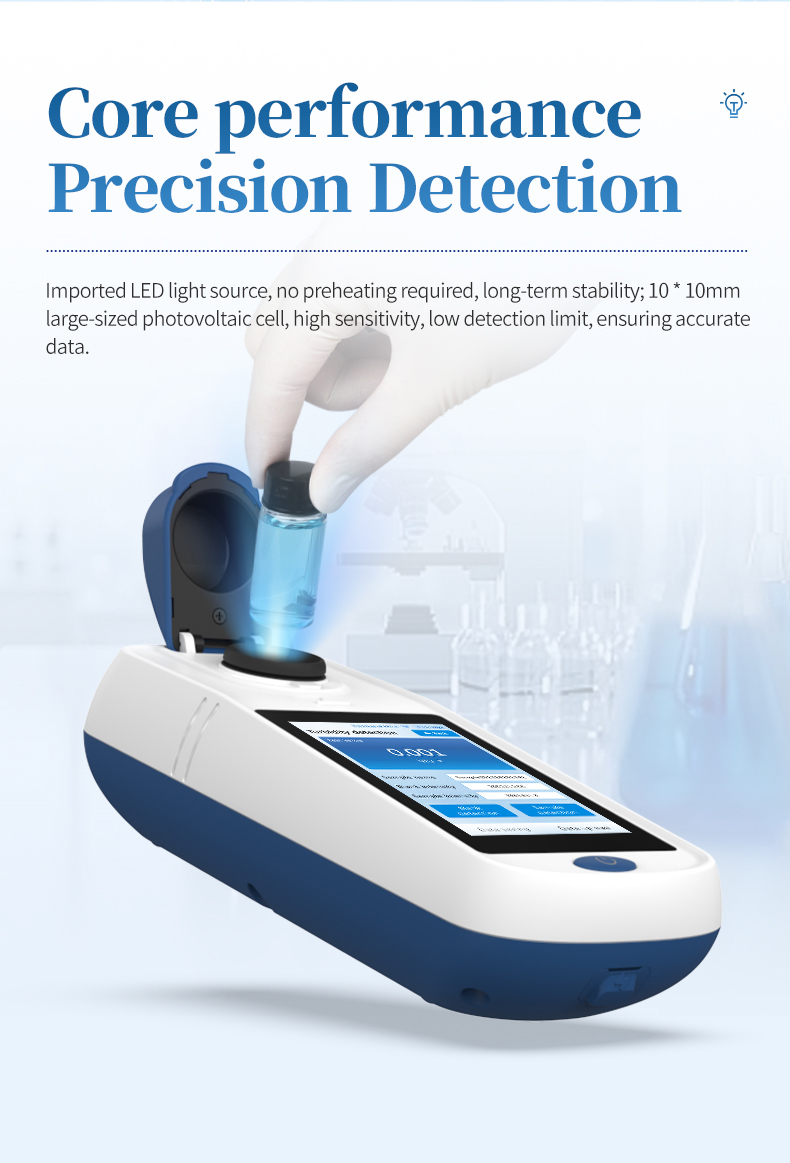
860 nm LED light source per ISO 7027 standard avoids visible-color interference, delivering accurate results for colored or tinted water samples
10 mm × 10 mm large-area photocell provides high sensitivity at low turbidity levels, detecting trace suspended solids in finished drinking water
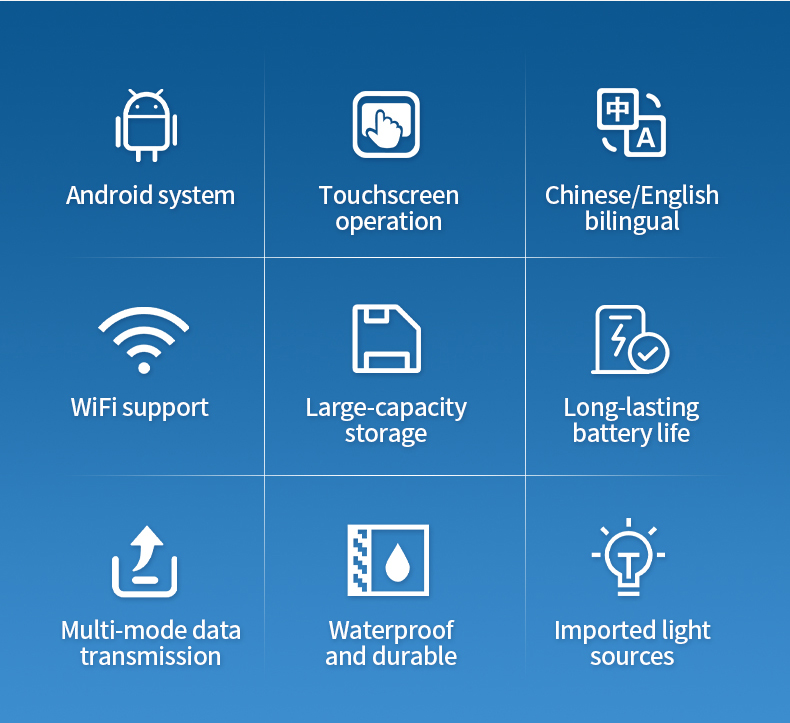
Android operating system with 4.3-inch HD touchscreen offers graphical workflow guidance, reducing operator training time in multi-user field teams
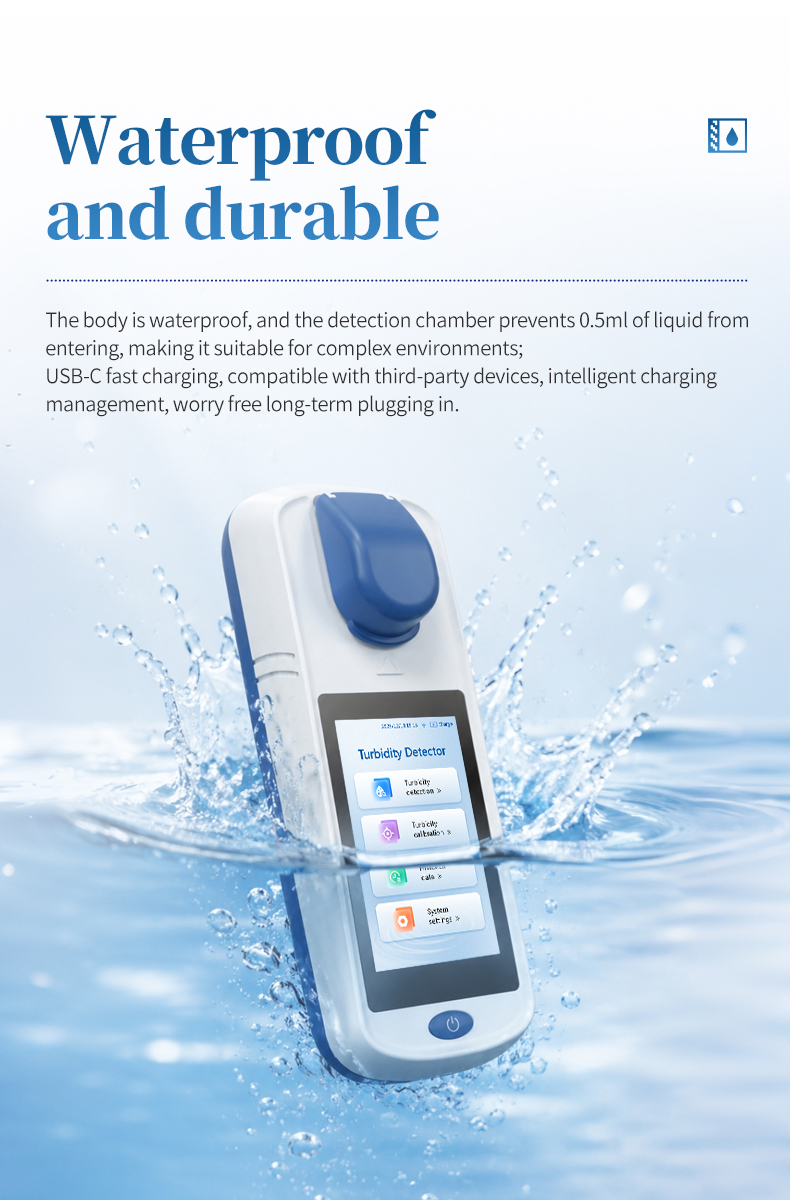
IP65 waterproof enclosure and liquid-resistant detection chamber enable reliable operation in rain, high-humidity, and washdown environments at treatment plants
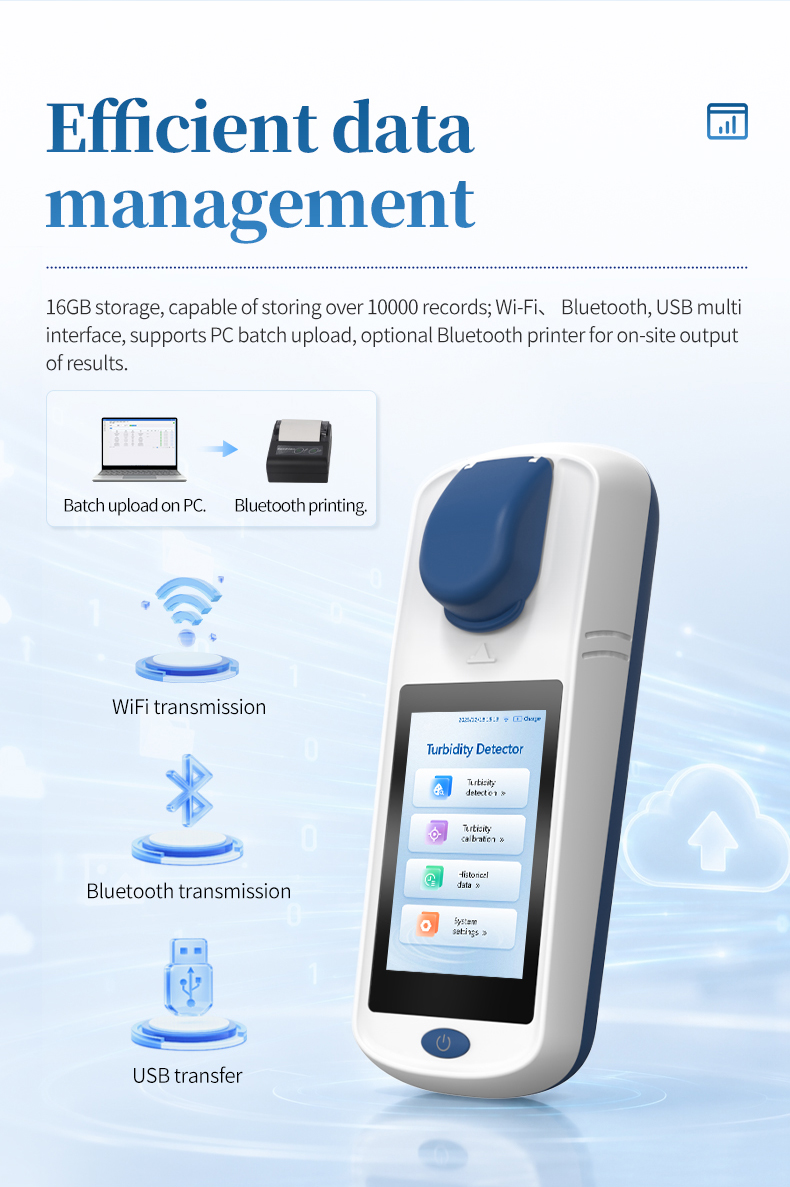
16 GB internal storage holds over 10,000 measurement records with timestamp and sample ID, supporting audit trail requirements for regulatory compliance
Wi-Fi, Bluetooth, and USB triple connectivity allows direct data upload to LIMS or regulatory platforms from the field, eliminating manual data transcription errors
Optional Bluetooth printer generates on-site hardcopy reports for immediate documentation during field inspections and audits
USB-C 5V 2.1A charging with BC2.1 protocol and 8000 mAh battery supports full-day field campaigns without recharging, compatible with standard power banks
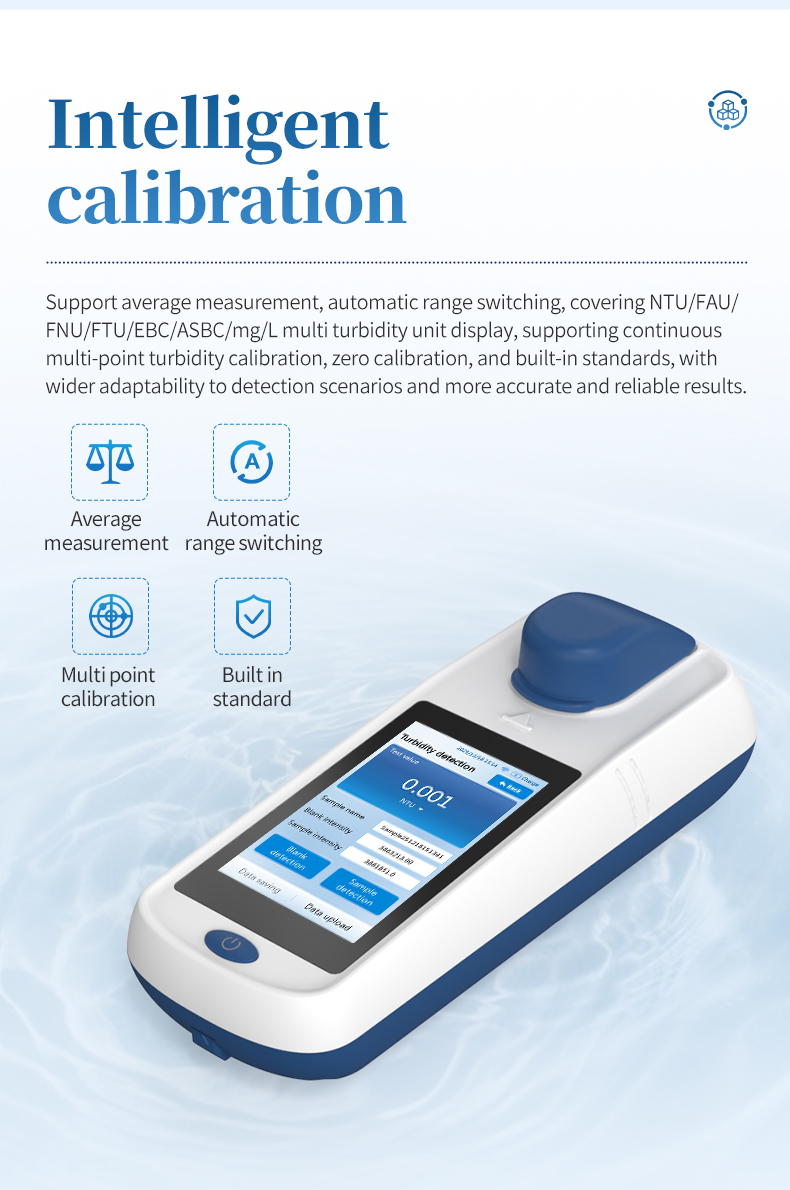
Multi-unit display (NTU, FAU, FNU, FTU, EBC, ASBC) accommodates different industry reporting standards without manual conversion
Continuous multi-point calibration with zero-point calibration and built-in standard support ensures measurement traceability across calibration intervals
Chinese/English bilingual interface serves both domestic regulatory teams and international project requirements
Average measurement mode automatically performs multiple readings and calculates the mean, reducing random error in unstable or settling samples
Compliance with HJ 1075-2019, ISO 7027, JJG 880-2006, GB 5749, CJ 3020, and GB/T 14848 standards covers drinking water, source water, and groundwater regulatory frameworks
Technical Specifications
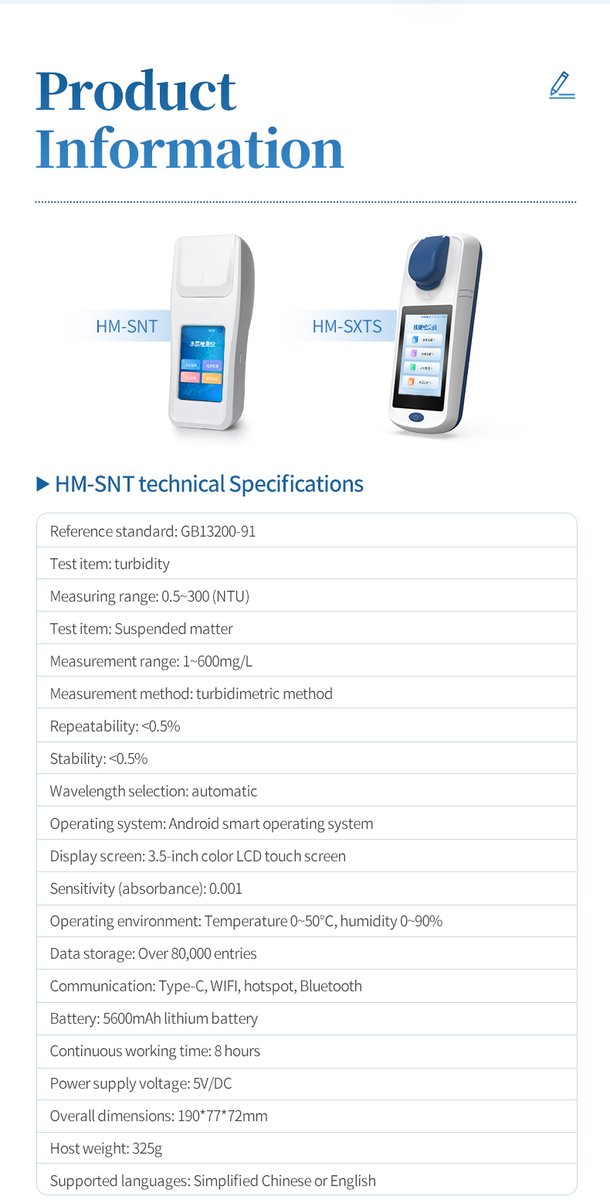
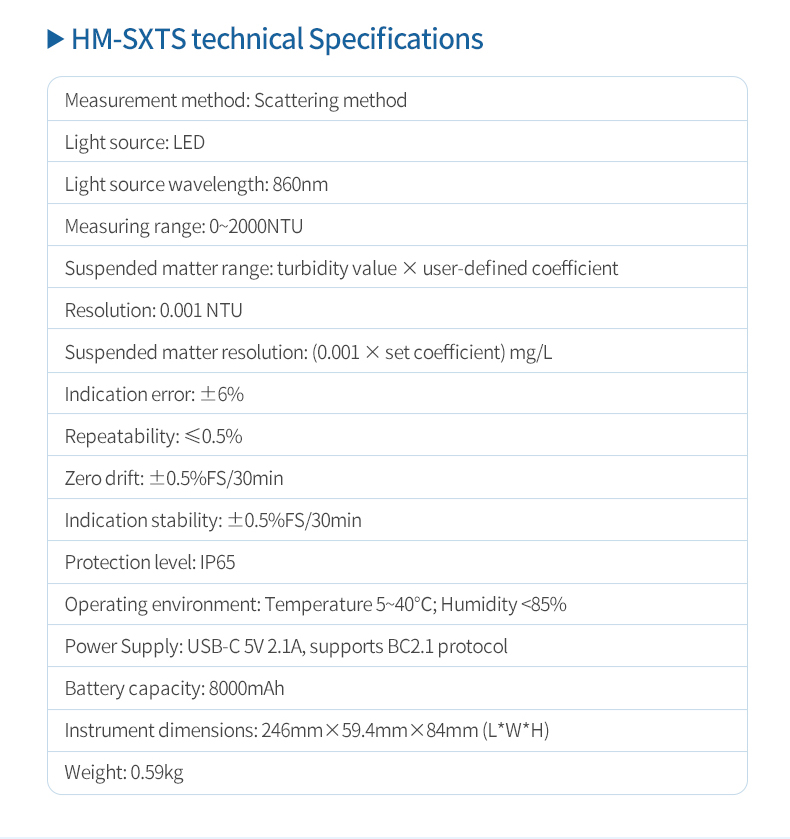
| Parameter | Specification |
|---|
| Measurement Method | Scatter method + Transmission method (automatic switching) |
| Light Source | LED |
| Light Source Wavelength | 860 nm |
| Measurement Range | 0–4000 NTU |
| Resolution | 0.001 NTU |
| Indication Error | ±6% |
| Repeatability | ≤0.5% |
| Zero Drift | ±0.5% FS / 30 min |
| Indication Stability | ±0.5% FS / 30 min |
| Protection Rating | IP65 |
| Operating Environment | Temperature 5–40°C; Humidity <85% |
| Power Supply | USB-C 5V 2.1A, supports BC2.1 protocol |
| Battery Capacity | 8000 mAh |
| Dimensions | 246 mm × 59.4 mm × 84 mm (L×W×H) |
| Weight | 0.59 kg |
| Display Units | NTU, FAU, FNU, FTU, EBC, ASBC |
| Internal Storage | 16 GB, >10,000 records |
| Connectivity | Wi-Fi, Bluetooth, USB |
| Operating System | Android, Chinese/English bilingual |
| Display | 4.3-inch HD touchscreen |
| Applicable Standards | HJ 1075-2019, ISO 7027, JJG 880-2006, GB 5749, CJ 3020, GB/T 14848 |
FAQ
Q: How does the scatter-transmission dual-mode system work in practice?
A: The HM-SXT2 continuously monitors the scattered light signal during measurement. For low-to-medium turbidity samples (typically 0 to several hundred NTU), the instrument operates in scatter mode, where a sensor positioned perpendicular to the light beam measures scattered light intensity proportional to turbidity. When the turbidity signal exceeds the scatter-mode threshold, the system automatically activates transmission mode, measuring the attenuation of light passing directly through the sample. This transition is seamless and requires no operator intervention, allowing a single measurement cycle to cover the full 0–4000 NTU range without manual range switching or sample dilution.
Q: What standards does the HM-SXT2 comply with for regulatory reporting?
A: The instrument complies with HJ 1075-2019 (Water quality — Determination of turbidity — Turbidimetric method), ISO 7027 (Water quality — Determination of turbidity), and JJG 880-2006 (Verification Regulation of Turbidity Meters). It also supports measurement workflows aligned with GB 5749 (Standards for drinking water quality), CJ 3020 (Water quality standard for drinking water sources), and GB/T 14848 (Quality standard for ground water). The 860 nm LED light source meets the ISO 7027 wavelength specification for nephelometric turbidity measurement.
Q: Can the HM-SXT2 be used outdoors in rainy or humid conditions?
A: Yes. The instrument carries an IP65 protection rating, meaning it is dust-tight and protected against water jets from any direction. The detection chamber is additionally designed to resist 0.5 ml of liquid intrusion. This makes the HM-SXT2 suitable for field deployment at water treatment plants, environmental sampling sites, and aquaculture facilities where rain, splashing, and high humidity are common. The 8000 mAh battery supports full-day field operation without recharging.
Q: How does the 860 nm wavelength benefit turbidity measurement?
A: The 860 nm near-infrared wavelength specified in ISO 7027 minimizes interference from the natural color of water samples. Many surface waters, wastewater, and industrial process waters contain dissolved substances that absorb visible light, which can cause falsely elevated turbidity readings on instruments using visible-spectrum light sources. By using 860 nm, the HM-SXT2 ensures that the measured signal primarily reflects particulate scattering rather than color absorption, delivering more accurate turbidity values for colored samples.
Q: How is measurement data managed and exported for compliance documentation?
A: The HM-SXT2 stores over 10,000 records with 16 GB internal memory, each record including measurement value, timestamp, and sample identifier. Data can be transferred via Wi-Fi, Bluetooth, or USB to a PC for batch upload. The Android-based system supports direct export to spreadsheet formats for compliance archiving. An optional Bluetooth printer enables on-site hardcopy report generation during field inspections. The multi-unit display (NTU, FNU, FAU, etc.) accommodates different regulatory reporting conventions without manual conversion.
Q: What calibration options does the HM-SXT2 support?
A: The instrument supports continuous multi-point turbidity calibration, allowing users to establish a calibration curve across multiple standard concentrations for improved accuracy over the full measurement range. Zero-point calibration eliminates background scatter from the sample cell and optical system. The built-in standard feature provides a quick verification check between full calibrations. Average measurement mode performs multiple readings and calculates the mean value, reducing random error in samples with settling particles or unstable suspensions.
Article address:https://www.hmwatertesting.cn/suspended-solids-turbidity-meter/turbidity-meter-water-quality-monitoring.html

 Current
location:
Current
location: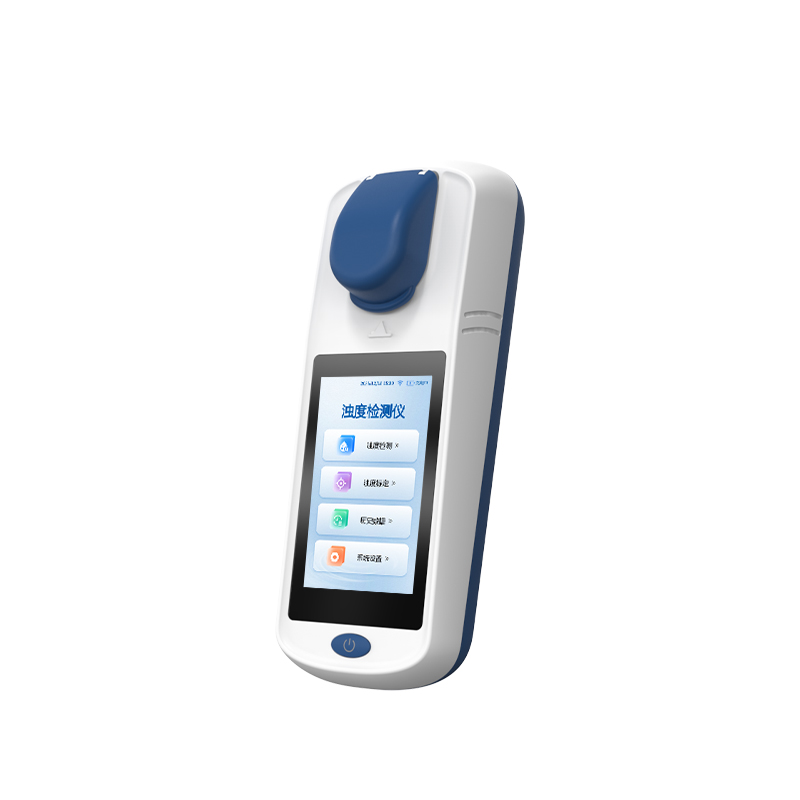
 +86 17853698681