

Product Center
-
Multi Parameter Water Quality Analyzer
-
COD/BOD Analyzer
-
Determination of Ammonia Nitrogen
-
Determination of Total Phosphorus and Total Nitrogen
-
Biological Toxicity Testing
-
Disinfection Residue Determination
-
Online water quality monitoring instrument
Dissolved oxygen online analyzer PH online monitoring device Chloride ion online monitoring instrument Conductivity online monitoring device Turbidity online monitoring instrument Online water hardness monitoring instrument ORP online monitoring device Residual chlorine online monitoring device Total organic carbon monitoring equipment -
Other related tests
Water quality heavy metal detector Infrared oil analyzer Water quality nitrite analyzer Colorimeter Dissolved oxygen analyzer Suspended Solids Turbidity Meter Total OrganicCarbon Analyzer Chlorophyll detector in water Suspended solids analyzer Water quality total hardness/total alkalinity detector Surfactant detector Proportional water quality sampler Microbial detector in water Sulfide acidification blowing instrument Carbon dioxide detector in water Online water quality sensor Volatile Phenol Analyzer Phosphate Silicate Analyzer Permanganate Index Analyzer Quantitative Sealing Machine
Recommended articles
- Water Quality 4-Nitrogen Analyzer | Ammonia, Nitrate, Nitrite, Total N
- Principle and application analysis of COD tester
- COD, Ammonia Nitrogen, Total Phosphorus and Total Nitrogen Detector Product Knowledge Graph White Paper
- Handheld residual chlorine analyzer: a portable guardian of water quality safety
- How accurate is a TOC analyzer?
- COD Tester: Accurate and Efficient, Mastering the Pulse of Water Quality
 Current
location:HOME>NEWS>Industry Trends>HM Instruments Portable Water Quality Analyzer Industry Application White Paper
Current
location:HOME>NEWS>Industry Trends>HM Instruments Portable Water Quality Analyzer Industry Application White Paper
HM Instruments Portable Water Quality Analyzer Industry Application White Paper
Article Source:Hengmei Water Quality Analysis Instrument Network Release time:2026-06-08 15:50:05
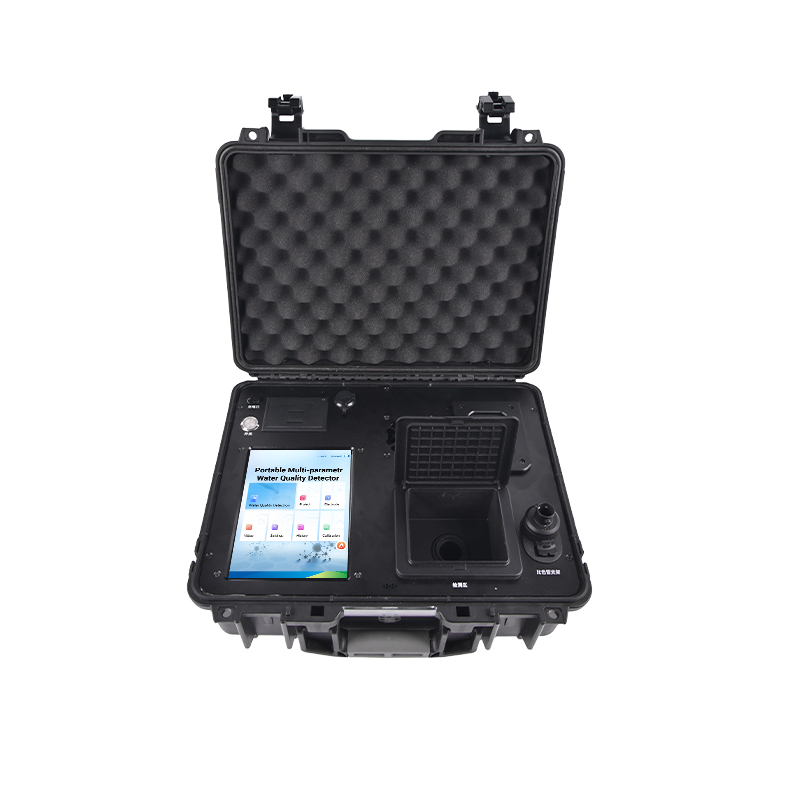
HM Instruments Portable Water Quality Analyzer — Industry Application White Paper
Water quality monitoring is not a uniform discipline. A municipal wastewater treatment plant tracking effluent compliance, a pharmaceutical manufacturer validating process water purity, and an environmental agency surveying river health all measure water — yet each faces distinct regulatory thresholds, parameter priorities, sample logistics, and data governance requirements. Selecting a portable water quality analyzer that matches your industry context is as important as selecting one that meets your measurement specifications.
This white paper maps the 10 models of the HM Instruments HM-BL series portable water quality analyzer line to six key industry sectors. For each sector, we identify the water quality challenge, the parameters that matter, the applicable regulatory framework, and the HM-BL model that provides the most efficient solution.
Industry 1: Municipal Wastewater Treatment
The Challenge
Municipal wastewater treatment plants operate under strict discharge permits that specify maximum concentrations for COD, ammonia nitrogen, total phosphorus, and total nitrogen. In China, GB 18918-2002 Class I-A standards require effluent COD below 50 mg/L, ammonia nitrogen below 5 mg/L (8 mg/L at temperatures below 12 °C), total phosphorus below 0.5 mg/L, and total nitrogen below 15 mg/L. In the United States, EPA NPDES permits impose analogous limits calibrated to each facility's receiving water body conditions.
The operational challenge is that these parameters must be measured frequently across multiple sampling points — influent, aeration tank mixed liquor, secondary clarifier underflow, and final effluent — often several times per day. Bench-top laboratory analyzers provide accuracy but require sample transport and turnaround times of hours. Portable analyzers enable immediate on-site results, allowing operators to adjust aeration rates, chemical dosing, and sludge return ratios in real time.
Key Parameters
- COD — the primary indicator of organic loading; determines whether biological treatment capacity is sufficient
- Ammonia nitrogen — reflects nitrification efficiency; critical for facilities discharging to nutrient-sensitive waterways
- Total phosphorus — monitored for chemical phosphorus removal control and effluent compliance
- Total nitrogen — combines organic nitrogen, ammonia, nitrite, and nitrate; required for total nitrogen permit compliance
Recommended Model: HM-BL04 (COD + Ammonia Nitrogen + Total Phosphorus + Total Nitrogen)
The HM-BL04 covers all four core discharge parameters in a single 8.3 kg portable instrument. Its integrated digestion module processes samples at the required temperatures (165 °C for COD, 120 °C for total phosphorus and total nitrogen), eliminating the need for a separate digestion device. Light source wavelengths 420/620/700 nm provide the optical channels necessary for dichromate COD, Nessler/salicylate ammonia nitrogen, molybdenum blue total phosphorus, and chromotropic acid total nitrogen methods.
For smaller treatment facilities that monitor only COD and ammonia nitrogen, the HM-BL02 ($1,100) provides a cost-effective alternative. For plants where permanganate index is additionally required for internal process monitoring, the HM-BLCMn ($1,100) complements the HM-BL04 as a secondary instrument.
Regulatory References
| Standard | Scope | Key Limits (Class I-A) |
|---|---|---|
| GB 18918-2002 | Municipal wastewater discharge (China) | COD ≤ 50, NH3-N ≤ 5, TP ≤ 0.5, TN ≤ 15 mg/L |
| EPA 40 CFR Part 133 | Secondary treatment standards (USA) | BOD5/COD limits per NPDES permit |
| EU Directive 91/271/EEC | Urban wastewater treatment (Europe) | COD ≤ 125, NH3-N ≤ 10, TP/TN per sensitivity zone |
Industry 2: Drinking Water Quality Surveillance
The Challenge
Drinking water suppliers and regulatory health agencies must verify that treated water meets safety standards before it reaches consumers. The primary organic matter indicator for drinking water is permanganate index (CODMn), not dichromate COD. GB 5749-2022 (China) limits permanganate index to 3 mg/L for source water and 2 mg/L for finished water. WHO Guidelines (4th Edition) reference oxidability as a surrogate for organic contamination. EPA does not regulate permanganate index directly but includes TOC requirements under the Disinfectants and Disinfection Byproducts Rule.
Ammonia nitrogen in drinking water is typically low (below 0.5 mg/L per GB 5749-2022), but elevated ammonia interferes with chlorination disinfection efficiency. Heavy metals — lead, arsenic, chromium, mercury — must be monitored at parts-per-billion levels in finished water.
Key Parameters
- Permanganate index — the standard organic matter indicator for drinking water regulation
- Ammonia nitrogen — affects disinfection effectiveness and taste
- Heavy metals — regulated at trace levels for consumer safety
Recommended Model: HM-BLCMn (Permanganate Index) + HM-BLNH (Ammonia Nitrogen)
For routine drinking water monitoring, the HM-BLCMn covers the permanganate index range of 0.25–25 mg/L with segmented calibration curves, accurately measuring at the low concentrations relevant to drinking water compliance. The HM-BLNH covers ammonia nitrogen with salicylate method ranges down to 0.025 mg/L, well below the 0.5 mg/L regulatory threshold. Together, these two single-parameter instruments ($1,100 + $740 = $1,840 total) provide the core drinking water monitoring capability.
For comprehensive drinking water surveillance including heavy metals, the HM-BLZ ($2,200) adds detection of Cr(VI), Mn, Hg, As, Ni, Zn, Fe, and Cu at the sensitivity levels required by drinking water standards. Alternatively, the HM-BL100 ($2,900) integrates permanganate index, ammonia nitrogen, and heavy metals in a single instrument.
Regulatory References
| Standard | Scope | Relevant Limits |
|---|---|---|
| GB 5749-2022 | Drinking water quality (China) | Permanganate index ≤ 3 mg/L; NH3-N ≤ 0.5 mg/L; As ≤ 0.01 mg/L; Cr(VI) ≤ 0.05 mg/L |
| WHO Guidelines 4th Ed. | Drinking water quality (International) | Guideline values for As, Cr, Pb, Mn, Fe |
| EPA 40 CFR 141 | Safe Drinking Water Act (USA) | MCLs for heavy metals and TOC |
Industry 3: Environmental Monitoring — Rivers and Lakes
The Challenge
Environmental monitoring agencies conduct regular surface water quality assessments across river networks, reservoirs, and lakes. GB 3838-2002 (China) classifies surface water into five categories from Source Water Class I (COD ≤ 15, NH3-N ≤ 0.15, TP ≤ 0.02 mg/L) to Class V (COD ≤ 40, NH3-N ≤ 2.0, TP ≤ 0.4 mg/L). EU Water Framework Directive (2000/60/EC) requires member states to achieve "good ecological status" with specific physico-chemical quality elements. EPA Clean Water Act Section 303(d) mandates identification of impaired waters and development of TMDLs.
The practical challenge is geographic: monitoring points are distributed across hundreds of kilometers of river corridors and remote lake shorelines. Field teams must travel to each site, collect samples, and produce results before sample degradation occurs. GPS-tagged measurements and cloud platform data upload enable spatial mapping and real-time trend analysis — capabilities that laboratory-based workflows cannot deliver efficiently.
Key Parameters
- Total phosphorus — the primary eutrophication driver; even 0.02 mg/L excess triggers algal blooms in sensitive lakes
- Total nitrogen — combined with TP to calculate the nitrogen-to-phosphorus ratio that predicts bloom species composition
- COD — indicates organic pollution from municipal and agricultural runoff
- Ammonia nitrogen — signals recent sewage or livestock waste contamination
Recommended Model: HM-BL04 (Four-Parameter) or HM-BL100 (Full-Parameter)
The HM-BL04 provides the four core surface water assessment parameters (COD, ammonia nitrogen, total phosphorus, total nitrogen) at $1,900. Its built-in GPS automatically tags each measurement with latitude and longitude, and 4G/Wi-Fi connectivity uploads results to the cloud platform for centralized data management.
For comprehensive environmental surveys that include heavy metal contamination screening alongside nutrient and organic indicators, the HM-BL100 ($2,900) covers all parameters including Cr(VI), As, and other heavy metals that may originate from upstream industrial discharges.
Regulatory References
| Standard | Scope | Key Classification |
|---|---|---|
| GB 3838-2002 | Surface water quality (China) | Five classes from I (pristine) to V (severely polluted) |
| EU WFD 2000/60/EC | Water Framework Directive (Europe) | "Good ecological status" with physico-chemical elements |
| EPA CWA §303(d) | Impaired water identification (USA) | TMDL development for listed water bodies |
Industry 4: Industrial Effluent — Chemical, Pharmaceutical, and Food Processing
The Challenge
Industrial wastewater varies dramatically across sub-sectors. Chemical manufacturing effluent may contain high COD (500–5,000 mg/L) with complex organic compounds resistant to biological degradation. Pharmaceutical wastewater includes antibiotic residues, organic solvents, and elevated ammonia nitrogen from nitrogen-containing drug intermediates. Food processing wastewater has high organic loads but relatively simple composition — sugars, proteins, and fats — with COD typically in the 200–2,000 mg/L range.
All three sub-sectors face the same operational requirement: frequent on-site monitoring to verify that pre-treatment processes are functioning correctly before discharge to municipal sewers or direct release to surface waters. Delayed detection of treatment failures results in permit violations and potential regulatory penalties.
Key Parameters by Sub-Sector
| Sub-Sector | Primary Parameters | Typical Ranges | Recommended Model |
|---|---|---|---|
| Chemical manufacturing | COD, ammonia nitrogen, total phosphorus | COD 500–5,000 mg/L; NH3-N 10–200 mg/L | HM-BL03 ($1,400) |
| Pharmaceutical production | COD, ammonia nitrogen, heavy metals (As, Hg) | COD 200–3,000 mg/L; heavy metals at trace levels | HM-BL02 + HM-BLZ ($3,300 combined) |
| Food & beverage processing | COD, ammonia nitrogen | COD 200–2,000 mg/L; NH3-N 5–50 mg/L | HM-BL02 ($1,100) |
For chemical manufacturing, the HM-BL03 covers COD (ranges up to 1,500 mg/L), ammonia nitrogen (Nessler method ranges up to 200 mg/L), and total phosphorus — the three most commonly regulated parameters. The wide-range COD reagent options (15–1,500 and 30–1,500 mg/L) accommodate the high concentrations typical of chemical industry effluent.
For pharmaceutical production, heavy metal monitoring is essential for process water validation as well as effluent compliance. The HM-BLZ detects Cr(VI), Mn, Hg, As, Ni, Zn, Fe, and Cu, covering the metals most frequently regulated in pharmaceutical discharge standards. Combined with the HM-BL02 for COD and ammonia nitrogen, this two-instrument configuration provides complete pharmaceutical wastewater monitoring coverage.
For food and beverage processing, the HM-BL02 ($1,100) addresses the two most critical parameters. Its dual-parameter design reduces the number of instruments field teams must carry, and the built-in thermal printer enables immediate on-site documentation for regulatory inspection records.
Regulatory References
| Standard | Scope |
|---|---|
| GB 31571-2015 | Chemical industry wastewater discharge (China) |
| GB 21904-2008 | Pharmaceutical industry wastewater discharge (China) |
| GB 19821-2005 | Beverage manufacturing wastewater discharge (China) |
| EPA 40 CFR Part 405–471 | Effluent guidelines by industry category (USA) |
| EU Directive 2010/75/EU | Industrial emissions (IED) — BAT reference documents |
Industry 5: Aquaculture Water Quality Management
The Challenge
Aquaculture — fish, shrimp, and shellfish farming — depends on maintaining precise water quality conditions within ponds, tanks, and recirculating aquaculture systems (RAS). Ammonia nitrogen is the single most critical parameter: even concentrations above 0.5 mg/L cause stress in most cultured species, and levels above 2 mg/L are lethal to sensitive species like shrimp. Total phosphorus and total nitrogen indicate nutrient accumulation that promotes harmful algal blooms in open ponds. COD reflects organic waste accumulation from feed residue and metabolic excretion.
Aquaculture facilities typically monitor water quality multiple times daily — morning and evening readings in pond-based operations, and continuous spot-checks in RAS systems. The monitoring points are often located at pond edges or on floating platforms where bench-top instruments are impractical. Portability and battery-powered operation are essential.
Key Parameters
- Ammonia nitrogen — the primary toxicity indicator; must remain below species-specific thresholds (typically 0.5–1.0 mg/L for fish, 0.2–0.5 mg/L for shrimp)
- Total phosphorus — nutrient accumulation indicator; elevated TP promotes harmful algal blooms
- COD — organic waste accumulation from uneaten feed and fecal matter
Recommended Model: HM-BL03 (COD + Ammonia Nitrogen + Total Phosphorus)
The HM-BL03 ($1,400) covers the three parameters most relevant to aquaculture water quality management. The salicylate method ammonia nitrogen ranges (0.025–2.5 and 0.5–25 mg/L) are particularly well-suited to aquaculture, as the salicylate method is less susceptible to interference from calcium and magnesium salts commonly present in brackish aquaculture water compared to the Nessler method. The lithium battery enables hours of continuous monitoring at pond-side locations without mains power.
For RAS operations where total nitrogen monitoring is also required (to track nitrate accumulation in recirculating systems), the HM-BL04 ($1,900) adds the total nitrogen parameter.
Regulatory and Technical References
| Reference | Scope |
|---|---|
| GB 11607-1989 | Fishery water quality standard (China) |
| FAO Fisheries Technical Paper 562 | Aquaculture water quality management guidelines |
| ISO 20653:2018 | Water quality — determination of ammonia in aquaculture |
Industry 6: Mining and Heavy Metal Contamination
The Challenge
Mining operations — including ore extraction, mineral processing, and smelting — generate wastewater containing elevated concentrations of heavy metals. Acid mine drainage (AMD) from sulfide-bearing ore bodies produces water with pH values below 3 and heavy metal concentrations (Fe, Mn, Cu, Zn, Cr, As) that can exceed regulatory limits by orders of magnitude. Tailings pond seepage and process water recycling also require heavy metal monitoring to verify that treatment systems are reducing concentrations to acceptable levels.
GB 31571-2015 and GB 8978-1996 (China) impose strict heavy metal discharge limits for mining effluent. In the USA, EPA 40 CFR Part 440 (Ore Mining and Dressing Point Source Category) specifies effluent limitations for iron, manganese, zinc, copper, lead, arsenic, and other metals. Mining companies operating under ISO 14001 environmental management systems must demonstrate continuous monitoring capability for compliance audits.
Key Parameters
- Cr(VI) — the most toxic chromium species; regulated at 0.5 mg/L or below in mining effluent
- Mn, Fe — primary AMD indicators; concentrations can reach hundreds of mg/L in untreated drainage
- Cu, Zn, Ni — common metals in copper, zinc, and nickel ore processing wastewater
- As, Hg — toxic metals associated with gold and arsenic-bearing mineral deposits
Recommended Model: HM-BLZ (Multi-parameter Heavy Metal Analyzer)
The HM-BLZ ($2,200) is specifically designed for heavy metal detection. Its five-wavelength light source (420/470/520/560/620 nm) provides the optical channels necessary for spectrophotometric determination of Cr(VI), Mn, Hg, As, Ni, Zn, Fe, and Cu. The absorbance resolution of 0.001 Abs enables detection at concentrations relevant to mining discharge compliance — for example, Cr(VI) detection at the 0.05 mg/L level required by most mining effluent standards.
For mining operations that also require COD monitoring for organic reagent residues (flotation agents, solvent extraction chemicals), the HM-BLC ($960) complements the HM-BLZ. Together at $3,160, this two-instrument configuration covers both heavy metals and COD — the two parameter categories most commonly regulated in mining wastewater.
Regulatory References
| Standard | Scope | Key Metal Limits |
|---|---|---|
| GB 8978-1996 | Integrated wastewater discharge (China) | Cr(VI) ≤ 0.5; As ≤ 0.5; Cu ≤ 1.0; Zn ≤ 2.0 mg/L (Class I) |
| EPA 40 CFR Part 440 | Ore mining effluent (USA) | Metal-specific daily maximum and 30-day average |
| EU Directive 2006/21/EC | Mining waste management (Europe) | Heavy metal limits in mining waste facility drainage |
Cross-Industry Model Recommendation Summary
| Industry Sector | Primary Parameters | Recommended Model(s) | Total Investment (USD) |
|---|---|---|---|
| Municipal wastewater | COD, NH3-N, TP, TN | HM-BL04 | $1,900 |
| Drinking water surveillance | Permanganate index, NH3-N, heavy metals | HM-BLCMn + HM-BLNH + HM-BLZ | $4,040 |
| Environmental monitoring (rivers/lakes) | COD, NH3-N, TP, TN | HM-BL04 (or HM-BL100 for metals) | $1,900 / $2,900 |
| Chemical manufacturing effluent | COD, NH3-N, TP | HM-BL03 | $1,400 |
| Pharmaceutical wastewater | COD, NH3-N, heavy metals | HM-BL02 + HM-BLZ | $3,300 |
| Food & beverage processing | COD, NH3-N | HM-BL02 | $1,100 |
| Aquaculture | COD, NH3-N, TP | HM-BL03 (or HM-BL04 for TN) | $1,400 / $1,900 |
| Mining / heavy metal contamination | Cr(VI), Mn, Fe, Cu, Zn, As, Hg, Ni | HM-BLZ (or HM-BLZ + HM-BLC) | $2,200 / $3,160 |
HM-BL Series Full Model Specification Reference
| Model | Product Name | Parameters | Light Source (nm) | Key Measurement Ranges | Price (USD) |
|---|---|---|---|---|---|
| HM-BLC | Portable COD Analyzer | COD | 420 / 620 | 5–150 / 15–1,500 / 30–1,500 mg/L | $960 |
| HM-BLNH | Portable Ammonia Nitrogen Analyzer | NH3-N | 420 / 700 | Nessler: 0.05–7.5 / 0.2–15 / 2–50 / 4–200; Salicylate: 0.025–2.5 / 0.5–25 mg/L | $740 |
| HM-BLTP | Portable Total Phosphorus Analyzer | TP | 420 / 700 | 0.02–3 / 0.15–15 / 0.5–30 mg/L | $960 |
| HM-BLTN | Portable Total Nitrogen Analyzer | TN | 420 | 0.5–30 / 2–200 mg/L | $960 |
| HM-BLCMn | Portable Permanganate Index Analyzer | Permanganate index | 420 / 620 | 0.25–25 mg/L (segments) | $1,100 |
| HM-BL02 | Portable COD & Ammonia Nitrogen Analyzer | COD, NH3-N | 420 / 620 | Dual parameter ranges | $1,100 |
| HM-BL03 | Portable COD/Ammonia/TP Analyzer | COD, NH3-N, TP | 420 / 620 / 700 | Triple parameter ranges | $1,400 |
| HM-BL04 | Portable COD/Ammonia/TP/TN Analyzer | COD, NH3-N, TP, TN | 420 / 620 / 700 | Four parameter ranges | $1,900 |
| HM-BLZ | Portable Multi-parameter Heavy Metal Analyzer | Cr(VI), Mn, Hg, As, Ni, Zn, Fe, Cu | 420 / 470 / 520 / 560 / 620 | Heavy metal trace-level detection | $2,200 |
| HM-BL100 | Portable Multi-parameter Water Quality Analyzer | All parameters (COD, NH3-N, TP, TN, heavy metals, permanganate index) | 420 / 470 / 520 / 560 / 620 / 700 / 860 | Full parameter ranges | $2,900 |
Shared platform specifications across all 10 models: dimensions 430 × 350 × 190 mm; weight 8.3 kg; absorbance resolution 0.001 Abs; dual power supply (AC 220V + lithium battery); spectrophotometric measurement method; 4G/Wi-Fi wireless data transmission; built-in GPS; cloud platform integration; built-in thermal printer; integrated digestion module.
Industry Selection Decision Framework
Choosing the correct HM-BL model depends on three practical factors:
- Parameter requirements dictated by regulation: Identify the parameters your discharge permit or monitoring protocol mandates. Never select an instrument that lacks a required parameter — even if it offers superior features in other areas.
- Sample concentration range: Verify that the instrument's measurement range covers your expected concentrations with margin. For example, a mining company monitoring Cr(VI) at 0.05–0.5 mg/L levels needs the HM-BLZ's trace-level sensitivity, while a chemical plant monitoring COD at 1,000 mg/L needs the HM-BL03's wide-range COD reagent option (30–1,500 mg/L).
- Budget and multi-instrument strategy: When a single model does not cover all required parameters, combining two single-parameter or dual-parameter instruments may be more cost-effective than purchasing the comprehensive HM-BL100. For instance, HM-BL02 + HM-BLZ ($3,300) covers COD, ammonia nitrogen, and heavy metals at less cost than HM-BL100 ($2,900) — but only if you do not also need total phosphorus, total nitrogen, and permanganate index.
Conclusion
The HM Instruments HM-BL series portable water quality analyzer line addresses water quality monitoring needs across six distinct industry sectors through targeted model configurations. From the single-parameter HM-BLC for dedicated COD monitoring in chemical effluent, to the comprehensive HM-BL100 covering all parameters for environmental surveillance, the 10-model lineup allows organizations to match instrument capability precisely to their industry-specific monitoring requirements without unnecessary expenditure.
Each model shares a consistent hardware platform — integrated digestion, GPS tagging, 4G/Wi-Fi cloud connectivity, thermal printing, and dual power supply — ensuring that regardless of which model an organization selects, the field operation workflow and data governance capabilities remain uniform. This consistency simplifies training, data management, and instrument maintenance across multi-model deployments.
For organizations evaluating portable water quality analyzers for industry-specific applications, the mapping presented in this white paper provides a direct path from regulatory requirements and operational constraints to the appropriate HM-BL model configuration. HM Instruments delivers professional-grade field water analysis capability at price points from $740 to $2,900, supported by 280 service centers and a 12-month warranty — a reliable foundation for water quality monitoring programs in any industry sector.
Article address:https://www.hmwatertesting.cn/article2/portable-water-quality-analyzer-industry-application-white-paper.html
Related products


Related articles
-
HM Instruments Biological Toxicity Analyzer Purchasing Guide: Evaluation Framework and Procurement Process
2026-05-22 -
What is the best water tester for drinking water?
2025-07-23 -
COD, Ammonia Nitrogen, Total Phosphorus and Total Nitrogen Detector Product Knowledge Graph White Paper
2025-12-03 -
Water Quality Ozone Detector: Rapid and Accurate On-Site Ozone Monitoring Solution
2025-09-19 -
Handheld residual chlorine analyzer: a portable guardian of water quality safety
2025-07-15 -
How accurate is a TOC analyzer?
2025-07-23 -
Chlorine dioxide detectors measure the concentration of chlorine dioxide in drinking water
2025-07-23 -
HM Instruments vs International Brands: Biological Toxicity Analyzer Cost-Performance Analysis
2026-05-22