
Product Introduction
Accredited commercial analytical facilities, municipal environmental quality monitoring centers, and major industrial utilities encounter massive sample backlogs during routine water compliance campaigns and regional pollution surveys. When analyzing trace heavy metals, reliance on conventional high-vacuum laboratory equipment such as ICP-MS or flame/graphite furnace AAS creates substantial operational bottlenecks. These complex spectrometers demand expensive argon gas supplies, high power consumption, intensive acid digestion pre-treatments, and specialized operator training, resulting in excessive per-sample costs and days of turnaround latency.
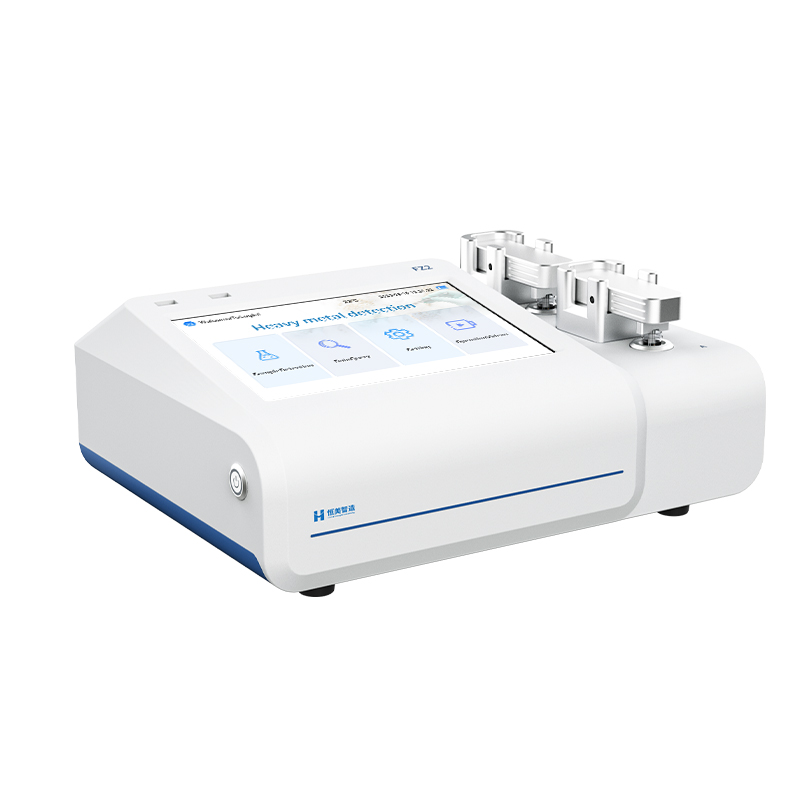
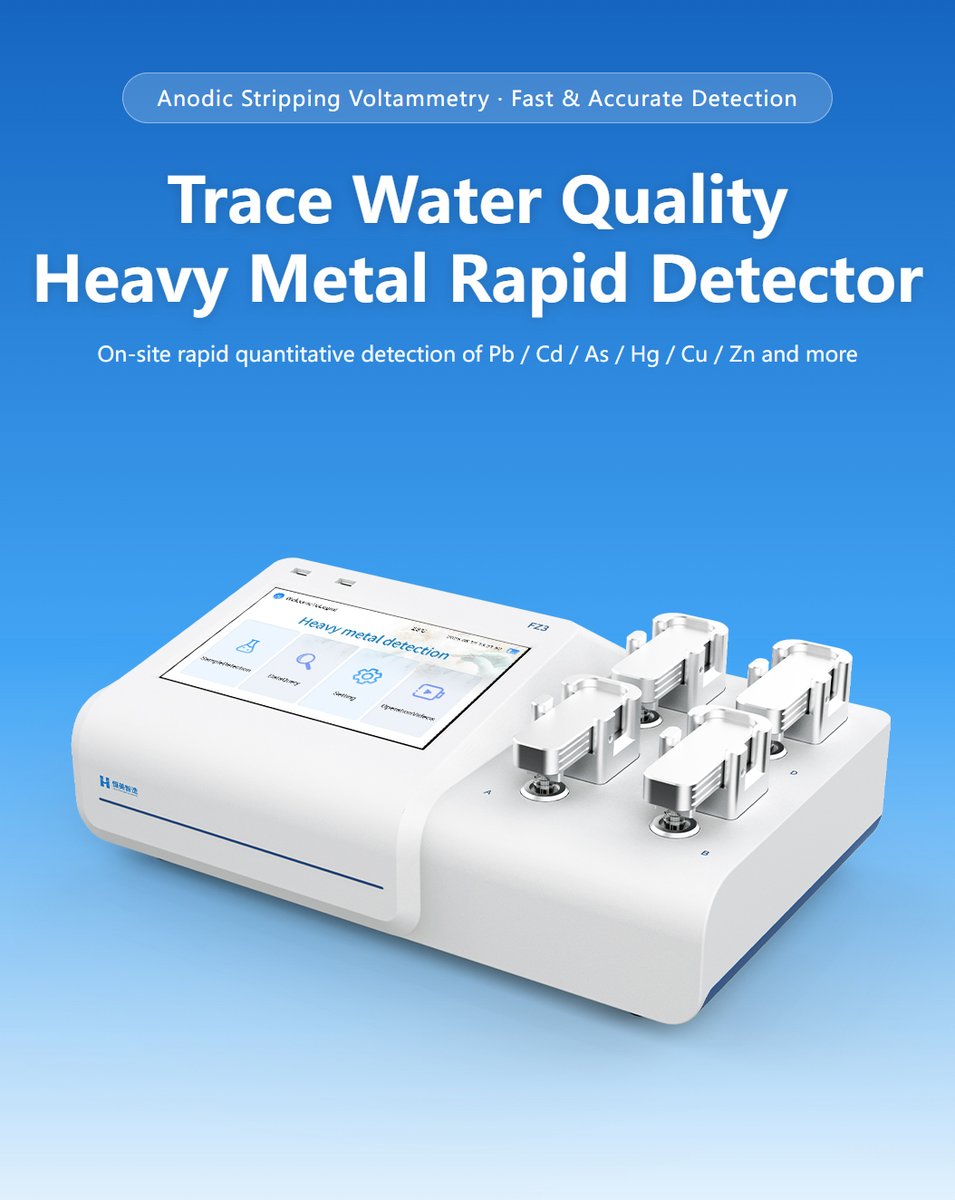
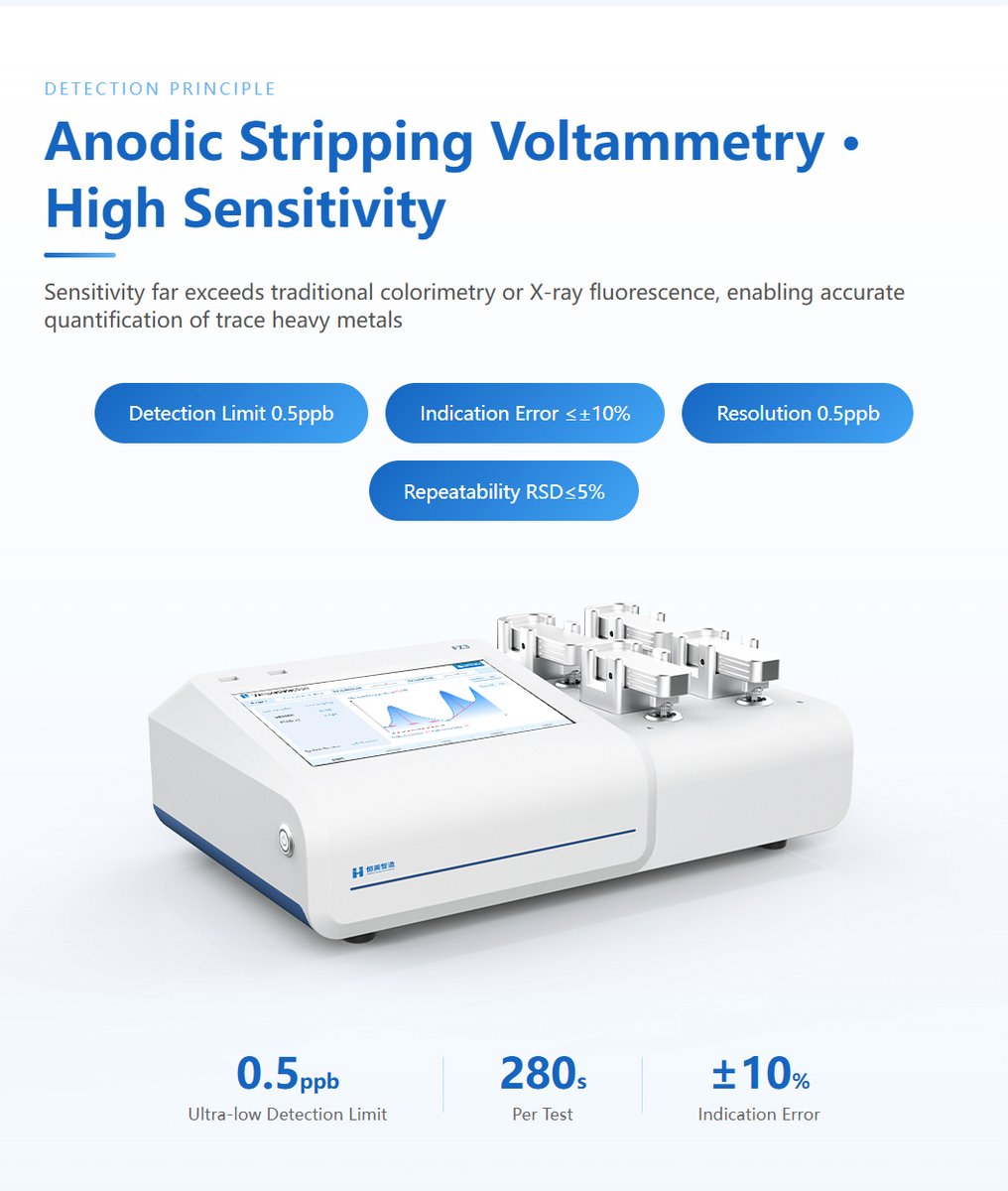
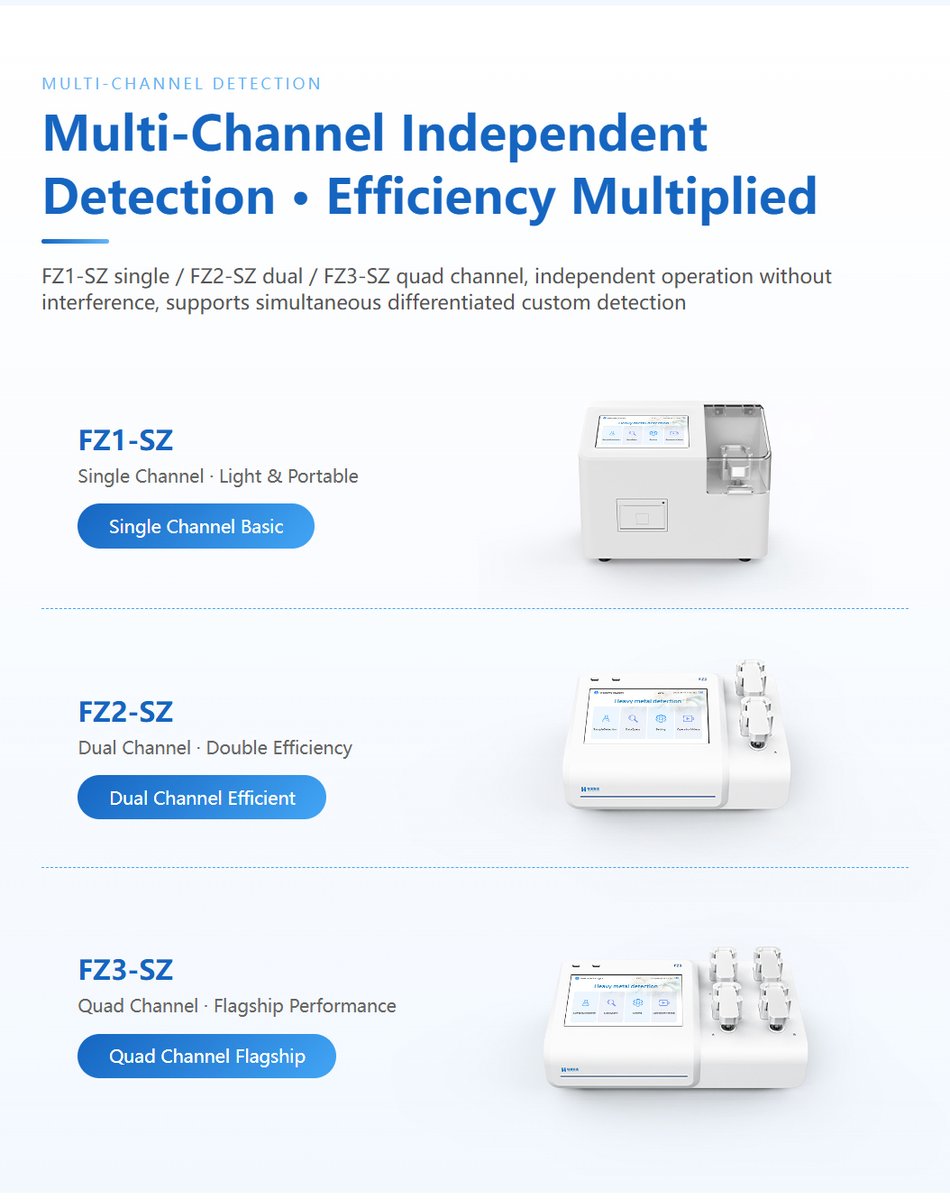
The HM-FZ3-SZ Quad-Channel Voltammetric Analyzer developed by HM Instruments redefines high-throughput trace metal testing by consolidating four fully autonomous anodic stripping voltammetry (ASV) channels into a single robust analytical workstation. Fully complying with the JJF 2037-2023 metrological calibration standard, HM-FZ3-SZ delivers 0.5 ppb detection limits for cadmium, lead, and mercury. By enabling concurrent analysis across four separate electrochemical cells, a single operator can process four parallel samples simultaneously or run multi-element standard addition calibrations concurrently, reducing total testing time to a fraction of single-channel methods.
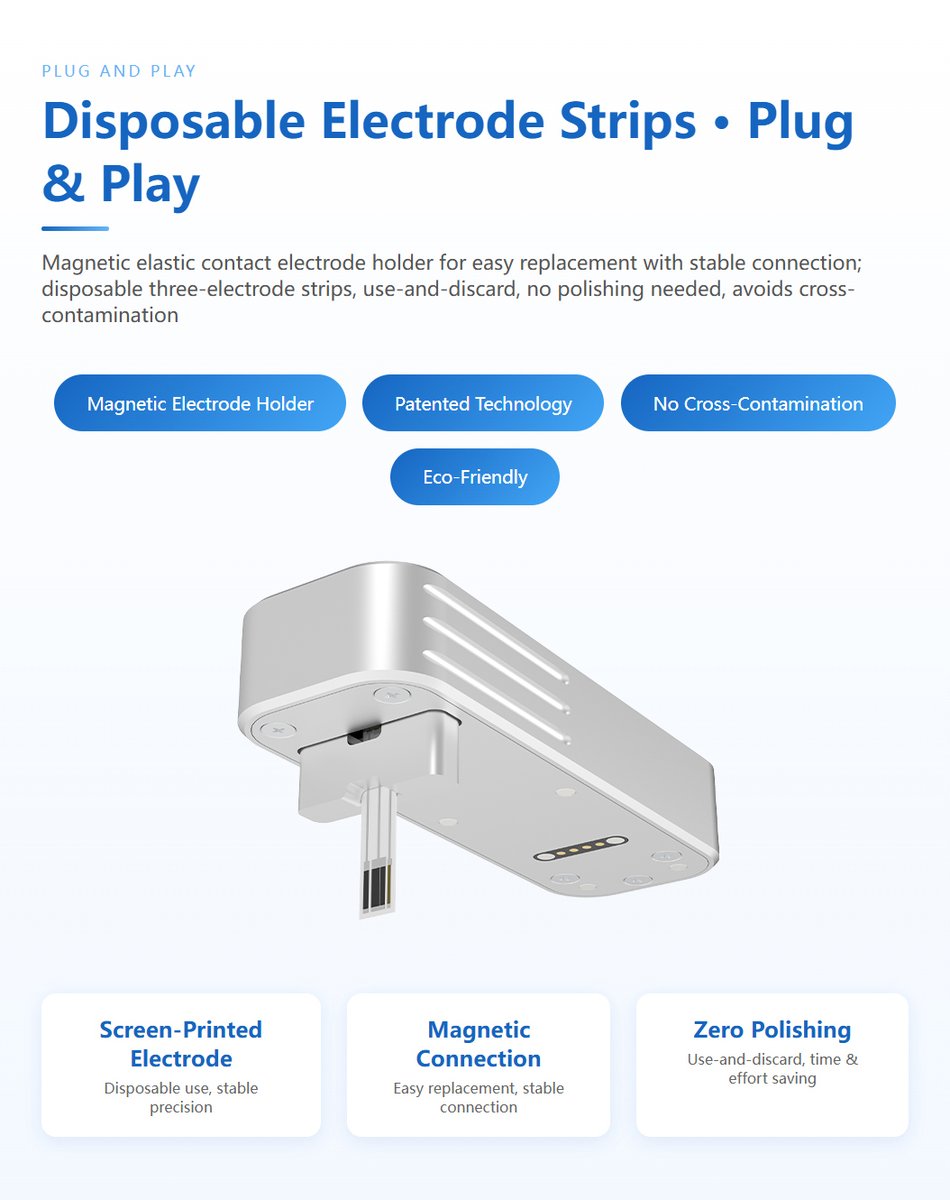
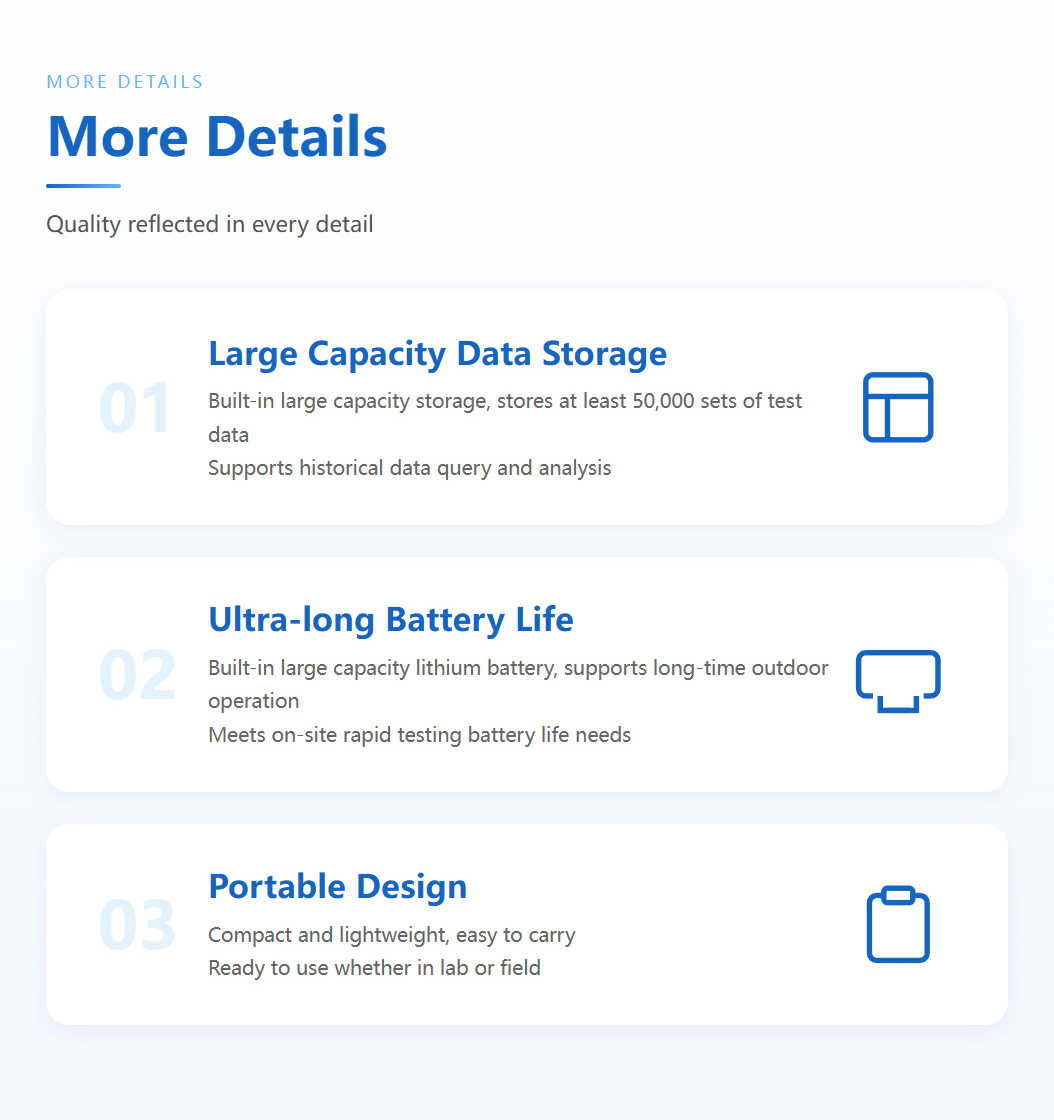
Operating with single-use screen-printed electrodes and patented magnetic elastic contact docking seats, HM-FZ3-SZ completely eliminates hazardous polarographic mercury drops and manual alumina polishing. Outfitted with a 10-inch Android touchscreen, integrated high-speed thermal report printer, and a 20,000 mAh rechargeable lithium battery pack, this 7.6 kg flagship system bridges the gap between field emergency triage and high-volume commercial laboratory production.
Applications
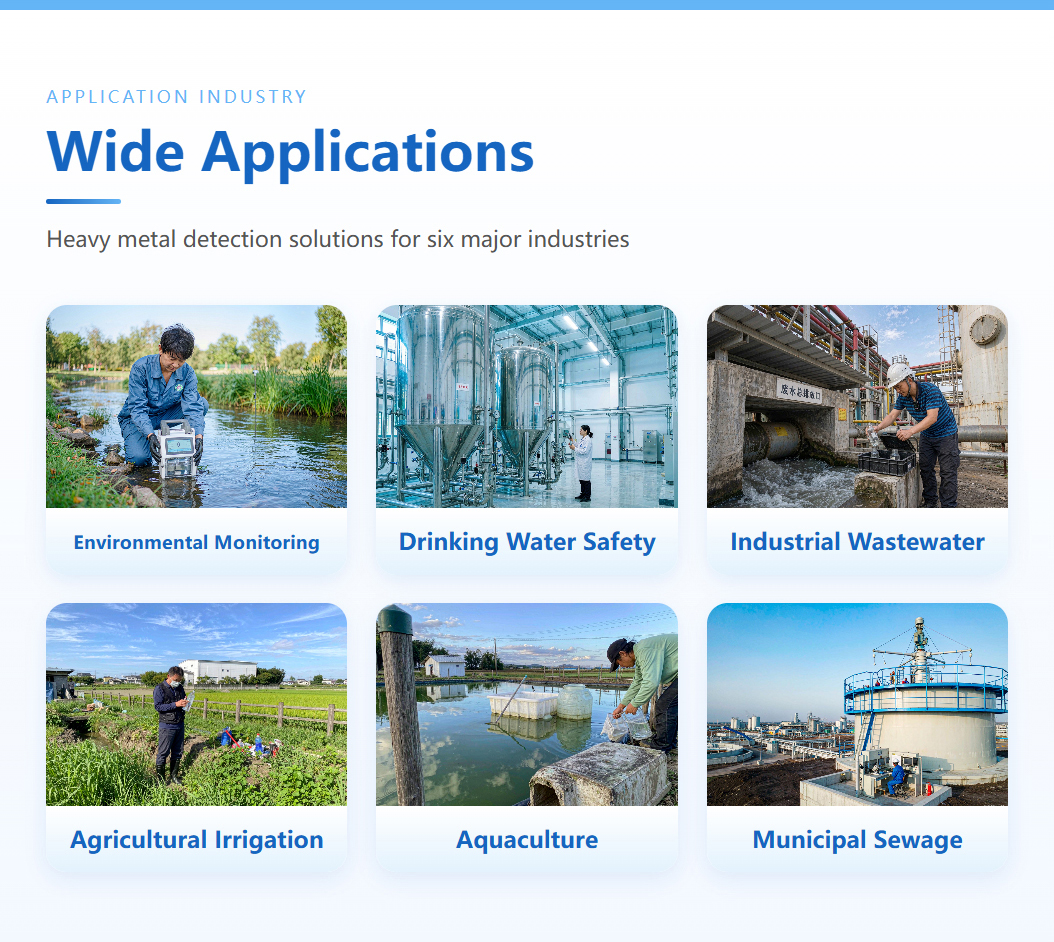
- Accredited Commercial Environmental Labs: Batch high-throughput contract testing for municipal and industrial environmental compliance.
- Provincial & Municipal Water Quality Centers: High-density surface water watershed surveys and drinking water compliance testing.
- Industrial Mining and Metallurgy Outlets: High-frequency continuous batch monitoring of tailing pond effluent and recycling circuits.
- Large-Scale Wastewater Treatment Complexes: Parallel tracking of multi-stage biological reactors and tertiary effluent disinfection basins.
- Agricultural Food & Soil Safety Audits: High-throughput screening of regional agricultural irrigation waters and drainage canals.
- Emergency River Basin Pollution Command Centers: High-speed sample triage during major chemical discharge emergencies across multiple river reaches.
Key Features & Advantages
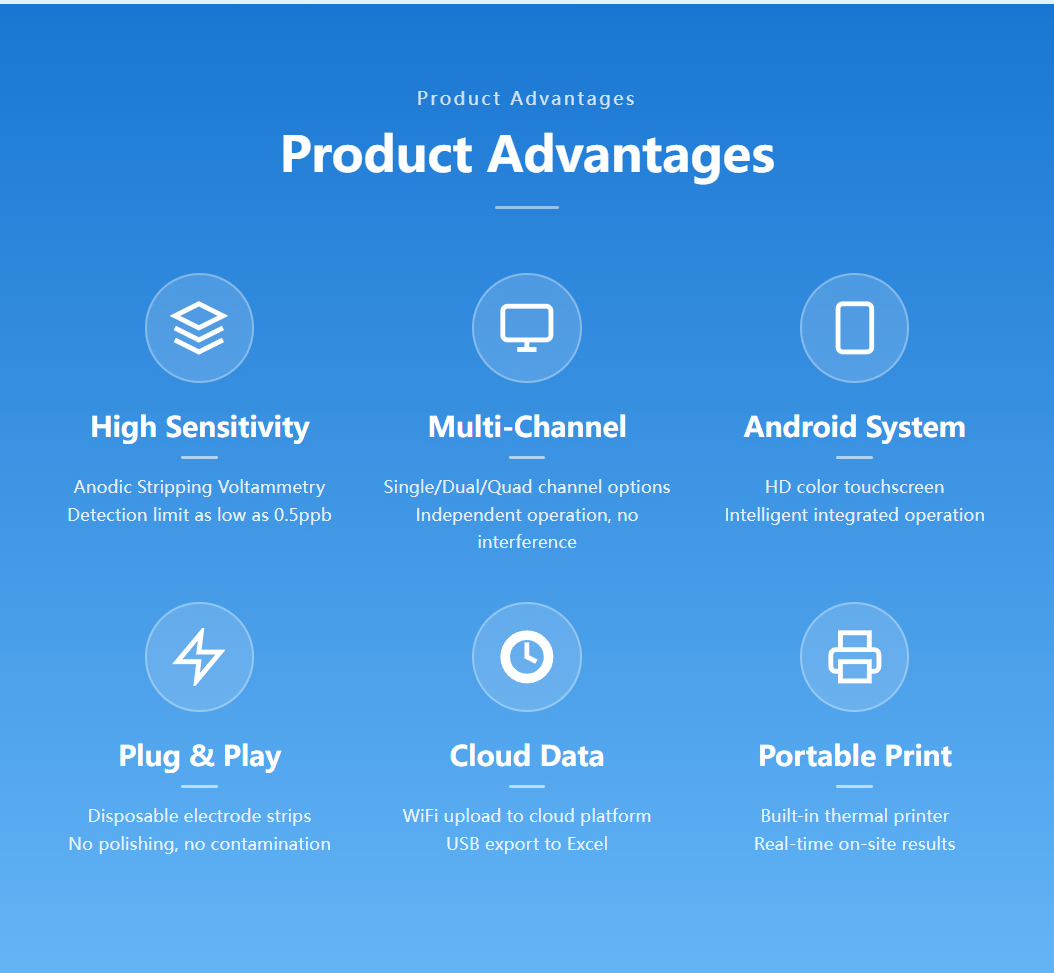
- Quadrupled Analytical Throughput: Four discrete potentiostat-driven channels operate concurrently, reducing sample processing duration by up to 75%.
- Versatile Channel Allocation: Individual channels (A, B, C, D) can be freely assigned different heavy metal elements, calibration curves, or dilution factors.
- Ultra-Trace 0.5 ppb Quantification: Anodic stripping voltammetry provides benchtop-grade sensitivity for cadmium, lead, and mercury conforming to JJF 2037-2023.
- Digestion-Free Clean Sample Analysis: Clean natural water and tap water samples require simple acidification and can be analyzed directly in 280 seconds.
- Four Patented Magnetic Docking Seats: Self-guiding magnetic attraction and gold-plated elastic pins ensure stable, repeatable electrical connection.
- Eco-Friendly Disposable Strips: Screen-printed three-electrode technology eliminates cross-contamination, memory carryover, and mercury disposal costs.
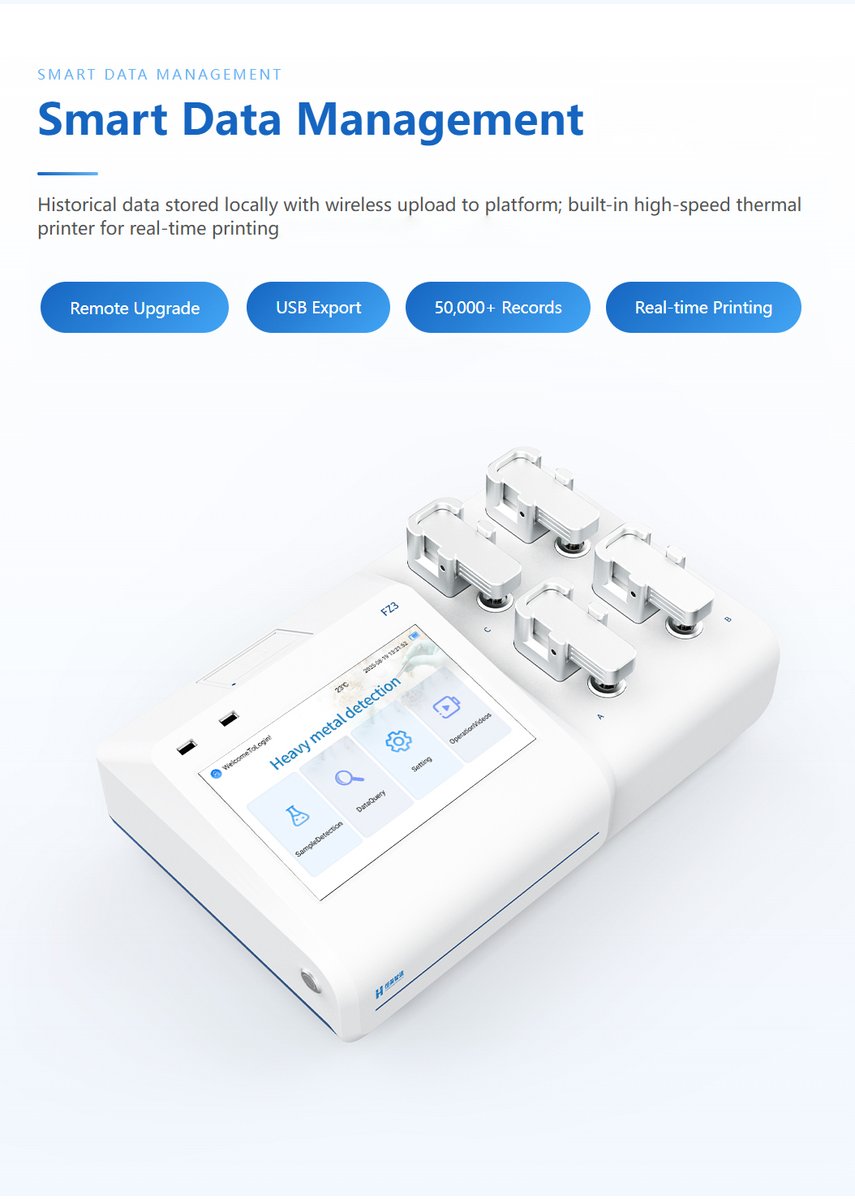
- 10-Inch Android Multi-Window Console: Real-time simultaneous display of four voltammetric stripping curves allows continuous visual quality control.
- Heavy-Duty 20,000 mAh Battery Architecture: High-capacity lithium battery allows deployment in mobile laboratory vehicles without generator noise.
- Direct Thermal Hardcopy Report Generation: Built-in printer instantly outputs multi-channel data slips with verifiable timestamps and peak values.
- Industrial 50,000 Dataset Flash Memory: Extensive on-board storage supports comprehensive search filters, USB data export, and Wi-Fi cloud synchronization.
- Broad Elemental Expansion Library: Standard cadmium and lead capabilities are readily expandable to arsenic, mercury, copper, zinc, selenium, and chromium.
- Scalable Fleet Integration: Deployed in central hubs while mobile inspection teams carry our portable single-channel heavy metal analyzer for comprehensive field coverage.
Technical Specifications
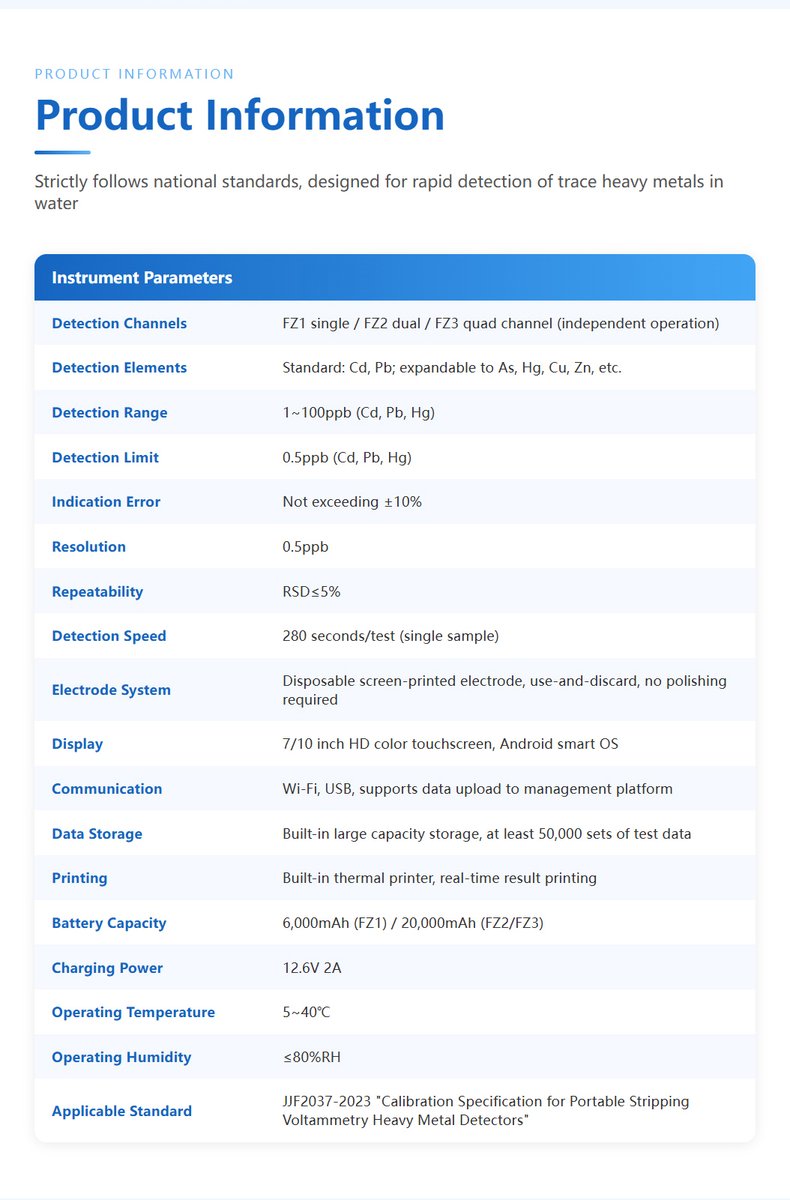
| Specification Parameter |
Certified Engineering Value |
| Measurement Methodology |
Anodic Stripping Voltammetry (ASV) |
| Operating Channels |
Quad channels (4 independent testing circuits running in parallel) |
| Standard Heavy Metals |
Cadmium (Cd), Lead (Pb); Expandable: As, Hg, Cu, Zn, Se, Cr |
| Analytical Concentration Range |
1 ~ 100 ppb (Cd, Pb, Hg) |
| Limit of Detection (LOD) |
0.5 ppb (Cd, Pb, Hg) |
| Indication Error Tolerance |
≤ ±10% |
| Instrument Resolution |
0.5 ppb |
| Repeatability Performance |
RSD ≤ 5% |
| Analysis Duration |
280 seconds / test cycle (single sample) |
| Electrode Sensor System |
Disposable screen-printed three-electrode strip (zero maintenance) |
| Electrode Docking Mechanism |
Four patented magnetic elastic contact electrode holders |
| Environmental Operating Limits |
Temperature: 5 ~ 40 ℃; Humidity: ≤ 80% RH |
| Display & Operating Console |
10-inch HD color touchscreen, Android operating system |
| Connectivity & Upgrades |
Wi-Fi, USB, cloud management upload, remote OTA software update |
| Data Storage Capacity |
≥ 50,000 complete test datasets with search and filter |
| Integrated Output |
Built-in thermal printer for instant field result documentation |
| Battery Capacity |
20,000 mAh rechargeable lithium battery pack |
| Charging Specifications |
12.6 V, 2 A DC input |
| Casing Footprint |
480 mm × 296 mm × 156 mm |
| Instrument Net Weight |
7.6 kg |
| Quality Standards |
JJF 2037-2023 Calibration Specification for Portable Stripping Voltammetry Heavy Metal Detectors |
FAQ
Q1: How does quad-channel concurrent testing lower the cost per sample in commercial testing laboratories?
In commercial water testing laboratories, personnel labor and turnaround latency constitute the largest portion of testing overhead. By running four independent voltammetric stripping cells concurrently, an operator can analyze four samples in the exact same 280-second window required for a single test on conventional equipment. Furthermore, HM-FZ3-SZ requires no carrier gases, specialized cooling chillers, or microwave digestion consumables, slashing both labor-hour costs and utility overhead.
Q2: Can the four channels be assigned to different heavy metals such as Lead, Cadmium, Arsenic, and Mercury simultaneously?
Yes. Each channel features an independent potentiostat subsystem and isolated control software thread. An analytical batch can dedicate Channel A to Cadmium, Channel B to Lead, Channel C to Copper, and Channel D to Mercury. The system calculates and displays the stripping peaks and concentration results for all four distinct metals simultaneously without crosstalk.
Q3: What quality assurance features ensure reproducibility and data consistency across all four channels?
HM-FZ3-SZ incorporates factory-calibrated precision electronic voltage references and independent current-sensing circuits for each channel, with component matching tolerances under 0.1%. Each channel follows automated background baseline subtraction and standardization protocols aligned with JJF 2037-2023. Inter-channel repeatability yields an RSD of ≤ 5%, ensuring data consistency regardless of which channel is utilized.
Q4: How does the Android system integrate with Laboratory Information Management Systems (LIMS)?
The Android operating system includes integrated Wi-Fi and USB network interfaces that support automated export of testing datasets in standard CSV and Excel formats. Data packets contain sample identifiers, operator IDs, channel numbers, peak voltages, calculated concentrations, and timestamps, allowing seamless API or database ingestion into commercial LIMS platforms without manual transcription errors.
Q5: How does HM-FZ3-SZ fit into an enterprise monitoring architecture alongside other HM Instruments models?
HM-FZ3-SZ serves as the centralized high-throughput laboratory engine for batch sample processing and regulatory reporting. For distributed satellite outposts or field inspection teams, organizations often deploy HM-FZ1-SZ portable single-channel analyzers. Because all models utilize the same screen-printed electrode consumables, calibration algorithms, and JJF 2037-2023 metrological foundation, test results across the entire organization remain directly comparable.
Expert Review
Article address:https://www.hmwatertesting.cn/qtjc1/laboratory-quad-channel-metal-analyzer-fz3.html

 Current
location:
Current
location: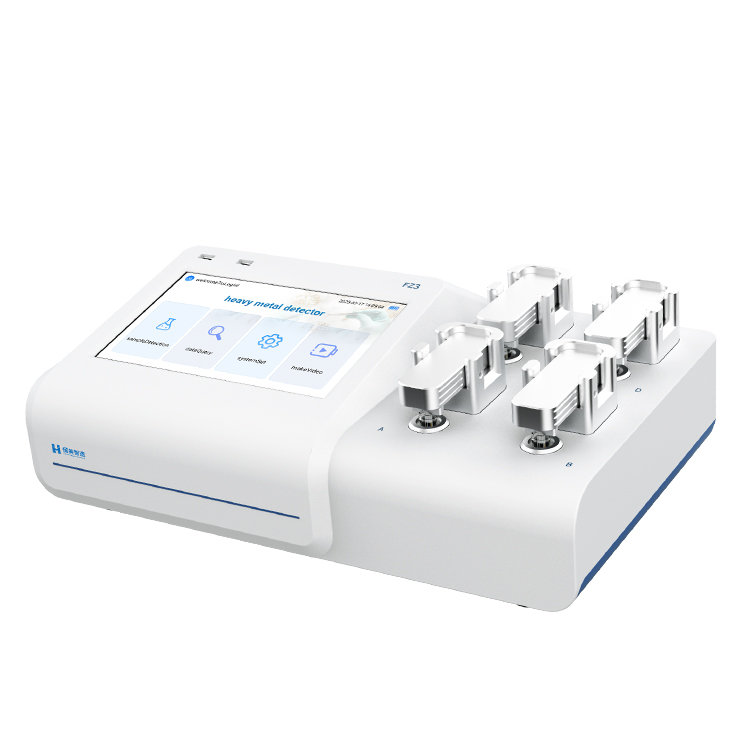
 +86 17853698681