

Product Center
-
Multi Parameter Water Quality Analyzer
-
COD/BOD Analyzer
-
Determination of Ammonia Nitrogen
-
Determination of Total Phosphorus and Total Nitrogen
-
Biological Toxicity Testing
-
Disinfection Residue Determination
-
Online water quality monitoring instrument
Dissolved oxygen online analyzer PH online monitoring device Chloride ion online monitoring instrument Conductivity online monitoring device Turbidity online monitoring instrument Online water hardness monitoring instrument ORP online monitoring device Residual chlorine online monitoring device Total organic carbon monitoring equipment -
Other related tests
Water quality heavy metal detector Infrared oil analyzer Water quality nitrite analyzer Colorimeter Dissolved oxygen analyzer Suspended Solids Turbidity Meter Total OrganicCarbon Analyzer Chlorophyll detector in water Suspended solids analyzer Water quality total hardness/total alkalinity detector Surfactant detector Proportional water quality sampler Microbial detector in water Sulfide acidification blowing instrument Carbon dioxide detector in water Online water quality sensor Volatile Phenol Analyzer Phosphate Silicate Analyzer Permanganate Index Analyzer Quantitative Sealing Machine
Recommended articles
- Water Quality Ozone Detector: Rapid and Accurate On-Site Ozone Monitoring Solution
- What is the best water tester for drinking water?
- BOD meter for biological oxygen demand testing: principles, advantages and applications
- Portable Infrared Spectrophotometer for Oil Analysis: Rapid On-Site Detection of Water and Soil Oil Pollution
- Water Quality Detector | Portable Multi-Parameter Analyzer
- What are the advantages of water toxicity analyzer?
 Current
location:HOME>NEWS>Industry Trends>HM Instruments Portable Water Quality Analyzer Cost-Performance Review
Current
location:HOME>NEWS>Industry Trends>HM Instruments Portable Water Quality Analyzer Cost-Performance Review
HM Instruments Portable Water Quality Analyzer Cost-Performance Review
Article Source:Hengmei Water Quality Analysis Instrument Network Release time:2026-06-08 15:51:08
HM Instruments Portable Water Quality Analyzer Cost-Performance Review
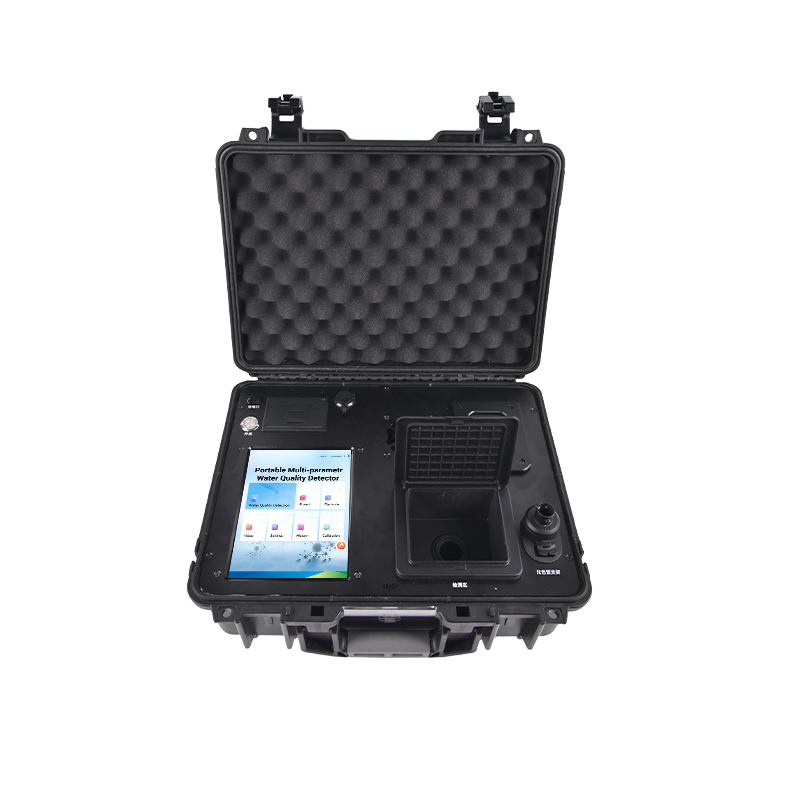
Choosing a portable water quality analyzer is a significant capital decision. This review examines whether the performance gap between HM Instruments and leading international brands justifies the price difference — using published specifications, typical market pricing, and a five-year total cost of ownership model.
Introduction: Why Cost-Performance Matters
Environmental monitoring agencies, municipal water utilities, and industrial compliance teams all face the same pressure: deliver defensible water quality data while operating within constrained budgets. The instrument you select affects not only your initial capital outlay but also years of consumable spending, calibration labor, and service costs.
Brands like Hach, YSI/Xylem, WTW/Xylem, and Lovibond have earned global reputations through decades of innovation, robust instrument design, and extensive application support. Their products are reference points in countless standard methods. However, reputation alone does not guarantee that every laboratory or field team needs to invest at the premium tier — especially when functionally equivalent specifications are available at substantially lower prices.
This review compares HM Instruments' portable water quality analyzer lineup against those respected international brands on the metrics that matter most: measurement performance, feature completeness, purchase price, and total cost of ownership.
Understanding the True Cost of Water Quality Analyzers
The sticker price of a portable analyzer is only the beginning. A complete cost assessment should include:
- Purchase price — the upfront capital investment.
- Consumables and reagents — reagent kits, cuvettes, digestion vials, and calibration standards consumed per test.
- Maintenance and calibration — labor hours, replacement parts (lamps, optical windows), and annual service contracts.
- Training and support — onboarding time, technical support accessibility, and documentation quality.
- Depreciation and replacement cycle — how many years of reliable service before the instrument requires replacement.
When analyzed this way, an instrument priced 50% lower but offering the same core specifications can deliver 40–60% savings in total cost of ownership over five years — savings that can be redirected to expanding monitoring programs, hiring additional staff, or purchasing complementary equipment.
HM Instruments vs Hach (USA)
Hach is arguably the most recognized name in water analysis. Their DR series portable spectrophotometers and COD test kits are fixtures in environmental laboratories worldwide. A typical Hach DR 1900 or DR 900 paired with TNTplus reagent vials delivers excellent optical performance and a vast pre-programmed method library.
Where Hach Excels
- Extensive method library covering hundreds of parameters beyond COD and nutrients.
- Deeply integrated reagent system (TNTplus, cuvette tests) with RFID-tagged lot tracking.
- Global service network and regulatory acceptance in many jurisdictions.
Where HM Instruments Matches or Offers Better Value
- Optical performance: HM Instruments analyzers achieve 0.001 Abs absorbance resolution, comparable to the Hach DR 1900 (also 0.001 Abs). Both use spectrophotometric methods aligned with EPA and ISO standard methods.
- Integrated digestion: HM Instruments builds a digestion module directly into the portable unit. Hach portable units typically require a separate DRB200 reactor ($1,500–$3,000 additional), which adds both cost and field complexity.
- Connectivity: HM Instruments includes 4G, Wi-Fi, GPS, and cloud platform integration as standard. Comparable Hach connectivity often requires add-on modules or separate data loggers.
- Price comparison: A Hach DR 1900 with TNTplus capability costs approximately $3,000–$5,000 before adding a separate digestion reactor. The HM Instruments HM-BL04 (COD/Ammonia/TP/TN, with integrated digestion) is priced at $1,900 — a 40–60% saving on the instrument alone.
Hach remains an outstanding choice for laboratories that need the widest possible method coverage or whose procurement policies mandate Hach-specific reagents. For teams focused on COD, nutrients, and heavy metals, HM Instruments delivers equivalent analytical capability at a fraction of the cost.
HM Instruments vs YSI/Xylem (USA)
YSI, now part of Xylem, is the benchmark for multi-parameter water quality sondes. The ProDSS handheld system is widely used for continuous surface water monitoring with sensor arrays measuring dissolved oxygen, conductivity, pH, turbidity, and more.
Where YSI/Xylem Excels
- Real-time continuous monitoring with ruggedized sensor arrays designed for long-term deployment.
- Exceptional build quality for harsh field conditions (IP67-rated housings).
- Strong integration with Xylem's cloud analytics platform.
Where HM Instruments Matches or Offers Better Value
- Parameter scope: YSI ProDSS excels at physical parameters (DO, conductivity, pH) but does not natively perform COD, ammonia nitrogen, total phosphorus, or total nitrogen analysis — these require laboratory spectrophotometry. HM Instruments covers exactly those chemical parameters that YSI sondes cannot.
- Multi-parameter chemical analysis: The HM-BL100 ($2,900) delivers COD, ammonia, TP, TN, permanganate index, and heavy metal detection in a single portable unit. A YSI ProDSS system with a full sensor array costs $5,000–$15,000+ and still cannot perform these chemical analyses.
- Complementary rather than competing: In practice, many monitoring programs pair a YSI sonde for physical parameters with an HM Instruments analyzer for chemical parameters — achieving comprehensive coverage at lower total cost than using YSI for physical and Hach for chemical.
YSI/Xylem instruments are the gold standard for in-situ physical parameter monitoring. HM Instruments fills the chemical analysis gap at a price point that makes comprehensive monitoring programs financially feasible.
HM Instruments vs WTW/Xylem (Germany)
WTW's photoLab series represents German engineering precision in photometric water analysis. The photoLab 7100 and 7600 models are respected in European laboratories for their optical accuracy and method breadth.
Where WTW Excels
- Premium optical design with high wavelength accuracy across the visible and UV range.
- Broad pre-programmed method library aligned with DIN/EN/ISO standards.
- Robust German manufacturing quality and long service life.
Where HM Instruments Matches or Offers Better Value
- Resolution parity: HM Instruments' 0.001 Abs resolution matches the photometric precision offered by the photoLab 7100 series.
- Integrated field design: WTW photoLab instruments are primarily laboratory photometers. They lack integrated digestion, GPS, 4G connectivity, and thermal printing — features that HM Instruments bundles as standard for true portable field deployment.
- Price comparison: A WTW photoLab 7600 costs approximately $4,000–$10,000 depending on configuration. The HM-BL03 (COD/Ammonia/TP with digestion) at $1,400 delivers the core analytical function at roughly one-third the price.
- European standard compliance: HM Instruments spectrophotometric methods align with the same ISO and EN standards that WTW methods reference, ensuring data acceptance in European regulatory contexts.
WTW remains an excellent choice for high-end laboratory photometry where UV-range analysis and the broadest method library are required. For field-deployed nutrient and COD analysis, HM Instruments provides a more complete and cost-effective package.
HM Instruments vs Lovibond (Germany/UK)
Lovibond's MD series portable photometers are well-regarded for their straightforward operation and compact design. They serve as practical field instruments for routine water testing.
Where Lovibond Excels
- Simple, intuitive interface designed for non-specialist operators.
- Compact and lightweight form factor for genuine handheld portability.
- Well-established reagent tablet system with long shelf life.
Where HM Instruments Matches or Offers Better Value
- Parameter coverage: Lovibond MD series models typically measure one or two parameters per unit. HM Instruments offers combined analyzers (HM-BL04: four parameters; HM-BL100: all parameters) that eliminate the need to carry and calibrate multiple instruments.
- Integrated digestion: Lovibond portable units require a separate Thermodigester for COD and total nutrient analysis. HM Instruments integrates digestion directly into the analyzer body.
- Price comparison: A Lovibond MD 610 with tablet reagent system costs approximately $2,500–$5,000. The HM-BLC (single-parameter COD) at $960 or the HM-BL02 (COD + Ammonia) at $1,100 provide equivalent or greater functionality at 50–70% lower cost.
- Data connectivity: HM Instruments includes GPS, 4G, Wi-Fi, and cloud platform — features generally absent from Lovibond's MD series.
Lovibond's simplicity is a genuine advantage for rapid field screening by non-technical operators. For professional monitoring teams that need integrated digestion, multi-parameter capability, and cloud connectivity, HM Instruments offers a more feature-complete and economical solution.
Detailed Specification Comparison
| Specification | HM Instruments | Hach DR 1900 | YSI ProDSS | WTW photoLab 7600 | Lovibond MD 610 |
|---|---|---|---|---|---|
| Measurement Method | Spectrophotometry | Spectrophotometry | Electrochemical sensor array | Spectrophotometry | Photometry (tablet) |
| Absorbance Resolution | 0.001 Abs | 0.001 Abs | N/A | 0.001 Abs | ~0.001 Abs |
| Integrated Digestion | Yes (built-in) | No (separate DRB200) | No | No (separate unit) | No (separate Thermodigester) |
| COD Range | 5–1500 mg/L (multi-range) | 5–1500 mg/L (TNTplus) | N/A | 5–1500 mg/L (cuvette) | 5–1500 mg/L (tablet) |
| Ammonia Nitrogen Range | 0.025–200 mg/L (Nessler/Salicylate) | 0.01–50 mg/L | N/A | 0.01–50 mg/L | 0.02–50 mg/L |
| Total Phosphorus Range | 0.02–30 mg/L | 0.02–30 mg/L | N/A | 0.02–30 mg/L | 0.05–15 mg/L |
| Total Nitrogen Range | 0.5–200 mg/L | 0.5–200 mg/L | N/A | 0.5–200 mg/L | 0.5–25 mg/L |
| Heavy Metal Detection | Cr(VI)/Mn/Hg/As/Ni/Zn/Fe/Cu (HM-BLZ/BL100) | Limited (separate instrument) | No | No | No |
| GPS | Yes (built-in) | No | Optional | No | No |
| 4G / Wi-Fi | Yes (built-in) | Wi-Fi optional | Bluetooth | USB only | USB only |
| Cloud Platform | Yes (built-in) | Optional (Hach Connect) | Yes (Xylem) | No | No |
| Thermal Printer | Yes (built-in) | No | No | No | No |
| Weight | 8.3 kg (with digestion) | ~1.5 kg (no digestion) | ~1.8 kg (sensor only) | ~3 kg (lab unit) | ~0.5 kg (handheld) |
| Battery | AC 220V + Li-ion | AA or Li-ion | Rechargeable | AC powered | AA or rechargeable |
| Typical Price Range | $740–$2,900 | $3,000–$8,000+ | $5,000–$15,000+ | $4,000–$10,000+ | $2,500–$7,000+ |
Note: International brand prices reflect typical market pricing and may vary by region, distributor, and configuration. HM Instruments prices are list prices as of 2026. Weight comparisons reflect the different design philosophies: HM Instruments integrates digestion, printing, and connectivity into a single field-ready unit.
HM Instruments Model Lineup and Pricing
| Model | Parameters | Light Source | Price (USD) |
|---|---|---|---|
| HM-BLC | COD | 420/620 nm | $960 |
| HM-BLNH | Ammonia Nitrogen | 420/700 nm | $740 |
| HM-BLTP | Total Phosphorus | 420/700 nm | $960 |
| HM-BLTN | Total Nitrogen | 420 nm | $960 |
| HM-BLCMn | Permanganate Index | 420/620 nm | $1,100 |
| HM-BL02 | COD + Ammonia Nitrogen | 420/620 nm | $1,100 |
| HM-BL03 | COD + Ammonia + TP | 420/620/700 nm | $1,400 |
| HM-BL04 | COD + Ammonia + TP + TN | 420/620/700 nm | $1,900 |
| HM-BLZ | Heavy Metals (8 elements) | 420/470/520/560/620 nm | $2,200 |
| HM-BL100 | All Parameters | 420/470/520/560/620/700/860 nm | $2,900 |
All models share: 430×350×190 mm dimensions, 8.3 kg weight, 0.001 Abs resolution, AC 220V + lithium battery power, 4G/Wi-Fi/GPS connectivity, cloud platform integration, built-in thermal printer, and integrated digestion module.
Total Cost of Ownership: Five-Year Projection
The following analysis estimates the five-year total cost of ownership for a representative multi-parameter analyzer capable of COD, ammonia nitrogen, total phosphorus, and total nitrogen measurement — the most common configuration for environmental compliance monitoring.
| Cost Component (5 Years) | HM Instruments HM-BL04 | Hach DR 1900 + DRB200 | WTW photoLab 7600 + Digestor | Lovibond MD 610 + Thermodigester |
|---|---|---|---|---|
| Instrument Purchase | $1,900 | $4,500–$7,000 | $5,500–$10,000 | $3,500–$6,500 |
| Digestion Unit | Included | $1,500–$3,000 | $1,500–$2,500 | $1,000–$2,000 |
| Reagent Consumables (est.) | $2,000–$3,000 | $2,500–$4,000 | $2,200–$3,500 | $2,000–$3,500 |
| Calibration & Service | $500–$1,000 | $1,000–$2,000 | $1,000–$2,000 | $800–$1,500 |
| Connectivity Add-ons | Included | $300–$800 | $200–$500 | $100–$300 |
| Estimated 5-Year TCO | $4,400–$6,900 | $9,800–$16,800 | $10,400–$18,500 | $7,400–$13,800 |
Estimates based on typical usage of 200–500 tests per year per parameter. Actual costs depend on test volume, local distributor pricing, and service contract terms. Reagent costs are broadly comparable across brands for equivalent methods; the primary TCO difference stems from instrument and digestion unit pricing.
Key Finding: Over five years, choosing HM Instruments can save $3,000–$11,600 compared to equivalent international brand configurations — a 40–60% reduction in total cost of ownership — while delivering the same core analytical performance for COD, nutrients, and heavy metals.
When HM Instruments Makes Sense
Ideal Use Cases
- Environmental compliance monitoring — Teams performing routine COD, ammonia, TP, TN, and permanganate index measurements for regulatory reporting will find HM Instruments specifications fully meet EPA, ISO, and EN method requirements.
- Municipal water and wastewater — Treatment plant laboratories that need reliable daily measurements without the budget for premium-brand instruments.
- Industrial discharge monitoring — Factories and mines that must demonstrate compliance with effluent limits and want integrated GPS-tagged data for audit trails.
- Field survey teams — The integrated digestion, thermal printing, 4G/GPS connectivity, and cloud upload make HM Instruments a true one-unit field solution — no separate digestion reactor, printer, or data logger to carry.
- Multi-site monitoring programs — Organizations managing 5, 10, or 20+ monitoring stations can equip every site with HM Instruments for the cost of 2–3 premium-brand units.
- Developing-region water quality programs — Where budget constraints are most acute, HM Instruments makes professional-grade water analysis accessible.
When a Premium Brand May Be Preferred
- Your organization has existing long-term reagent contracts or procurement policies tied to a specific brand.
- You require UV-range photometric methods (below 350 nm) that extend beyond HM Instruments' LED wavelength range.
- You need the extensive method library of a Hach DR series for parameters beyond COD, nutrients, and heavy metals.
- Your field conditions demand the ultra-ruggedized form factor of a YSI ProDSS for continuous physical parameter deployment.
Conclusion: Equal Quality, Better Value
Hach, YSI/Xylem, WTW, and Lovibond have each made invaluable contributions to water quality instrumentation. Their decades of engineering innovation have defined the standards by which all instruments — including HM Instruments — are measured. This review does not question their quality or their legitimacy as premium choices.
What the data shows, however, is clear: for the specific parameters that dominate environmental compliance monitoring — COD, ammonia nitrogen, total phosphorus, total nitrogen, permanganate index, and heavy metals — HM Instruments delivers analytical specifications that are essentially equivalent to these international brands. The absorbance resolution is the same. The measurement ranges are comparable. The standard methods are aligned.
The difference is that HM Instruments achieves this parity at 40–60% lower cost by focusing resources on core analytical performance and practical field integration rather than maintaining vast method libraries, multi-platform service networks, and premium brand positioning.
When you choose HM Instruments, you are not choosing a compromise. You are choosing to allocate your budget based on data rather than brand perception — and redirecting the savings toward expanding your monitoring coverage, training your team, or investing in complementary capabilities.
For organizations that need professional portable water quality analysis at a responsible price point, HM Instruments represents the most cost-effective path to reliable, regulation-grade data.
Article address:https://www.hmwatertesting.cn/article2/portable-water-quality-analyzer-cost-performance-review.html
- Previous: HM Instruments Portable Water Quality Analyzer Industry Application White Paper
- Next: no more
Related products

Related articles
-
Portable Infrared Spectrophotometer for Oil Analysis: Rapid On-Site Detection of Water and Soil Oil Pollution
2025-09-19 -
Hengmei Intelligent Portable Biotoxicity Tester Product Knowledge Graph White Paper
2025-12-18 -
Multi parameter water quality analyzer: technological innovation for water safety guardians
2025-07-15 -
Portable Total Phosphorus Detector Product Knowledge Graph White Paper
2025-12-03 -
What is a handheld water quality tester for for water quality measurement?
2025-07-23 -
Water Quality 4-Nitrogen Analyzer | Ammonia, Nitrate, Nitrite, Total N
2025-10-22 -
Bromate Rapid Detector: Essential for Ensuring Packaged Drinking Water Safety
2025-09-30 -
How accurate is a TOC analyzer?
2025-07-23