
Product Introduction
Heavy-metal contamination in water bodies poses long-term risks to ecosystems and public health, yet monitoring programs often face a practical dilemma: laboratory-grade instruments such as ICP-MS deliver the required sensitivity but require sample transport, trained operators, and extended turnaround times, while field colorimetric test kits sacrifice accuracy and quantification depth at trace levels. The HM-B400 Portable Water Quality Detector was developed to bridge this gap by bringing anodic stripping voltammetry — a technique with sensitivity comparable to laboratory instrumentation — into a field-deployable platform.
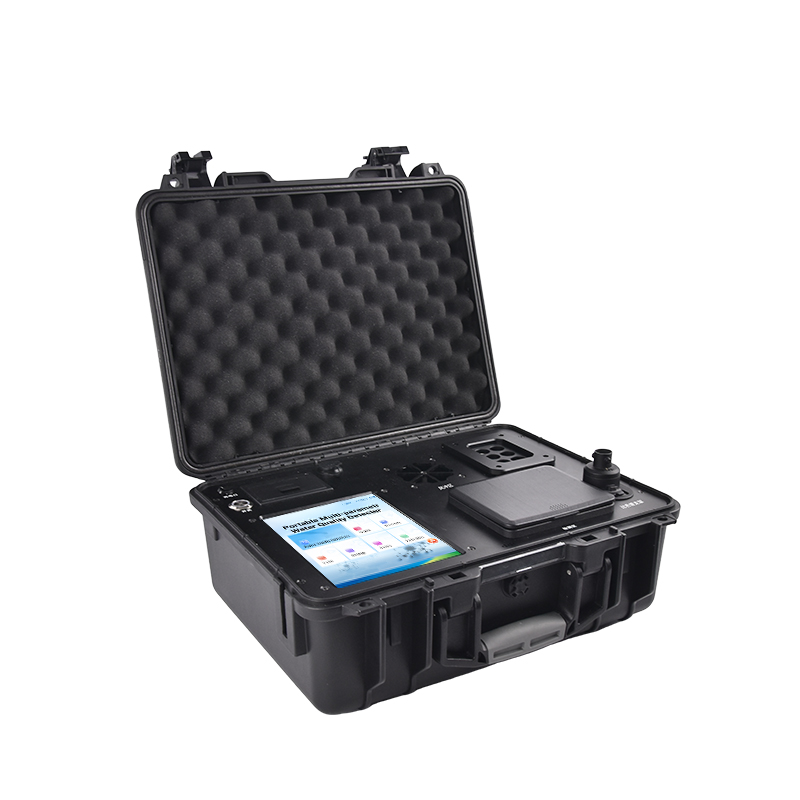
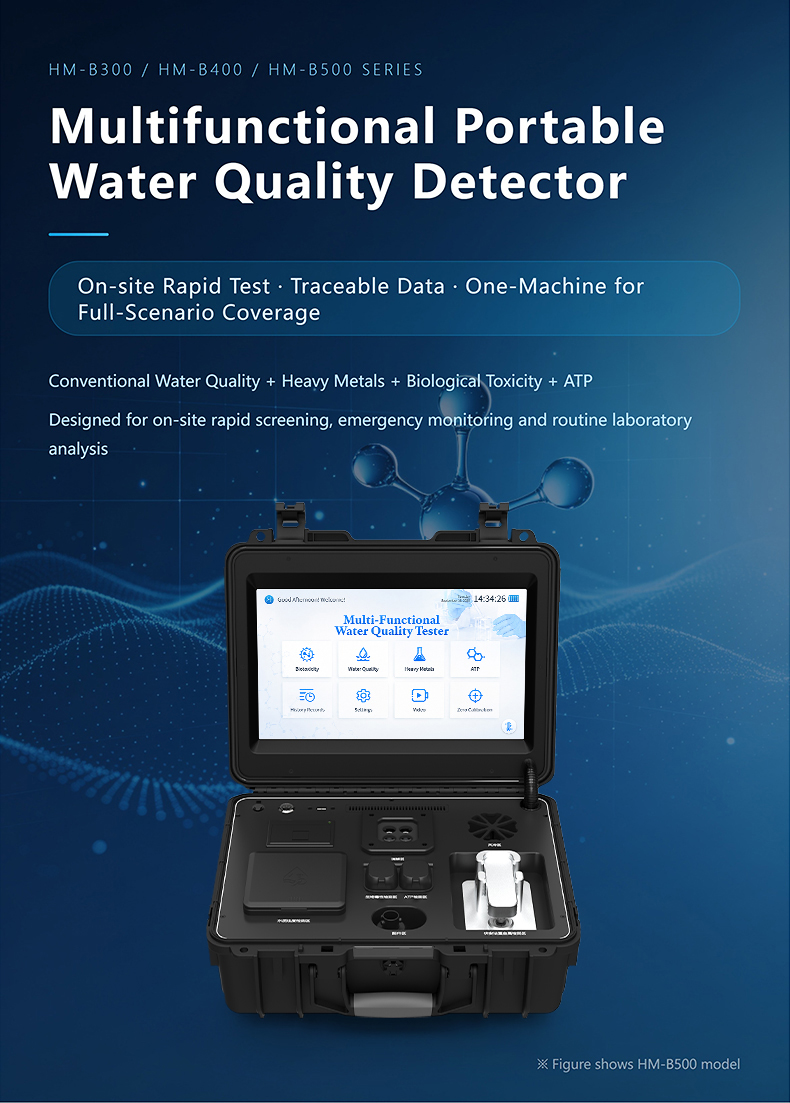
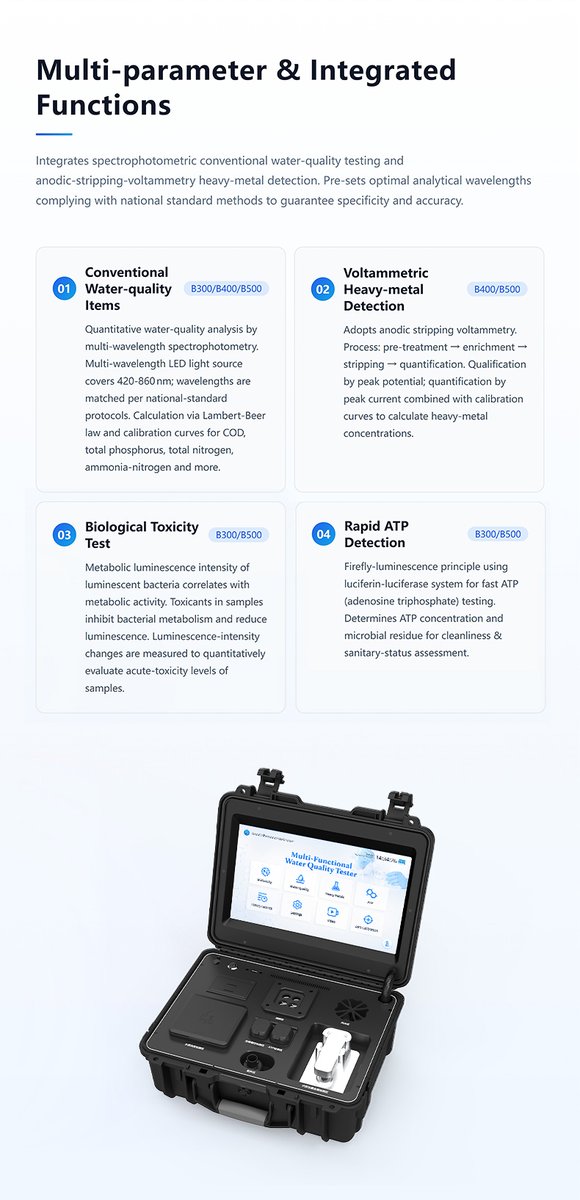
The instrument combines two analytical systems within a ruggedized carrying case. The spectrophotometric module uses a multi-wavelength LED light source (420–860 nm) with pre-configured analytical wavelengths matched to national standard methods, enabling direct quantification of COD, total phosphorus, total nitrogen, ammonia nitrogen, and 45 additional parameters. The voltammetric heavy-metal module employs anodic stripping voltammetry: metal ions in the sample are first enriched on the working electrode surface by applying a negative voltage, then re-oxidized during a reverse scan, producing characteristic stripping peaks whose potential identifies the element and whose current quantifies the concentration. This method achieves detection limits of 0.5 ppb for cadmium and lead in water and 0.01 mg/kg in grain samples — sensitivity far exceeding colorimetric or X-ray fluorescence approaches.
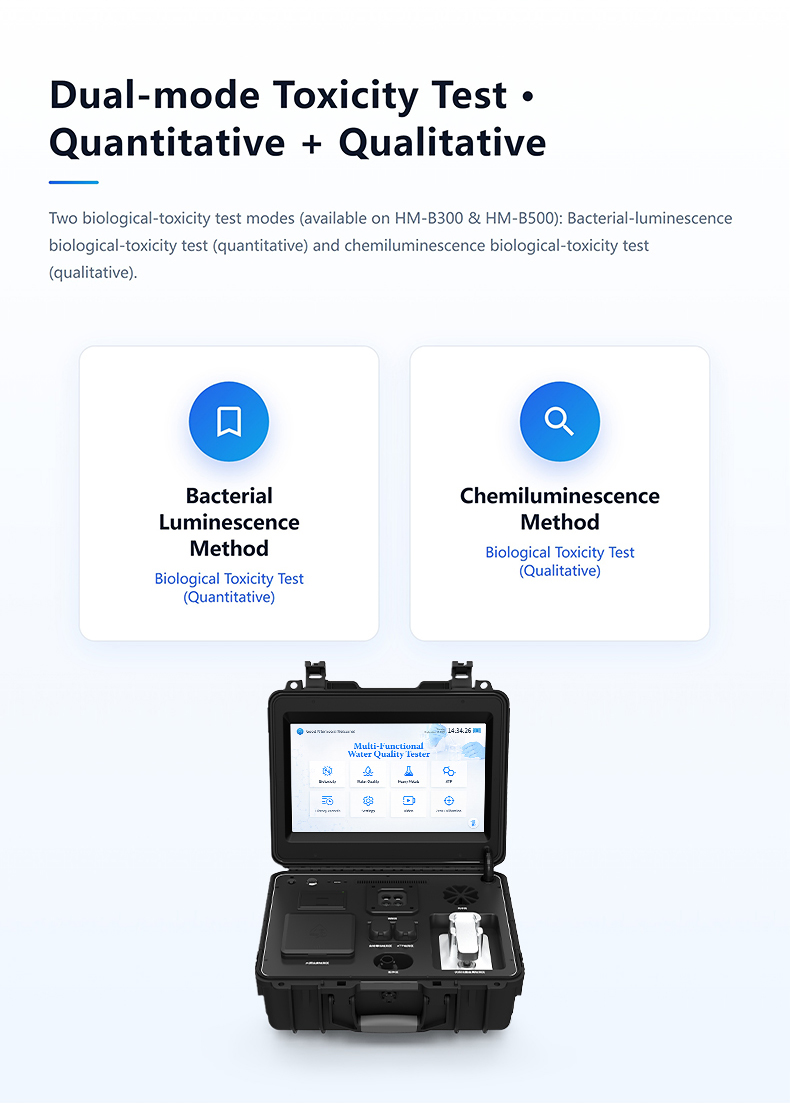
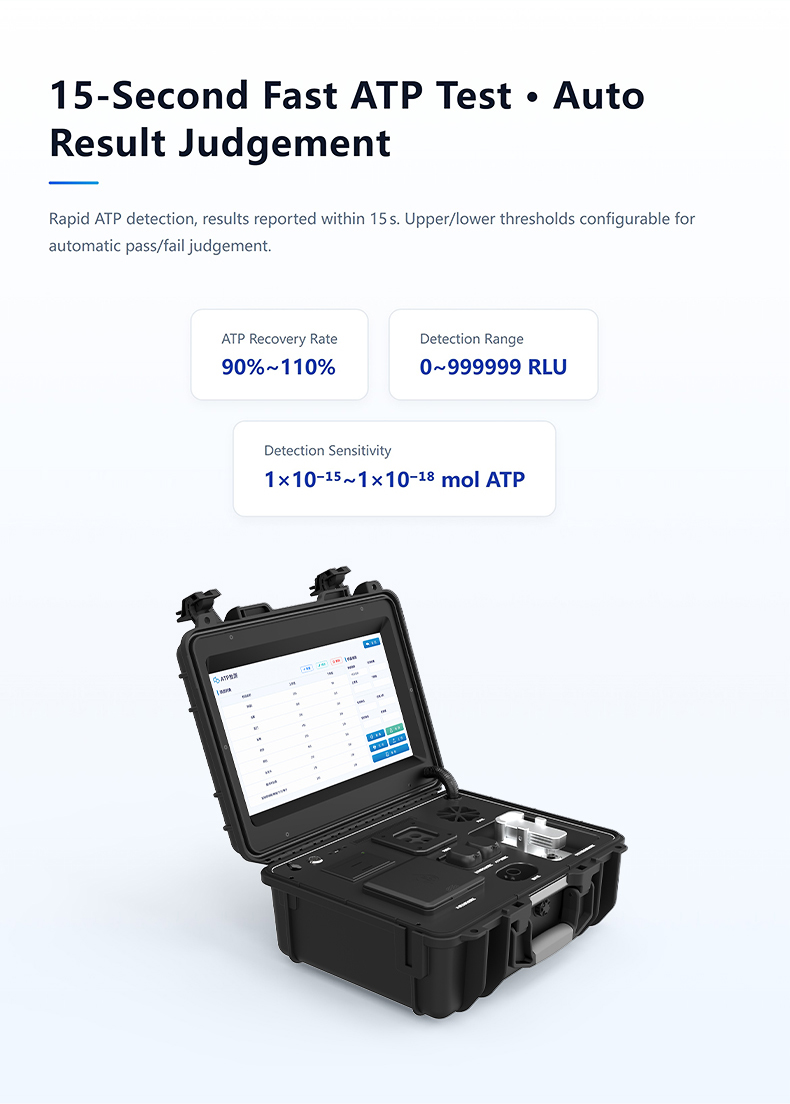
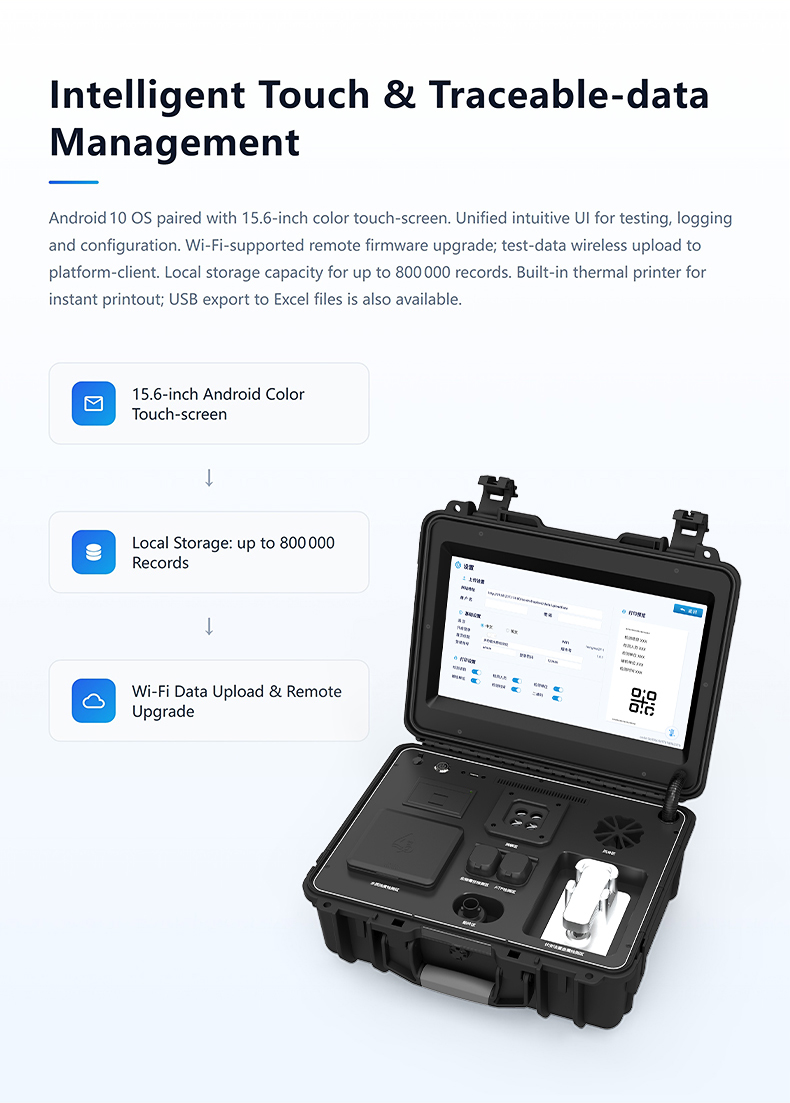
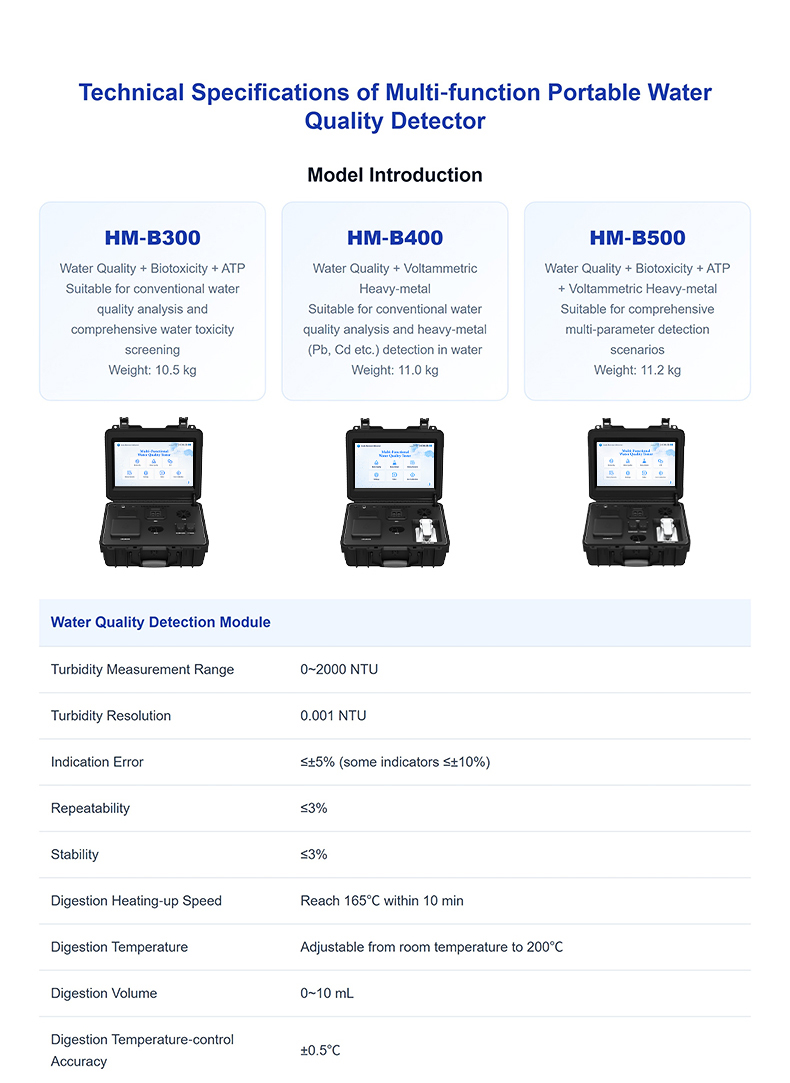
The electrode system uses disposable screen-printed electrodes that require no polishing and eliminate cross-contamination between samples, mounted on a magnetic elastic-contact holder for tool-free replacement. A complete single-sample heavy-metal test runs in 280 seconds per measurement, with the stripping voltammogram displayed in real time as the scan proceeds. The 15.6-inch Android touchscreen manages both modules through a unified interface, and data workflows include 800,000-record local storage, thermal printing, USB Excel export, and Wi-Fi upload to platform clients. For monitoring programs that also require biological toxicity and ATP hygiene testing, the HM-B500 full-configuration model adds both modules to the same voltammetric and spectrophotometric platform.
Applications
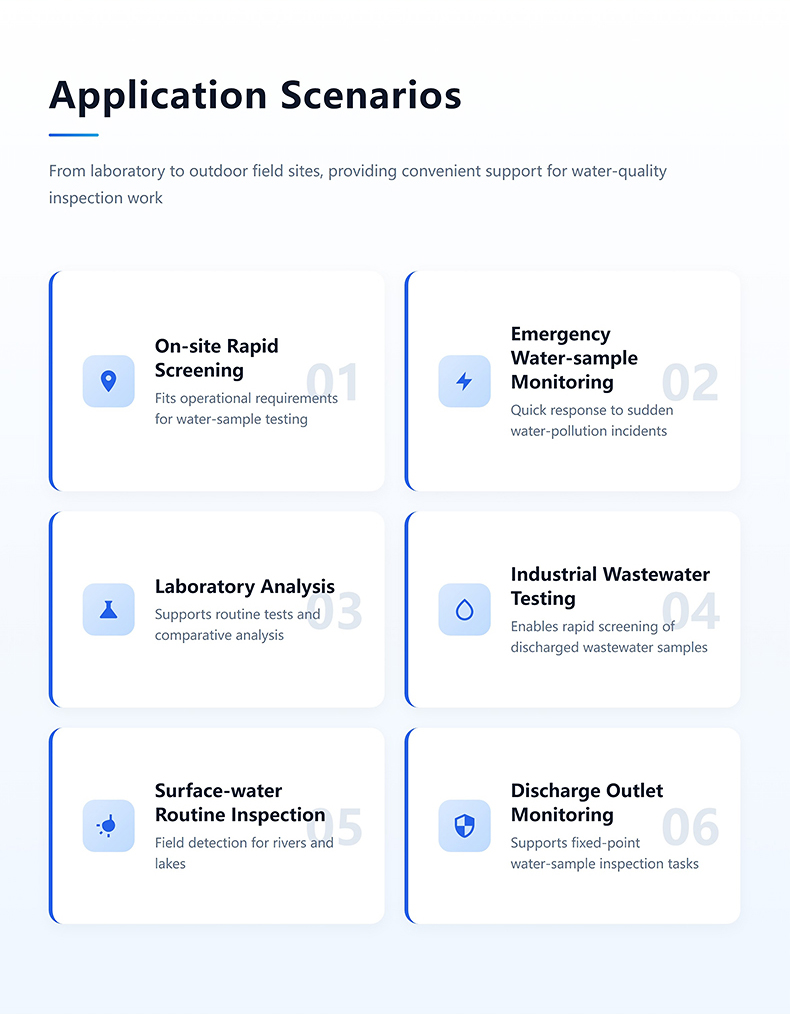
- Industrial wastewater compliance: On-site cadmium and lead screening at discharge outlets against regulatory limits, with simultaneous COD and nutrient parameter measurement from the same field visit.
- Surface water contamination assessment: Trace heavy-metal detection at river and lake monitoring cross-sections where contamination sources include mining, electroplating, or battery manufacturing upstream.
- Grain safety screening: Cadmium and lead analysis in grain samples at 0.01 mg/kg detection limits, supporting food safety monitoring programs.
- Emergency pollution incident response: Rapid on-site quantification of heavy-metal contamination following accidental discharge events, with results available within 20 minutes of sample preparation.
- Pretreatment process verification: Monitoring heavy-metal removal efficiency in wastewater treatment processes by comparing inlet and outlet concentrations.
- Laboratory comparative analysis: Bench-side verification of field voltammetric results against reference methods, using the same calibration curves and electrode parameters.
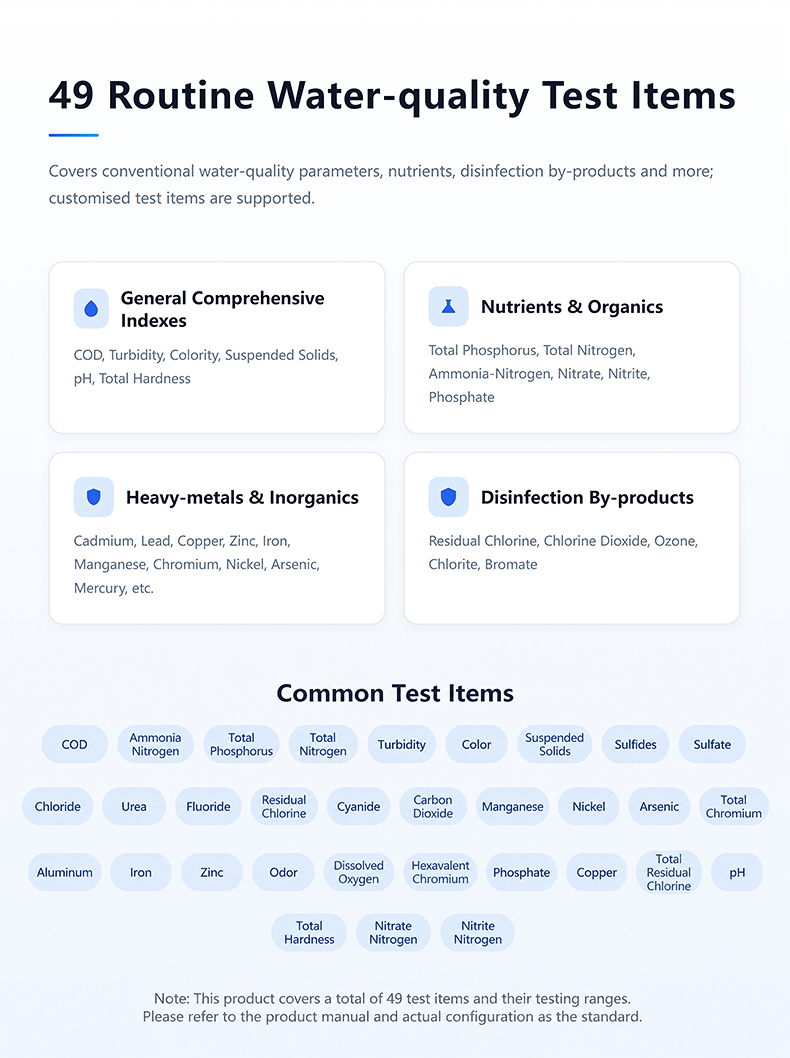
- Routine water quality parameter testing: 49 spectrophotometric parameters including COD, total nitrogen, total phosphorus, ammonia nitrogen, turbidity, and metal indicators.
Key Features & Advantages
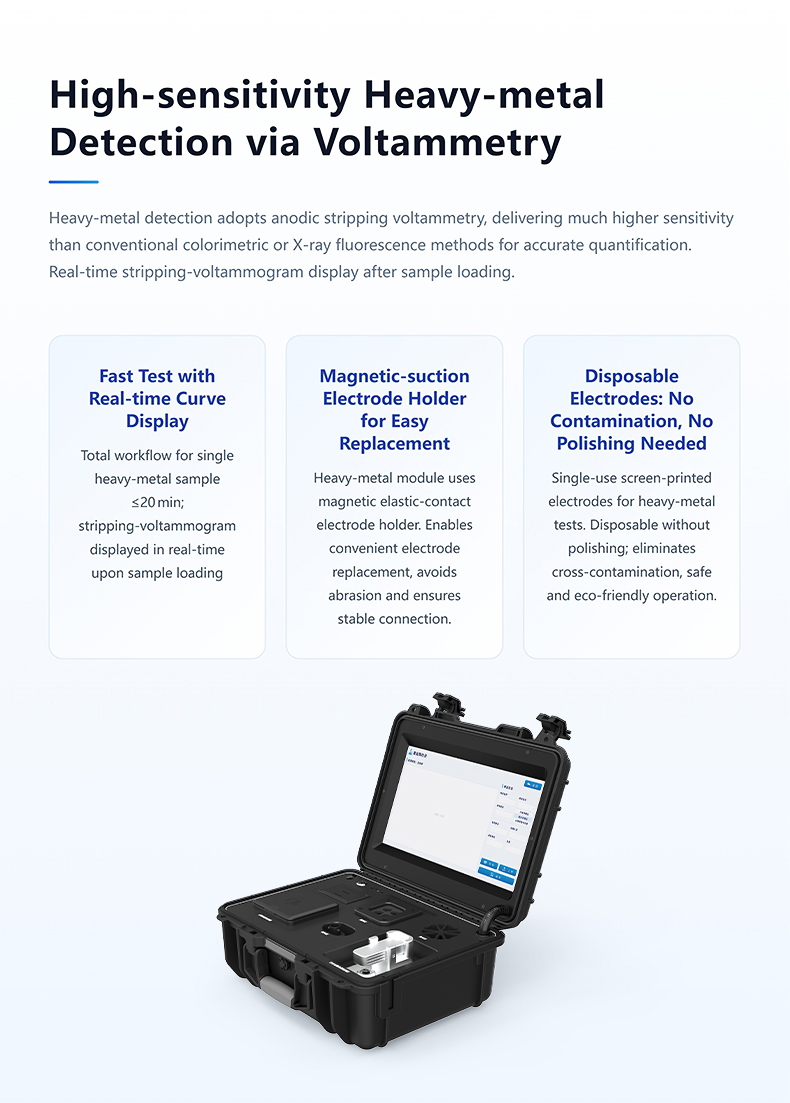
- Anodic stripping voltammetry achieves sensitivity far exceeding colorimetric or X-ray fluorescence methods, with 0.5 ppb detection limits for Cd and Pb in water
- Disposable screen-printed electrodes eliminate polishing maintenance and cross-contamination between samples, supporting environmentally responsible operation
- Magnetic elastic-contact electrode holder enables tool-free electrode replacement without mechanical wear, ensuring consistent electrical contact
- Single heavy-metal sample test completes within 20 minutes with real-time stripping voltammogram display for immediate result verification
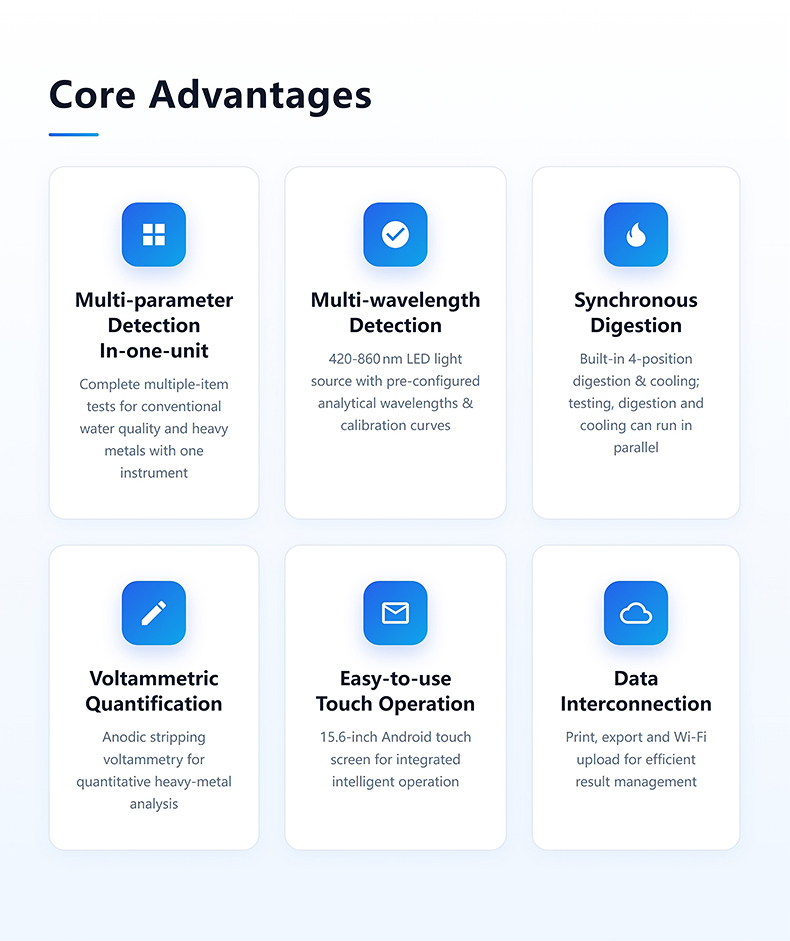
- Dual analytical systems — spectrophotometric water quality and voltammetric heavy-metal — on one portable platform reduce total equipment and training investment
- Multi-wavelength LED light source (420–860 nm) with pre-configured wavelengths matching national standard methods for all 49 water quality test items
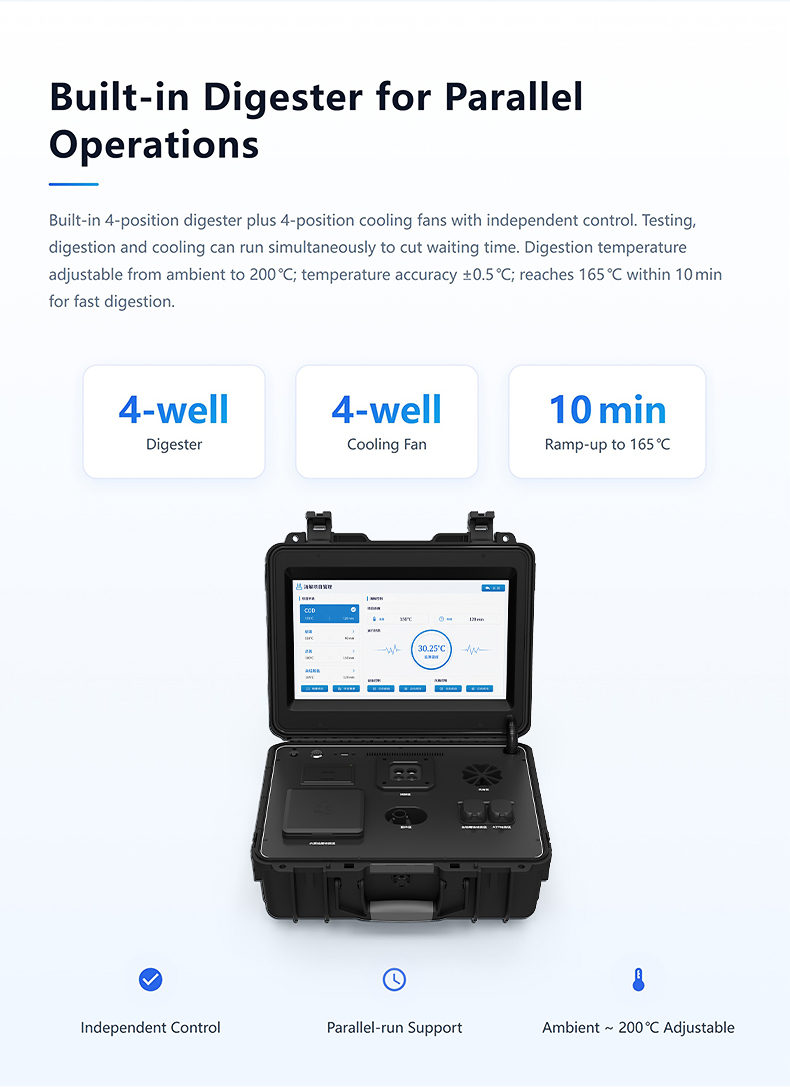
- Built-in 4-position digester with independent cooling fan control enables simultaneous digestion, cooling, and measurement for improved workflow throughput
- Digestion temperature adjustable from room temperature to 200°C with ±0.5°C accuracy, heating to 165°C within 10 minutes
- 15.6-inch Android touchscreen with unified interface across both modules simplifies operator training and reduces procedural errors
- Local storage of 800,000 records consolidates spectrophotometric and voltammetric results in one system with consistent timestamps
- Built-in thermal printer provides immediate field documentation for chain-of-custody requirements
- Wi-Fi connectivity supports remote firmware upgrade and wireless data upload to centralized monitoring platforms
- USB Excel export streamlines data transfer to laboratory information management systems for regulatory reporting
- Built-in 6,000 mAh lithium battery with 3-hour standby supports extended field campaigns without external power
- Ruggedized carrying case design with reinforced corners for transport to industrial discharge and remote sampling sites
Technical Specifications
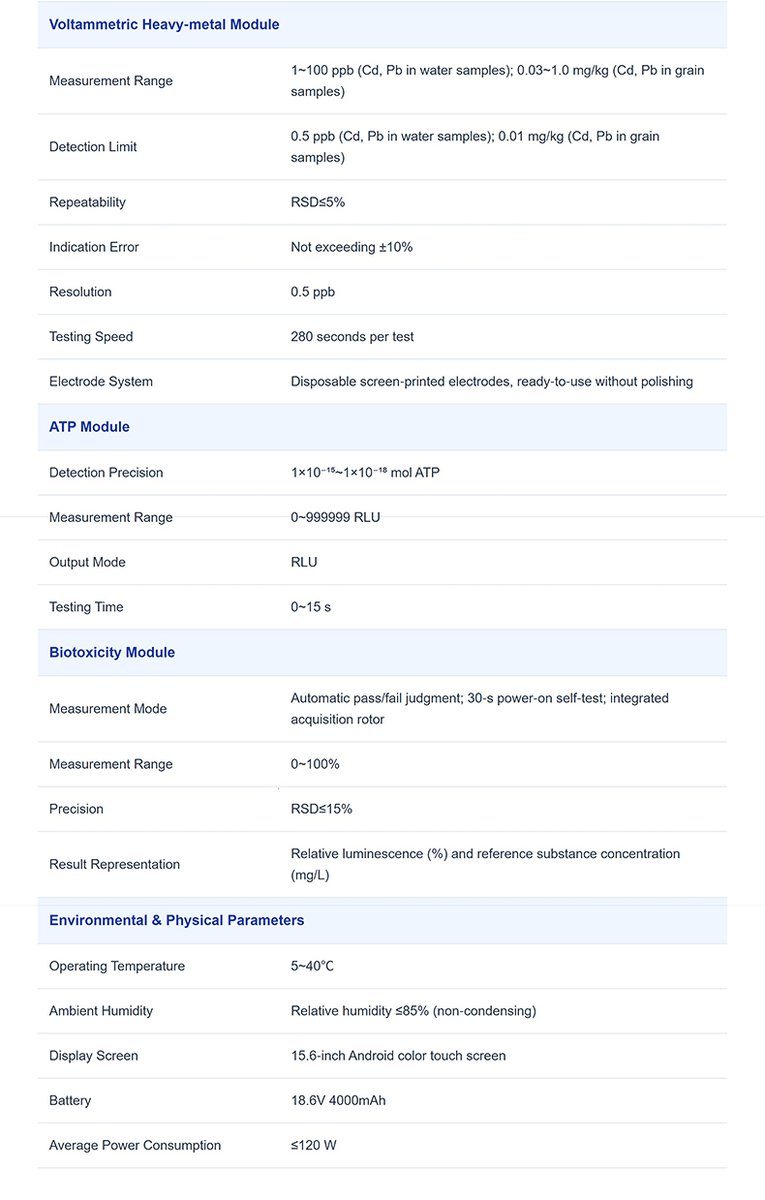
Voltammetric Heavy-Metal Detection Module
| Parameter | Specification |
|---|
| Detection range (water Cd, Pb) | 1–100 ppb |
| Detection range (grain Cd, Pb) | 0.03–1.0 mg/kg |
| Detection limit (water Cd, Pb) | 0.5 ppb |
| Detection limit (grain Cd, Pb) | 0.01 mg/kg |
| Repeatability | RSD ≤5% |
| Indication error | ≤±10% |
| Resolution | 0.5 ppb |
| Testing speed | 280 seconds per test |
| Electrode system | Disposable screen-printed electrodes, no polishing required |
Water Quality Detection Module
| Parameter | Specification |
|---|
| Turbidity measurement range | 0–2,000 NTU |
| Turbidity resolution | 0.001 NTU |
| Indication error | ≤±5% (some indicators ≤±10%) |
| Repeatability | ≤3% |
| Stability | ≤3% |
| Digestion heating speed | Reaches 165°C within 10 min |
| Digestion temperature | Room temperature to 200°C adjustable |
| Digestion capacity | 0–10 mL |
| Digestion temperature control accuracy | ±0.5°C |
Environmental & Physical Parameters
| Parameter | Specification |
|---|
| Operating temperature | 5–40°C |
| Ambient humidity | ≤85% relative humidity (non-condensing) |
| Screen | 15.6-inch Android LCD touchscreen |
| Working voltage | 48 V |
| Battery capacity | 6,000 mAh |
| Average power consumption | ≤120 W |
| Dimensions | 427 mm × 344 mm × 188 mm |
| Weight | 11.0 kg |
FAQ
Q: How does anodic stripping voltammetry compare to ICP-MS for field heavy-metal monitoring?
A: ICP-MS delivers laboratory-grade multi-element analysis but requires fixed installation and trained operators, unsuitable for on-site use. Anodic stripping voltammetry achieves 0.5 ppb detection limits for Cd and Pb — sufficient for most regulatory thresholds — in a battery-powered portable platform. The trade-off is element specificity: voltammetry covers electrochemically active metals (Cd, Pb, Cu, Zn), while ICP-MS covers the full periodic table. For priority heavy-metal monitoring, the HM-B400 provides field quantification without transport delays, with ICP-MS confirmation available when needed.
Q: What are the advantages of disposable screen-printed electrodes?
A: Traditional voltammetric methods use solid electrodes (glassy carbon, gold, or mercury drop) that require mechanical polishing between measurements to remove oxide buildup and contamination. This polishing step adds 5–10 minutes per sample and introduces variability based on operator technique. Disposable screen-printed electrodes are manufactured with consistent surface characteristics, used for a single measurement, then discarded — eliminating polishing, reducing inter-sample contamination risk, and improving result reproducibility (RSD ≤5%). The magnetic elastic-contact holder enables replacement in seconds without tools. From an operational standpoint, this means field operators with minimal voltammetry training can produce reliable results, and the per-electrode cost is low enough that single-use disposal is economically practical for routine monitoring.
Q: Can the HM-B400 analyze heavy metals in grain and food samples?
A: Yes. The voltammetric module supports solid sample analysis with appropriate sample preparation: solid samples are crushed, and metal ions are extracted using a suitable extraction solution before measurement. Detection limits for cadmium and lead in grain samples are 0.01 mg/kg, with a measurement range of 0.03–1.0 mg/kg. This capability extends the instrument's utility beyond water quality monitoring into food safety screening programs, particularly for cadmium in rice and lead in cereal products, where regulatory limits are set at mg/kg levels. The sample preparation workflow is documented in the instrument's method library, and the same electrode system and calibration curve approach applies to both water and grain matrices.
Q: How does the spectrophotometric module complement the voltammetric heavy-metal analysis?
A: The spectrophotometric module covers 49 conventional parameters including COD, nutrients, turbidity, and colorimetric metal indicators at mg/L levels. While the voltammetric module quantifies trace Cd and Pb at ppb levels, the spectrophotometric module provides broader context — nutrient loading, organic pollution, and compliance parameters. Both systems on one platform mean a single field visit produces a comprehensive profile: spectrophotometric results characterize general pollution, while voltammetric results flag trace heavy-metal contamination requiring investigation.
Q: What is the typical testing workflow for a field heavy-metal monitoring visit?
A: Typical workflow: (1) collect water sample, (2) place COD/total metal samples in the built-in 4-position digester, (3) while digesting, prepare voltammetric sample with supporting electrolyte, (4) mount a fresh screen-printed electrode, (5) run the 280-second voltammetric scan with real-time curve display, (6) measure spectrophotometric parameters, (7) print or export results. Total time: 30–40 minutes, with heavy-metal results within 20 minutes.
Article address:https://www.hmwatertesting.cn/dcsz2/water-quality-voltammetric-heavy-metal-analyzer.html

 Current
location:
Current
location: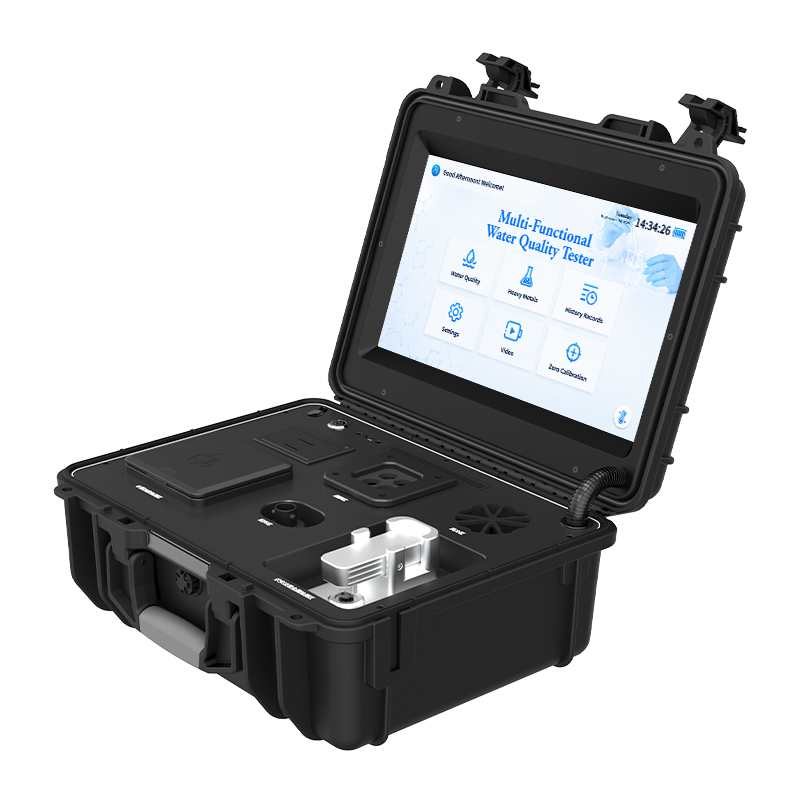
 +86 17853698681