

Wastewater Treatment Plant Daily Monitoring — The Dual-Parameter Challenge
Every wastewater treatment plant operator knows the daily routine: collect influent and effluent samples, measure COD to track organic load reduction, and measure ammonia nitrogen to verify nutrient removal. These two parameters — COD and ammonia nitrogen — appear on virtually every discharge permit and constitute the minimum mandatory monitoring set for routine compliance reporting. Yet most facilities still use separate single-parameter instruments for each measurement, doubling equipment cost, calibration workload, and operator training requirements.
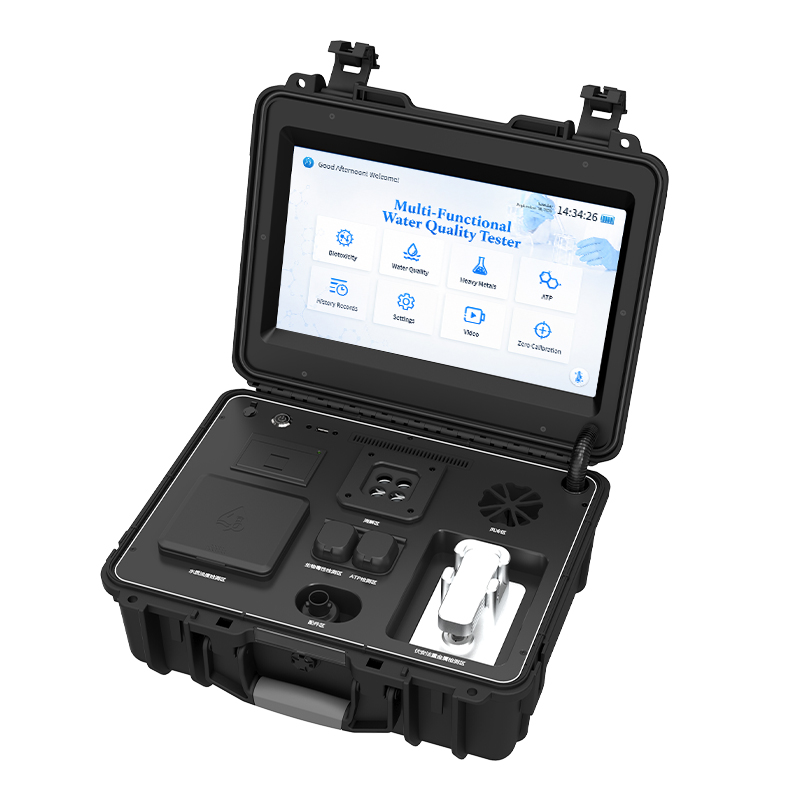
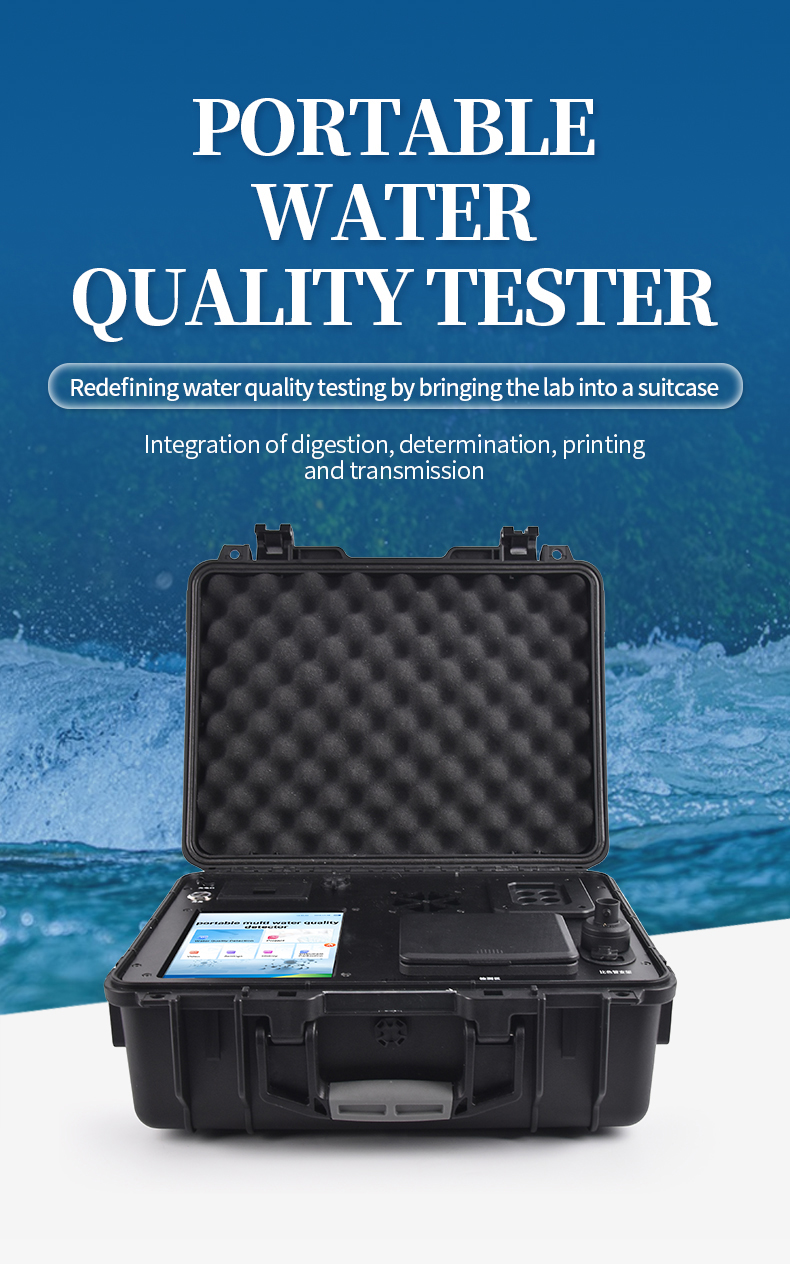
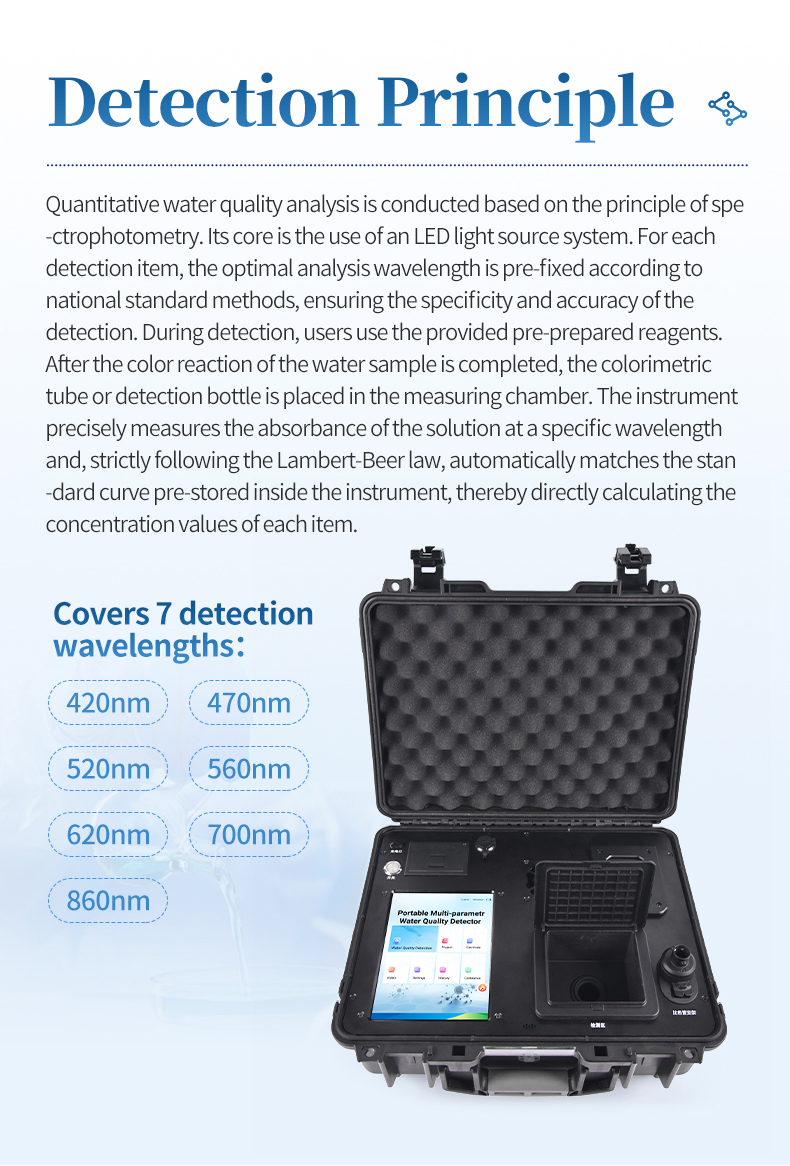
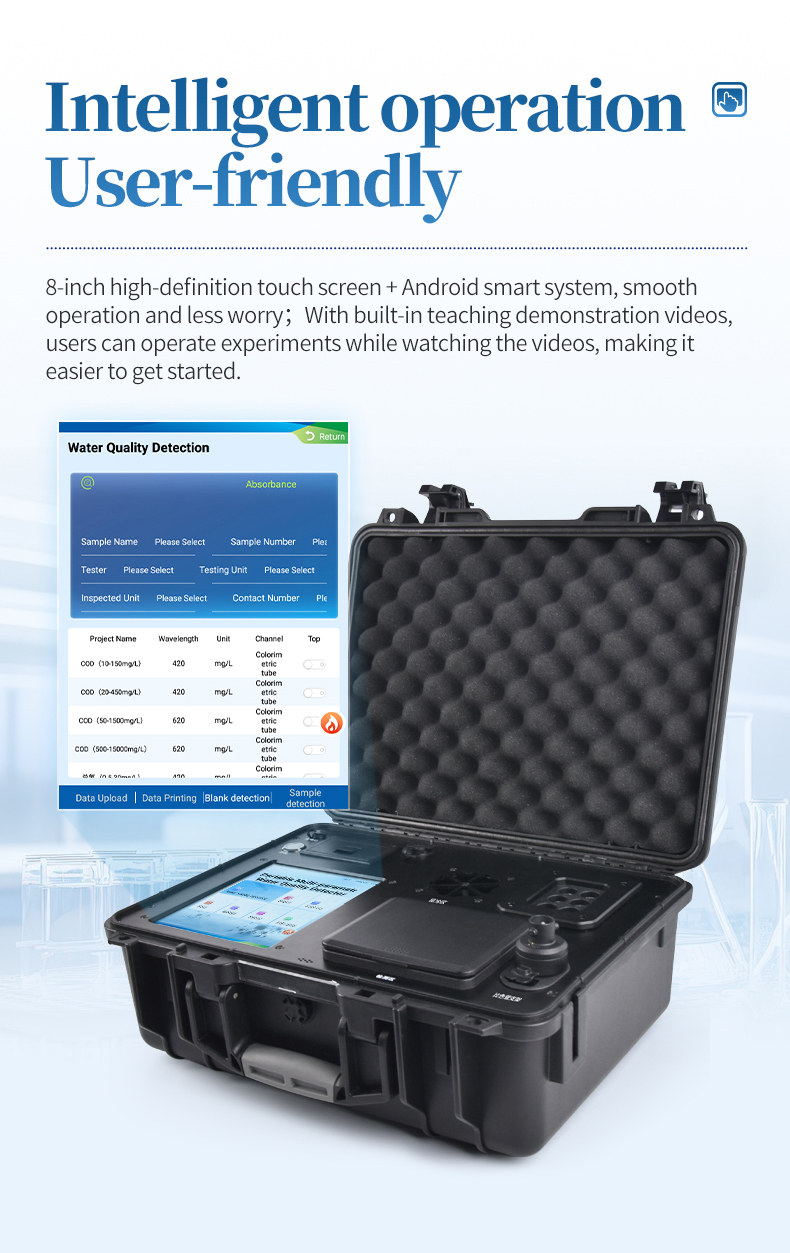
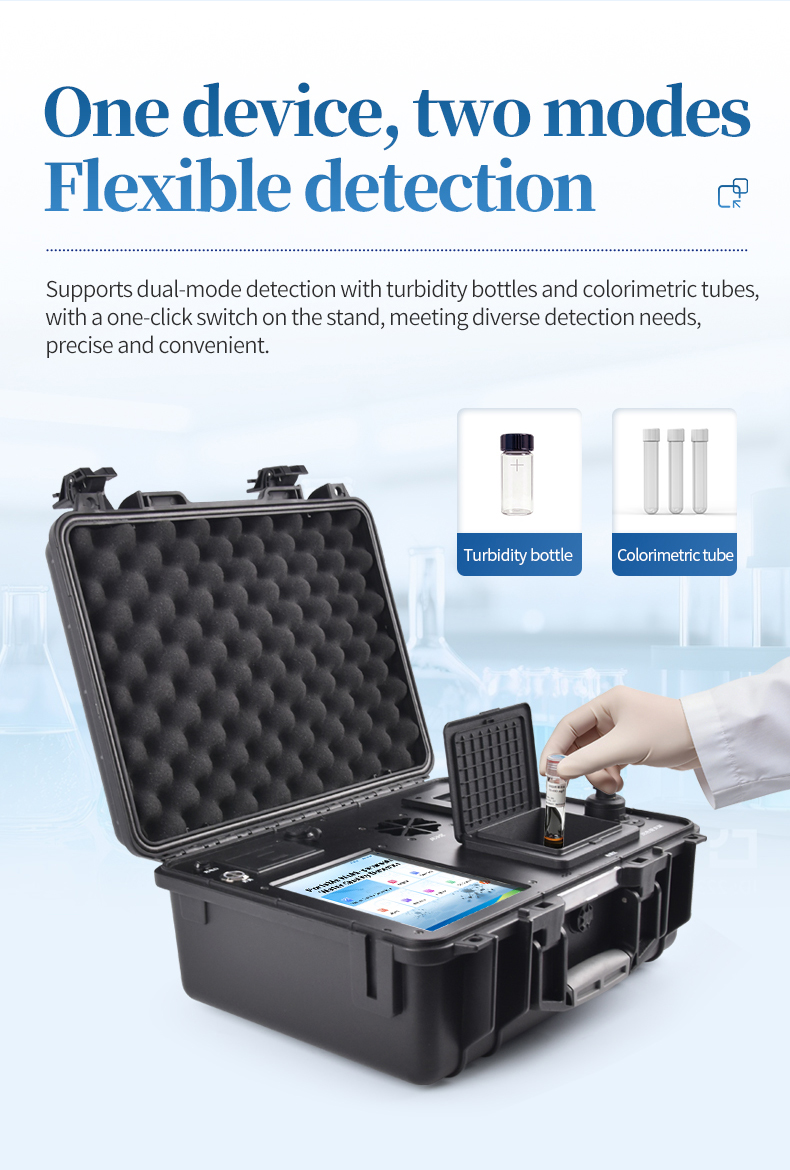
The HM-BL02 Portable COD & Ammonia Nitrogen Analyzer was designed to solve this dual-parameter challenge with one integrated instrument. Built around a dual-wavelength LED spectrophotometry system (420 and 620 nm), the HM-BL02 measures COD via the dichromate method and ammonia nitrogen via both Nessler and salicylate reagent systems — all within a single 8.3 kg portable unit. The integrated digestion module handles COD sample heating within the instrument enclosure, while multiple overlapping ammonia nitrogen ranges (0.025–200 mg/L) cover clean effluent and high-load influent in one workflow.
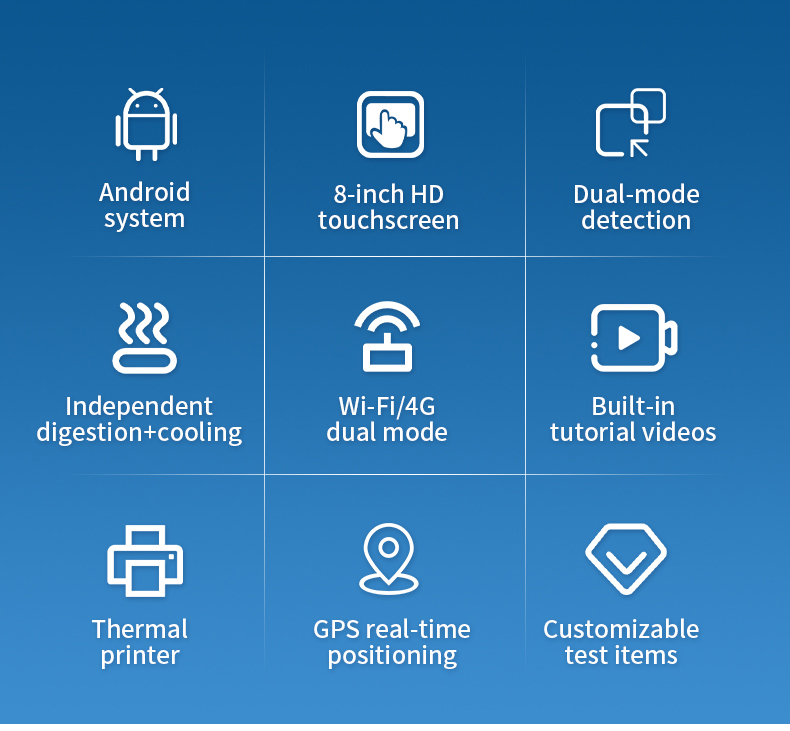
For treatment plant monitoring teams, this means one deployment cycle instead of two: collect the sample, run COD digestion and measurement, then switch to the ammonia nitrogen protocol — all without changing instruments, carrying additional equipment, or maintaining separate calibration schedules. Results print on-site via the thermal printer and upload to the cloud platform with GPS coordinates, providing an immediate defensible compliance record for audit and regulatory submission.
Dual-Parameter Monitoring Workflow
The HM-BL02 streamlines the wastewater monitoring workflow from sample collection to compliance submission:
Sample Collection: Collect influent and effluent samples at designated monitoring points.
COD Digestion & Measurement: Add dichromate reagent, place sample in the integrated digestion module, set temperature and time, wait for automatic cooling, then read COD concentration at 420/620 nm.
Ammonia Nitrogen Measurement: Add Nessler or salicylate reagent to a separate aliquot, wait for color development, then read NH3-N concentration at the corresponding wavelength.
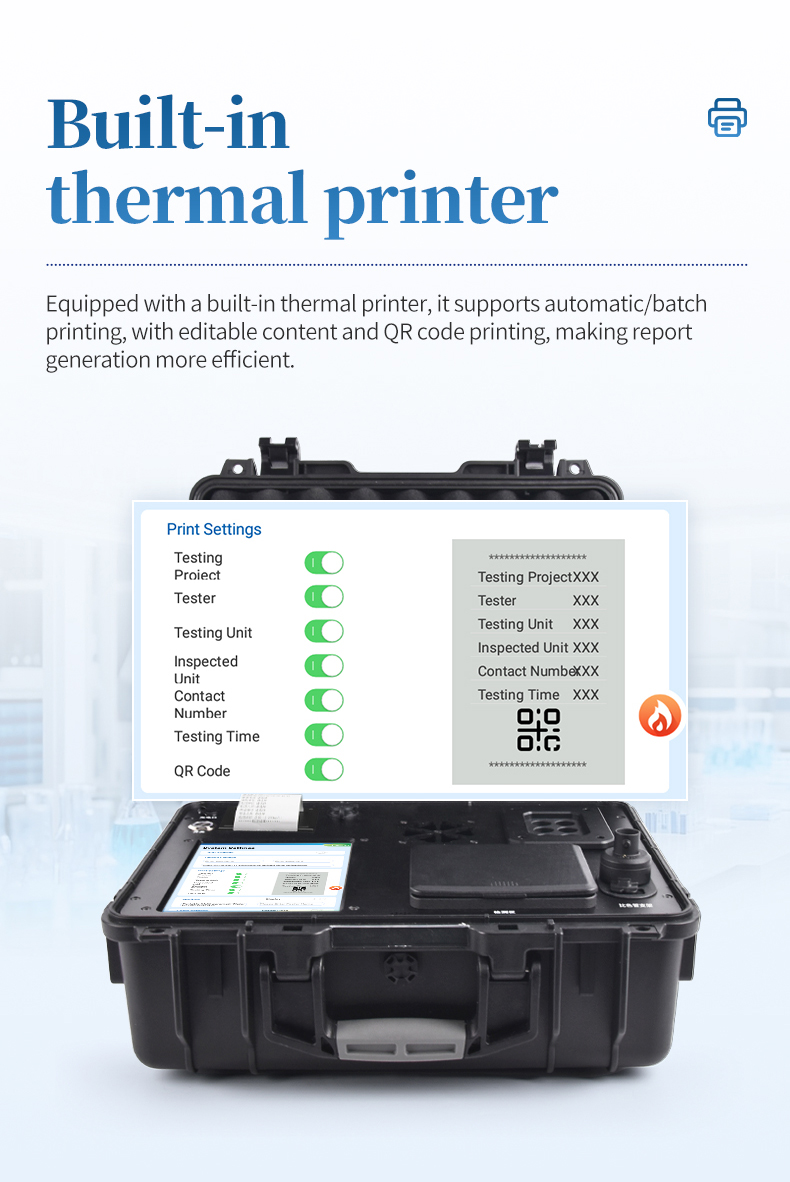
On-Site Documentation: Thermal printer generates hard-copy results for immediate record keeping.
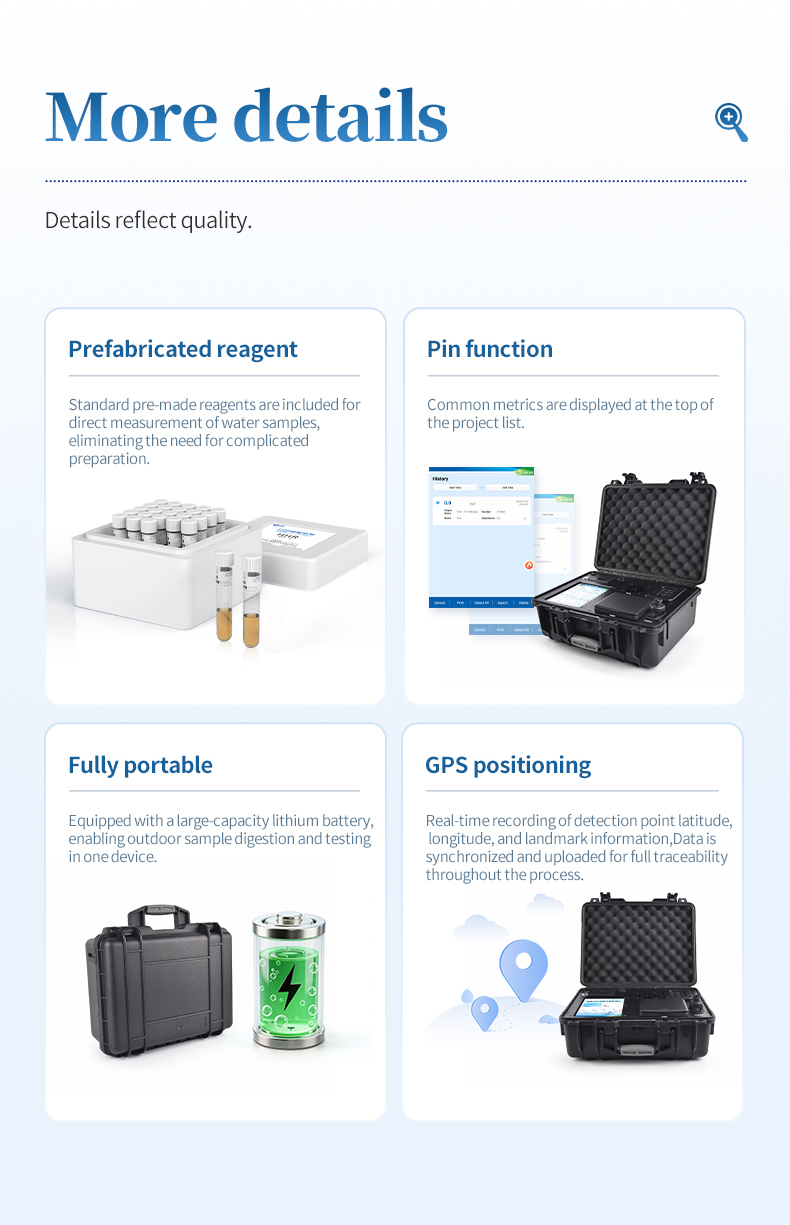
Cloud Platform Submission: 4G or Wi-Fi transmits GPS-tagged results to the cloud dashboard for centralized compliance tracking, trend analysis, and threshold exceedance alerting.
Compliance Reporting: Generate regulatory reports from the cloud platform incorporating timestamps, operator IDs, GPS coordinates, and measurement values.
Applications
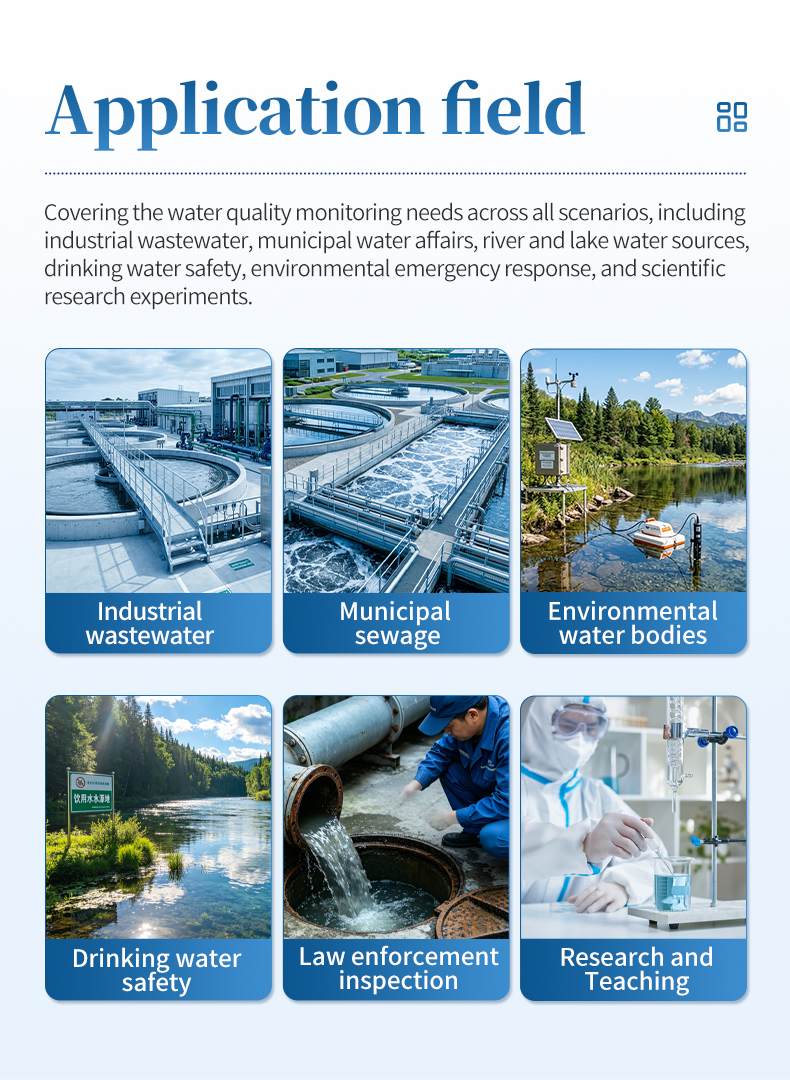
Municipal Wastewater Treatment — Daily influent organic load (COD) and effluent ammonia nitrogen compliance monitoring.
Industrial Wastewater Compliance — Pre-treatment effectiveness verification for COD reduction and ammonia nitrogen removal.
Chemical & Petrochemical Facilities — Monitoring organic pollutant and nutrient discharge in process effluent.
Food & Beverage Processing — Tracking organic waste load and ammonia nitrogen in production wastewater streams.
Pharmaceutical Manufacturing — Dual-parameter verification of COD and NH3-N permit limits.
Environmental Monitoring Stations — Surface water organic pollution and nutrient enrichment assessment.
Aquaculture Operations — Maintaining ammonia nitrogen within safe thresholds for stock health.
Key Features and Advantages
Dual-Parameter Efficiency: Measure COD and ammonia nitrogen in one deployment cycle — no instrument switching, no duplicate equipment logistics.
Dual-Wavelength LED System: 420 and 620 nm LEDs cover both dichromate COD and Nessler/salicylate ammonia nitrogen detection without hardware changes.
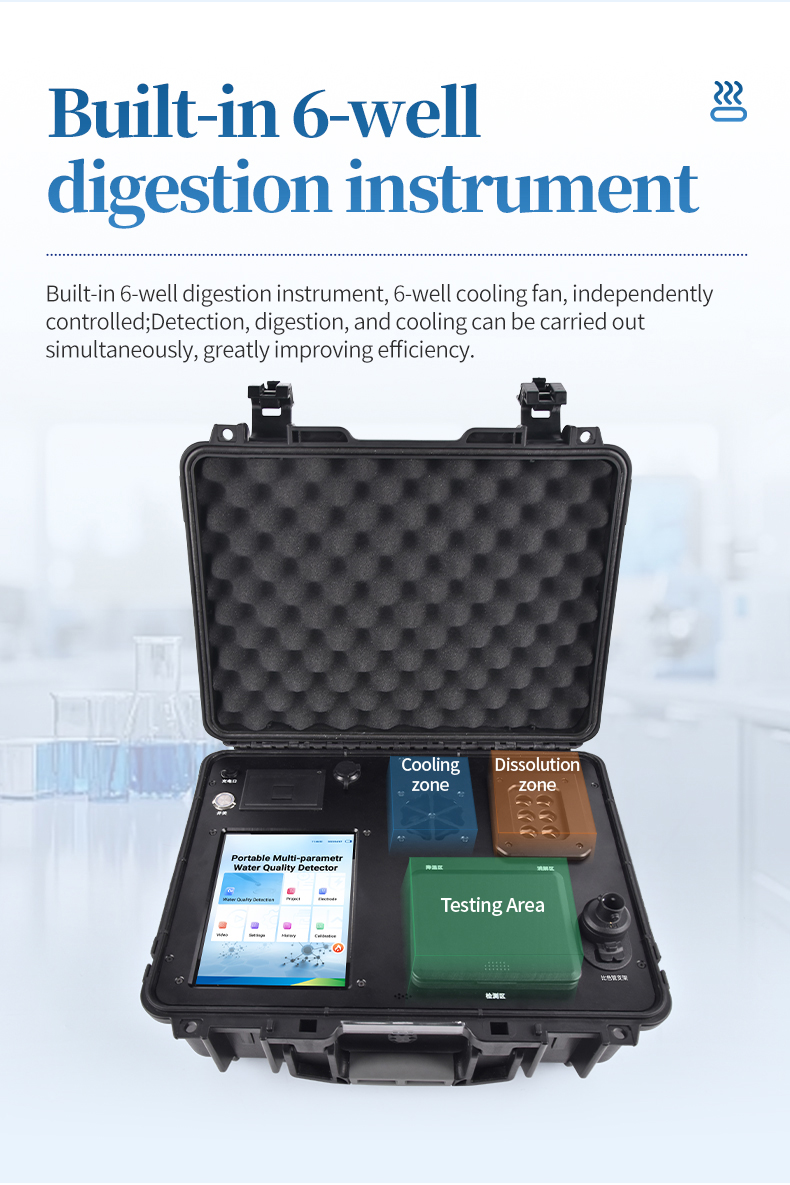
Integrated Digestion Module: On-board heating block performs COD sample preparation directly in the field — no external digestion equipment needed.
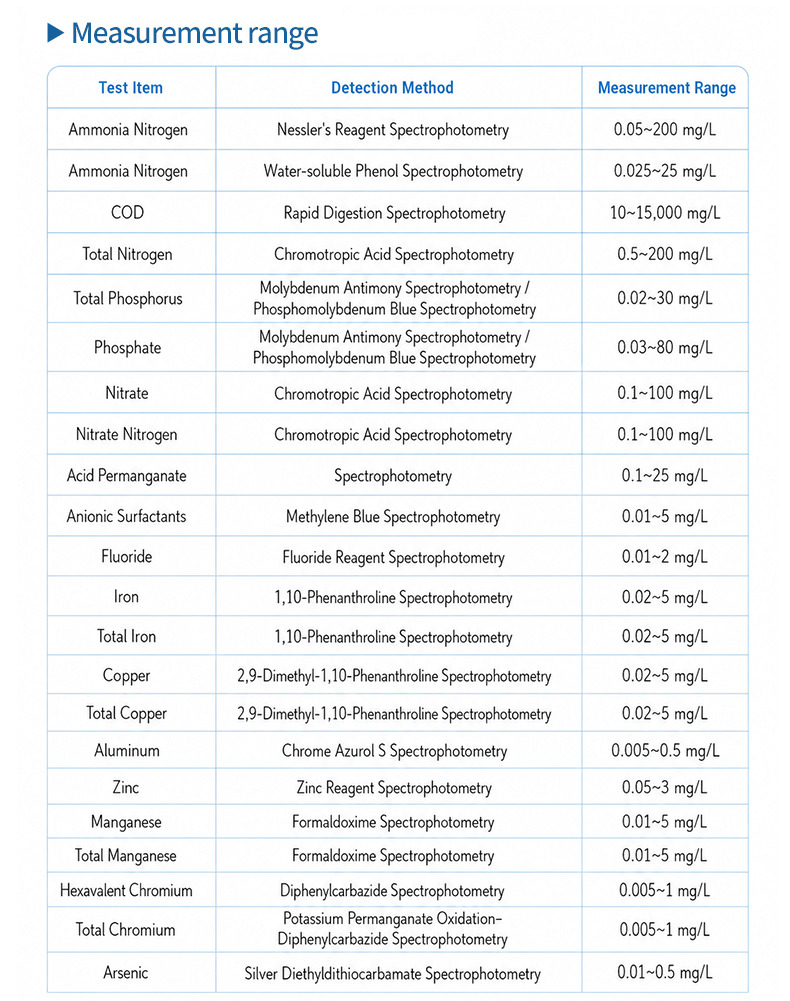
Two NH3-N Reagent Systems: Nessler method for high-concentration industrial influent (up to 200 mg/L) and salicylate method for low-concentration clean effluent (down to 0.025 mg/L).
Three COD Overlapping Ranges: 5–150, 15–1,500, and 30–1,500 mg/L cover treated effluent, municipal influent, and high-load industrial wastewater.
GPS-Tagged Cloud Reporting: Built-in GPS stamps coordinates; 4G/Wi-Fi pushes dual-parameter results to cloud platforms for centralized compliance tracking.
On-Site Thermal Printer: Generates tamper-evident hard-copy dual-parameter reports immediately after analysis.
Better Value Than Single-Parameter Units: One HM-BL02 ($1,100) replaces a COD analyzer ($960) plus an ammonia nitrogen analyzer ($740) — saving $600 in total equipment cost while reducing calibration and training overhead.
More Focused Than Triple/Quad Models: For facilities whose primary compliance need is COD and ammonia nitrogen, the HM-BL02 delivers exactly what you need without paying for TP, TN, or heavy metal capability you may not require.
Absorbance Resolution 0.001 Abs: Laboratory-grade optical precision ensures reliable detection at regulatory threshold levels for both parameters.
Dual Power Supply: AC 220V mains for bench use and built-in lithium battery for full-shift field deployment.
Rugged Field-Ready Construction: 430 × 350 × 190 mm at 8.3 kg — portable by a single operator.
Pre-Programmed Calibration Curves: Factory-loaded curves for all COD and NH3-N ranges reduce setup time.
Automated Data Integrity: Timestamps, operator IDs, and GPS coordinates embedded in each record prevent data manipulation.
Rapid Throughput: Full COD cycle including digestion completes within 20–40 minutes; ammonia nitrogen measurement takes 10–15 minutes.
Technical Specifications
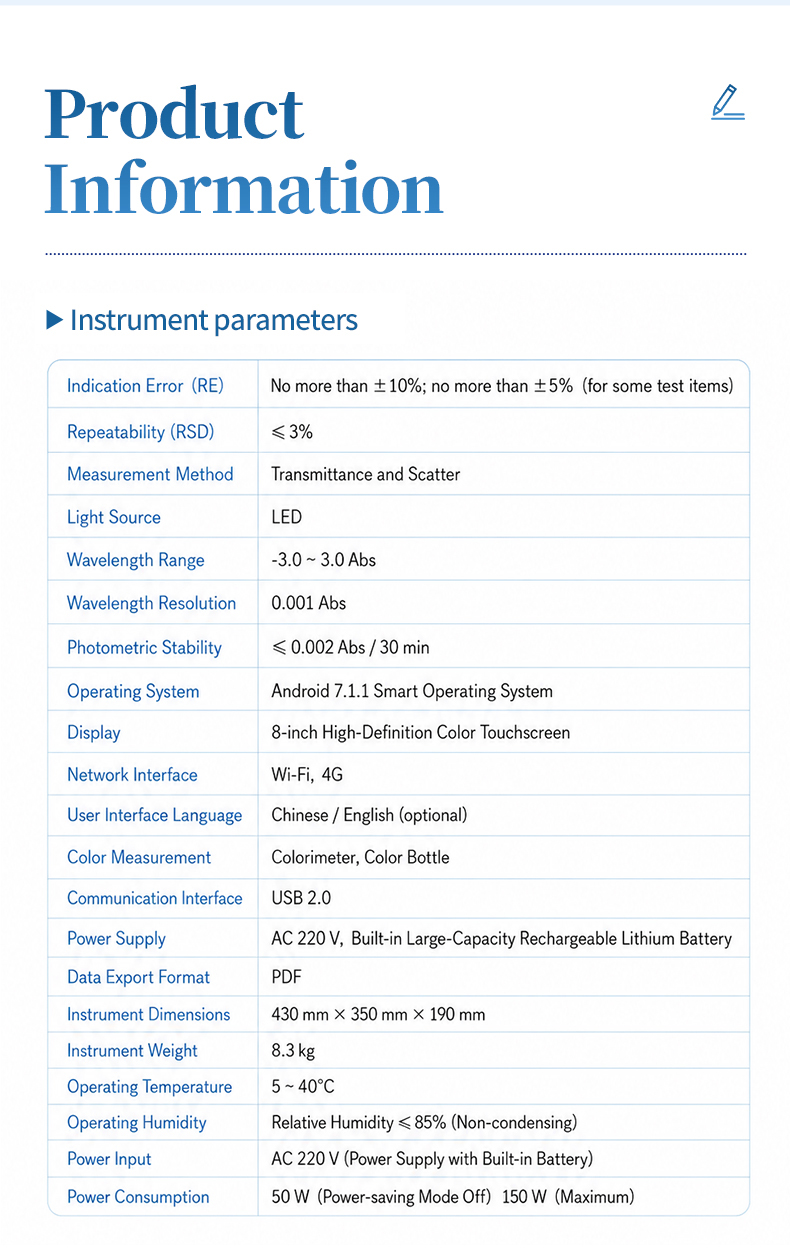
| Parameter | Specification |
|---|
| Model | HM-BL02 |
| Product Name | Portable COD & Ammonia Nitrogen Analyzer |
| Detection Method | Spectrophotometry — dichromate for COD; Nessler/Salicylate for NH3-N |
| Light Source | LED, 2 wavelengths: 420 / 620 nm |
| Absorbance Resolution | 0.001 Abs |
| COD Detection Range | 5–150 / 15–1,500 / 30–1,500 mg/L |
| Ammonia Nitrogen (Nessler) | 0.05–7.5 / 0.2–15 / 2–50 / 4–200 mg/L |
| Ammonia Nitrogen (Salicylate) | 0.025–2.5 / 0.5–25 mg/L |
| Digestion Module | Integrated, programmable temperature and time |
| Printer | Integrated thermal printer |
| Connectivity | 4G / Wi-Fi |
| Positioning | GPS (built-in) |
| Cloud Platform | Supported — real-time dual-parameter data upload and dashboard |
| Power Supply | AC 220V + built-in lithium battery |
| Dimensions | 430 × 350 × 190 mm |
| Weight | 8.3 kg |
| Price | $1,100 |
FAQ
Why should I choose the HM-BL02 dual-parameter model instead of separate COD and ammonia nitrogen analyzers?
The HM-BL02 at $1,100 costs less than separate COD ($960) plus ammonia nitrogen ($740) analyzers totaling $1,700. Beyond savings, you eliminate duplicate calibration, reduce training (one interface), simplify logistics (one instrument), and complete both measurements in a single deployment. For COD and ammonia nitrogen compliance, this is the most efficient configuration.
How does the HM-BL02 compare to the HM-BL03 (COD + NH3-N + TP) or HM-BL04 (COD + NH3-N + TP + TN) models?
The HM-BL02 is the right choice when your primary monitoring requirement is COD and ammonia nitrogen — the two most critical discharge parameters. If your discharge permit also mandates total phosphorus or total nitrogen monitoring, the HM-BL03 ($1,400) or HM-BL04 ($1,900) add those parameters with an additional 700 nm LED wavelength. However, many municipal and industrial facilities only report COD and ammonia nitrogen for routine compliance; for those operations, the HM-BL02 provides exactly the needed capability at the best value, without paying for extra parameters that may not be required.
Does the HM-BL02 perform COD digestion on-site, or do I need a separate digestion device?
The HM-BL02 integrates a programmable digestion module within the enclosure. Add dichromate reagent, place the vial in the built-in heating block, and the system ramps to prescribed temperature, holds for the required duration, then cools automatically before measurement. Complete COD analysis including digestion is possible at any field location using the battery or AC supply — no external equipment needed.
Why does the HM-BL02 offer both Nessler and salicylate methods for ammonia nitrogen?
The two reagent systems serve different concentration ranges and application scenarios. The Nessler method covers four overlapping ranges from 0.05 to 200 mg/L — ideal for high-concentration industrial influent and broad-range monitoring. The salicylate method covers 0.025–2.5 and 0.5–25 mg/L — offering superior low-concentration sensitivity for treated effluent and clean receiving waters where regulatory thresholds may be as low as 0.5 mg/L. Having both methods ensures accurate quantification across the entire spectrum of wastewater monitoring concentrations.
What is the typical throughput for dual-parameter monitoring at a wastewater treatment plant?
A complete dual-parameter cycle — COD digestion, cooling, measurement, then ammonia nitrogen reagent addition, color development, and measurement — takes approximately 30–55 minutes total. COD digestion and measurement typically requires 20–40 minutes (digestion time depends on the protocol), and ammonia nitrogen measurement adds 10–15 minutes for color development and reading. For facilities monitoring multiple sampling points, the lithium battery supports 6–8 hours of continuous operation covering multiple cycles per shift.
Can the HM-BL02 data integrate with our existing SCADA or compliance reporting system?
Yes. The HM-BL02 uploads data via 4G or Wi-Fi to the cloud platform, which provides API access for integration with SCADA and compliance reporting systems. Each record includes COD and ammonia nitrogen values, timestamps, operator ID, GPS coordinates, and instrument metadata. The cloud dashboard aggregates data from multiple HM-BL series instruments with trend analysis and threshold alerts.
Is the HM-BL02 suitable for regulatory compliance reporting?
Yes. The dichromate COD, Nessler and salicylate ammonia nitrogen methods align with EPA-approved methods and Chinese national standards (HJ series). Each record includes timestamps, operator ID, and GPS coordinates. The thermal printer generates on-site hard-copy reports for audit trails. Users should verify acceptance of field-portable results with their regulatory authority, as some jurisdictions may require confirmatory lab analysis.
Wastewater Treatment Plant Daily Monitoring — The Dual-Parameter Challenge
Every wastewater treatment plant operator knows the daily routine: collect influent and effluent samples, measure COD to track organic load reduction, and measure ammonia nitrogen to verify nutrient removal. These two parameters — COD and ammonia nitrogen — appear on virtually every discharge permit and constitute the minimum mandatory monitoring set for routine compliance reporting. Yet most facilities still use separate single-parameter instruments for each measurement, doubling equipment cost, calibration workload, and operator training requirements.
The HM-BL02 Portable COD & Ammonia Nitrogen Analyzer was designed to solve this dual-parameter challenge with one integrated instrument. Built around a dual-wavelength LED spectrophotometry system (420 and 620 nm), the HM-BL02 measures COD via the dichromate method and ammonia nitrogen via both Nessler and salicylate reagent systems — all within a single 8.3 kg portable unit. The integrated digestion module handles COD sample heating within the instrument enclosure, while multiple overlapping ammonia nitrogen ranges (0.025–200 mg/L) cover clean effluent and high-load influent in one workflow.
For treatment plant monitoring teams, this means one deployment cycle instead of two: collect the sample, run COD digestion and measurement, then switch to the ammonia nitrogen protocol — all without changing instruments, carrying additional equipment, or maintaining separate calibration schedules. Results print on-site via the thermal printer and upload to the cloud platform with GPS coordinates, providing an immediate defensible compliance record for audit and regulatory submission.
Dual-Parameter Monitoring Workflow
The HM-BL02 streamlines the wastewater monitoring workflow from sample collection to compliance submission:
Sample Collection: Collect influent and effluent samples at designated monitoring points.
COD Digestion & Measurement: Add dichromate reagent, place sample in the integrated digestion module, set temperature and time, wait for automatic cooling, then read COD concentration at 420/620 nm.
Ammonia Nitrogen Measurement: Add Nessler or salicylate reagent to a separate aliquot, wait for color development, then read NH3-N concentration at the corresponding wavelength.
On-Site Documentation: Thermal printer generates hard-copy results for immediate record keeping.
Cloud Platform Submission: 4G or Wi-Fi transmits GPS-tagged results to the cloud dashboard for centralized compliance tracking, trend analysis, and threshold exceedance alerting.
Compliance Reporting: Generate regulatory reports from the cloud platform incorporating timestamps, operator IDs, GPS coordinates, and measurement values.
Applications
Municipal Wastewater Treatment — Daily influent organic load (COD) and effluent ammonia nitrogen compliance monitoring.
Industrial Wastewater Compliance — Pre-treatment effectiveness verification for COD reduction and ammonia nitrogen removal.
Chemical & Petrochemical Facilities — Monitoring organic pollutant and nutrient discharge in process effluent.
Food & Beverage Processing — Tracking organic waste load and ammonia nitrogen in production wastewater streams.
Pharmaceutical Manufacturing — Dual-parameter verification of COD and NH3-N permit limits.
Environmental Monitoring Stations — Surface water organic pollution and nutrient enrichment assessment.
Aquaculture Operations — Maintaining ammonia nitrogen within safe thresholds for stock health.
Key Features and Advantages
Dual-Parameter Efficiency: Measure COD and ammonia nitrogen in one deployment cycle — no instrument switching, no duplicate equipment logistics.
Dual-Wavelength LED System: 420 and 620 nm LEDs cover both dichromate COD and Nessler/salicylate ammonia nitrogen detection without hardware changes.
Integrated Digestion Module: On-board heating block performs COD sample preparation directly in the field — no external digestion equipment needed.
Two NH3-N Reagent Systems: Nessler method for high-concentration industrial influent (up to 200 mg/L) and salicylate method for low-concentration clean effluent (down to 0.025 mg/L).
Three COD Overlapping Ranges: 5–150, 15–1,500, and 30–1,500 mg/L cover treated effluent, municipal influent, and high-load industrial wastewater.
GPS-Tagged Cloud Reporting: Built-in GPS stamps coordinates; 4G/Wi-Fi pushes dual-parameter results to cloud platforms for centralized compliance tracking.
On-Site Thermal Printer: Generates tamper-evident hard-copy dual-parameter reports immediately after analysis.
Better Value Than Single-Parameter Units: One HM-BL02 ($1,100) replaces a COD analyzer ($960) plus an ammonia nitrogen analyzer ($740) — saving $600 in total equipment cost while reducing calibration and training overhead.
More Focused Than Triple/Quad Models: For facilities whose primary compliance need is COD and ammonia nitrogen, the HM-BL02 delivers exactly what you need without paying for TP, TN, or heavy metal capability you may not require.
Absorbance Resolution 0.001 Abs: Laboratory-grade optical precision ensures reliable detection at regulatory threshold levels for both parameters.
Dual Power Supply: AC 220V mains for bench use and built-in lithium battery for full-shift field deployment.
Rugged Field-Ready Construction: 430 × 350 × 190 mm at 8.3 kg — portable by a single operator.
Pre-Programmed Calibration Curves: Factory-loaded curves for all COD and NH3-N ranges reduce setup time.
Automated Data Integrity: Timestamps, operator IDs, and GPS coordinates embedded in each record prevent data manipulation.
Rapid Throughput: Full COD cycle including digestion completes within 20–40 minutes; ammonia nitrogen measurement takes 10–15 minutes.
Technical Specifications
| Parameter | Specification |
|---|
| Model | HM-BL02 |
| Product Name | Portable COD & Ammonia Nitrogen Analyzer |
| Detection Method | Spectrophotometry — dichromate for COD; Nessler/Salicylate for NH3-N |
| Light Source | LED, 2 wavelengths: 420 / 620 nm |
| Absorbance Resolution | 0.001 Abs |
| COD Detection Range | 5–150 / 15–1,500 / 30–1,500 mg/L |
| Ammonia Nitrogen (Nessler) | 0.05–7.5 / 0.2–15 / 2–50 / 4–200 mg/L |
| Ammonia Nitrogen (Salicylate) | 0.025–2.5 / 0.5–25 mg/L |
| Digestion Module | Integrated, programmable temperature and time |
| Printer | Integrated thermal printer |
| Connectivity | 4G / Wi-Fi |
| Positioning | GPS (built-in) |
| Cloud Platform | Supported — real-time dual-parameter data upload and dashboard |
| Power Supply | AC 220V + built-in lithium battery |
| Dimensions | 430 × 350 × 190 mm |
| Weight | 8.3 kg |
| Price | $1,100 |
FAQ
Why should I choose the HM-BL02 dual-parameter model instead of separate COD and ammonia nitrogen analyzers?
The HM-BL02 at $1,100 costs less than separate COD ($960) plus ammonia nitrogen ($740) analyzers totaling $1,700. Beyond savings, you eliminate duplicate calibration, reduce training (one interface), simplify logistics (one instrument), and complete both measurements in a single deployment. For COD and ammonia nitrogen compliance, this is the most efficient configuration.
How does the HM-BL02 compare to the HM-BL03 (COD + NH3-N + TP) or HM-BL04 (COD + NH3-N + TP + TN) models?
The HM-BL02 is the right choice when your primary monitoring requirement is COD and ammonia nitrogen — the two most critical discharge parameters. If your discharge permit also mandates total phosphorus or total nitrogen monitoring, the HM-BL03 ($1,400) or HM-BL04 ($1,900) add those parameters with an additional 700 nm LED wavelength. However, many municipal and industrial facilities only report COD and ammonia nitrogen for routine compliance; for those operations, the HM-BL02 provides exactly the needed capability at the best value, without paying for extra parameters that may not be required.
Does the HM-BL02 perform COD digestion on-site, or do I need a separate digestion device?
The HM-BL02 integrates a programmable digestion module within the enclosure. Add dichromate reagent, place the vial in the built-in heating block, and the system ramps to prescribed temperature, holds for the required duration, then cools automatically before measurement. Complete COD analysis including digestion is possible at any field location using the battery or AC supply — no external equipment needed.
Why does the HM-BL02 offer both Nessler and salicylate methods for ammonia nitrogen?
The two reagent systems serve different concentration ranges and application scenarios. The Nessler method covers four overlapping ranges from 0.05 to 200 mg/L — ideal for high-concentration industrial influent and broad-range monitoring. The salicylate method covers 0.025–2.5 and 0.5–25 mg/L — offering superior low-concentration sensitivity for treated effluent and clean receiving waters where regulatory thresholds may be as low as 0.5 mg/L. Having both methods ensures accurate quantification across the entire spectrum of wastewater monitoring concentrations.
What is the typical throughput for dual-parameter monitoring at a wastewater treatment plant?
A complete dual-parameter cycle — COD digestion, cooling, measurement, then ammonia nitrogen reagent addition, color development, and measurement — takes approximately 30–55 minutes total. COD digestion and measurement typically requires 20–40 minutes (digestion time depends on the protocol), and ammonia nitrogen measurement adds 10–15 minutes for color development and reading. For facilities monitoring multiple sampling points, the lithium battery supports 6–8 hours of continuous operation covering multiple cycles per shift.
Can the HM-BL02 data integrate with our existing SCADA or compliance reporting system?
Yes. The HM-BL02 uploads data via 4G or Wi-Fi to the cloud platform, which provides API access for integration with SCADA and compliance reporting systems. Each record includes COD and ammonia nitrogen values, timestamps, operator ID, GPS coordinates, and instrument metadata. The cloud dashboard aggregates data from multiple HM-BL series instruments with trend analysis and threshold alerts.
Is the HM-BL02 suitable for regulatory compliance reporting?
Yes. The dichromate COD, Nessler and salicylate ammonia nitrogen methods align with EPA-approved methods and Chinese national standards (HJ series). Each record includes timestamps, operator ID, and GPS coordinates. The thermal printer generates on-site hard-copy reports for audit trails. Users should verify acceptance of field-portable results with their regulatory authority, as some jurisdictions may require confirmatory lab analysis.
Article address:https://www.hmwatertesting.cn/dcsz2/cod-ammonia-nitrogen-analyzer-wastewater-monitoring.html

 Current
location:
Current
location: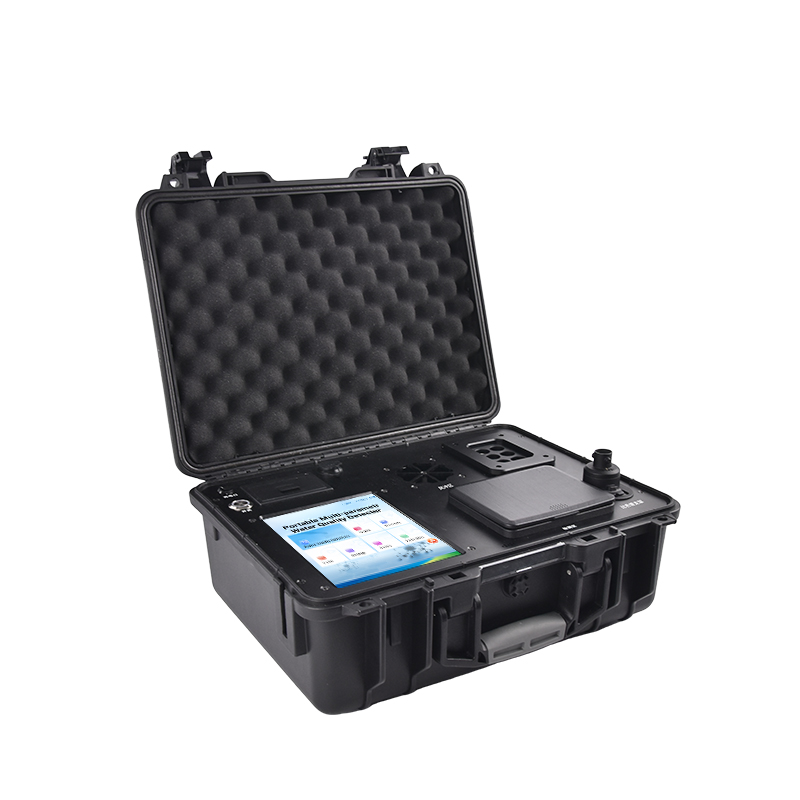
 +86 17853698681