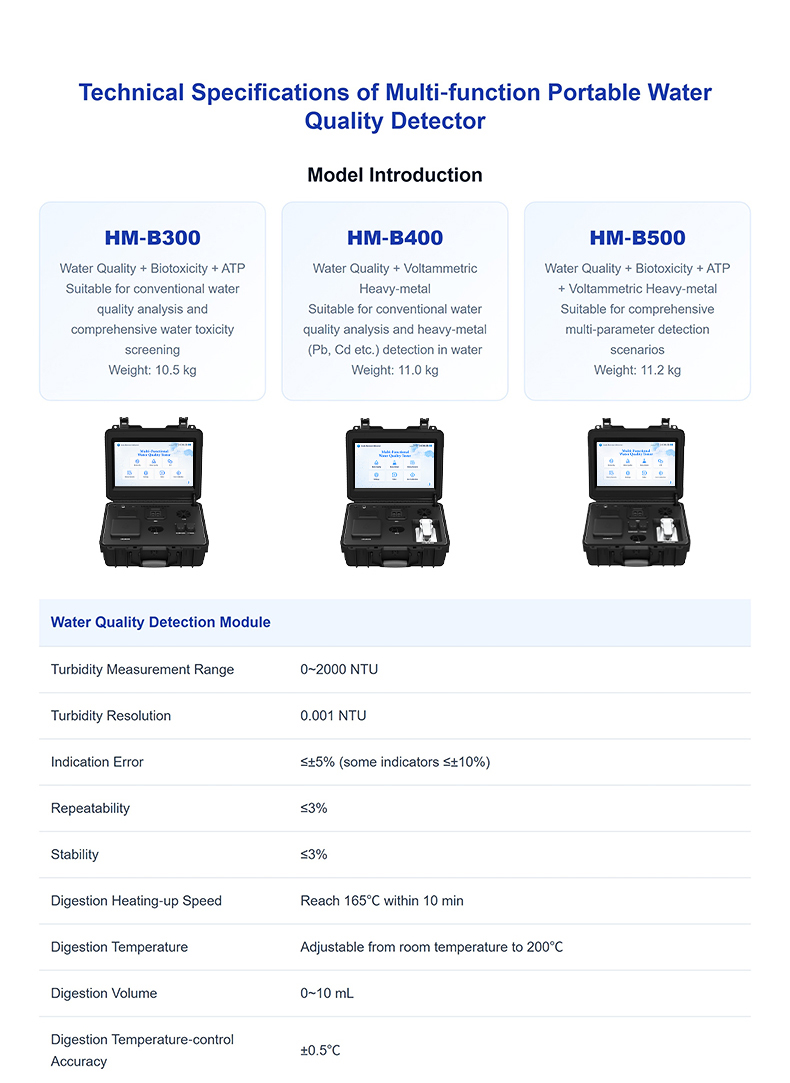

Product Introduction
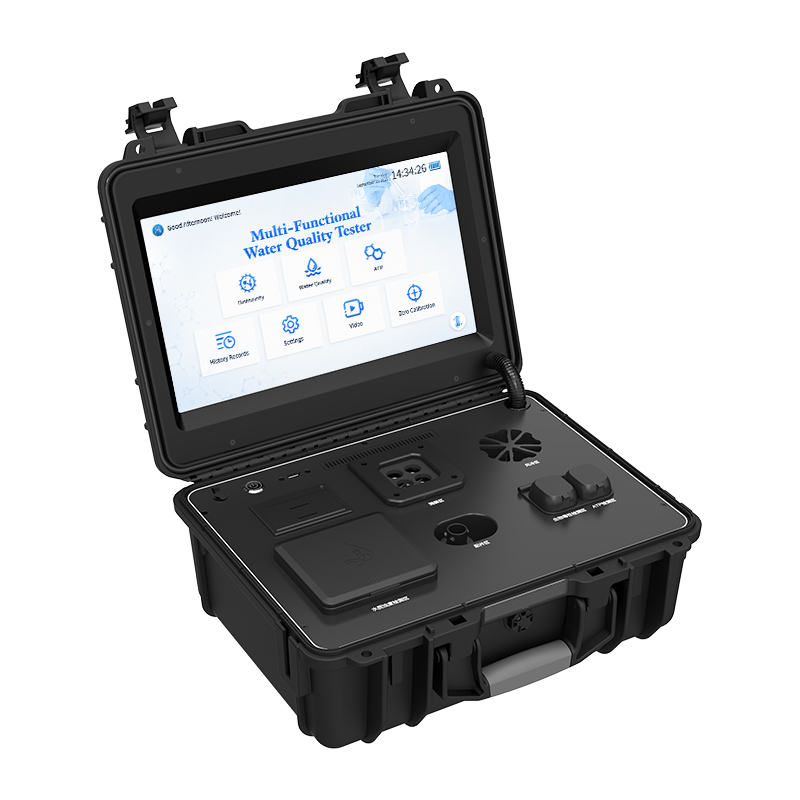
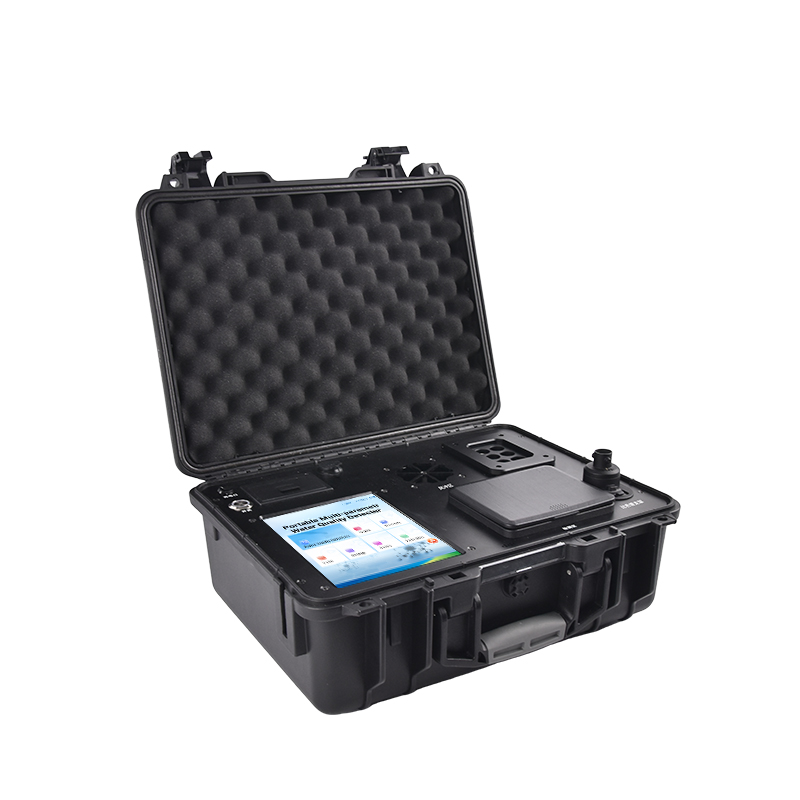
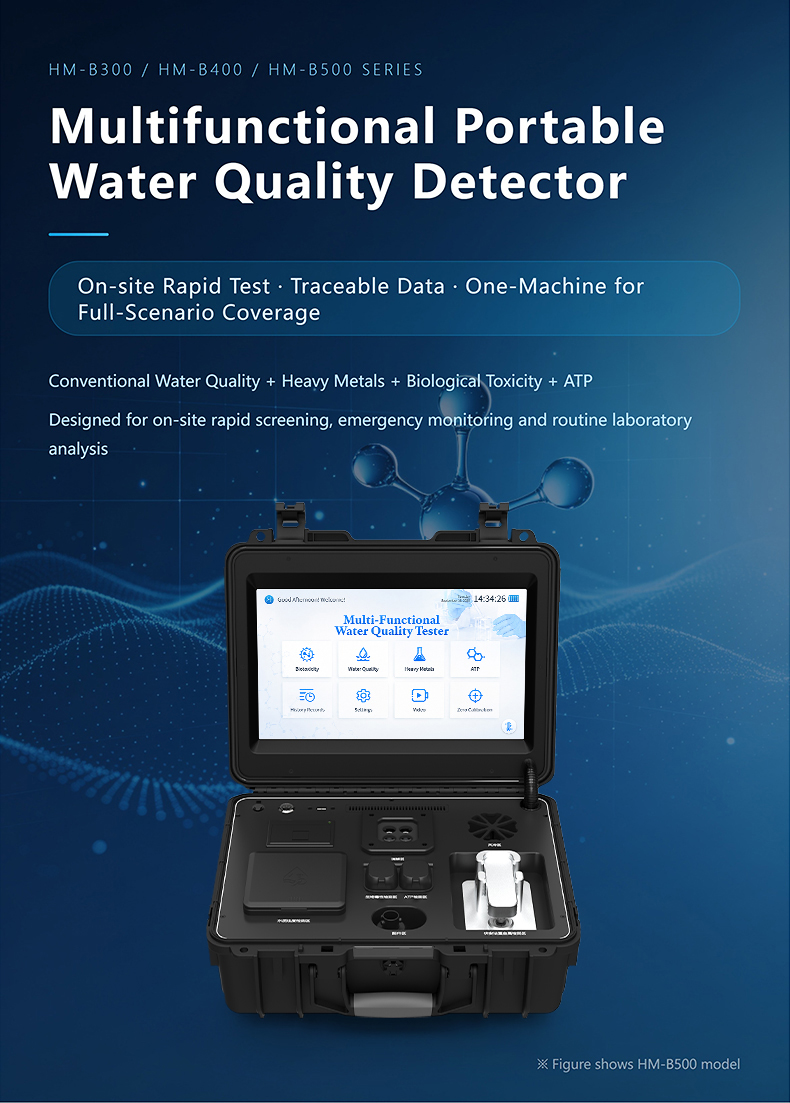
Comprehensive water quality monitoring programs increasingly require data across four distinct analytical dimensions: chemical parameter concentrations (COD, nutrients, metals), trace heavy-metal speciation at ppb levels, biological toxicity as an integrated effect measure, and hygiene indicators for microbial contamination assessment. Traditional approaches deploy separate instruments for each dimension — spectrophotometers for conventional parameters, ICP-MS or AAS for heavy metals, dedicated toxicity analyzers, and ATP luminometers — creating gaps in data alignment, calibration consistency, and field deployment efficiency. The HM-B500 Portable Water Quality Detector consolidates all four dimensions into a single ruggedized platform.
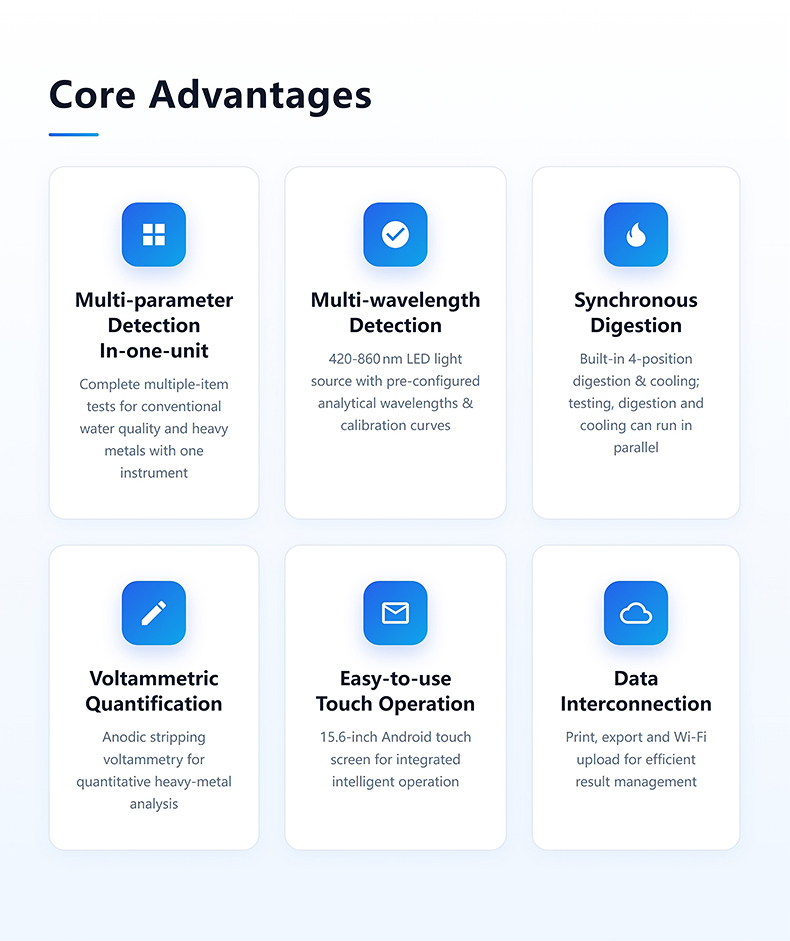
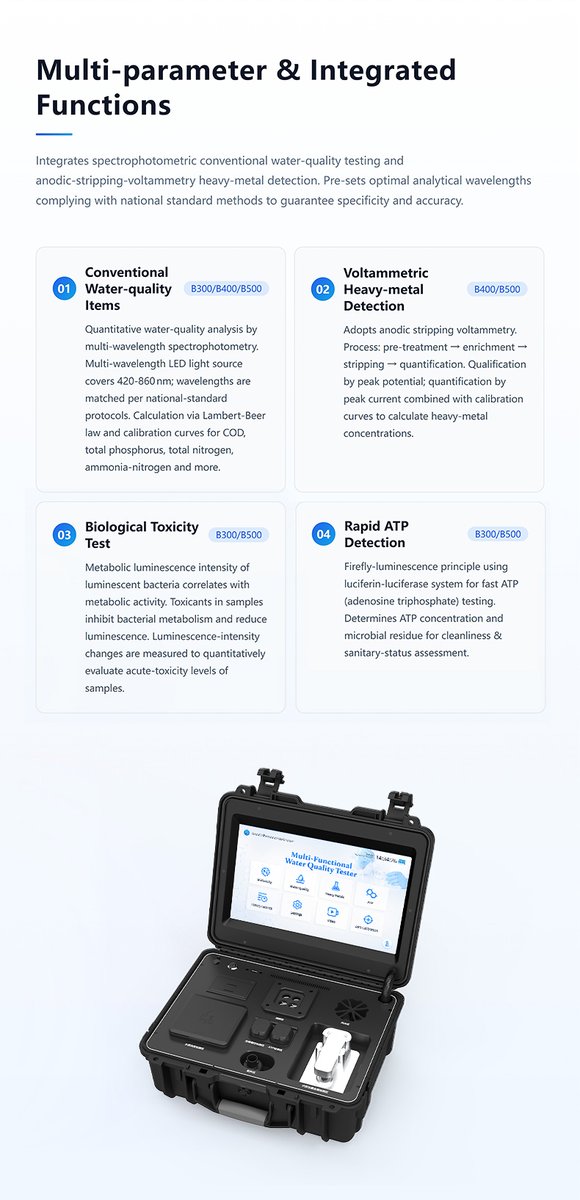
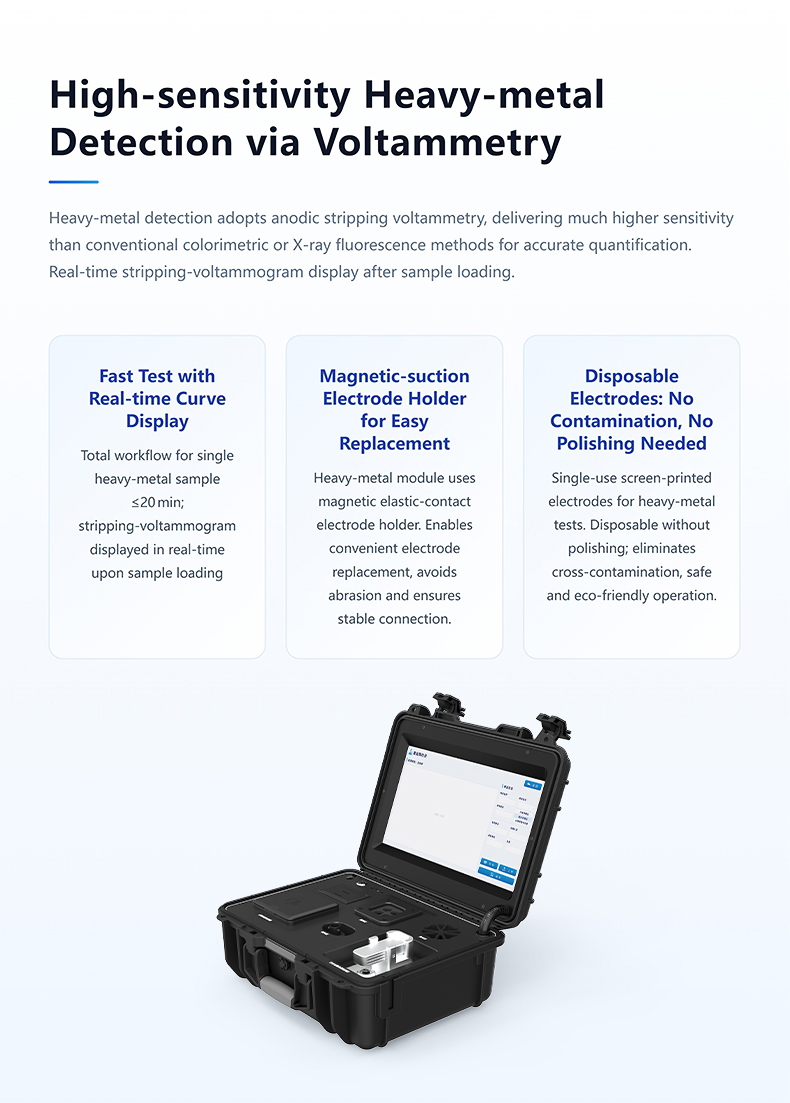
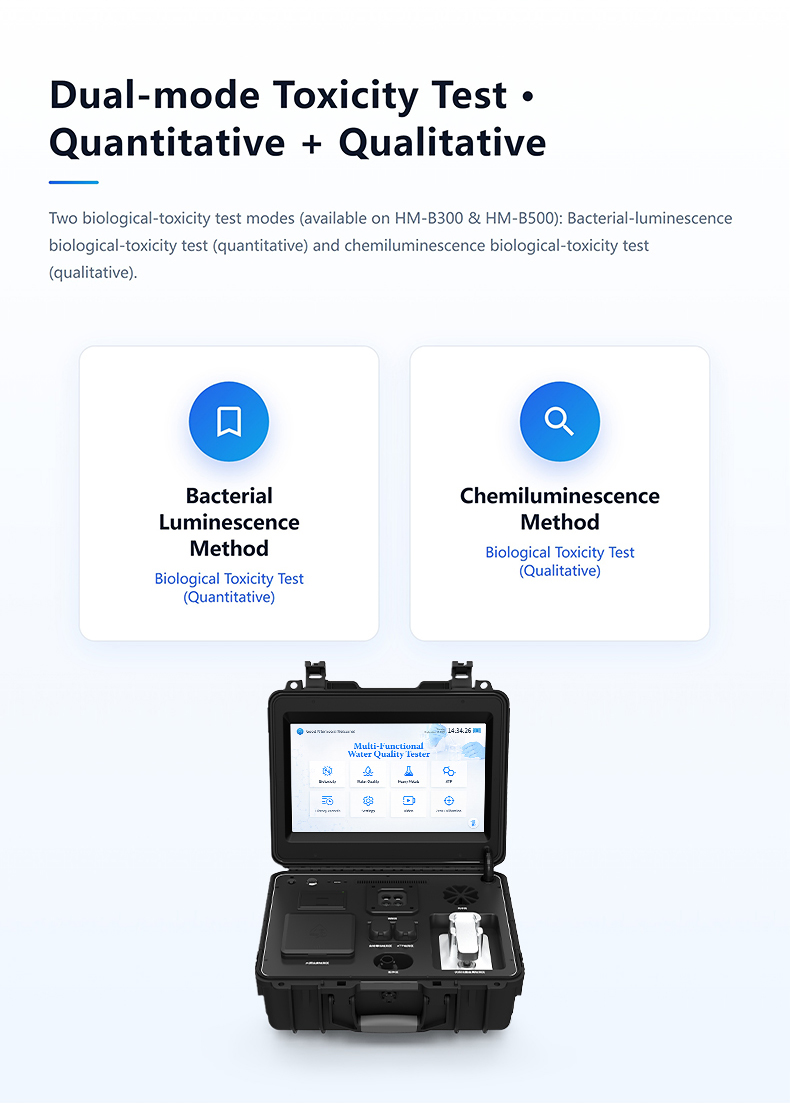
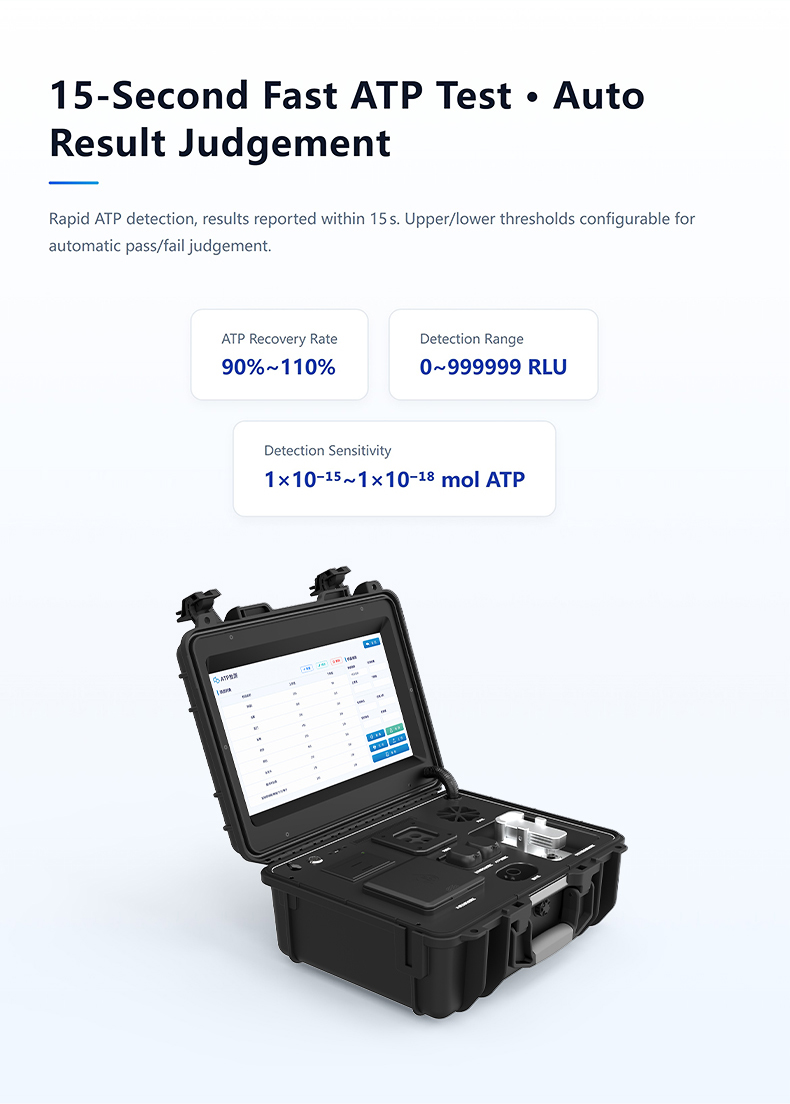
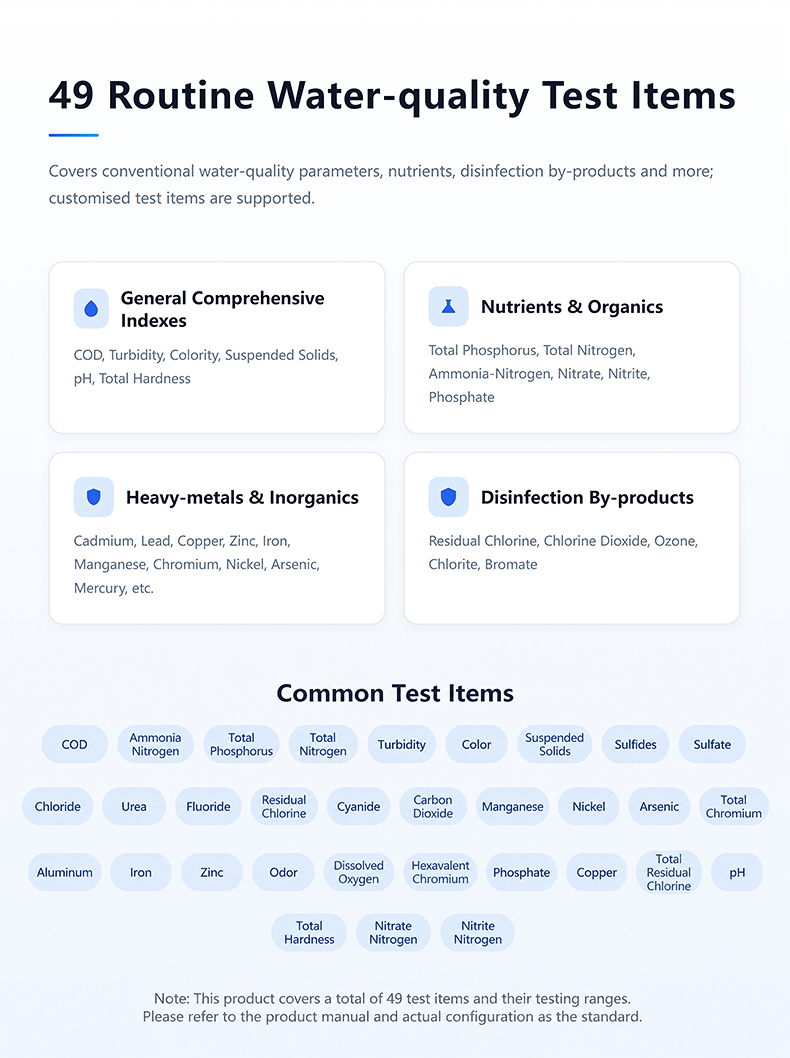
The spectrophotometric module provides 49 parameters using a multi-wavelength LED light source (420–860 nm) with pre-configured wavelengths matched to national standard methods. The voltammetric module uses anodic stripping voltammetry with disposable screen-printed electrodes, achieving 0.5 ppb detection limits for Cd and Pb in water and 0.01 mg/kg in grain, with 280-second measurement and real-time curve display. The biological toxicity module applies the luminescent bacteria principle — measuring fluorescence change to quantify acute toxicity — with dual-mode capability and results within 15 minutes. The ATP module uses the firefly luciferin-luciferase system for 15-second hygiene verification.
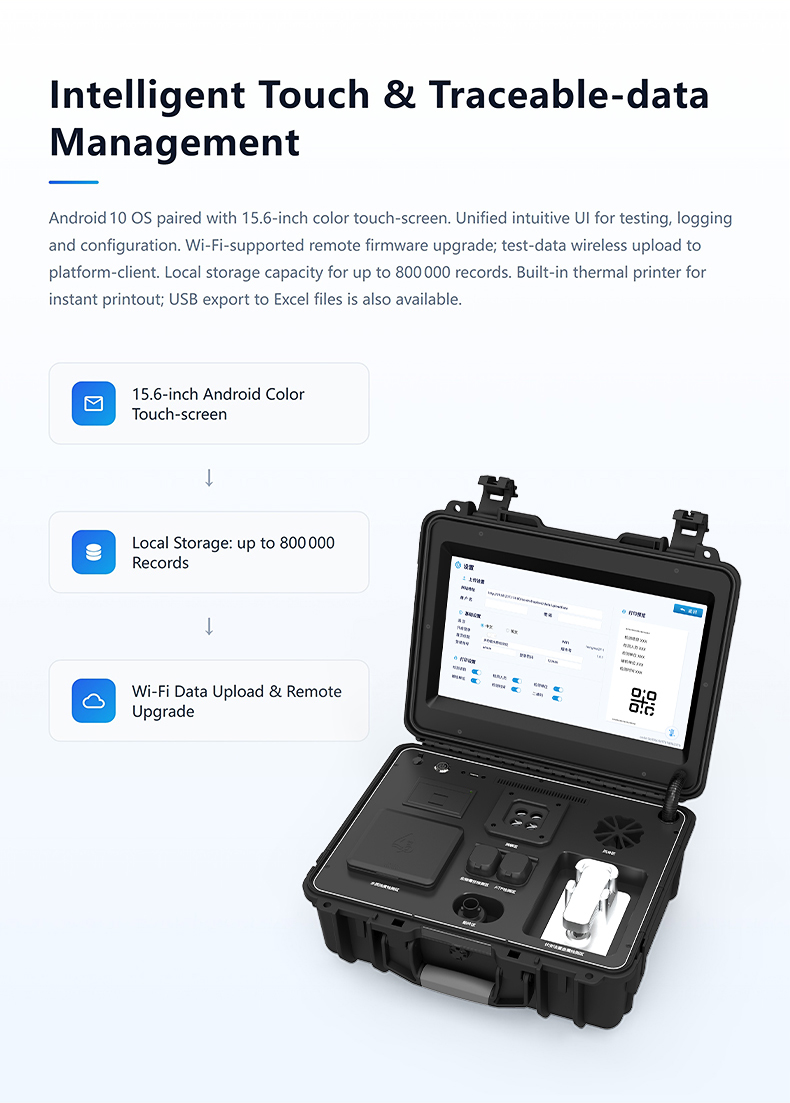
All four modules operate through a unified Android interface on a 15.6-inch touchscreen, with 800,000-record storage, thermal printing, Wi-Fi upload, and USB Excel export consolidating results into a traceable dataset. For narrower scope, the HM-B300 covers water quality, toxicity, and ATP, and the HM-B400 covers water quality and heavy metals.
Applications
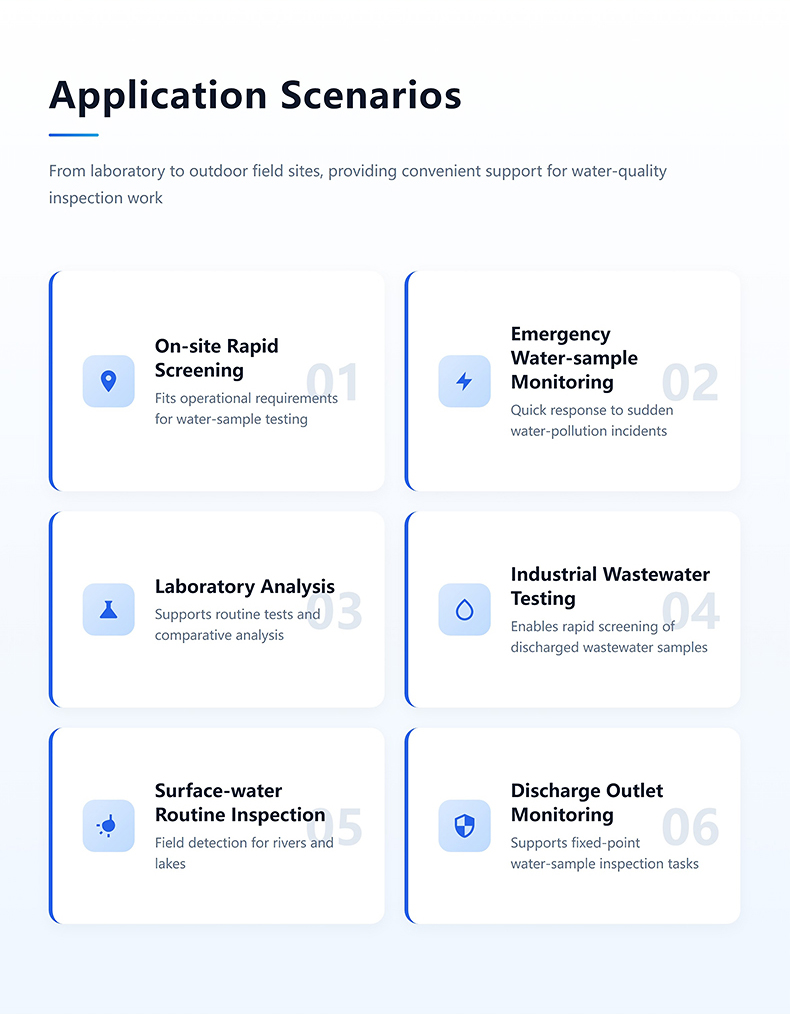
- Comprehensive environmental monitoring: Complete water quality assessment at river, lake, and reservoir monitoring stations — chemical parameters, trace metals, toxicity, and hygiene from a single field visit.
- Industrial wastewater compliance: Multi-dimensional discharge verification: COD and nutrient compliance, trace heavy-metal screening against regulatory limits, and toxicity testing for ecological impact assessment.
- Emergency pollution incident response: Rapid multi-dimensional screening — chemical characterization, heavy-metal quantification, and biological toxicity assessment — to guide response decisions when contaminant identity is unknown.
- Drinking water source protection: Routine monitoring combining conventional parameters, trace heavy metals, and biological toxicity for source water safety evaluation.
- Water treatment process verification: Inlet-outlet comparison across all four analytical dimensions to verify treatment effectiveness and compliance.
- Food safety and agricultural monitoring: Grain heavy-metal analysis (Cd, Pb) alongside water quality parameter testing for agricultural irrigation and food processing water.
- Laboratory comprehensive analysis: Bench-side multi-parameter testing with field-comparable results for research and regulatory reporting.
Key Features & Advantages
- Four-in-one platform eliminates the need for separate spectrophotometer, voltammetric analyzer, toxicity detector, and ATP luminometer
- Complete analytical dimension coverage: chemical parameters, trace metals, biological effects, and hygiene indicators from a single sample workflow
- Unified Android interface on 15.6-inch touchscreen manages all four modules with consistent calibration data and sample tracking
- 49 spectrophotometric water quality parameters using multi-wavelength LED light source (420–860 nm) with national standard method wavelengths
- Voltammetric heavy-metal module with 0.5 ppb detection limits for Cd and Pb using anodic stripping voltammetry
- Disposable screen-printed electrodes eliminate polishing and cross-contamination, with magnetic holder for tool-free replacement
- Dual-mode biological toxicity testing: bacterial luminescence (quantitative) with RSD ≤5% and chemiluminescence (qualitative) for rapid screening
- ATP detection in 15 seconds with 1×10⁻¹⁵–1×10⁻¹⁸ mol ATP sensitivity and configurable automatic pass/fail thresholds
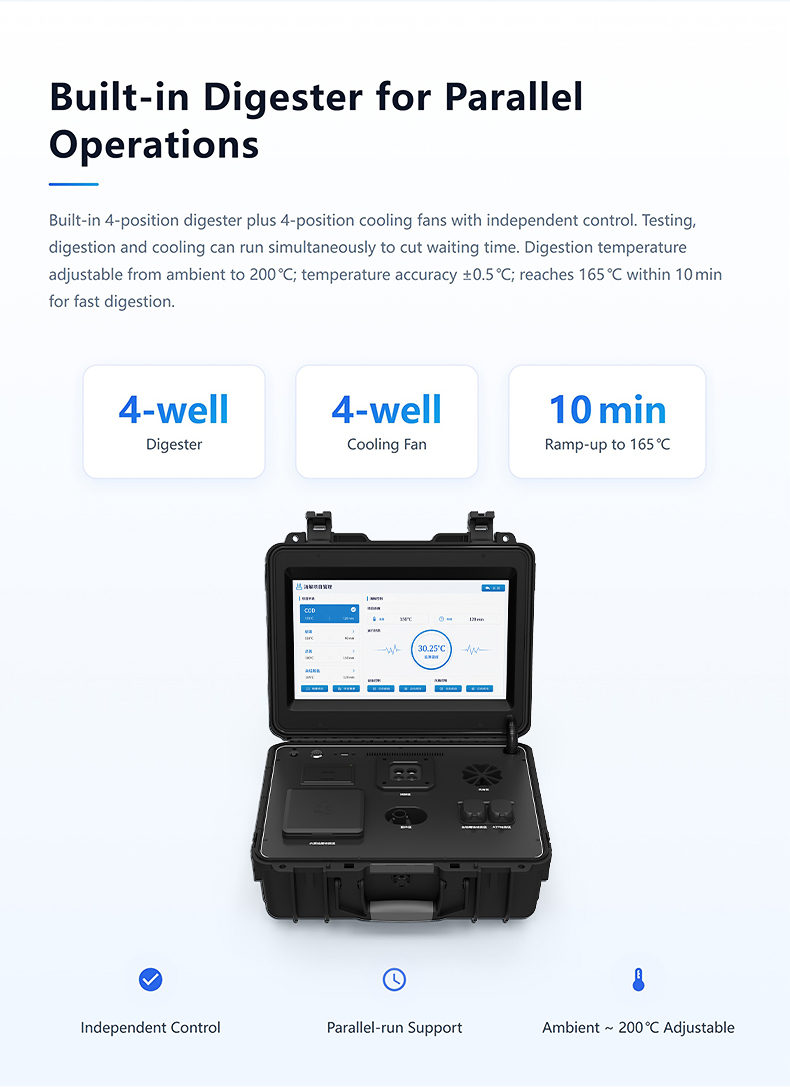
- Built-in 4-position digester with 4-position cooling fan and independent control for parallel digestion, cooling, and measurement
- 800,000-record local storage consolidates results from all four modules with unified timestamps and sample identifiers
- Built-in 6,000 mAh lithium battery with 3-hour standby and ruggedized case for comprehensive field deployment
Technical Specifications
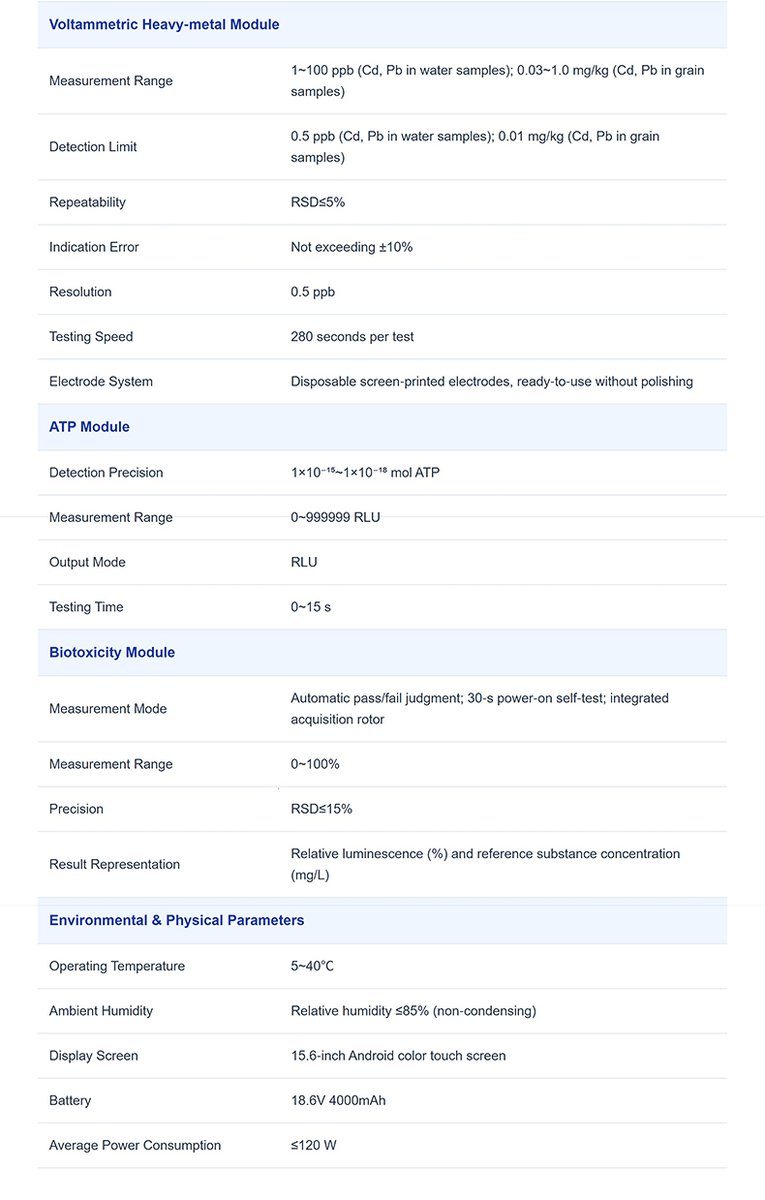
Water Quality Detection Module
| Parameter | Specification |
|---|
| Turbidity measurement range | 0–2,000 NTU |
| Turbidity resolution | 0.001 NTU |
| Indication error | ≤±5% (some indicators ≤±10%) |
| Repeatability | ≤3% |
| Stability | ≤3% |
| Digestion heating speed | Reaches 165°C within 10 min |
| Digestion temperature | Room temperature to 200°C adjustable |
| Digestion capacity | 0–10 mL |
| Digestion temperature control accuracy | ±0.5°C |
Voltammetric Heavy-Metal Module
| Parameter | Specification |
|---|
| Detection range (water Cd, Pb) | 1–100 ppb |
| Detection range (grain Cd, Pb) | 0.03–1.0 mg/kg |
| Detection limit (water Cd, Pb) | 0.5 ppb |
| Detection limit (grain Cd, Pb) | 0.01 mg/kg |
| Repeatability | RSD ≤5% |
| Indication error | ≤±10% |
| Resolution | 0.5 ppb |
| Testing speed | 280 seconds per test |
| Electrode system | Disposable screen-printed electrodes |
ATP Detection Module
| Parameter | Specification |
|---|
| Detection precision | 1×10⁻¹⁵–1×10⁻¹⁸ mol ATP |
| Detection range | 0–999,999 RLU |
| Detection interference | ±5% or ±5 RLUs |
| ATP recovery rate | 90%–110% |
| Detection time | 15 s |
Biological Toxicity Module
| Parameter | Specification |
|---|
| Measurement range | 0–1×10⁷ mV |
| Measurable spectrum range | 340–1,000 nm |
| Precision | RSD ≤5% |
| Detection time | Results within 15 min after sample preparation |
| Result representation | Relative luminosity (%) and reference toxicant concentration (mg/L) |
Environmental & Physical Parameters
| Parameter | Specification |
|---|
| Operating temperature | 5–40°C |
| Ambient humidity | ≤85% relative humidity (non-condensing) |
| Screen | 15.6-inch Android LCD touchscreen |
| Working voltage | 48 V |
| Battery capacity | 6,000 mAh |
| Average power consumption | ≤120 W |
| Dimensions | 427 mm × 344 mm × 188 mm |
| Weight | 11.2 kg |
FAQ
Q: What are the practical advantages of consolidating four analytical modules on one platform?
A: The primary advantages are data alignment, workflow efficiency, and cost reduction. Separate instruments each have their own calibration, sample preparation, and data export, making cross-dimensional analysis error-prone. The HM-B500's unified interface manages all four modules with consistent sample identifiers and timestamps, automatically aligning results. A single field visit produces a complete multi-dimensional profile in 30–60 minutes, versus multiple visits and several hours with separate instruments. Equipment cost is also lower than purchasing four dedicated instruments.
Q: How do the four modules complement each other in a comprehensive monitoring program?
A: Each module addresses a different aspect: the spectrophotometric module quantifies chemical concentrations (COD, nutrients, metals) at mg/L levels; the voltammetric module targets trace Cd and Pb at ppb levels — priority pollutants below colorimetric detection limits but above ecological risk thresholds; the biological toxicity module measures integrated biological effects of all substances — useful when contaminant identity is unknown; the ATP module indicates microbial contamination. Together: chemical characterization, priority pollutant quantification, biological effect assessment, and hygiene verification.
Q: What is the typical workflow for a comprehensive field monitoring visit using the HM-B500?
A: Typical workflow: (1) collect and split sample for each module, (2) start COD/total phosphorus digestion in the built-in 4-position digester, (3) while digesting, run the 280-second voltammetric measurement, (4) run the 15-second ATP test, (5) start the 15-minute toxicity incubation, (6) measure digested spectrophotometric parameters, (7) read toxicity results, (8) print or export. Total time: approximately 30–45 minutes per sampling point.
Q: How does the HM-B500 compare to the HM-B300 and HM-B400 in terms of monitoring scope?
A: The HM-B300 covers water quality, toxicity, and ATP — for programs focused on chemical parameters and ecological safety without heavy-metal needs. The HM-B400 covers water quality and voltammetric heavy metals — for industrial discharge and mining-influenced water monitoring. The HM-B500 covers all four dimensions — for comprehensive assessment: drinking water source protection, multi-parameter monitoring, and full-spectrum evaluation. All three share the same spectrophotometric, digester, touchscreen, and data management capabilities; the differentiation is in the analytical modules.
Q: Can the HM-B500 be used for both field and laboratory deployment?
A: Yes. In field mode, the 6,000 mAh battery provides 3-hour standby, and the ruggedized case protects components during transport. The thermal printer and Wi-Fi upload support on-site documentation. In laboratory mode, the instrument operates on external power with USB/Wi-Fi data export to laboratory systems. The same calibration and methods apply in both modes, meaning field and laboratory results are directly comparable — a key advantage for field screening followed by laboratory confirmation.
Article address:https://www.hmwatertesting.cn/dcsz2/comprehensive-water-quality-toxicity-metal-analyzer.html

 Current
location:
Current
location: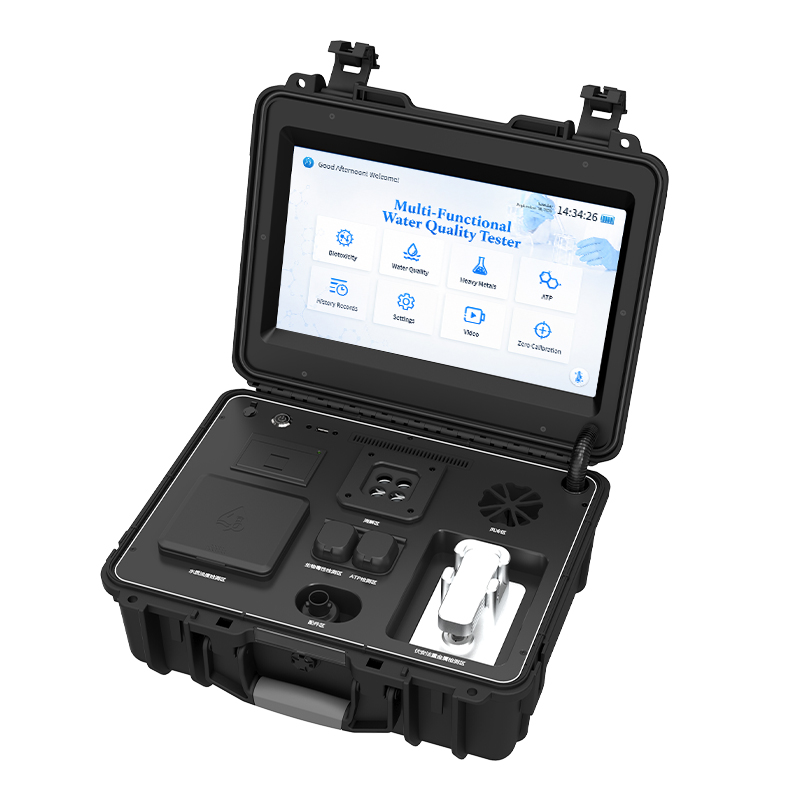
 +86 17853698681