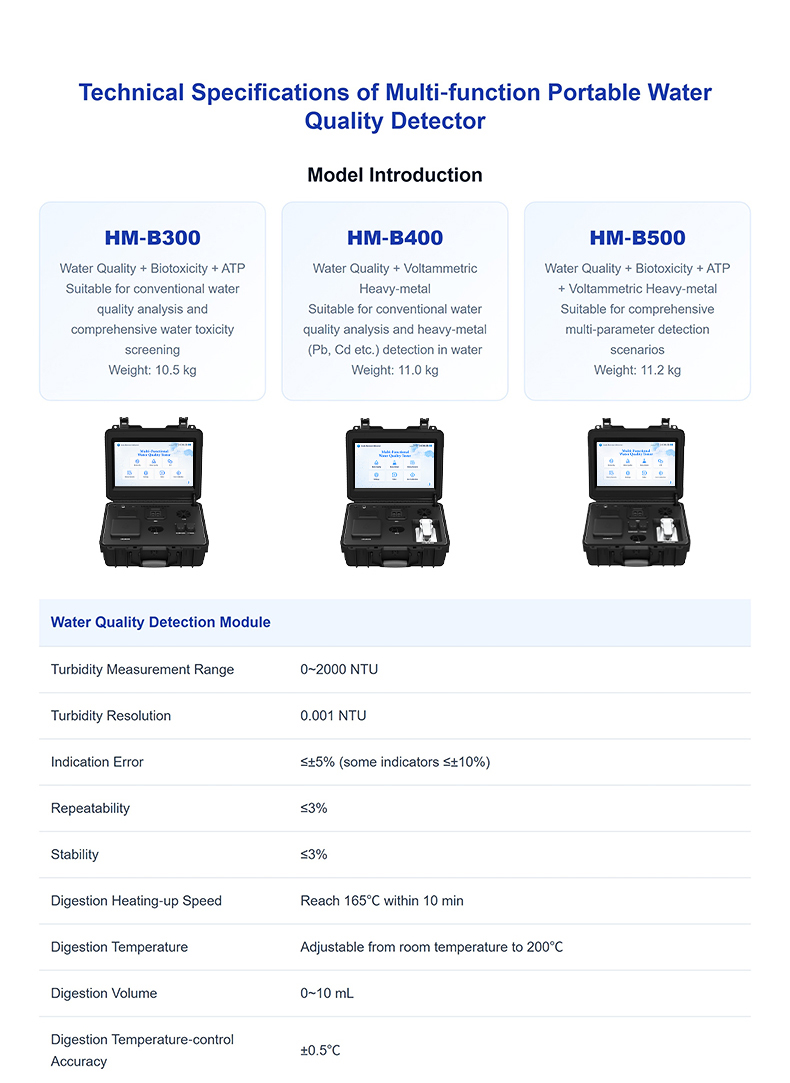
Product Introduction
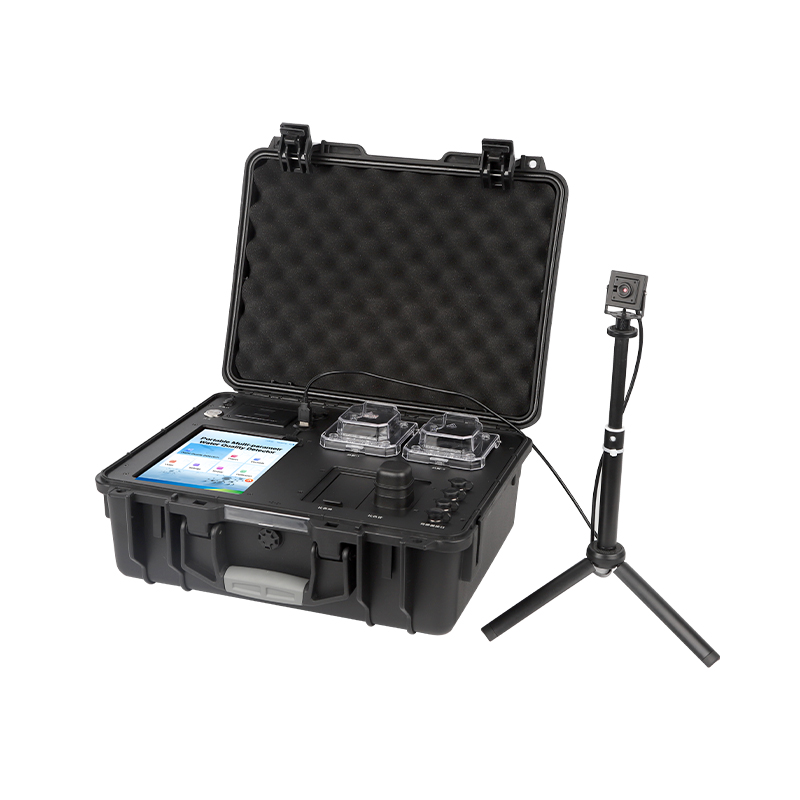
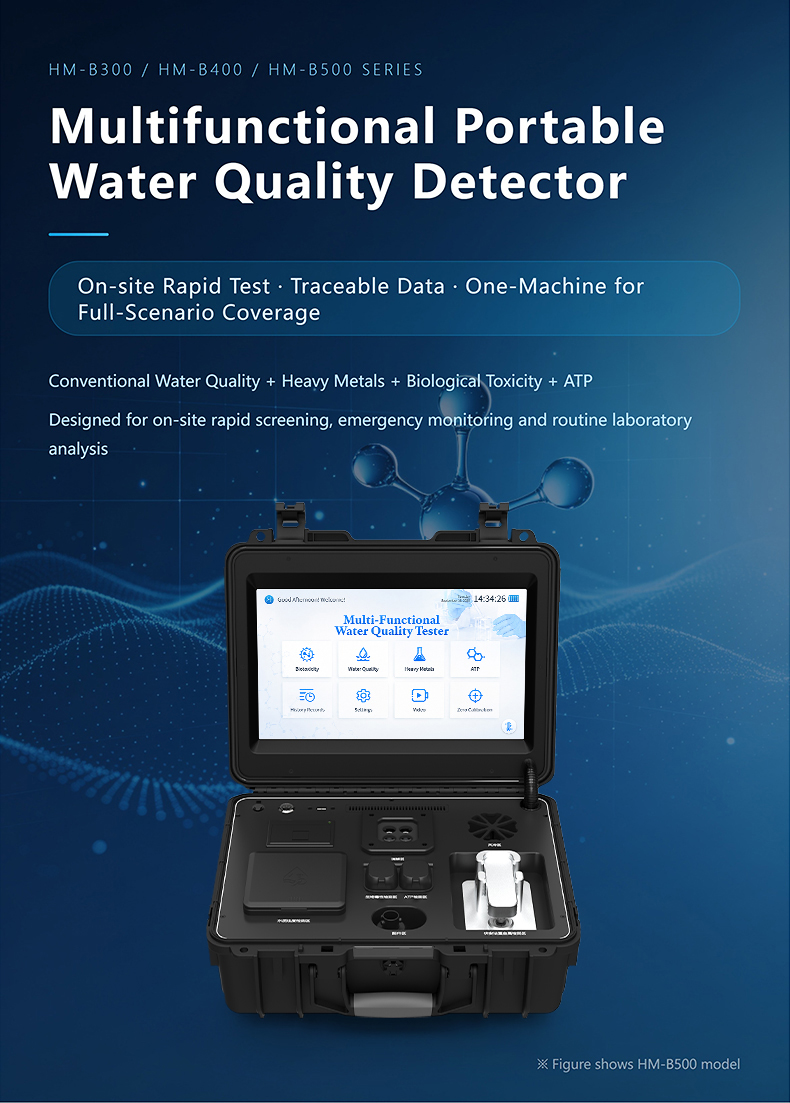
Environmental monitoring agencies and industrial facilities face a persistent challenge: conventional water quality parameters, biological toxicity, and hygiene indicators typically require separate instruments, each with distinct calibration protocols and data management systems. This fragmentation increases equipment costs, extends field deployment time, and complicates data consolidation for regulatory reporting. The HM-B300 Multifunctional Portable Water Quality Detector addresses this gap by integrating three complementary analytical approaches within a single ruggedized platform.
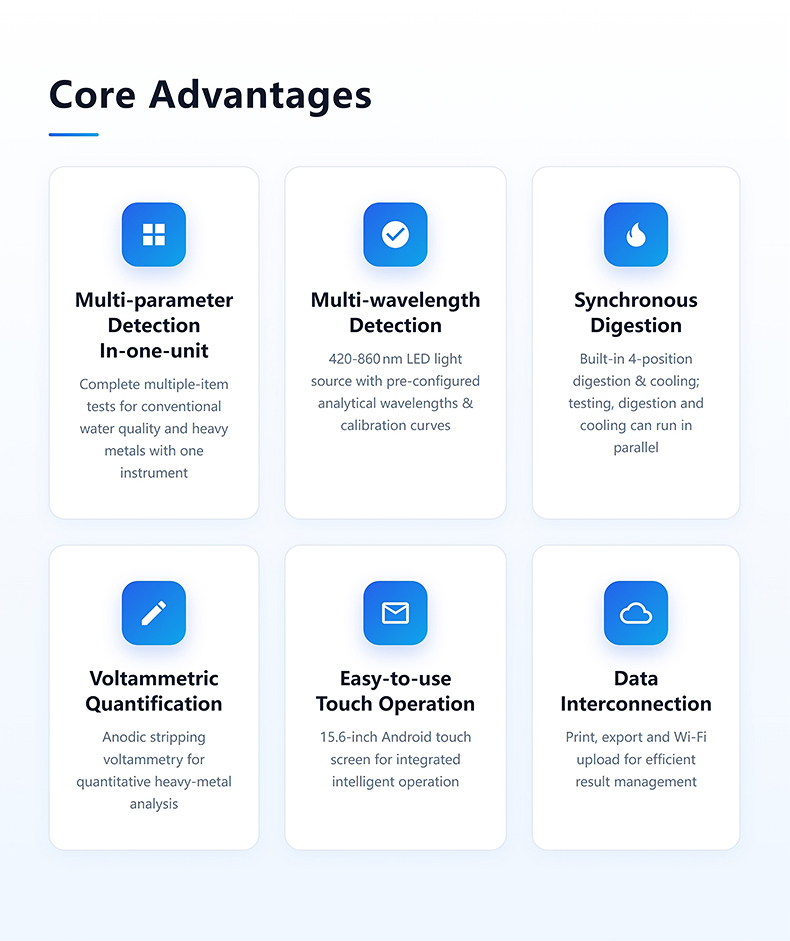
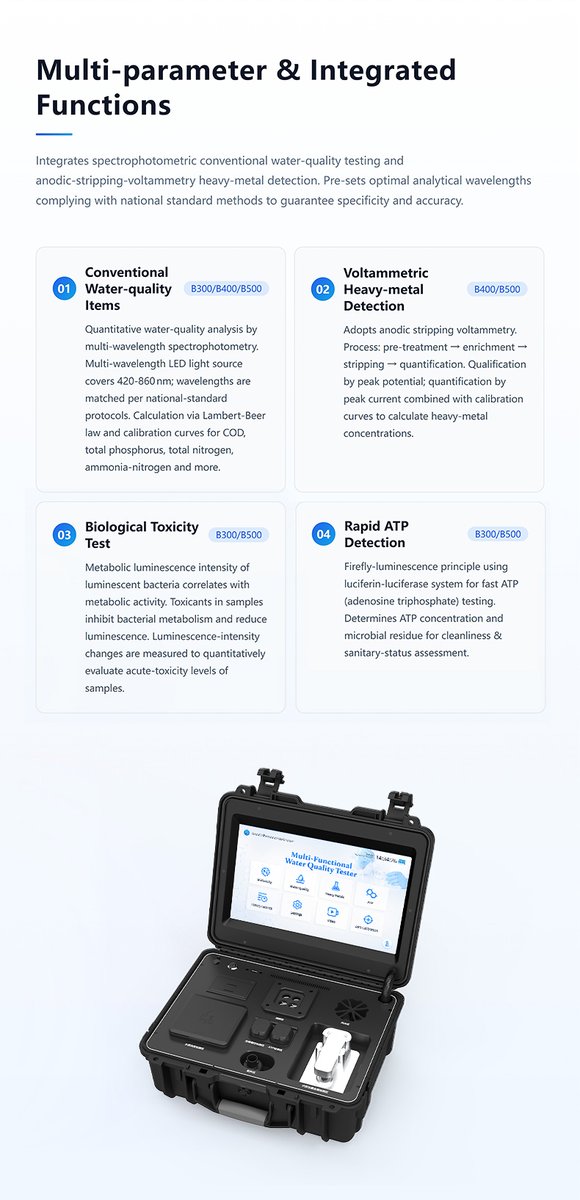
At its core, the instrument employs multi-wavelength spectrophotometry using a 420–860 nm LED light source system, with analytical wavelengths pre-configured to match national standard methods. Pre-loaded calibration curves enable direct calculation of COD, total phosphorus, total nitrogen, ammonia nitrogen, and 45 additional parameters from the 49-item test library. The biological toxicity module leverages the metabolic luminescence principle: luminescent bacteria emit visible fluorescence proportional to metabolic activity, and when toxic substances are present, the fluorescence intensity decreases in proportion to toxicity. Results are expressed as relative luminosity (%) and equivalent reference toxicant concentration (mg/L), with quantification completed within 15 minutes of sample preparation. The ATP detection module uses the firefly luciferin-luciferase system to measure adenosine triphosphate levels in 15 seconds, providing a rapid indicator of microbial contamination and surface cleanliness.
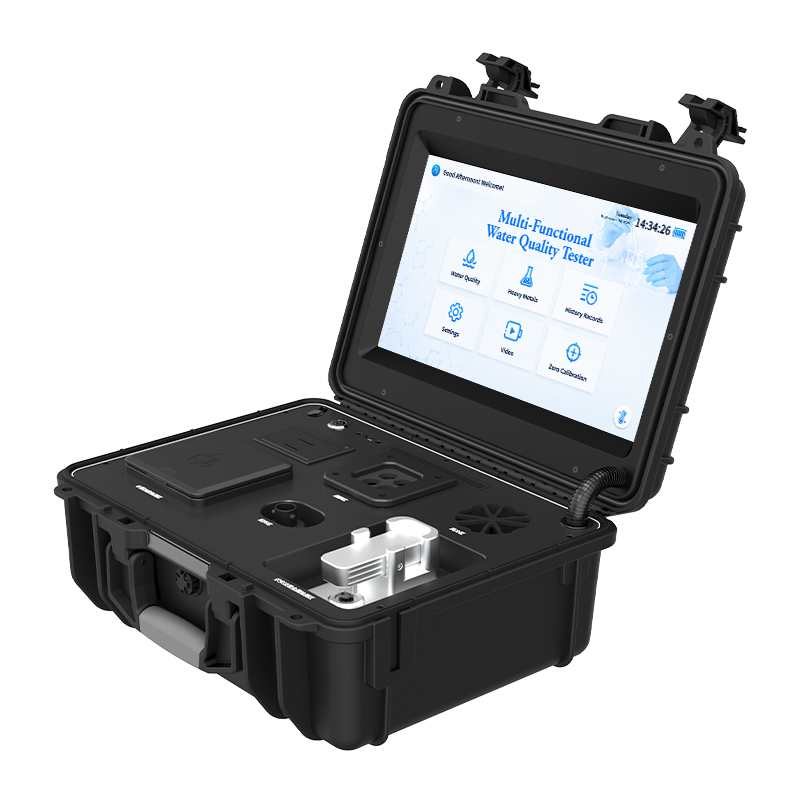
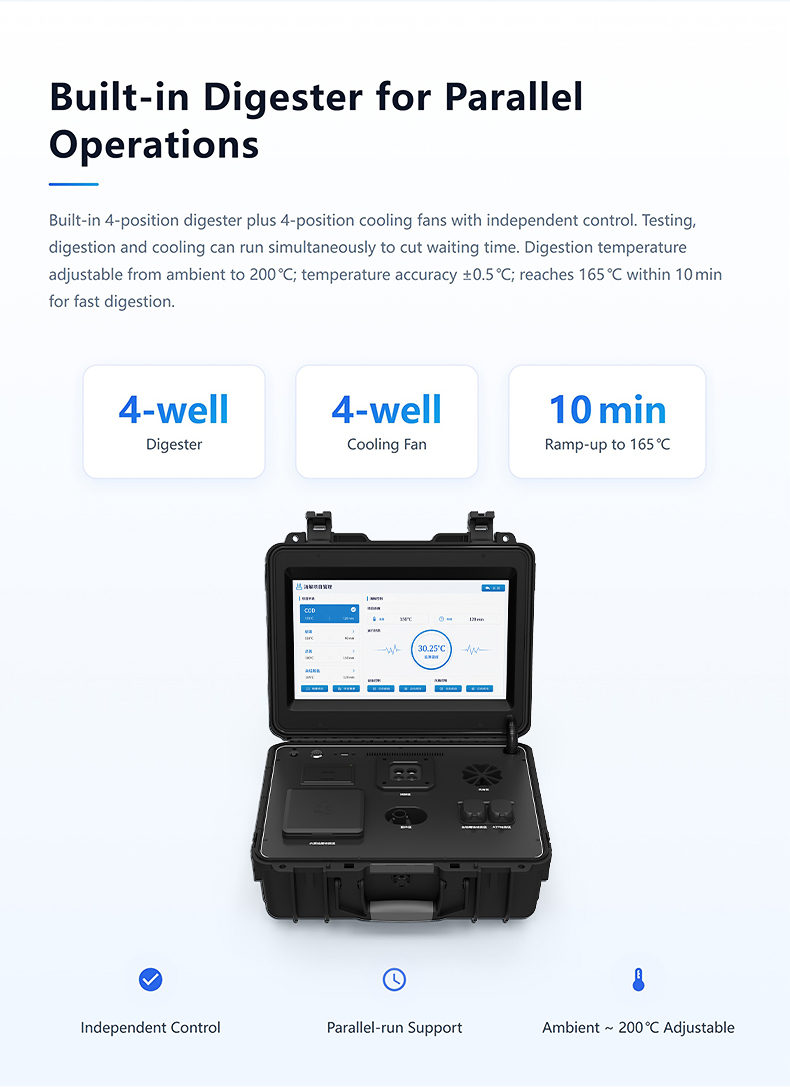
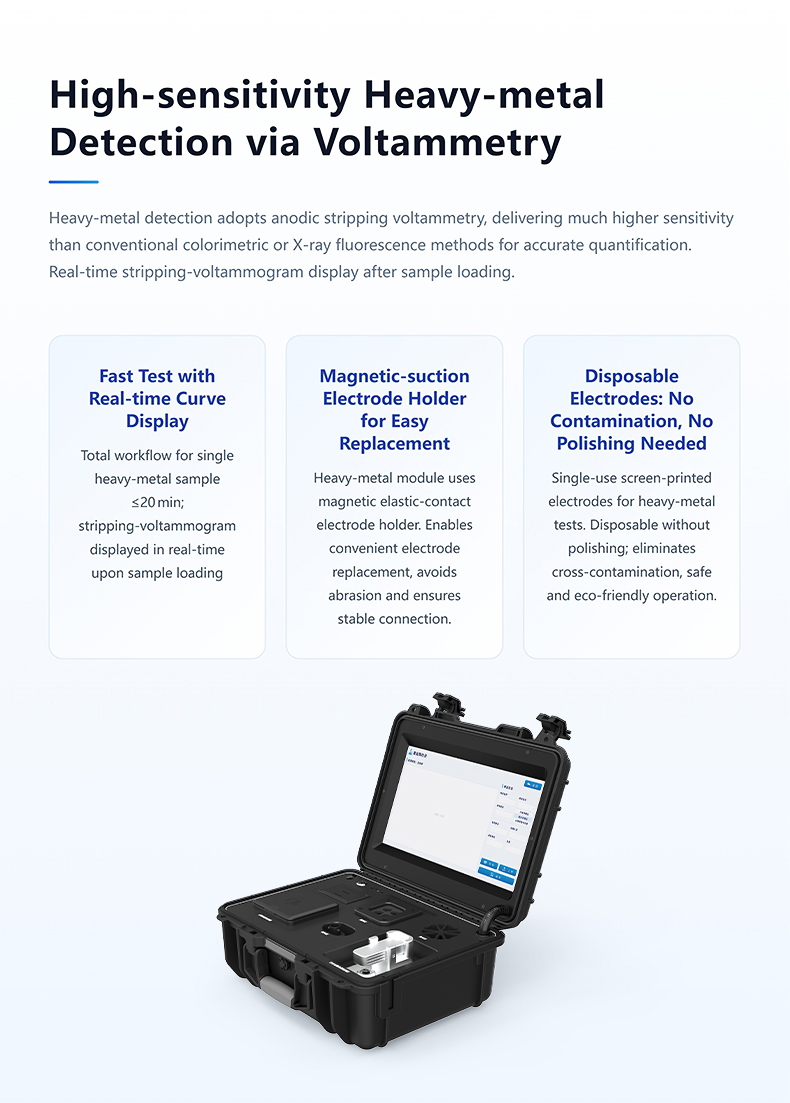
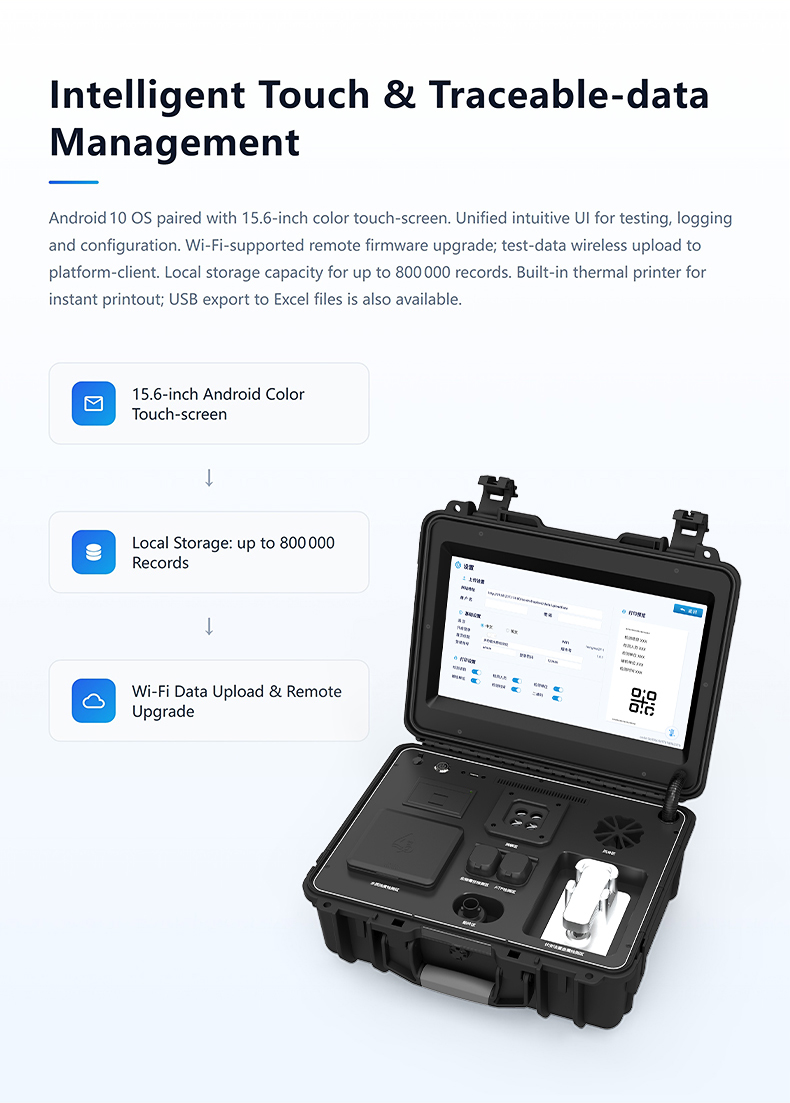
A built-in 4-position digester with independent temperature control (room temperature to 200°C, ±0.5°C accuracy) enables simultaneous digestion and cooling during measurement, eliminating the need to carry separate digestion equipment. The Android 10 operating system on a 15.6-inch touchscreen manages all three modules through a unified interface, while 800,000-record local storage, thermal printing, Wi-Fi data upload, and USB Excel export support traceable data workflows from field to report. For monitoring programs that also require trace heavy-metal analysis, the HM-B500 full-configuration model extends the same platform with anodic stripping voltammetry for cadmium and lead detection.
Applications
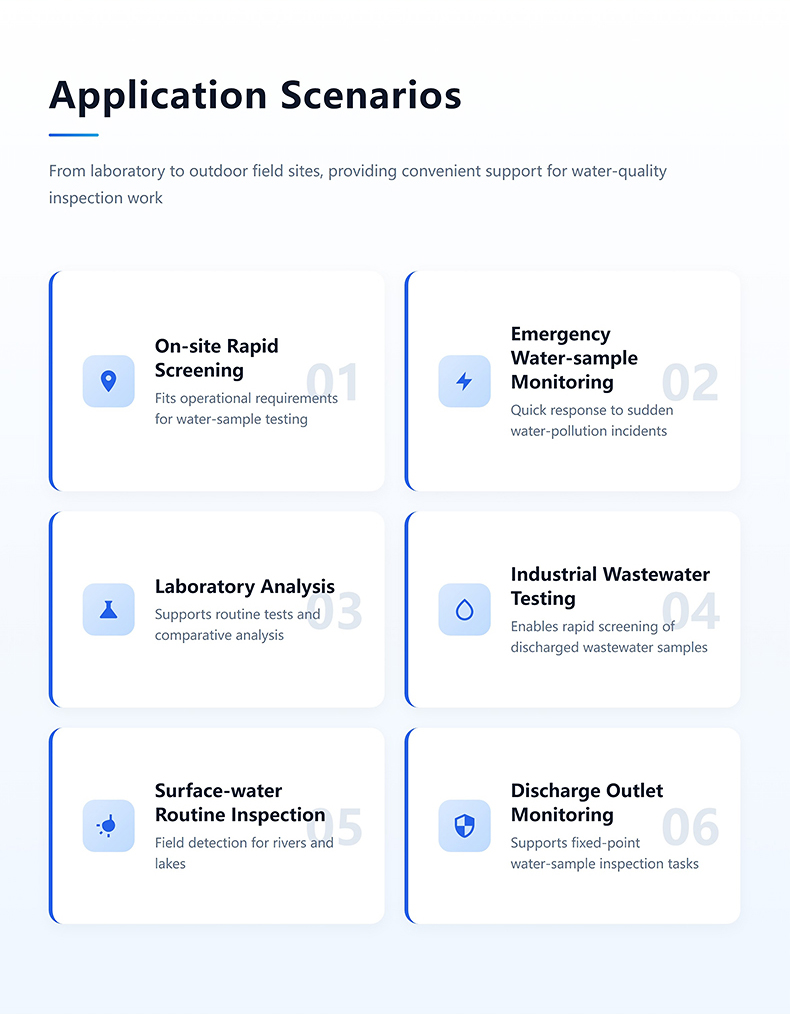
- On-site rapid screening: Deployable at river, lake, and reservoir sampling points for immediate parameter assessment without sample transport delays.
- Emergency pollution incident monitoring: Rapid toxicity screening using luminescent bacteria provides a first-pass assessment of unknown contamination within 15 minutes, guiding response decisions.
- Industrial wastewater compliance: Pre-configured methods for COD, total nitrogen, total phosphorus, ammonia nitrogen, and heavy-metal indicators support discharge permit verification.
- Surface water routine inspection: Field detection at designated monitoring cross-sections for rivers and lakes, with results exported directly for regulatory databases.
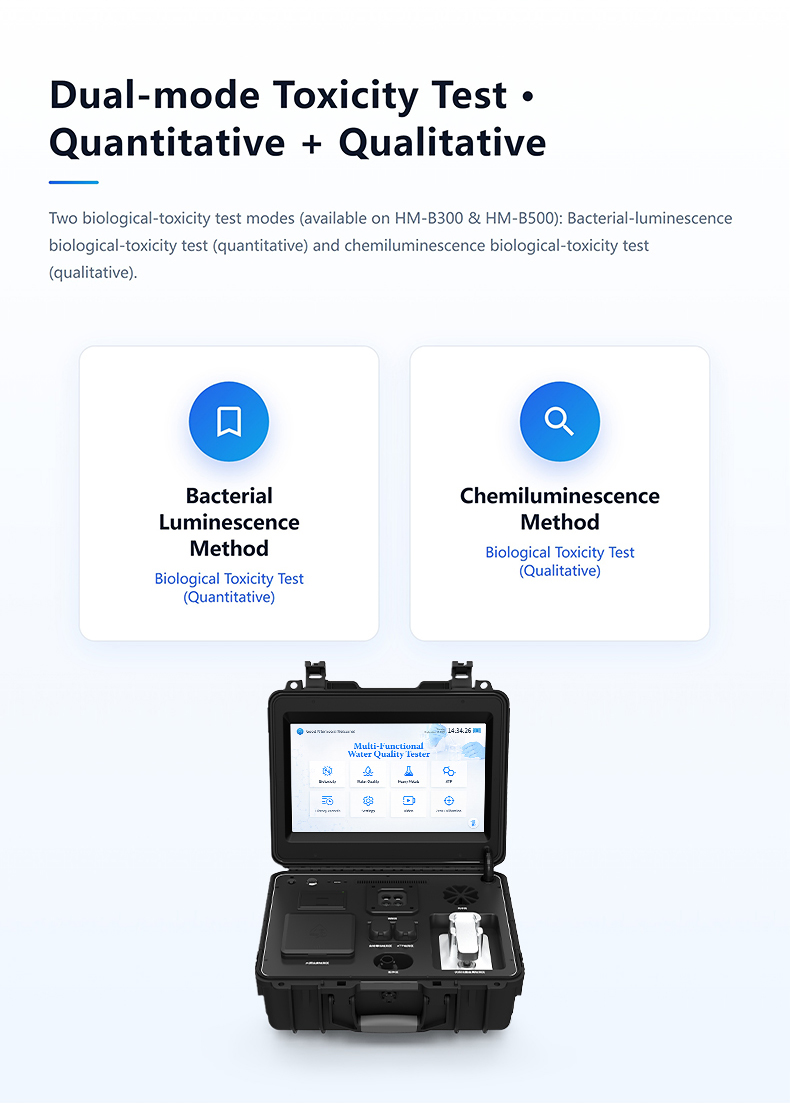
- Biological toxicity assessment: Quantitative evaluation of acute toxicity in surface water, industrial effluent, domestic sewage, and emergency incident water samples using dual-mode testing.
- ATP hygiene verification: 15-second cleanliness testing for water treatment plant surfaces, distribution system components, and storage facilities.
- Laboratory comparative analysis: Supports bench-side verification of field results with the same calibration curves and detection methods.
Key Features & Advantages
- Three-in-one platform eliminates separate instruments for water quality, toxicity, and ATP testing, reducing total equipment investment and training burden
- Multi-wavelength LED light source (420–860 nm) with pre-configured wavelengths matching national standard methods ensures analytical specificity and accuracy
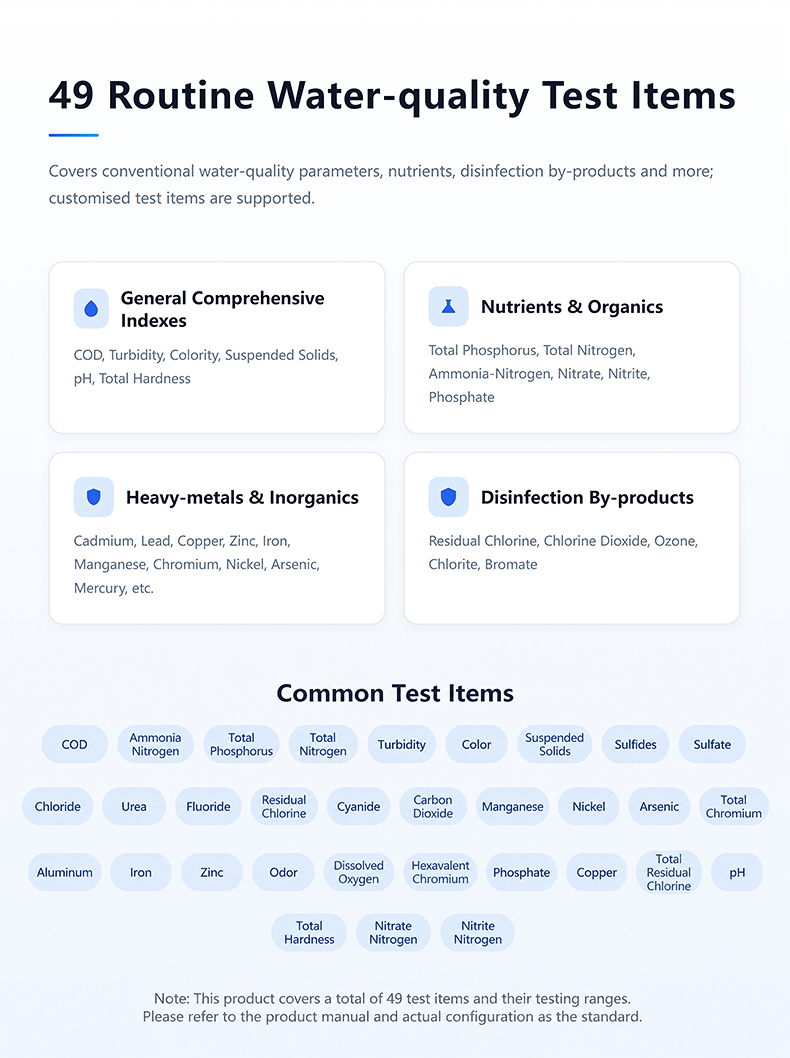
- 49 routine water quality test items covering COD, nutrients, heavy metals, and disinfection by-products from a single reagent system
- Built-in 4-position digester with 4-position cooling fan and independent control enables parallel digestion, cooling, and measurement
- Digestion temperature adjustable from room temperature to 200°C with ±0.5°C control accuracy, heating to 165°C within 10 minutes
- Dual-mode biological toxicity testing: bacterial luminescence for quantitative results and chemiluminescence for qualitative screening
- Luminescent bacteria toxicity results available within 15 minutes of sample preparation, expressed as relative luminosity (%) and reference toxicant concentration (mg/L)
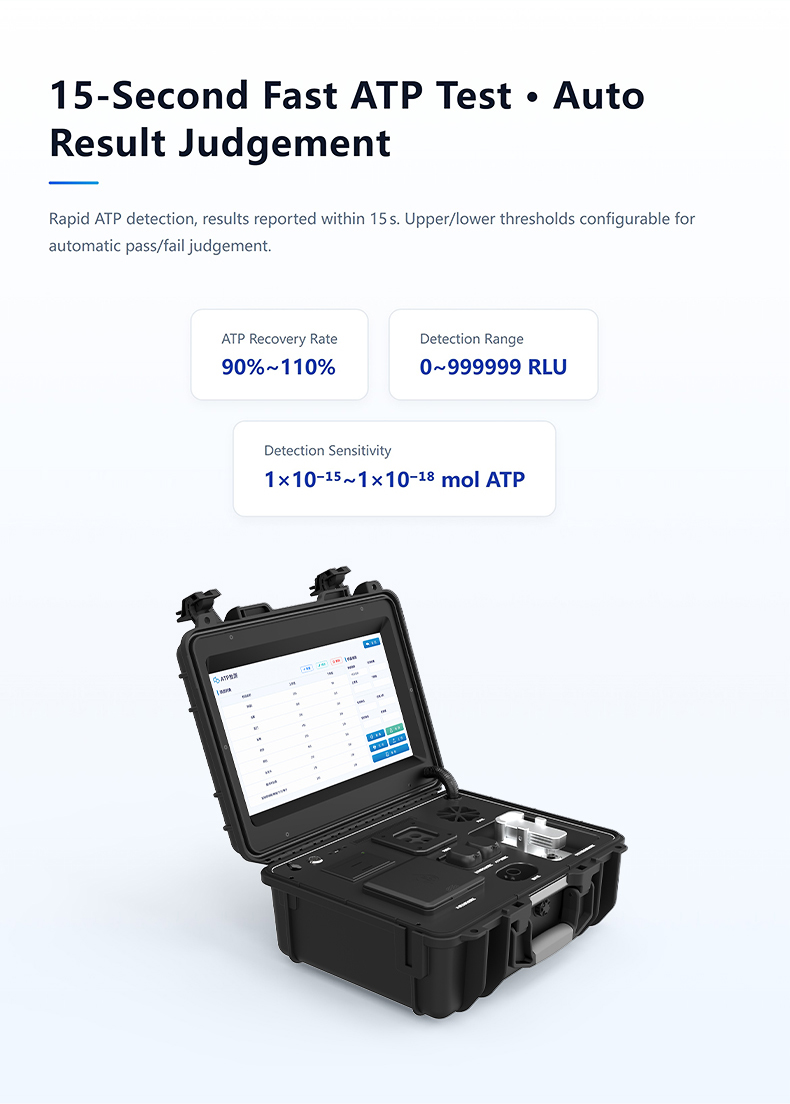
- ATP detection in 15 seconds with sensitivity of 1×10⁻¹⁵–1×10⁻¹⁸ mol ATP and configurable pass/fail thresholds for automatic judgement
- 15.6-inch Android touchscreen with unified interface across all three testing modules for simplified operator training
- Local storage of 800,000 records with built-in thermal printer enables immediate field documentation and result printout
- Wi-Fi connectivity supports remote firmware upgrade and wireless data upload to platform client for centralized monitoring
- USB Excel export streamlines data transfer to laboratory information management systems and regulatory reporting tools
- Built-in 6,000 mAh lithium battery with 3-hour standby supports extended field campaigns without external power
- Ruggedized carrying case design with reinforced corners and latches for transport to remote sampling locations
- Customizable test item configuration allows adaptation to project-specific monitoring requirements
Technical Specifications
Water Quality Detection Module
| Parameter | Specification |
|---|
| Turbidity measurement range | 0–2,000 NTU |
| Turbidity resolution | 0.001 NTU |
| Indication error | ≤±5% (some indicators ≤±10%) |
| Repeatability | ≤3% |
| Stability | ≤3% |
| Digestion heating speed | Reaches 165°C within 10 min |
| Digestion temperature | Room temperature to 200°C adjustable |
| Digestion capacity | 0–10 mL |
| Digestion temperature control accuracy | ±0.5°C |
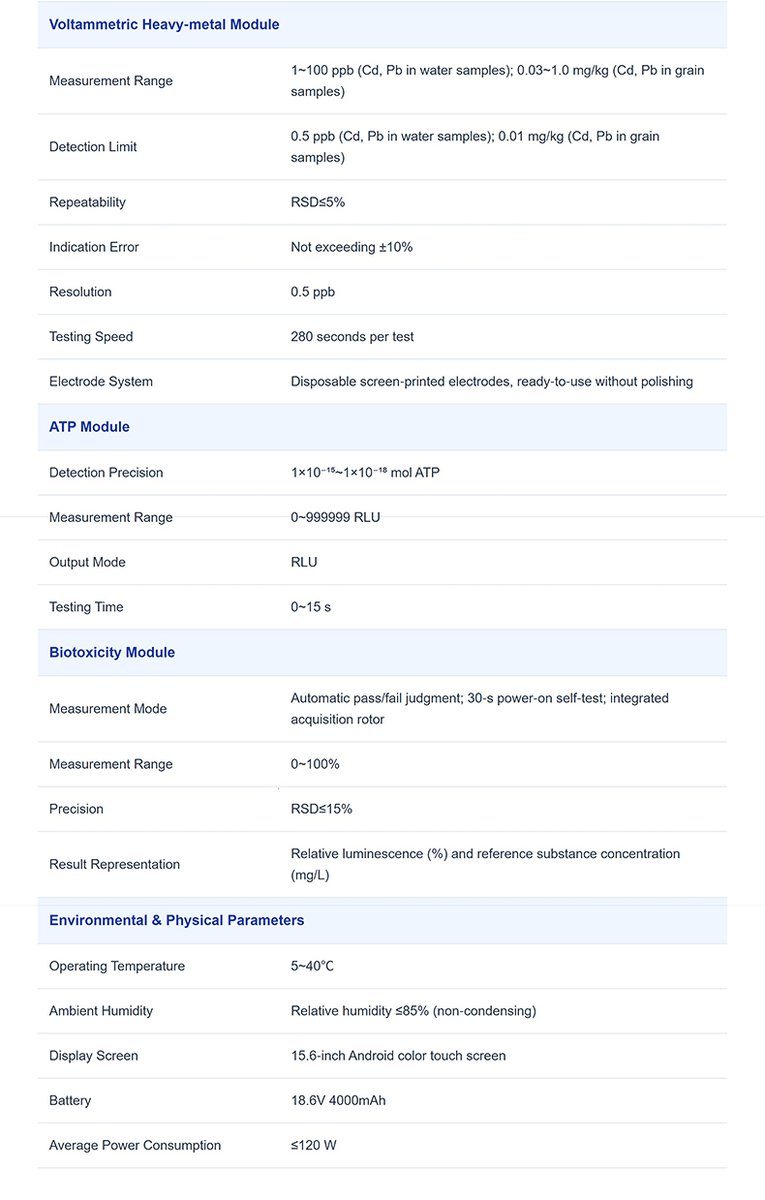
ATP Detection Module
| Parameter | Specification |
|---|
| Detection precision | 1×10⁻¹⁵–1×10⁻¹⁸ mol ATP |
| Detection range | 0–999,999 RLU |
| Detection interference | ±5% or ±5 RLUs |
| ATP recovery rate | 90%–110% |
| Detection time | 15 s |
| Output mode | RLU |
| Configurable thresholds | Upper and lower limits for automatic pass/fail |
Biological Toxicity Detection Module
| Parameter | Specification |
|---|
| Measurement range | 0–1×10⁷ mV |
| Measurable spectrum range | 340–1,000 nm |
| Precision | RSD ≤5% |
| Detection time | Results within 15 min after sample preparation |
| Result representation | Relative luminosity (%) and equivalent reference toxicant concentration (mg/L) |
Environmental & Physical Parameters
| Parameter | Specification |
|---|
| Operating temperature | 5–40°C |
| Ambient humidity | ≤85% relative humidity (non-condensing) |
| Screen | 15.6-inch Android LCD touchscreen |
| Working voltage | 48 V |
| Battery capacity | 6,000 mAh |
| Average power consumption | ≤120 W |
| Dimensions | 427 mm × 344 mm × 188 mm |
| Weight | 10.5 kg |
FAQ
Q: How does the biological toxicity module complement conventional water quality parameters?
A: Conventional parameters like COD quantify specific chemical concentrations but cannot indicate the combined biological effect of all substances. The biological toxicity module uses luminescent bacteria whose fluorescence decreases proportionally to sample toxicity, providing an integrated acute toxicity assessment. During emergency incidents with unknown contaminants, the 15-minute toxicity screening delivers a first-pass risk assessment, while the spectrophotometric module subsequently identifies specific parameters. Together, they cover both chemical characterization and biological effect evaluation.
Q: What is the difference between the two biological toxicity testing modes?
A: The bacterial luminescence method provides quantitative results by measuring the change in bioluminescence intensity of luminescent bacteria before and after contact with the sample. Results are expressed as relative luminosity (%) and equivalent reference toxicant concentration (mg/L), enabling comparison against regulatory thresholds. The chemiluminescence method provides qualitative screening results, offering a faster and simpler approach for initial pass/fail assessment. Having both modes on a single instrument allows operators to choose the appropriate level of sensitivity and quantification depth depending on the monitoring objective and regulatory requirements.
Q: Can the 49 water quality test items be customized for specific monitoring programs?
A: Yes. The instrument supports customizable test item configuration, allowing users to select and prioritize parameters relevant to their monitoring objectives. For example, an industrial discharge compliance program may focus on COD, total nitrogen, total phosphorus, ammonia nitrogen, and specific heavy-metal indicators, while a surface water monitoring station may configure a broader nutrient and organic parameter set. The multi-wavelength LED light source (420–860 nm) covers the analytical wavelengths required by national standard methods across all 49 items, and pre-loaded calibration curves are matched to each method, so no additional wavelength configuration is needed.
Q: How does the built-in digester improve field testing efficiency?
A: COD and total phosphorus require digestion before measurement. The HM-B300's built-in 4-position digester with independent cooling fan enables parallel digestion, cooling, and measurement. The digester heats to 165°C within 10 minutes (adjustable to 200°C, ±0.5°C), eliminating separate digestion equipment and streamlining field workflow.
Q: How does the ATP module contribute to water quality monitoring?
A: ATP (adenosine triphosphate) is present in all living cells, so measuring ATP concentration provides a rapid indicator of total microbial biomass and biological contamination in a water sample or on a surface. The HM-B300's ATP module delivers results in 15 seconds with detection sensitivity of 1×10⁻¹⁵–1×10⁻¹⁸ mol ATP, making it useful for verifying the cleanliness of water treatment plant surfaces, distribution system components, and storage facilities. Configurable upper and lower thresholds enable automatic pass/fail judgement, streamlining routine hygiene verification without the incubation time required by traditional microbial culture methods.
Article address:https://www.hmwatertesting.cn/dcsz2/water-quality-toxicity-atp-field-analyzer.html

 Current
location:
Current
location: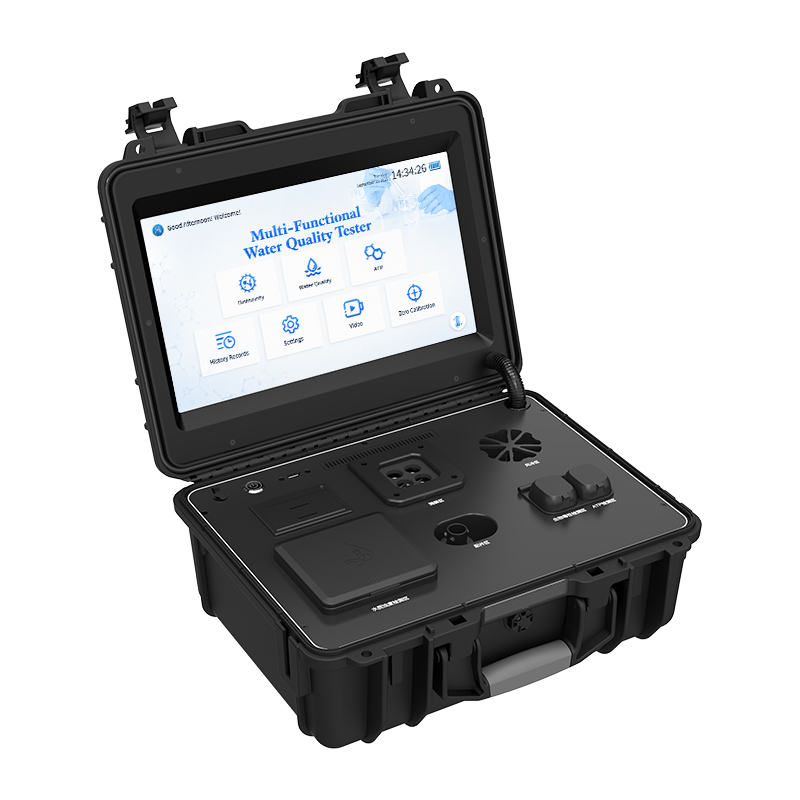
 +86 17853698681