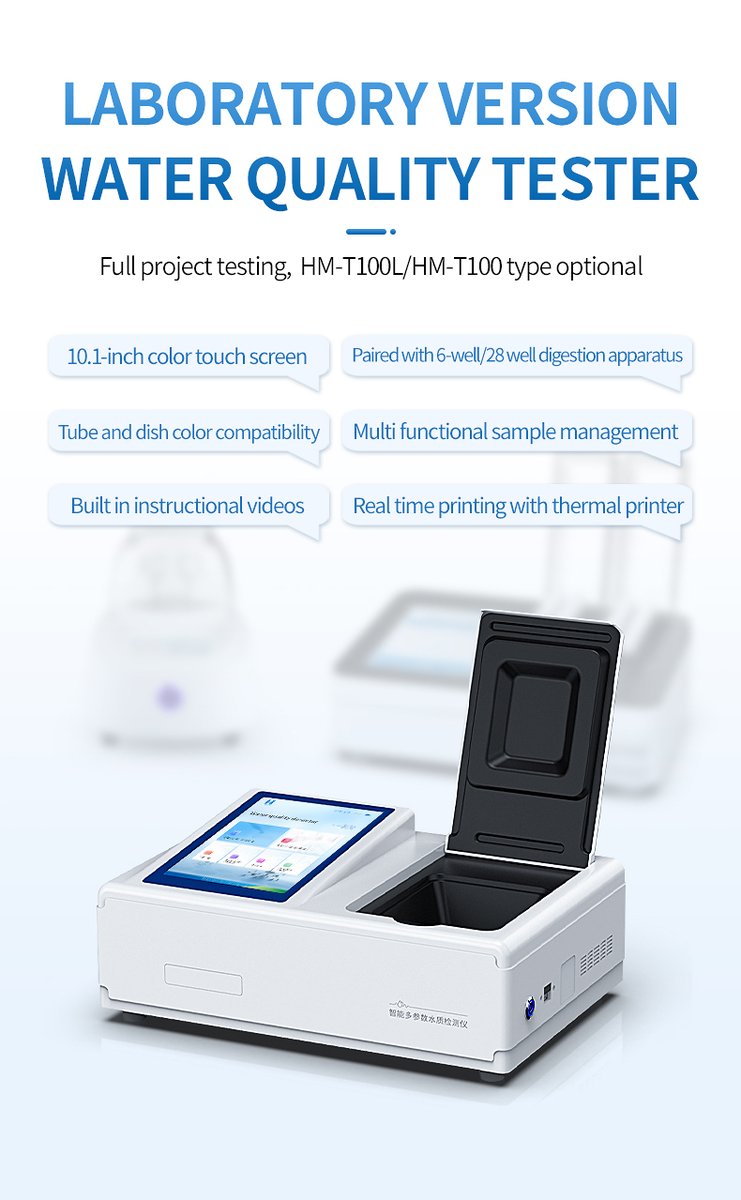
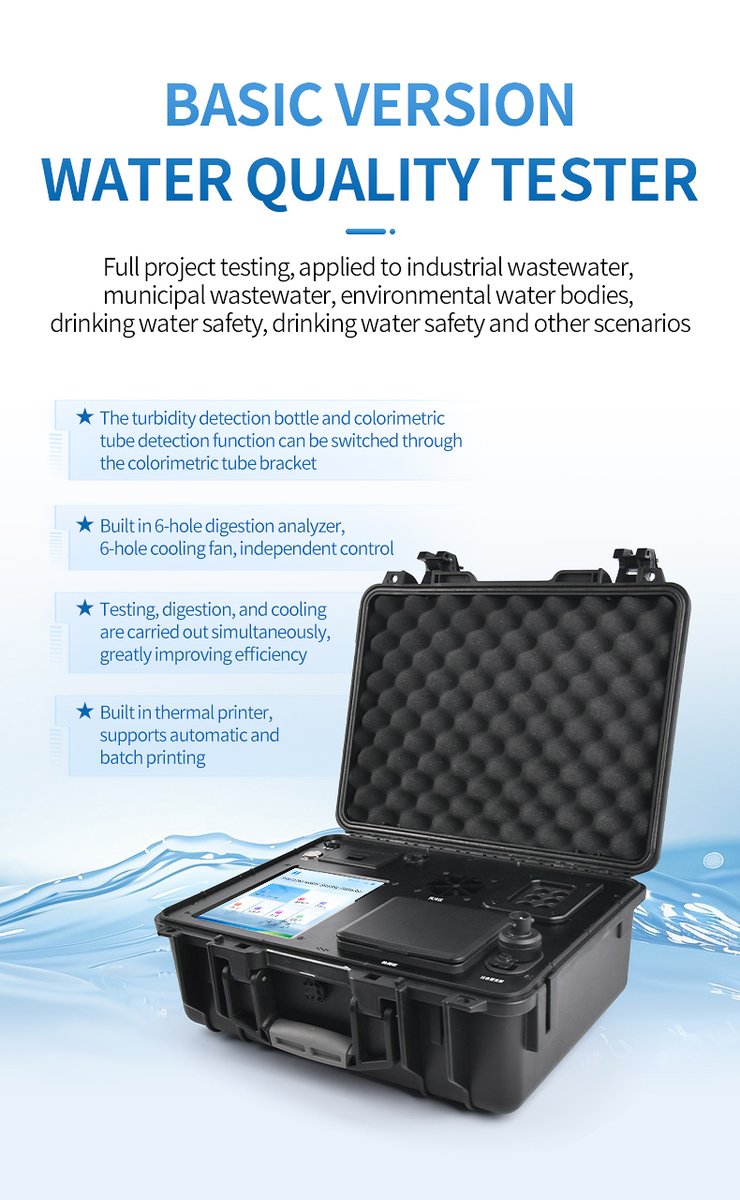
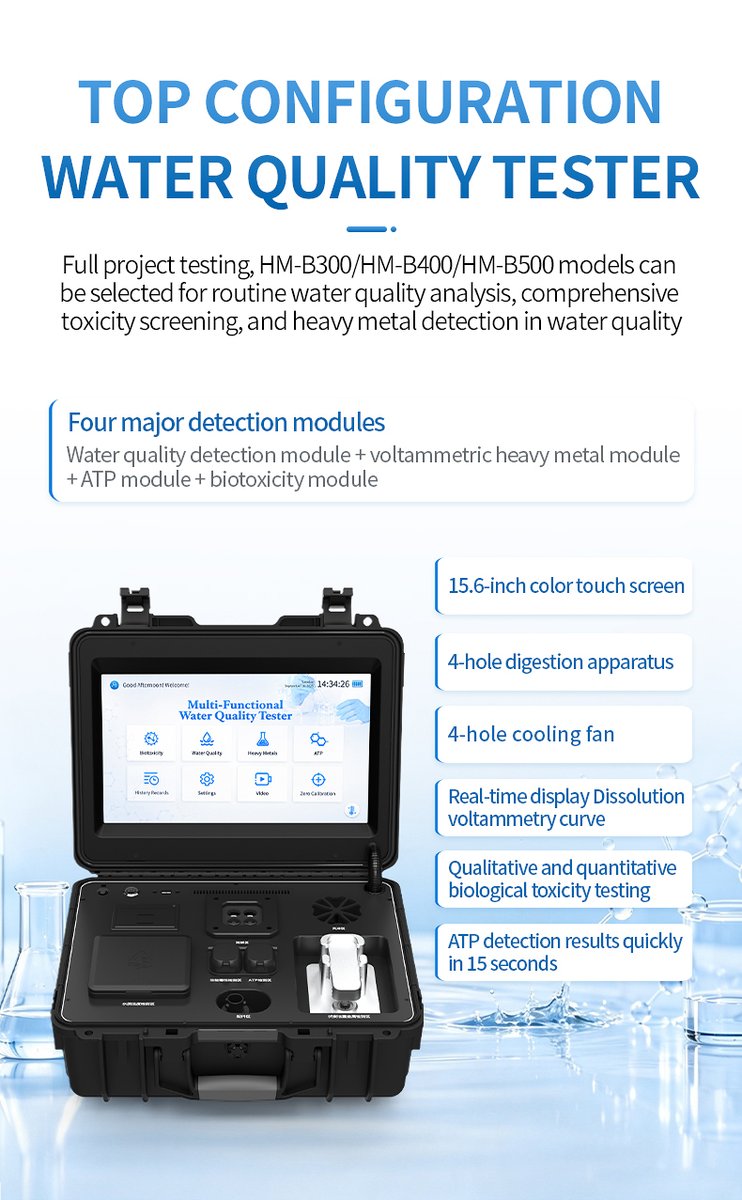
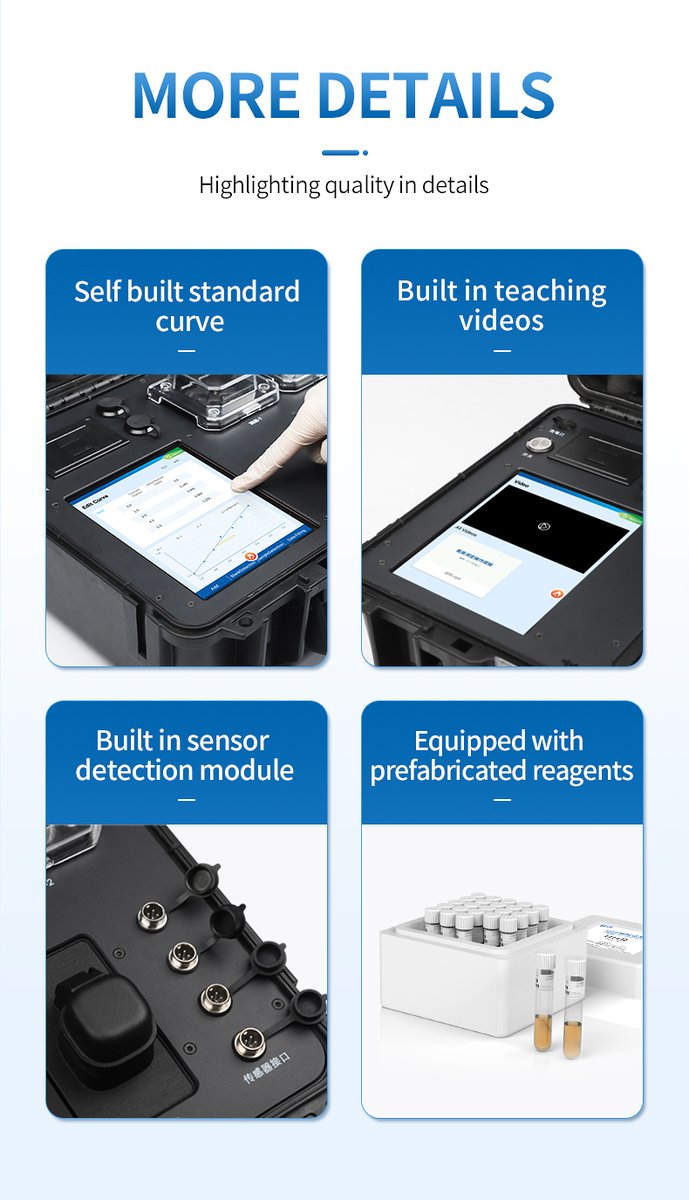


Product Introduction
Water quality professionals face a fundamental instrumentation challenge: spectrophotometric methods excel at measuring chemical parameters like COD, total nitrogen, and heavy metals, while electrode sensors provide real-time readings of pH, dissolved oxygen, conductivity, and turbidity — yet these two analytical approaches have historically required separate instruments. This division forces field teams to carry multiple devices, manage separate calibration schedules, and manually consolidate data from different systems.
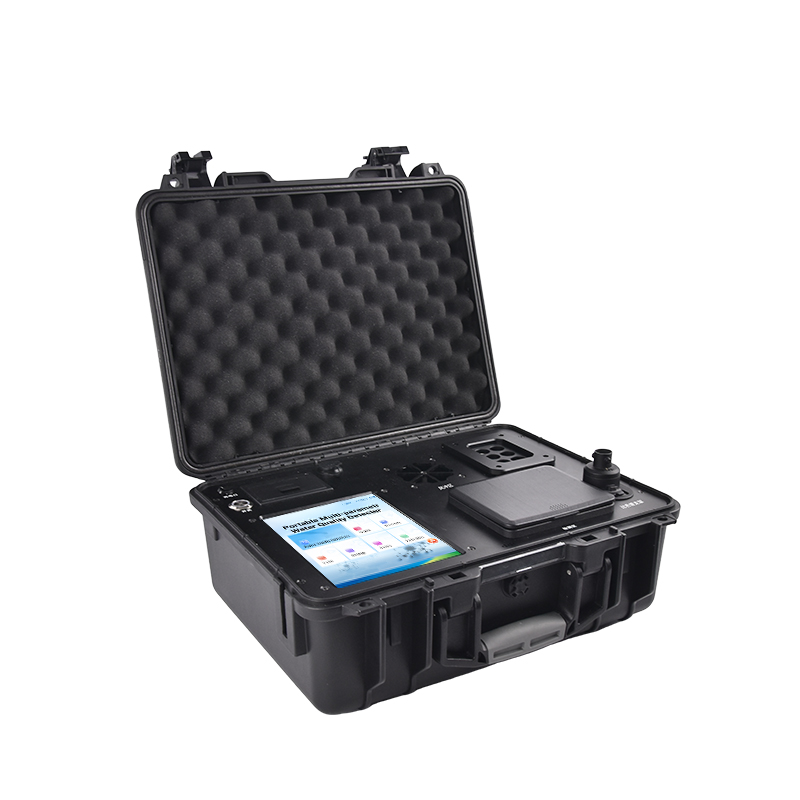
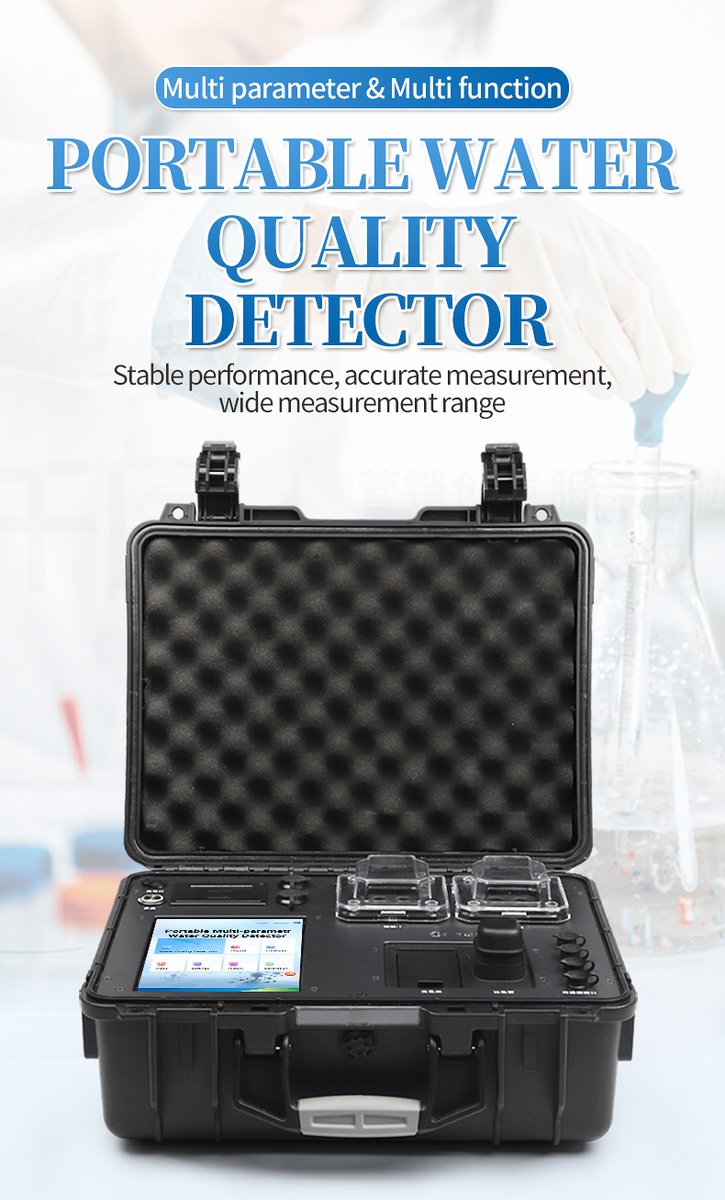
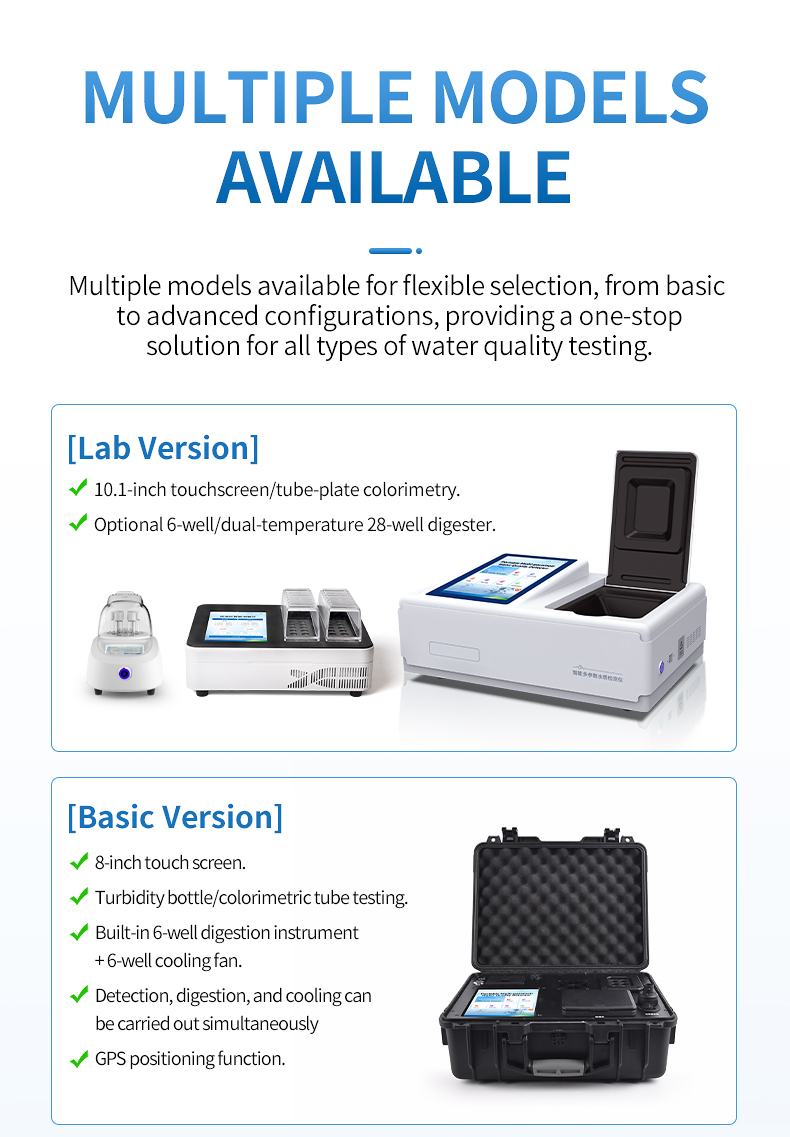
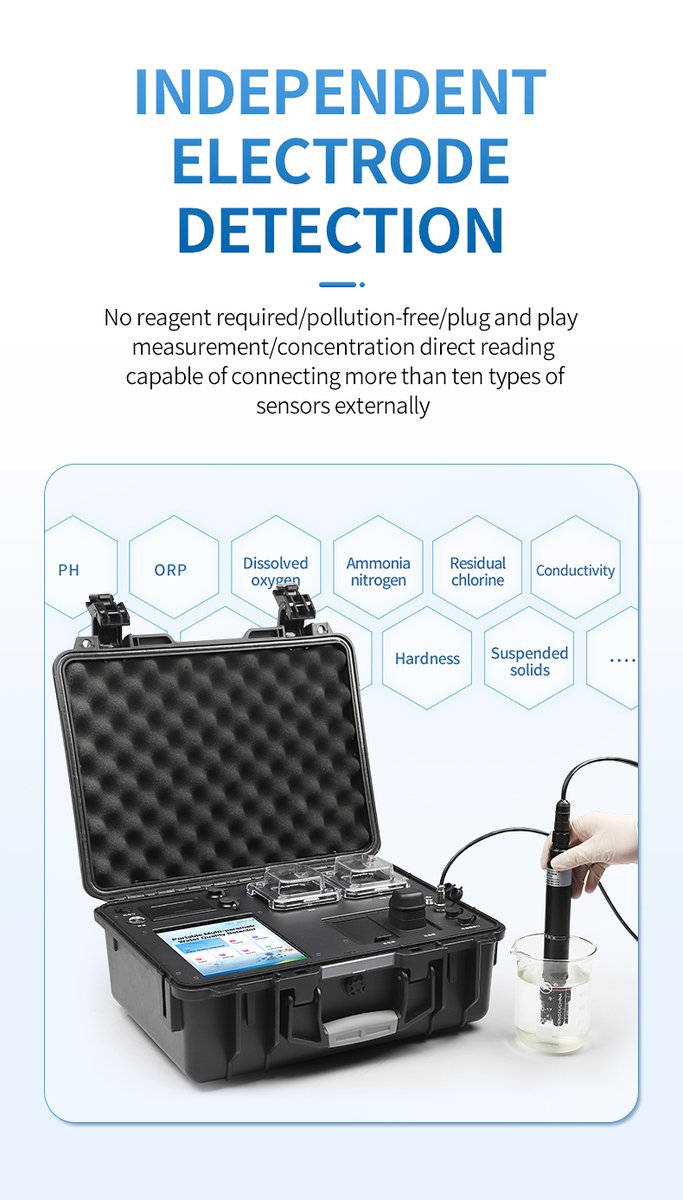
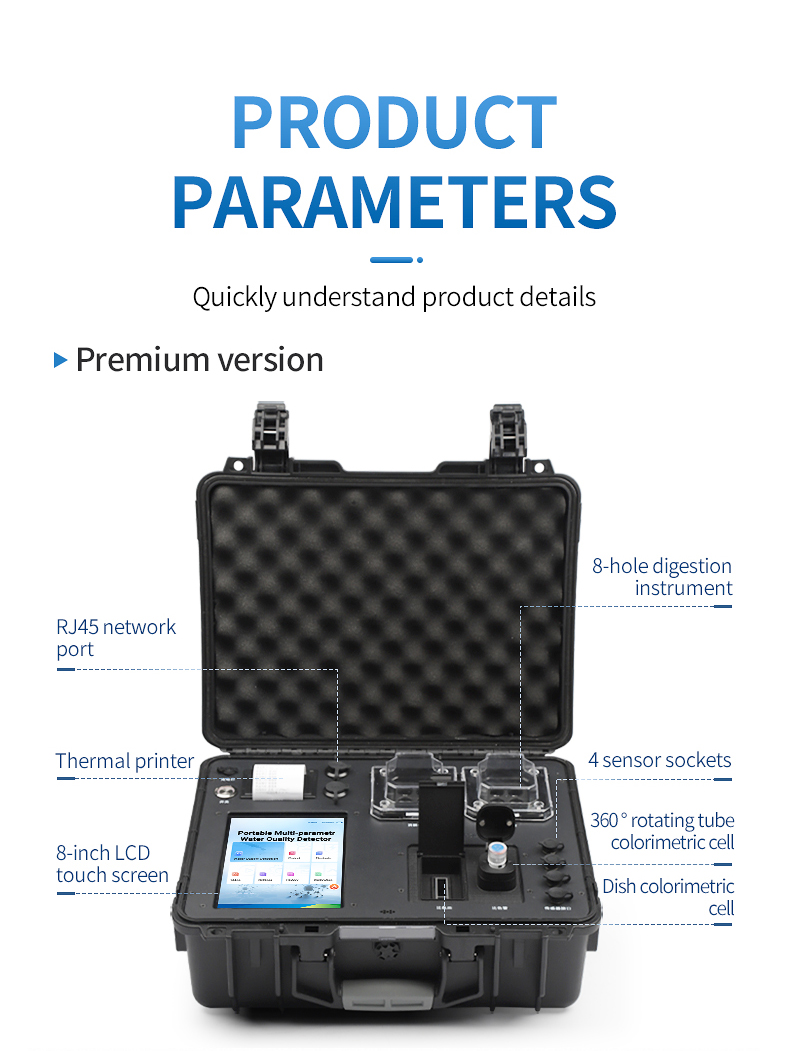
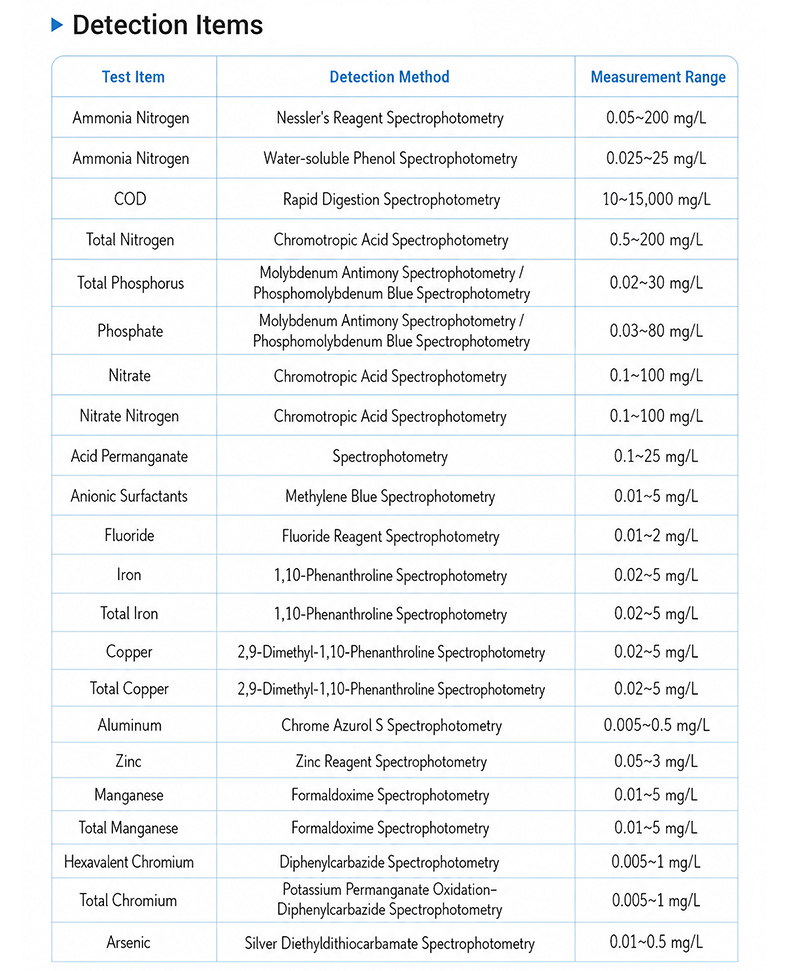
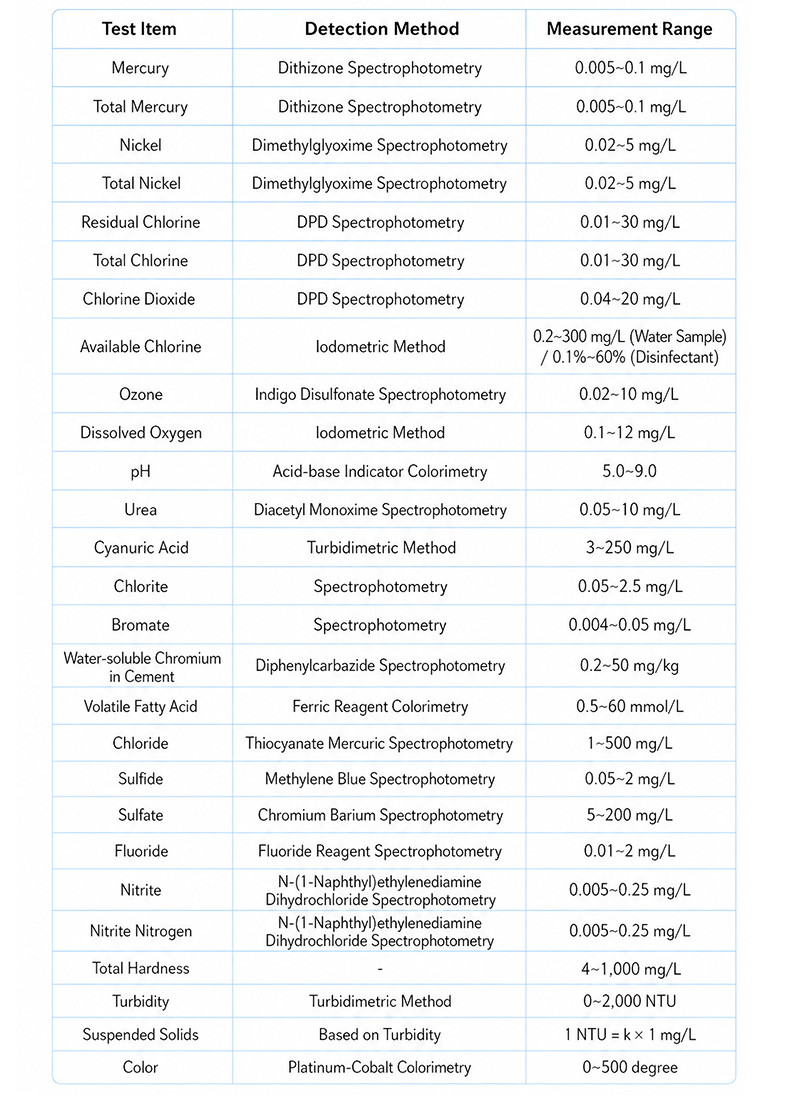
The HM-B200M resolves this limitation by unifying both detection technologies within a single 11kg portable platform. Its spectrophotometric module covers 49 standardized colorimetric parameters, while the integrated 4-port sensor module simultaneously accepts up to 4 different electrode probes — enabling concurrent measurement of parameters such as pH, ORP, dissolved oxygen (fluorescence method), residual chlorine (constant voltage method), conductivity, salinity, ozone, turbidity, hardness, suspended solids, sludge concentration, COD, ammonia nitrogen, chlorophyll, blue-green algae, oil in water, and CDOM.
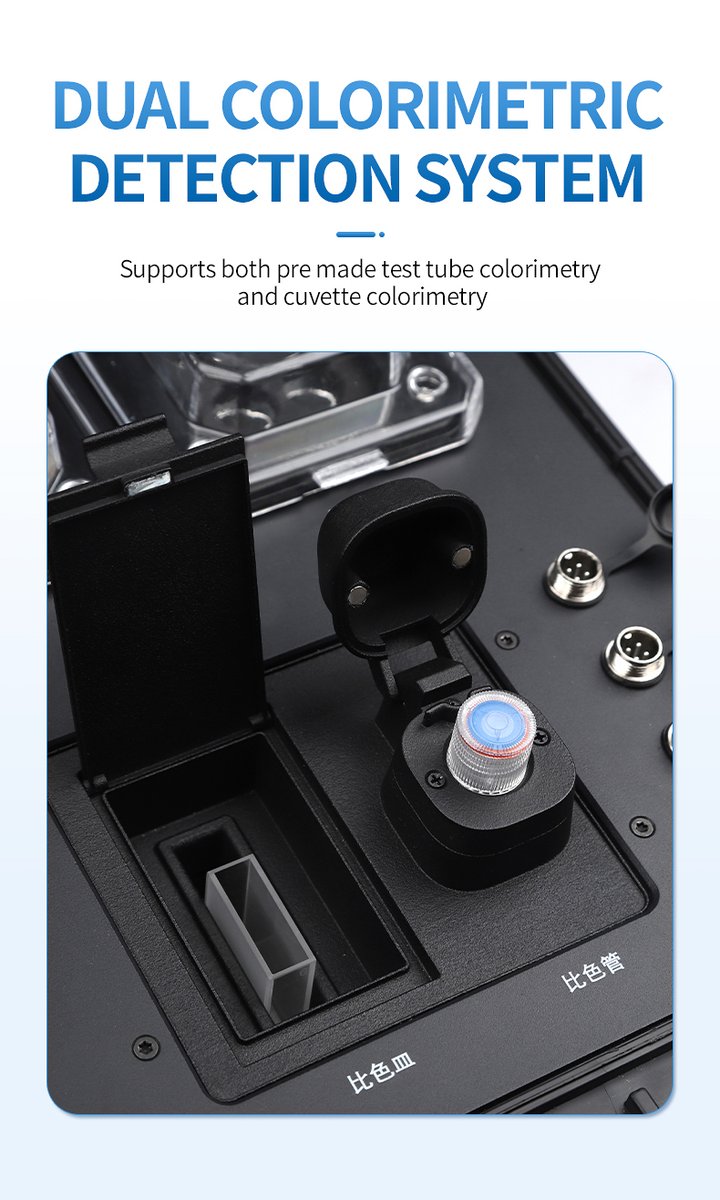
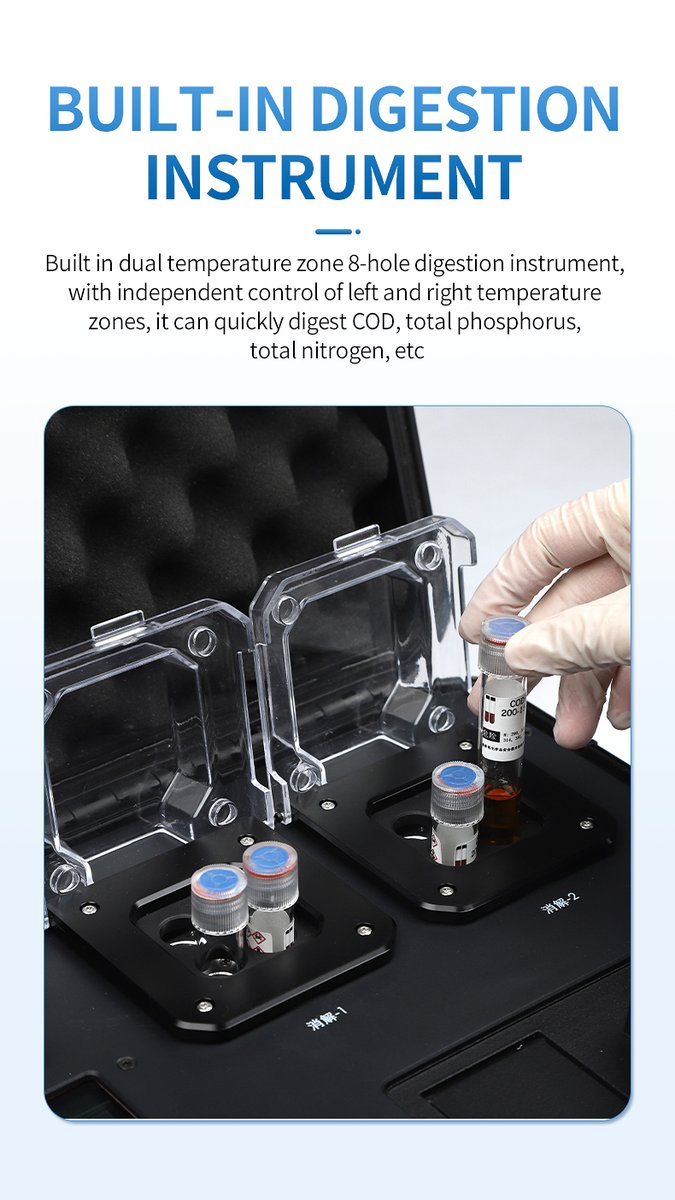
This unified architecture delivers measurable operational advantages. A wastewater treatment plant operator can simultaneously digest COD samples in the dual-temperature-zone 8-hole block, run spectrophotometric ammonia nitrogen analysis through the 360° rotating colorimetric system, and monitor pH and dissolved oxygen via sensor probes — all from one instrument interface. Sensor readings support both timed automatic storage and manual capture, with data exportable alongside spectrophotometric results.
For organizations operating spectrophotometry-only systems like the HM-B100M, the B200M sensor module represents a strategic upgrade expanding analytical coverage without adding equipment complexity.
Applications
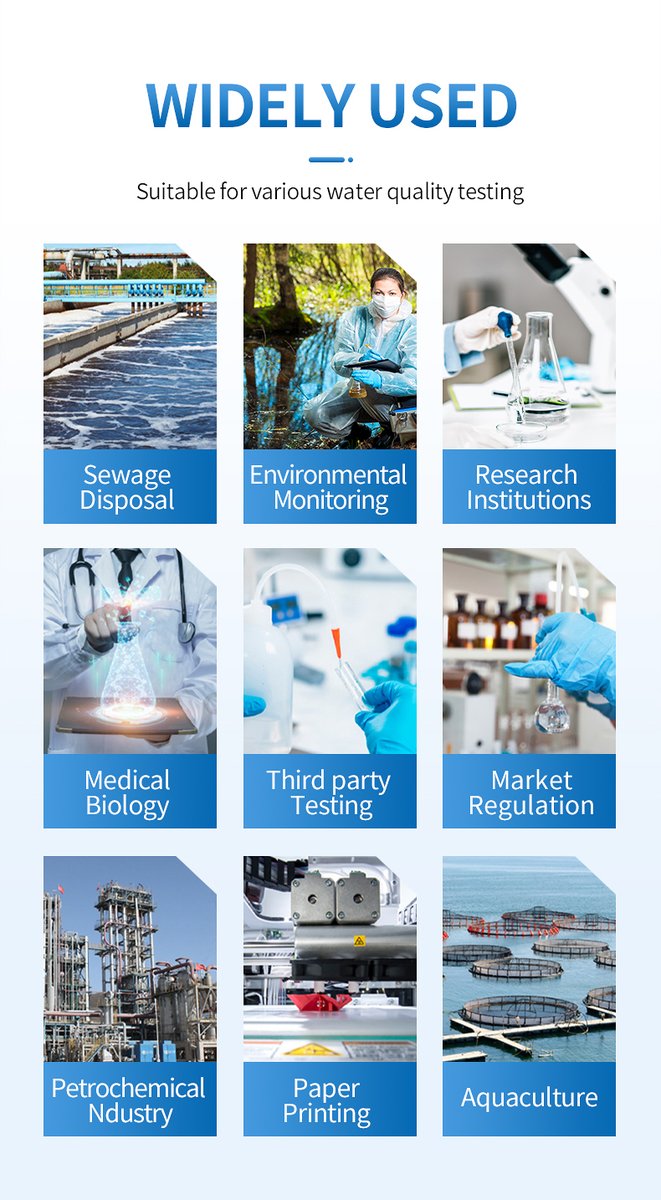
Wastewater Treatment Plant Operations: Combined monitoring of COD, BOD-related parameters, ammonia nitrogen, dissolved oxygen, pH, and suspended solids to optimize biological treatment processes and verify effluent compliance with discharge permits
Environmental Compliance Inspections: Full-spectrum water quality assessment at industrial discharge points combining spectrophotometric heavy metal analysis with real-time pH, conductivity, and dissolved oxygen sensor readings for comprehensive compliance evaluation
Surface Water Ecological Monitoring: Simultaneous measurement of chlorophyll, blue-green algae, dissolved oxygen, turbidity, and nutrient parameters to assess eutrophication status in lakes, reservoirs, and river systems
Industrial Process Water Management: Real-time conductivity, pH, and ORP sensor monitoring combined with periodic spectrophotometric analysis of trace contaminants in cooling water, boiler feedwater, and process streams
Aquaculture Water Quality Management: Continuous dissolved oxygen, pH, ammonia nitrogen, and turbidity monitoring critical for fish and shrimp farming operations, with spectrophotometric confirmation of nutrient levels
Drinking Water Distribution: Residual chlorine tracking combined with spectrophotometric disinfectant byproduct and turbidity analysis
Emergency Spill Response: Rapid dual-technology screening to identify contaminant type and concentration during chemical spill incidents
Key Features & Advantages
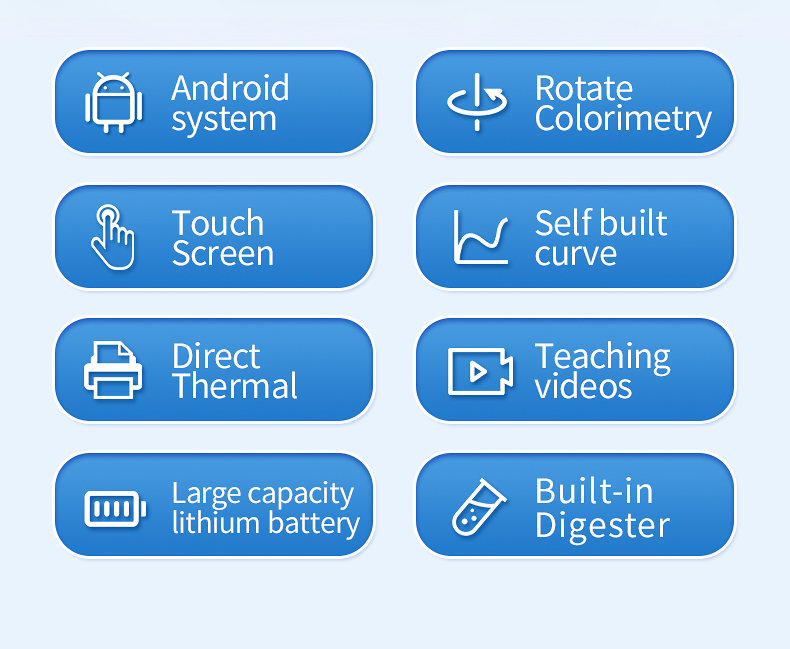
4-port sensor module enables true simultaneous multi-parameter electrode measurement — insert pH, DO, conductivity, and turbidity sensors at the same time for instantaneous water quality profiling
Unified data management consolidates spectrophotometric and sensor results into a single instrument database with GPS tagging, eliminating manual data merging from separate devices
Concurrent operation of detection, digestion, and sensor measurement modules maximizes field team productivity — one operator accomplishes the work traditionally requiring multiple instruments
17+ compatible sensor types from basic pH/ORP to specialized chlorophyll and CDOM detection, all plug-and-play with automatic recognition
Sensor timed storage records readings at set intervals, enabling unattended monitoring during digestion cycles or sample preparation
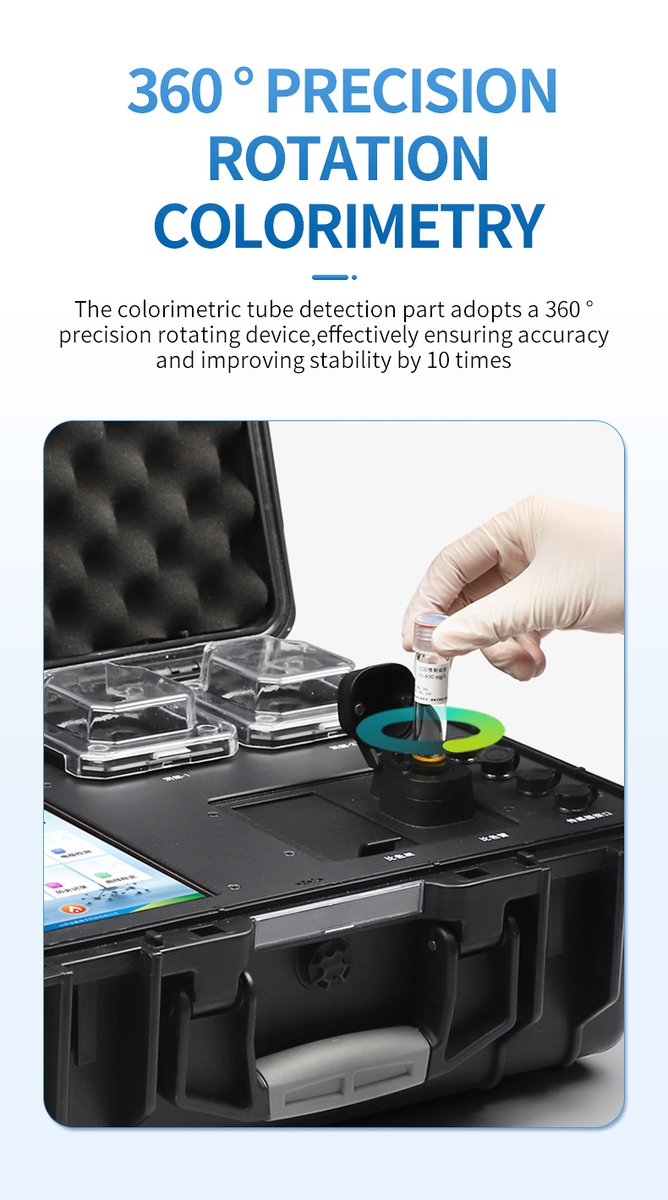
360° rotating colorimetric system provides 10× stability improvement over fixed optical paths, critical for maintaining accuracy when the instrument sits on uneven terrain or vehicle surfaces
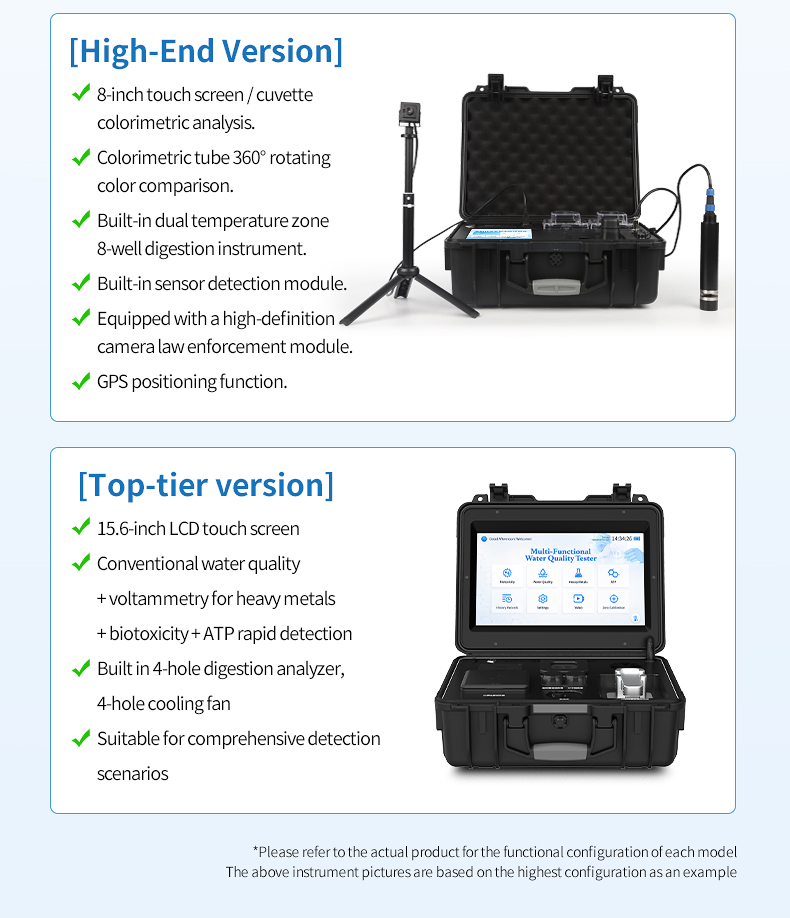
Dual-temperature-zone PID digester independently controls two 4-hole blocks — run COD digestion at 165°C alongside total phosphorus digestion at 120°C without cross-interference
720P evidence camera with GPS geo-tagging creates tamper-resistant field documentation linking photographic evidence, location data, and analytical results to each sample record
Cloud platform integration via WiFi, 4G, or RJ45 enables remote supervisors to monitor field data in real time, reducing the lag between sample collection and management decision-making
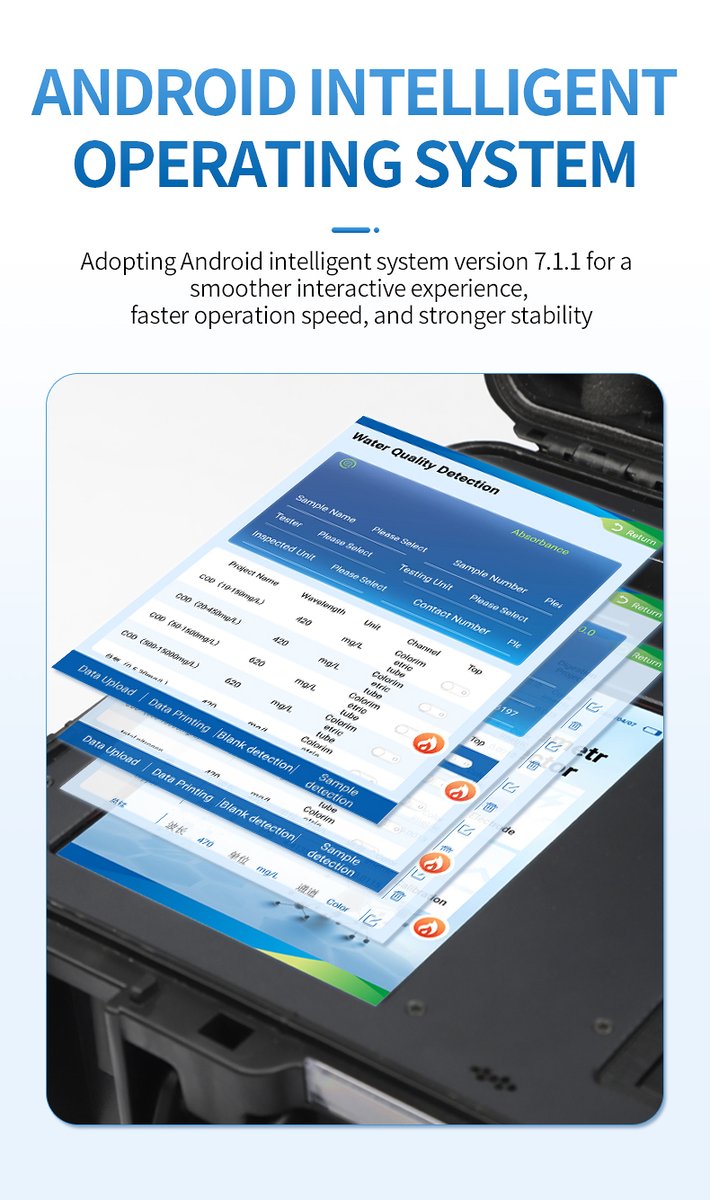
Android 7.1.1 touchscreen interface presents spectrophotometric and sensor workflows through a unified menu system, requiring no instrument switching or software changes between measurement types
10 million record capacity with USB export supports years of daily testing without data management intervention
Technical Specifications
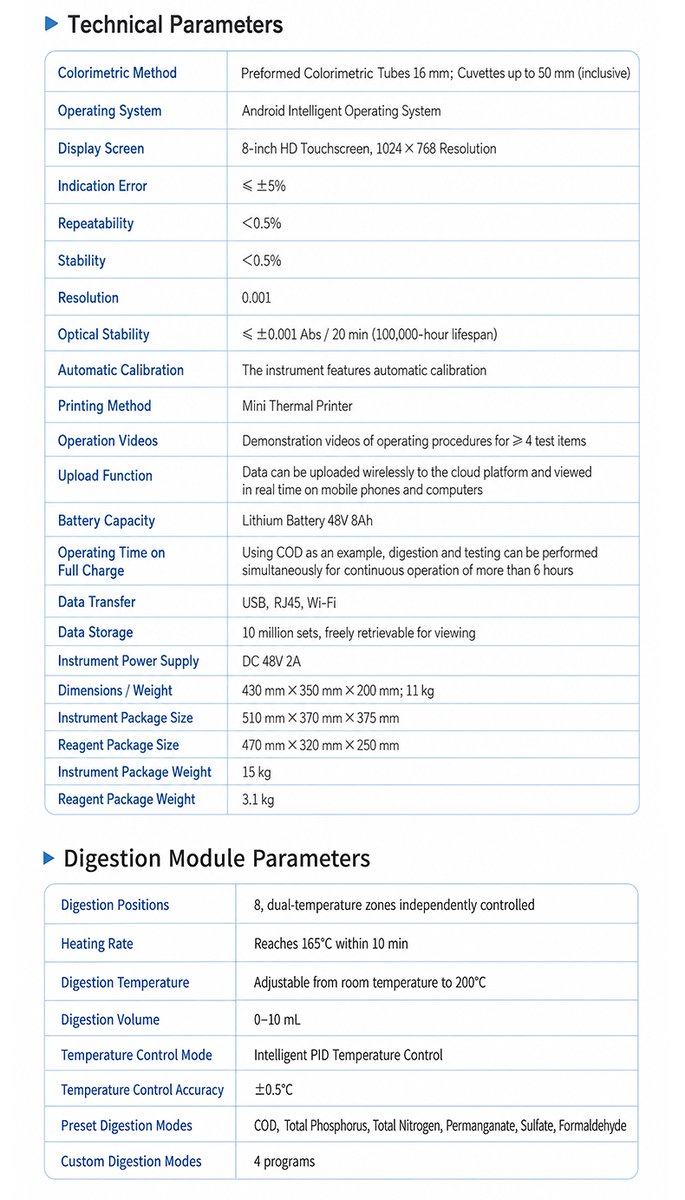
| Parameter | Specification |
|---|
| Colorimetric Method | Pre-made Colorimetric Tubes 16mm; Cuvettes ≤50mm |
| Operating System | Android 7.1.1 |
| Display | 8-inch HD Touchscreen, 1024×768 Resolution |
| Indication Error | ≤±5% |
| Repeatability | <0.5% |
| Stability | <0.5% |
| Resolution | 0.001 |
| Optical Stability | ≤±0.001Abs/20min (100,000-hour lifespan) |
| Automatic Calibration | Built-in auto-calibration function |
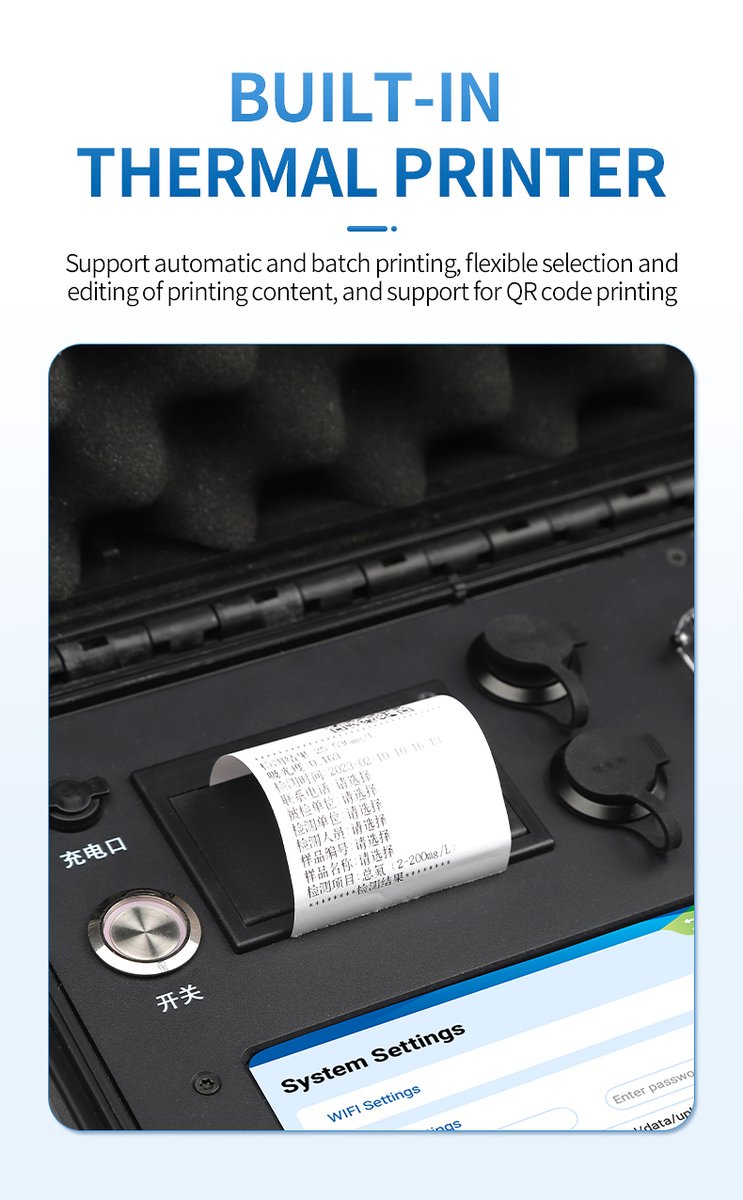
| Printing Method | Mini thermal printer |
| Sensor Ports | 4 independent ports, simultaneous insertion and detection |
| Sensor Storage | Timed automatic or manual storage with print output |
| Battery Capacity | Lithium 48V8AH |
| Full Charge Runtime | 6+ hours (digestion + detection simultaneously) |
| Data Transfer | USB, RJ45, WiFi |
| Digestion Positions | 8 holes, dual-temperature-zone independent control |
| Heating Rate | Reaches 165°C within 10 minutes |
| Digestion Temperature | RT–200°C adjustable |
| Digestion Volume | 0–10 mL |
| Temperature Control | Intelligent PID, ±0.5°C accuracy |
| Preset Digestion Modes | COD, TP, TN, Permanganate, Sulfate, Formaldehyde |
| Custom Digestion Modes | 4 programs |
| Camera | 1080×720 (720P HD) evidence module |
| Data Storage | 10 million records with GPS tagging |
| Power Supply | DC 48V 2A |
| Dimensions | 430×350×200mm |
| Weight | 11kg |
FAQ
Q: How does the 4-port sensor module work in practice?
Each of the 4 ports accepts a different sensor — e.g., pH, DO, conductivity, and turbidity simultaneously. Results display on a single screen. Data can be captured manually or at timed intervals, useful during sample preparation while digestion cycles run.
Q: What sensor types are compatible with the HM-B200M?
The instrument supports 17+ sensor types including pH, ORP, dissolved oxygen, residual chlorine, conductivity, salinity, ozone, turbidity, hardness, suspended solids, sludge concentration, COD, ammonia nitrogen, chlorophyll, blue-green algae, oil in water, and CDOM. All sensors are plug-and-play with automatic recognition.
Q: Can spectrophotometric and sensor measurements run at the same time?
Yes — the B200M enables spectrophotometric COD analysis through the rotating colorimetric system while simultaneously monitoring pH and dissolved oxygen via sensor probes, all while the dual-zone digester processes additional samples.
Q: How does the B200M compare to using separate handheld meters?
Traditional setups require separate pH, DO, conductivity meters and a spectrophotometer — four instruments with individual calibration and data management. The B200M consolidates all into one 11kg device with unified GPS-tagged storage and cloud upload, reducing total equipment weight from 15-20kg to 11kg.
Q: What training is required to operate both detection systems?
The touchscreen presents both spectrophotometric and sensor workflows through intuitive menus with built-in instructional videos. Most operators become proficient within 1-2 days. Pre-made reagent kits require only adding the water sample for standard parameters.
Q: How does evidence documentation support regulatory compliance?
The 720P camera captures geo-tagged photographs automatically linked to test records with GPS coordinates and timestamps. This creates a complete evidence chain for environmental enforcement agencies, eliminating disputes about sample origin or testing conditions.
Article address:https://www.hmwatertesting.cn/dcsz2/multi-sensor-field-water-analyzer.html

 Current
location:
Current
location: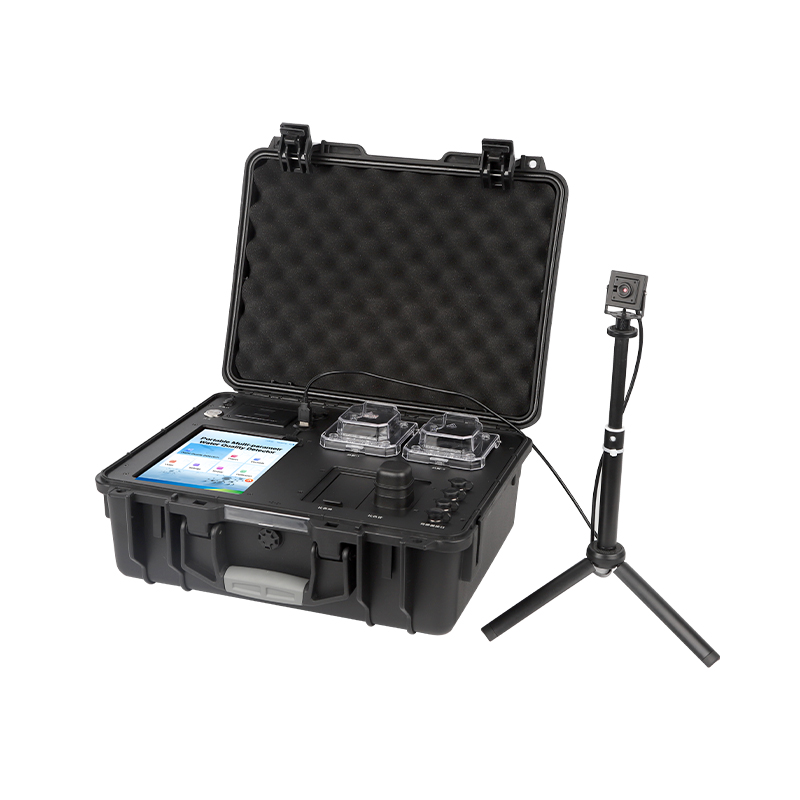
 +86 17853698681