
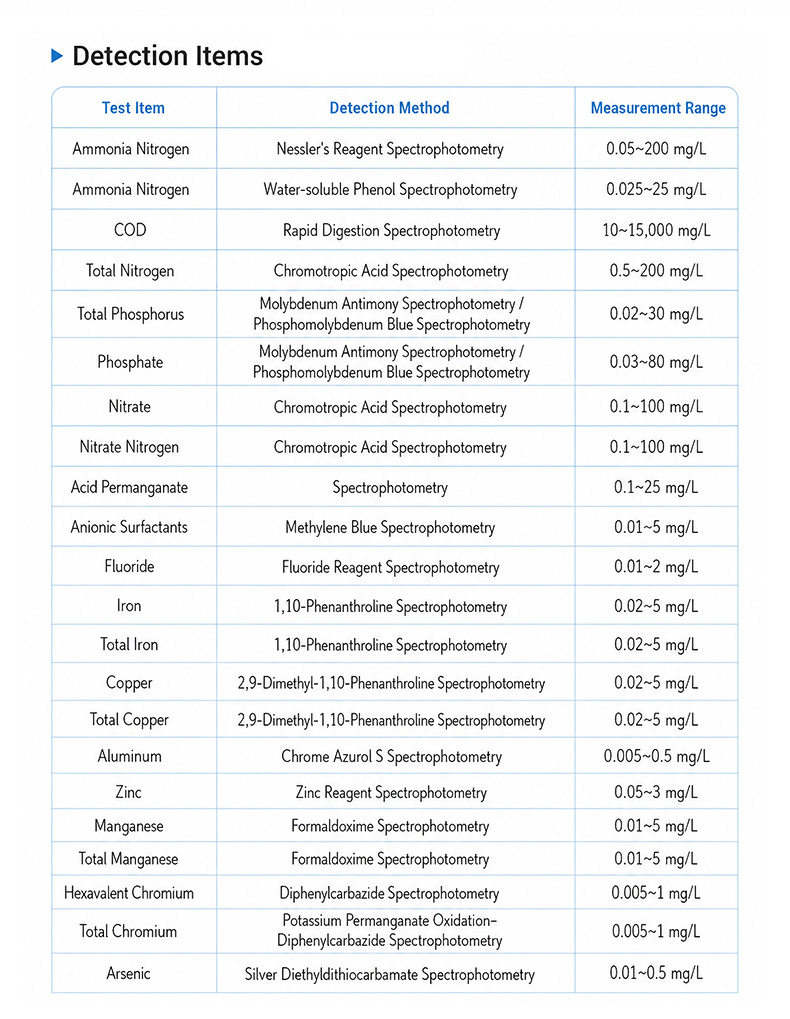
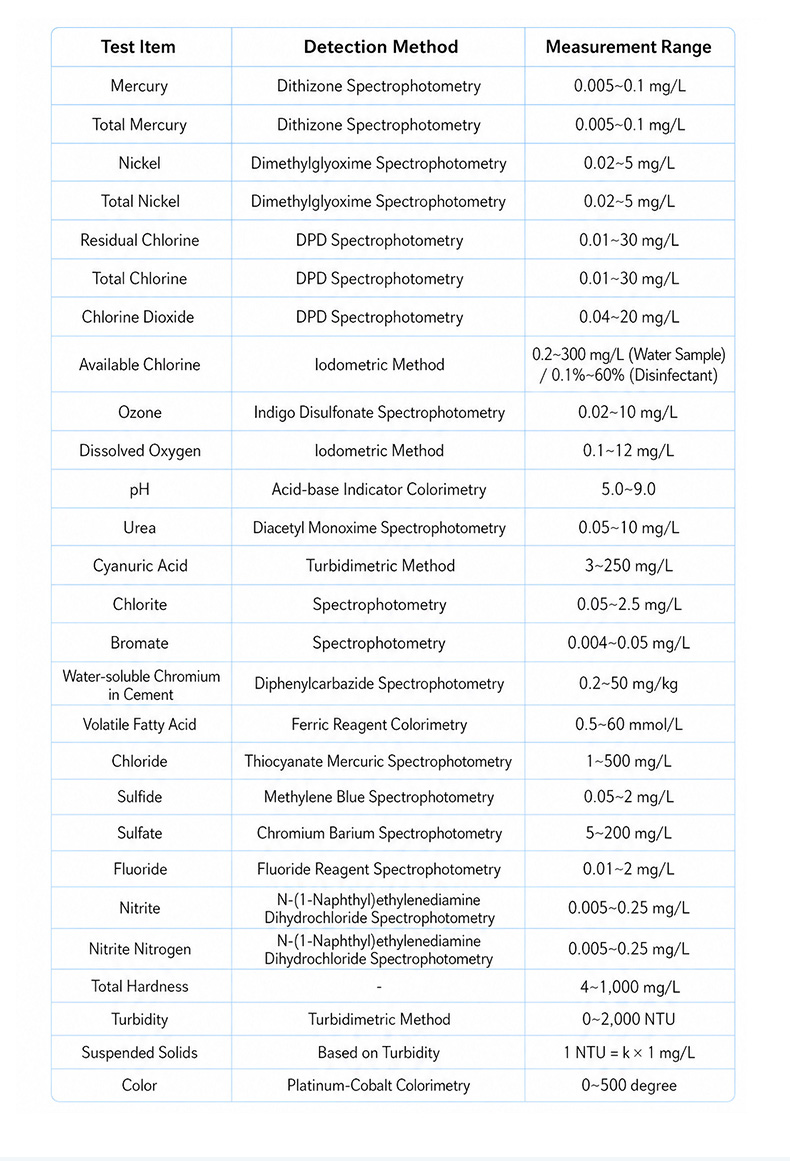

Product Introduction
Wastewater treatment operators face a constant obligation: before effluent leaves the plant, COD and ammonia nitrogen must stay below permitted limits, and regulators expect records to prove it. Laboratory send-outs take days, so process adjustments lag behind actual conditions, while single-parameter instruments force separate field trips — one for COD, another for NH3-N — doubling travel time and reagent handling. Missing either value delays the whole report.
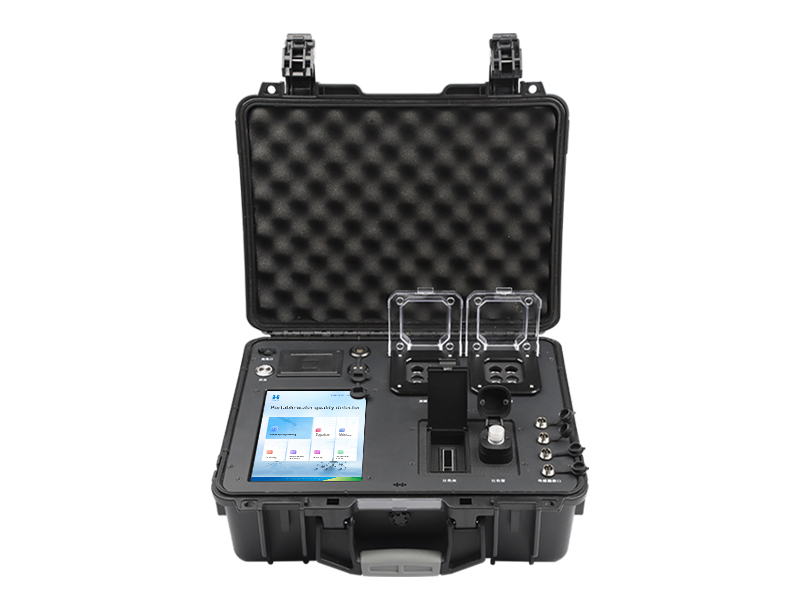
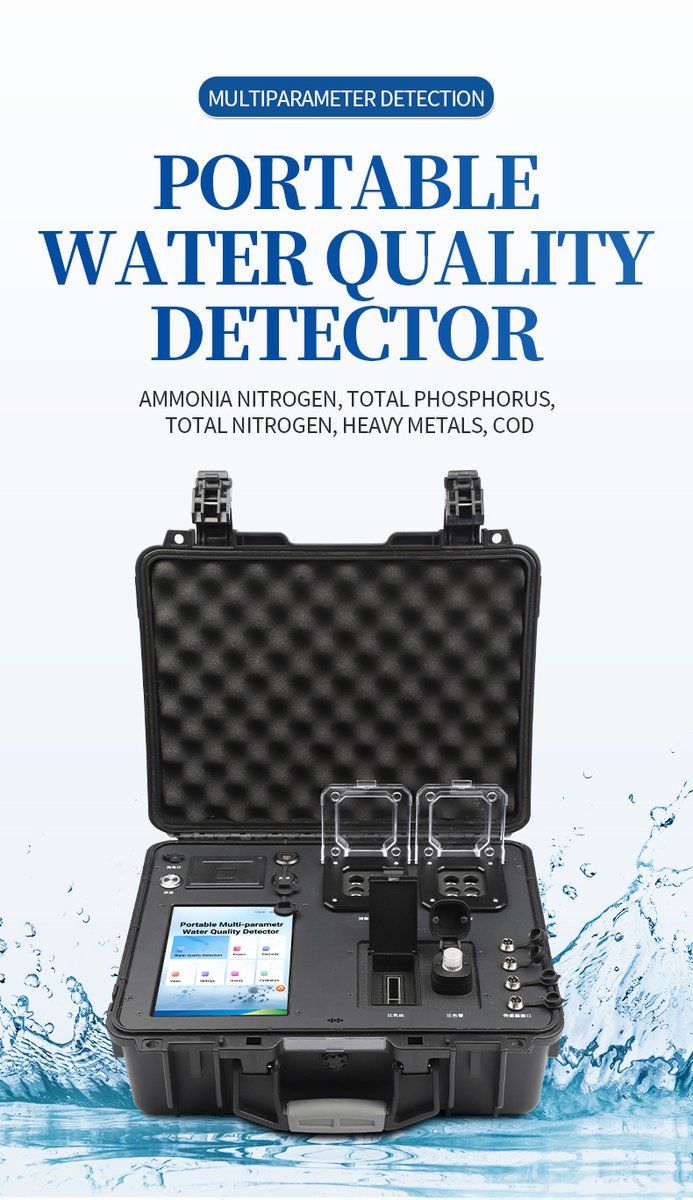
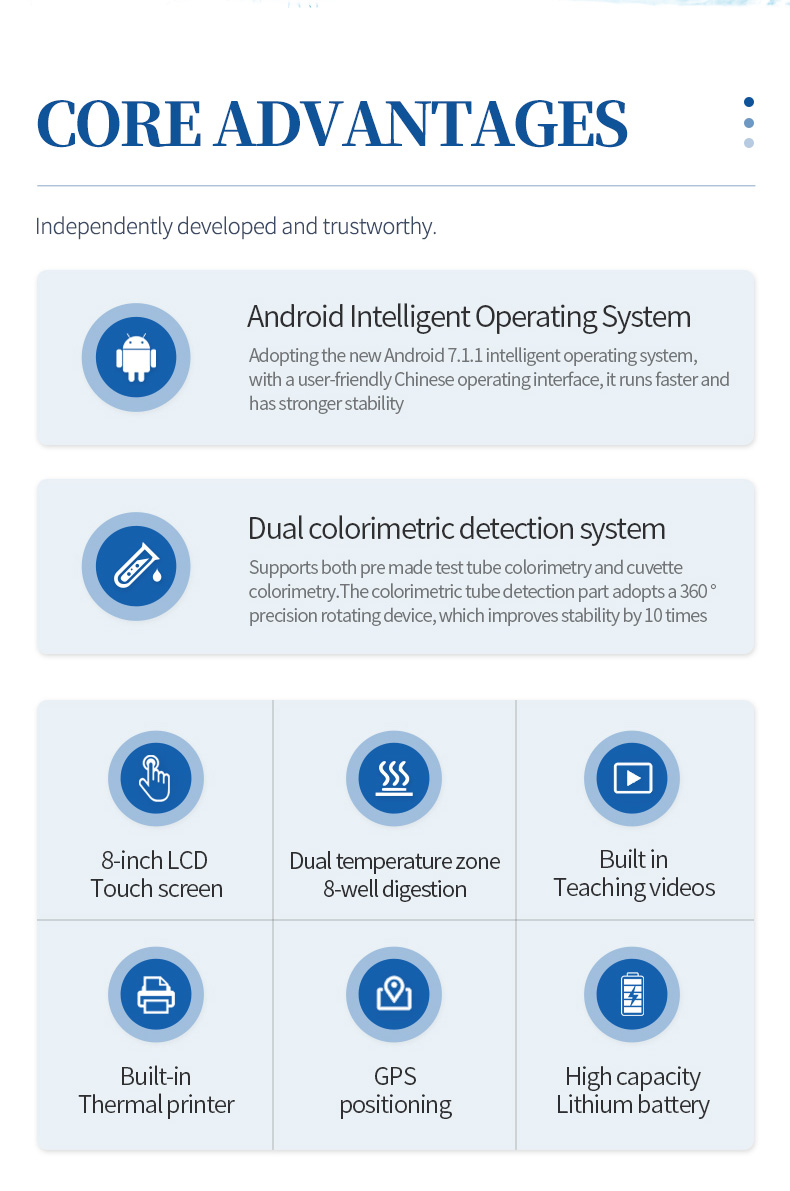
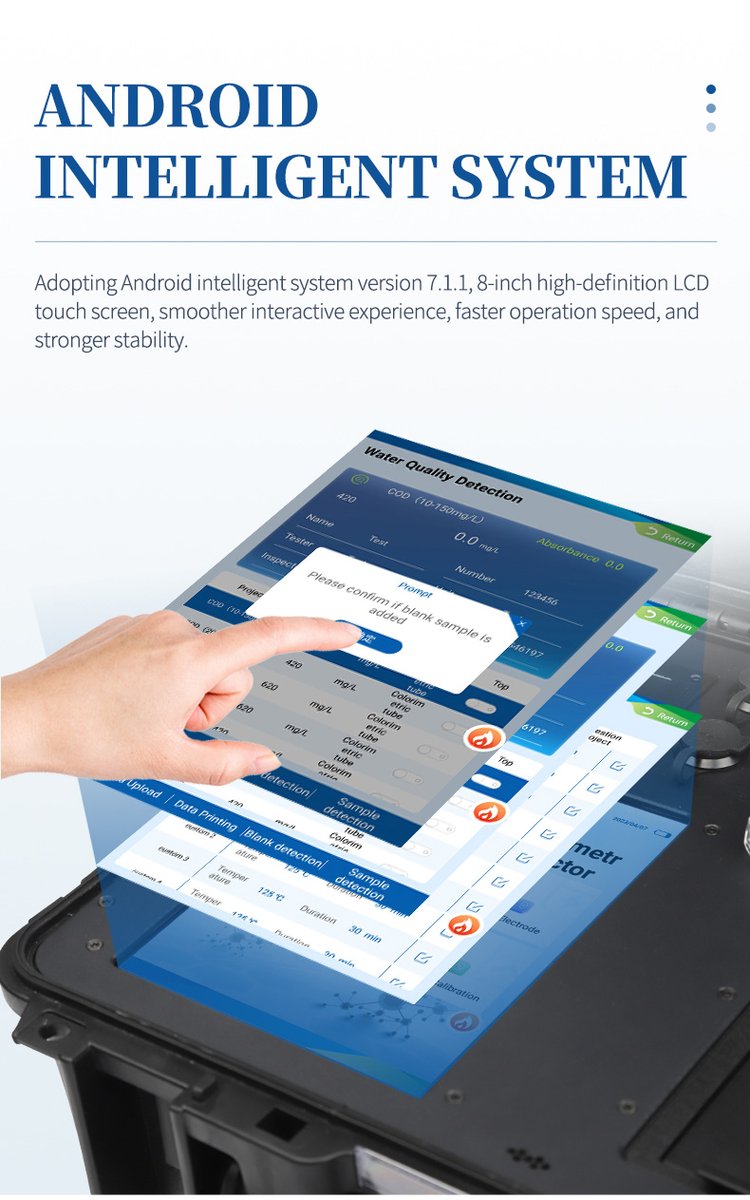
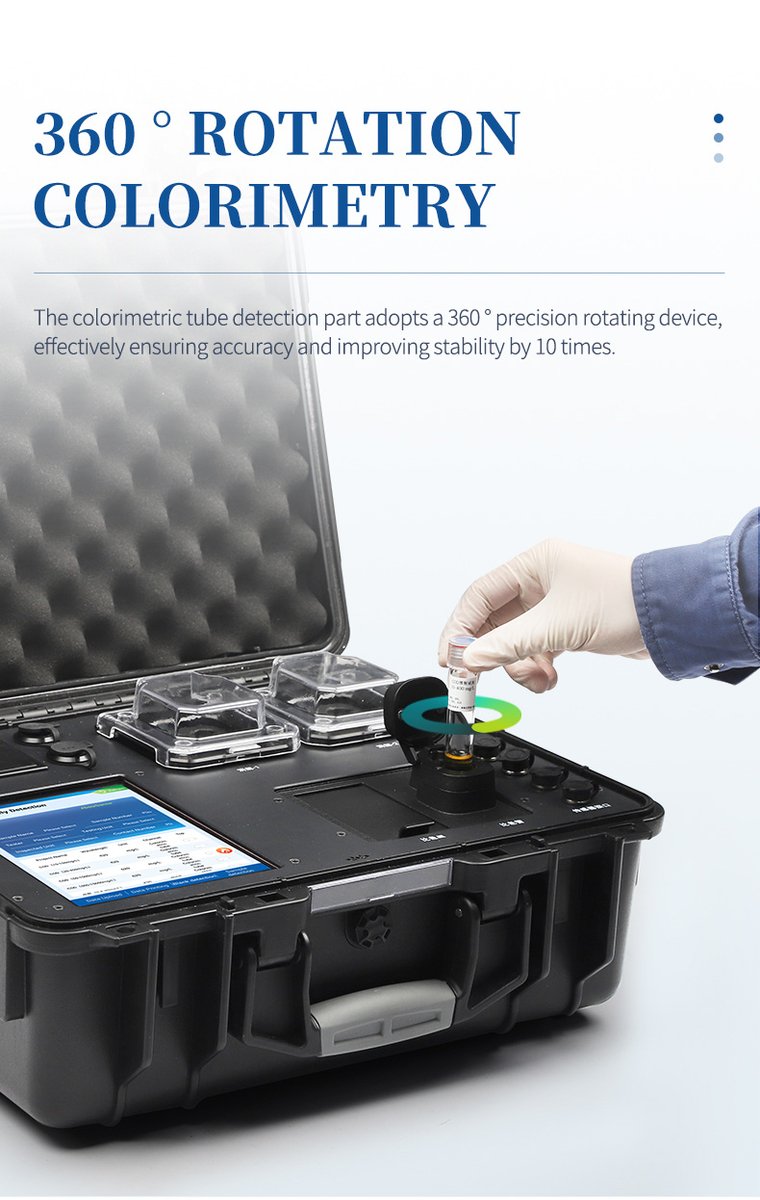
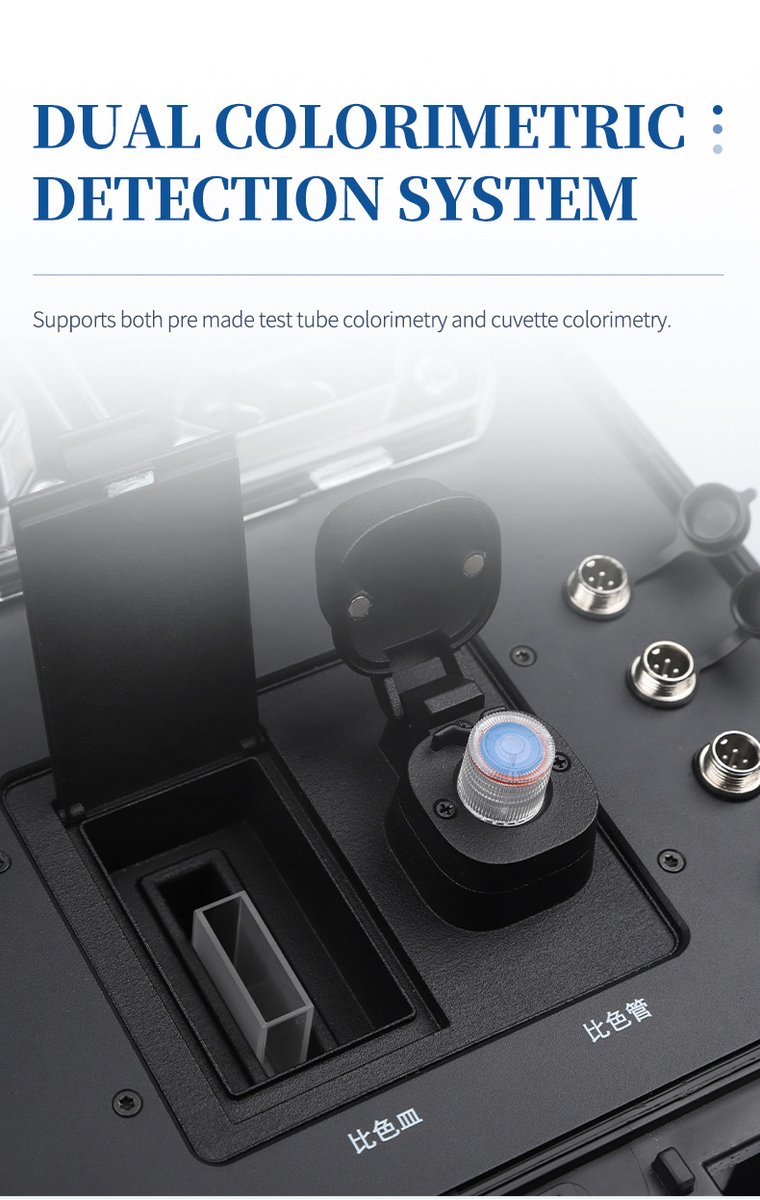
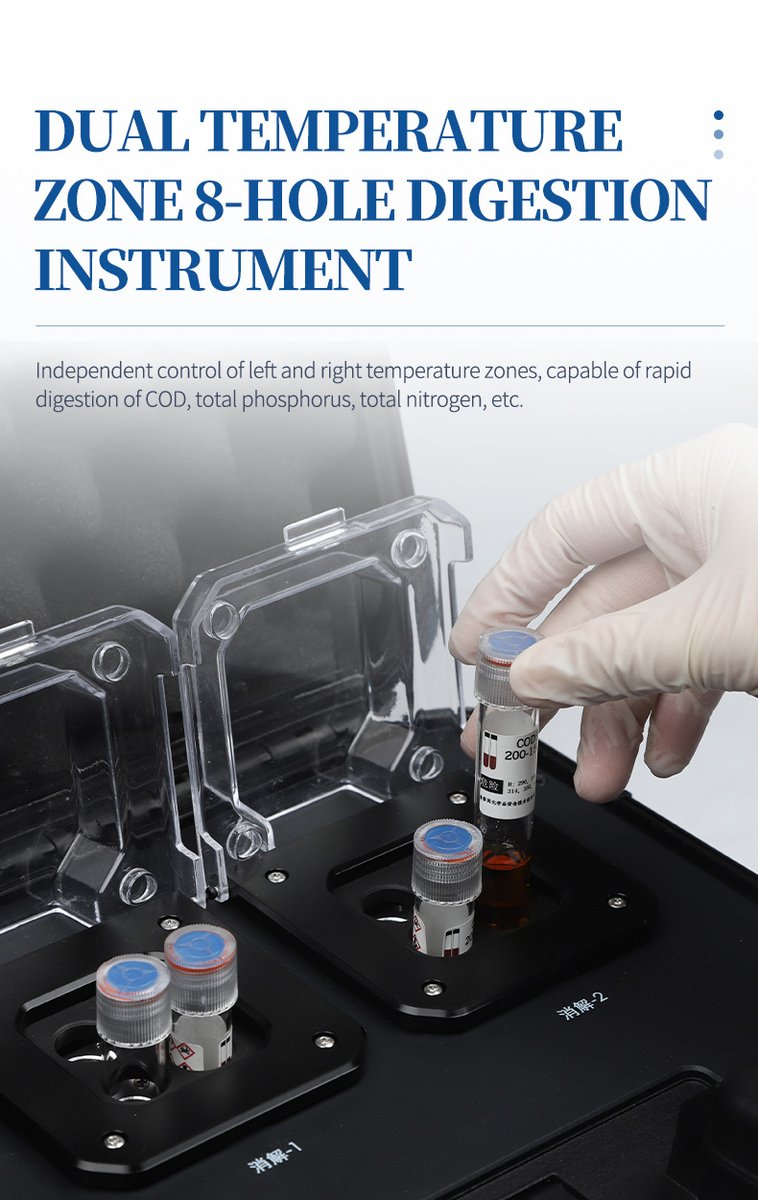
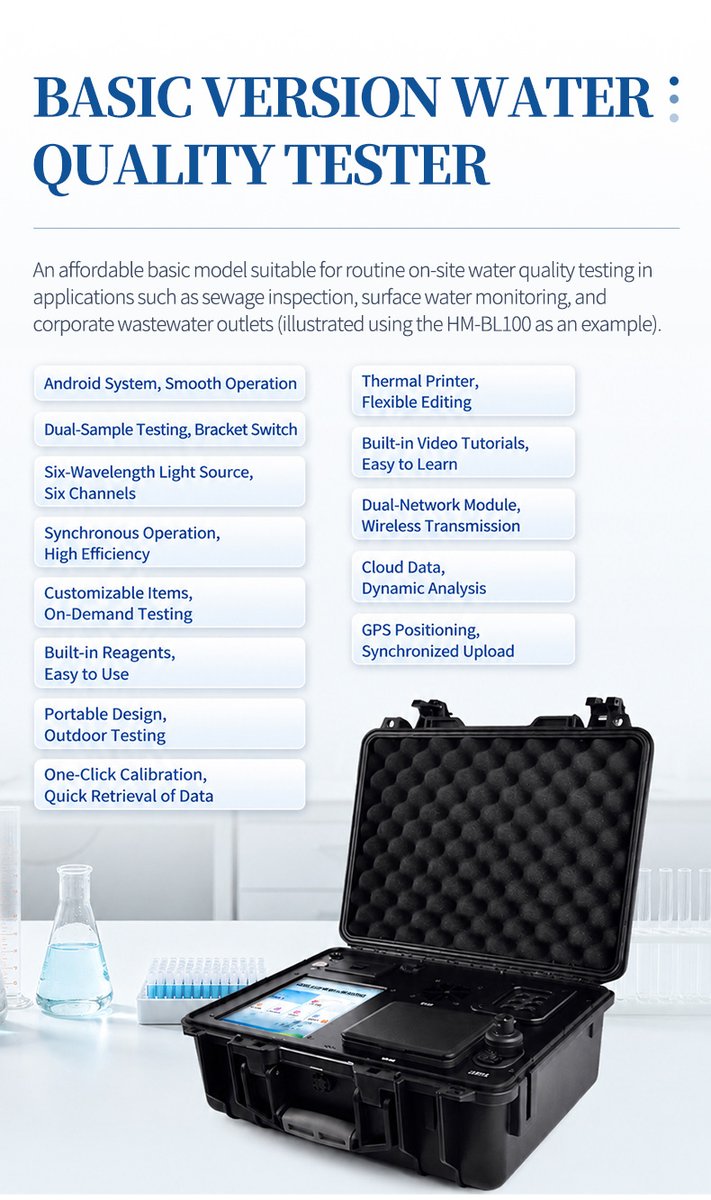
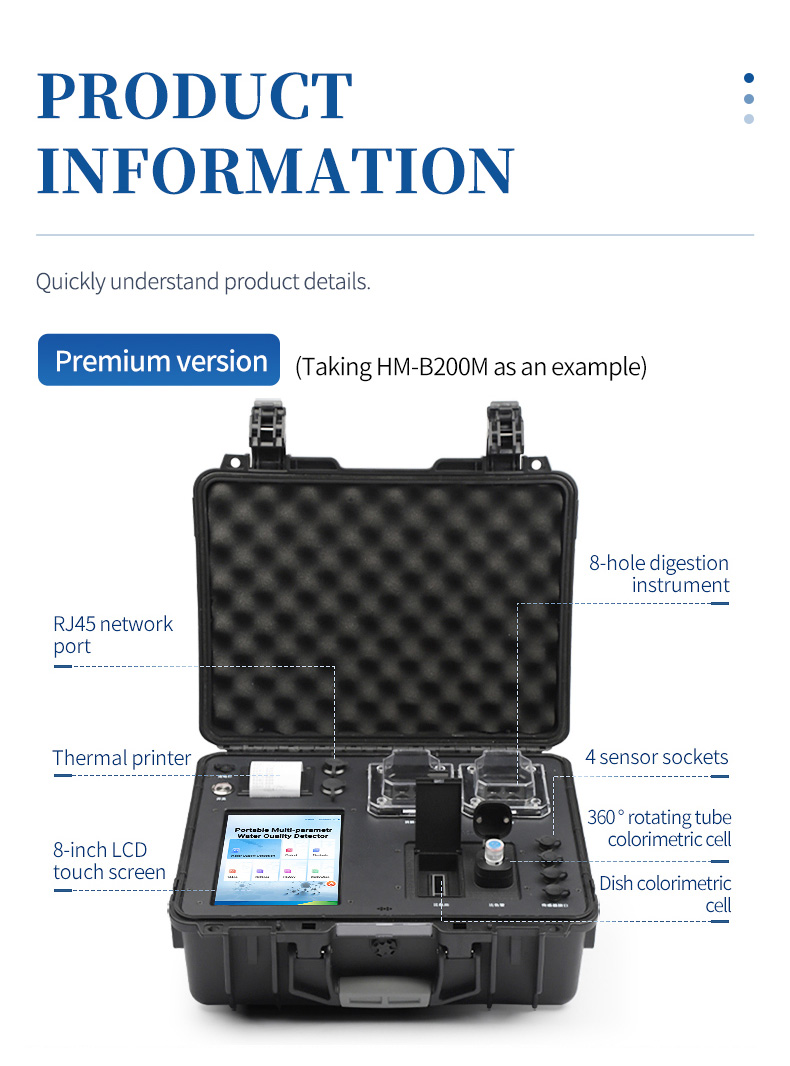
The HM-B02 Pro solves both problems by combining dual-parameter spectrophotometric detection for COD and ammonia nitrogen on a single Android platform. One sampling stop covers the two regulated indicators that dominate discharge permits. Samples digest in the built-in dual-zone 8-vial block — room temperature to 200°C adjustable, 165°C within 10 minutes, smart PID control at ±0.5°C — then read through the dual colorimetric system (16mm pre-made tubes, cuvettes up to 50mm) stabilized by a 360° rotating holder. Digestion, colorimetric reading, and sensor measurement run simultaneously, so a compliance batch finishes in one visit.
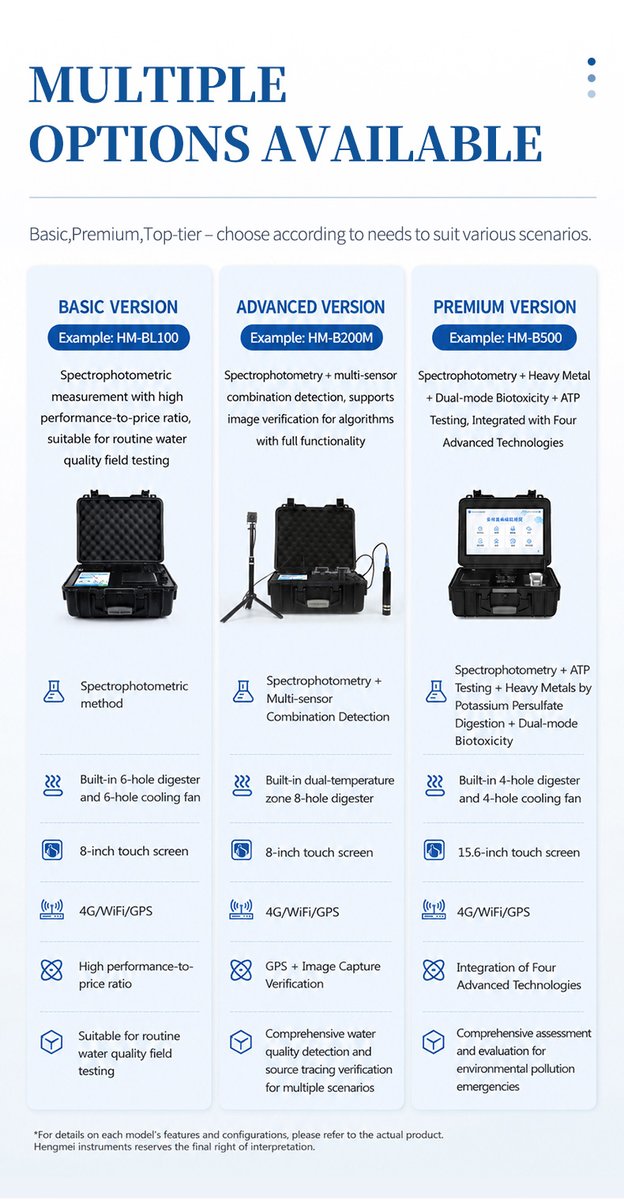
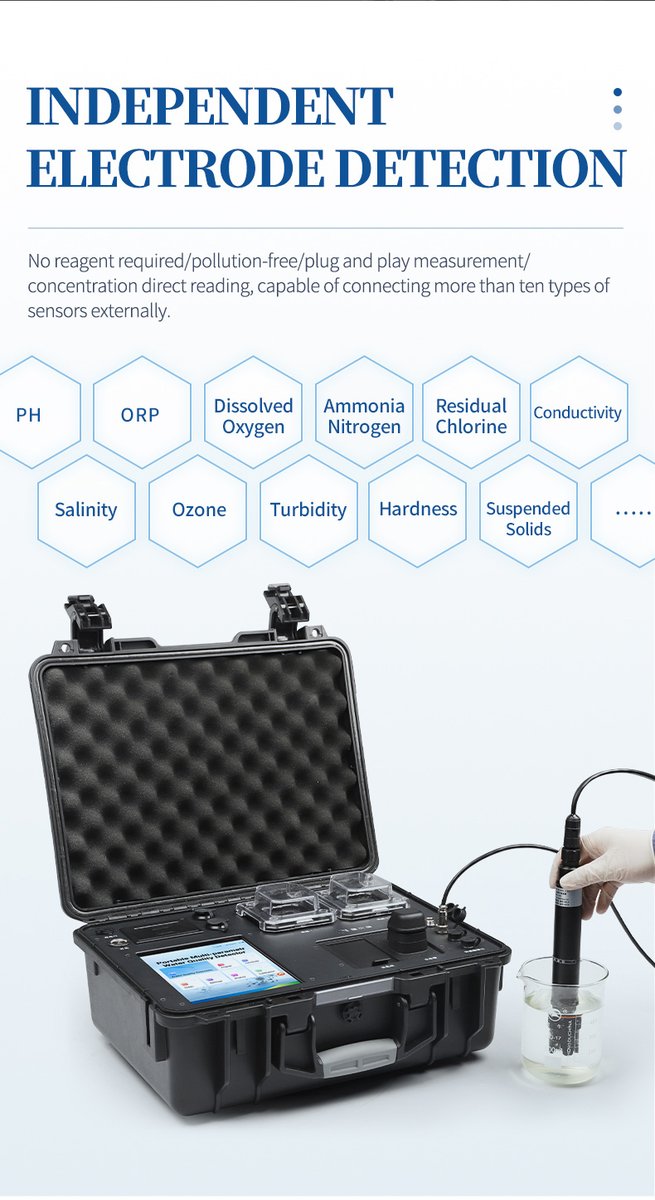
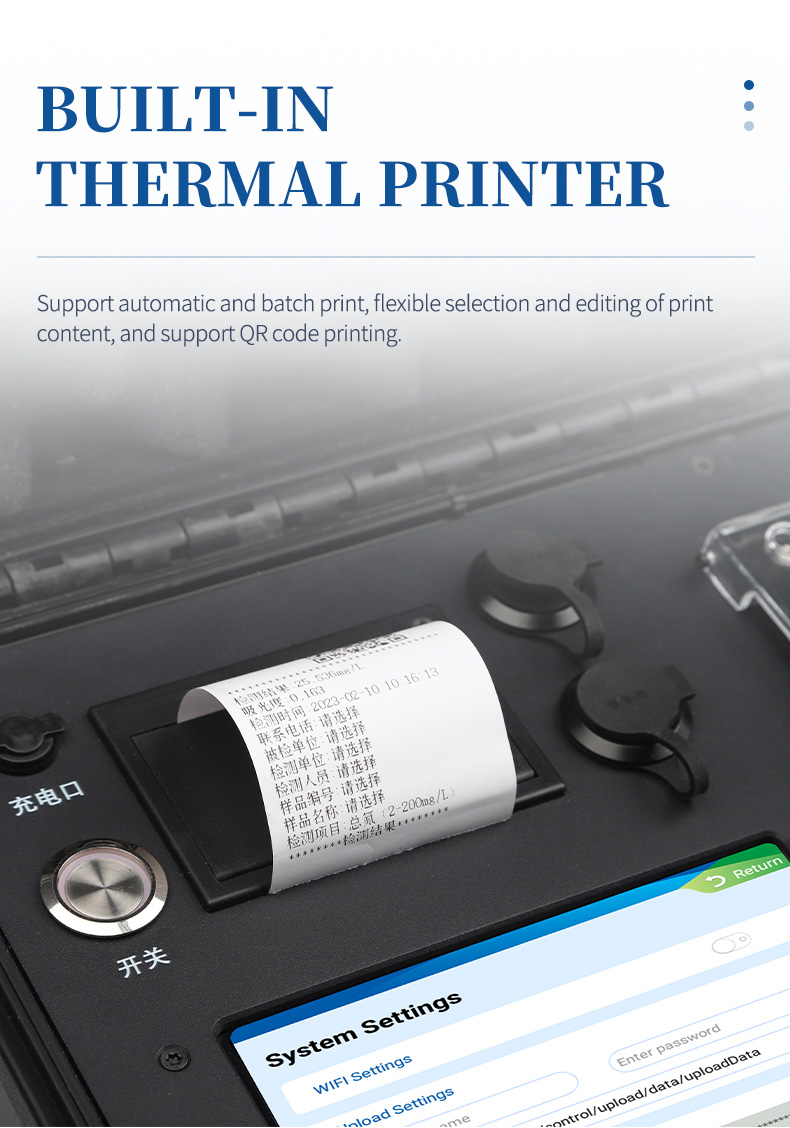
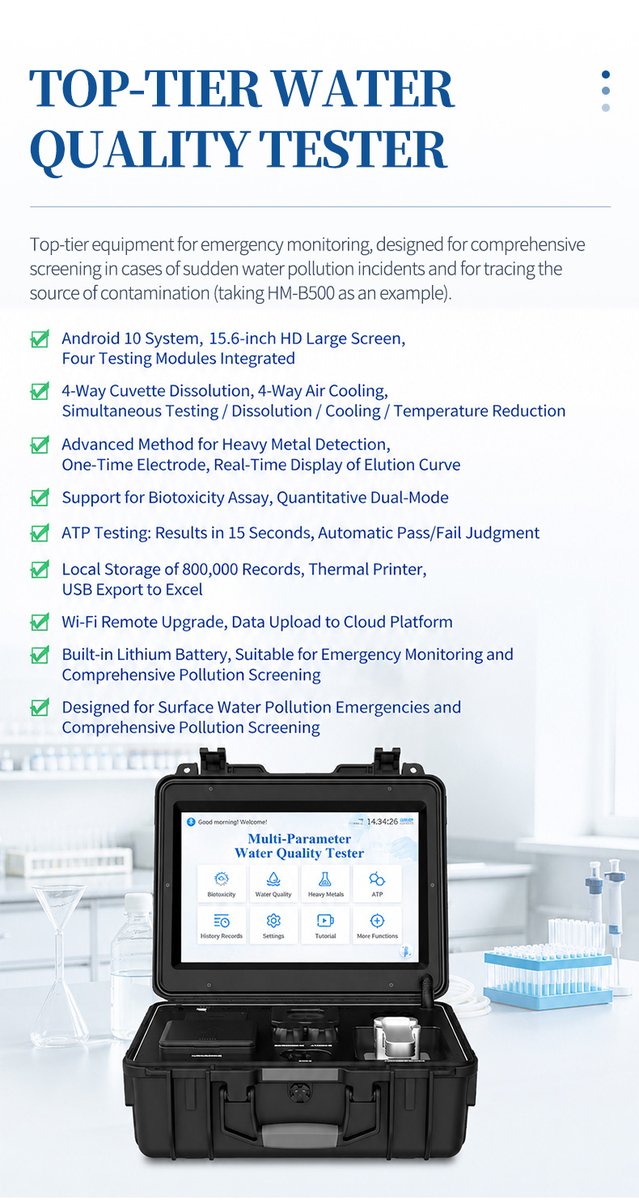
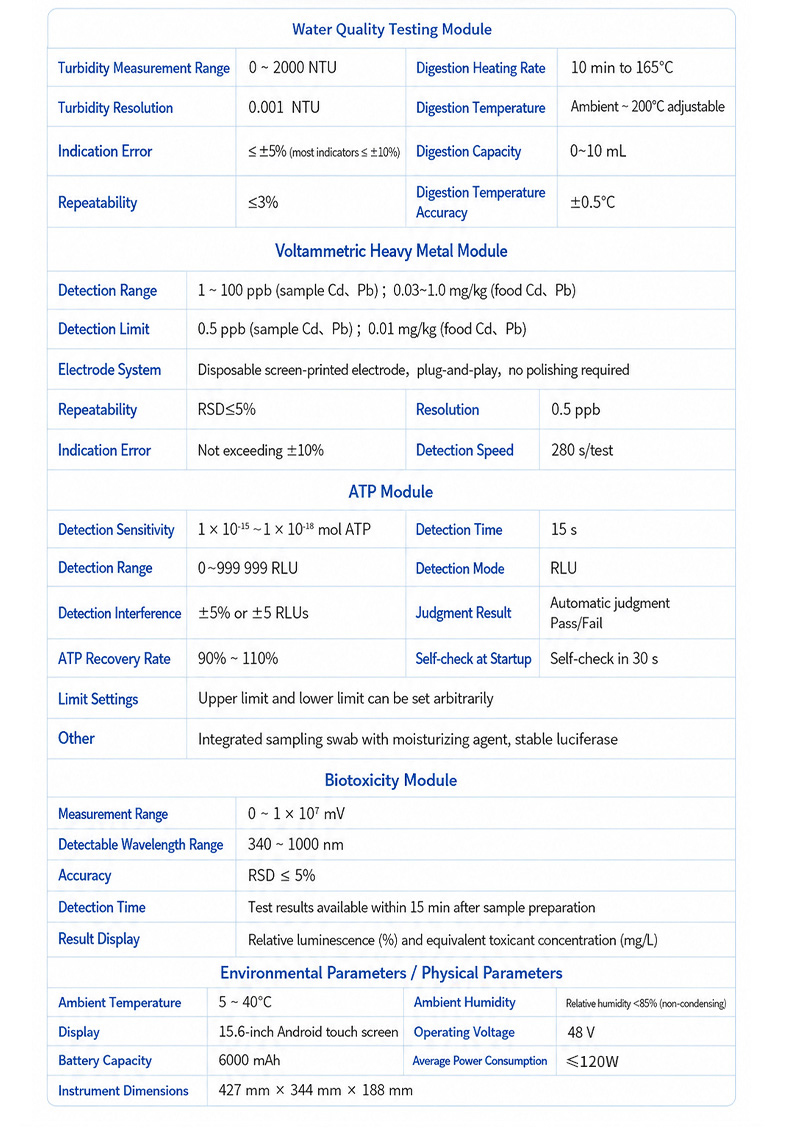
Four sensor interfaces accept pH, ORP, fluorescence-method dissolved oxygen, constant-voltage residual chlorine, conductivity, turbidity, chlorophyll, and dozens of other probes, with scheduled or manual logging. Results stay defensible: 10 million data sets are freely retrievable, the thermal printer issues QR-coded reports, and WiFi, 4G, or RJ45 uploads data to the cloud for real-time mobile and PC viewing. A 48V 8Ah battery sustains over six hours of simultaneous digestion and detection, with GPS positioning on every record. Facilities that later need broader panels can move up to an expanded multi-parameter analysis platform in the same family.
Applications
- Municipal Wastewater Treatment Plants: daily COD and NH3-N verification before effluent discharge
- Industrial Effluent Compliance: organic and nutrient monitoring at food, chemical, and manufacturing plants
- Environmental Monitoring Stations: field data collection for surface water and outfalls
- Sewage Networks and Pump Stations: screening at nodes without laboratory access
- Third-Party Testing Teams: mobile compliance sampling across multiple client sites
- Plant Process Control: aeration-related parameter tracking with the sensor module alongside effluent testing
Key Features and Advantages
- Single-platform COD and NH3-N testing eliminates dual-instrument workflows for discharge verification
- Built-in dual-zone 8-vial digester handles both parameters without extra equipment
- 10-minute heat-up to 165°C, room temperature to 200°C adjustable, smart PID control at ±0.5°C
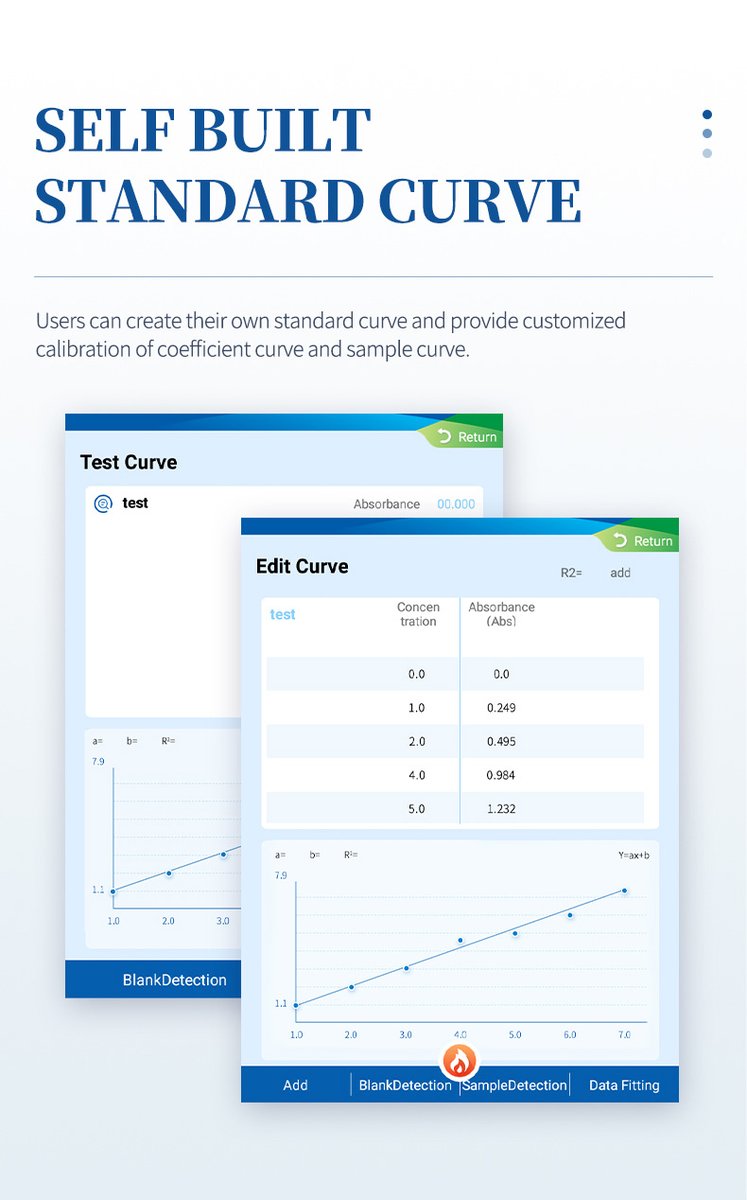
- Six preset digestion programs plus 4 custom modes for plant-specific settings
- Four sensor interfaces read simultaneously alongside colorimetric tests, with scheduled or manual storage
- Dozens of sensor options — pH, ORP, fluorescence dissolved oxygen, constant-voltage residual chlorine, conductivity, turbidity, and more
- 360° precision rotating tube holder stabilizes readings for defensible compliance records
- 10 million data sets storage, freely retrievable, supports audit lookbacks
- Cloud upload via WiFi, 4G, or RJ45 with real-time mobile and PC viewing; micro thermal printer with QR codes
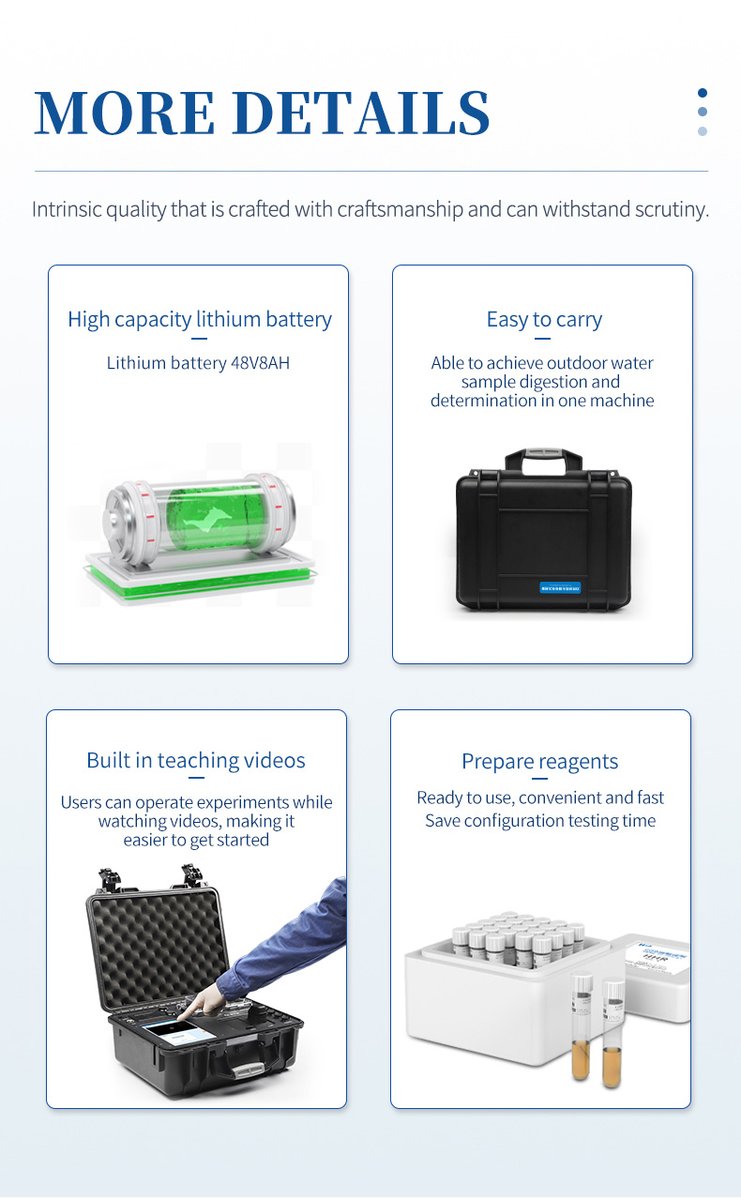
- 48V 8Ah lithium battery sustains 6+ hours of simultaneous digestion and detection, with GPS positioning and tutorial videos
Technical Specifications
| Specification | Value |
|---|
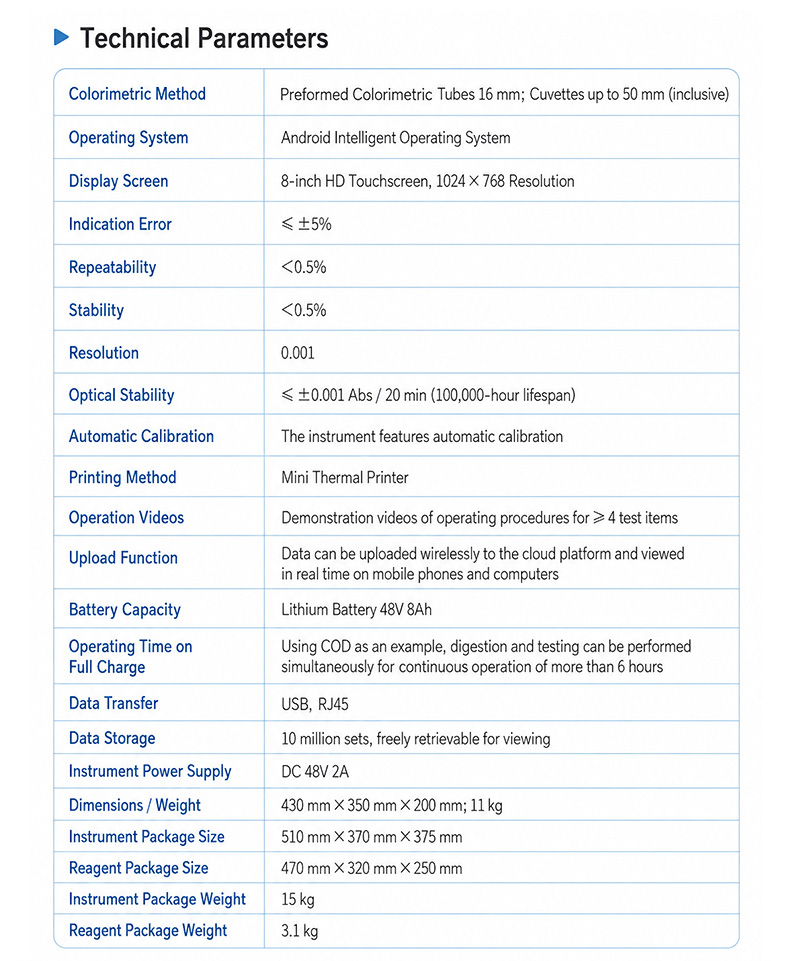
| Spectrophotometric Parameters | COD, Ammonia Nitrogen |
| Sensor Interfaces | 4 ports, simultaneous insertion and detection, scheduled or manual storage |
| Indication Error | ≤ ±5% |
| Repeatability | < 0.5% |
| Stability | < 0.5% |
| Resolution | 0.001 |
| Optical Stability | ≤ ±0.001 Abs/20 min (100,000-hour life) |
| Colorimetric Method | 16mm pre-made test tubes; cuvettes 50mm and below |
| Operating System | Android smart system (7.1.1) |
| Display | 8-inch HD touchscreen, 1024×768 |
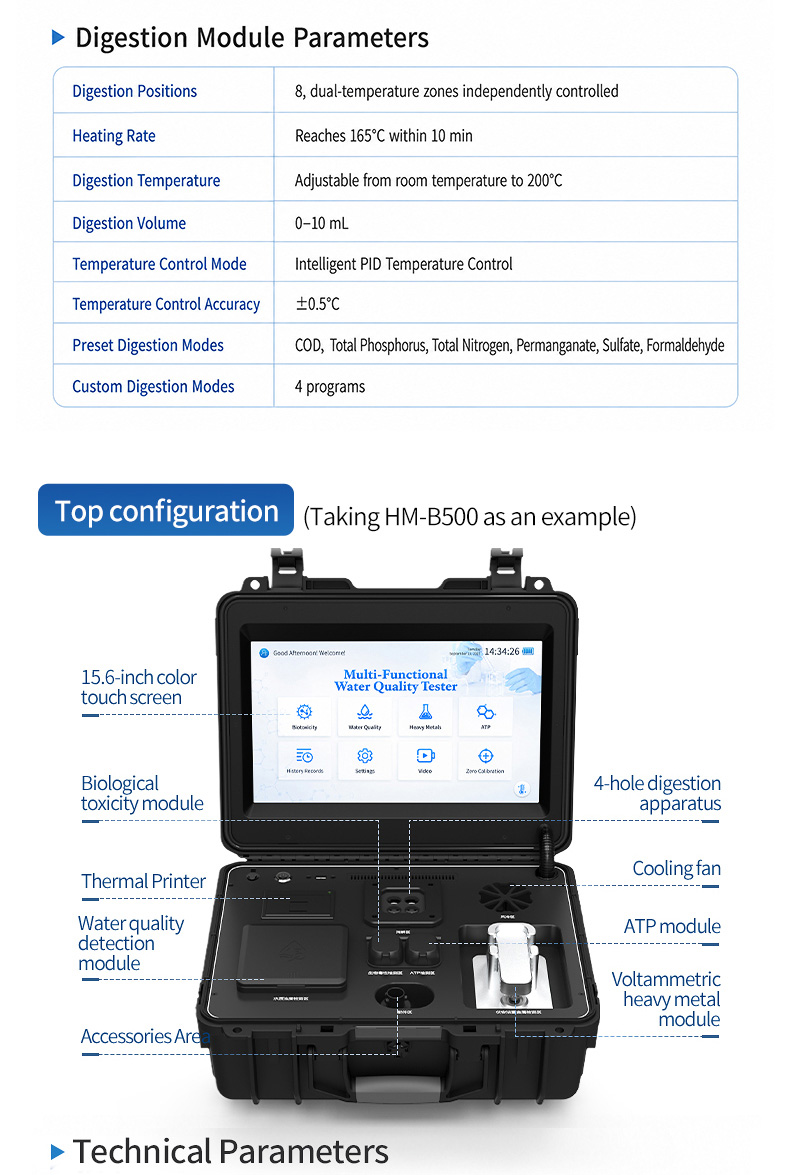
| Digestion Capacity | 8 vials, dual-zone independent control |
| Heating Rate | 165°C within 10 minutes |
| Digestion Temperature | Room temperature – 200°C adjustable |
| Digestion Volume | 0–10 ml |
| Preset Digestion Modes | COD, total phosphorus, total nitrogen, permanganate index, sulfate, formaldehyde |
| Custom Digestion Modes | 4 |
| Data Transfer | USB, RJ45, WiFi |
| Data Upload | Wireless cloud upload, mobile and PC viewing |
| Printer | Micro thermal printer |
| Battery | 48V 8Ah lithium, 6+ hours (COD digestion and detection) |
| Data Storage | 10 million sets, freely retrievable |
| Power Supply | DC48V2A |
| Dimensions | 430 × 350 × 200 mm |
| Weight | 11 kg |
FAQ
Q1: Can one unit cover both COD and ammonia nitrogen for discharge permit checks?
Yes. The instrument performs dual-parameter spectrophotometric detection of COD and ammonia nitrogen on a single Android platform, so one sampling trip yields both of the values required by typical discharge permits. Samples digest in the built-in dual-zone 8-vial block and read through the dual colorimetric system using 16mm pre-made tubes or cuvettes up to 50mm. Detection, digestion, and sensor measurement proceed simultaneously, so a routine compliance batch completes during one site visit without a second instrument or a follow-up trip.
Q2: How does the built-in digester support daily testing schedules?
The dual-zone block holds 8 vials with independent temperature control, heats to 165°C within 10 minutes, and adjusts from room temperature to 200°C. Smart PID control holds ±0.5°C, keeping digestion conditions consistent between batches. Six preset programs cover COD, total phosphorus, total nitrogen, permanganate index, sulfate, and formaldehyde, and four custom modes store plant-specific settings. Operators can start digestion, then move on to sensor measurements while digestion, colorimetric detection, and sensor testing all run together. That parallel workflow shortens each compliance cycle.
Q3: Which field parameters can the sensor module measure alongside colorimetric tests?
Four sensor interfaces operate simultaneously. Options include pH, ORP, dissolved oxygen (fluorescence method), residual chlorine (constant-voltage method), conductivity, salinity, ozone, turbidity, hardness, suspended solids, sludge concentration, COD, ammonia nitrogen, chlorophyll, blue-green algae, oil in water, and CDOM — dozens of parameters in total. Readings can also be stored on a timer or manually, suiting both unattended monitoring windows and operator-driven station rounds. Plant staff can record aeration-related values like dissolved oxygen together with effluent compliance data in one complete field session.
Q4: How long can it operate away from mains power?
The internal 48V 8Ah lithium battery pack supports over six hours of continuous operation with digestion and detection running at the same time, measured using COD testing as the reference workload. That covers a full day of station rounds — outfall stops, digestion cycles, colorimetric readings, sensor logging, and printed reports — all without an external power supply. When mains power is available, the instrument simply runs on DC48V2A input. Planning careful sampling sequences around the 8-vial digestion capacity keeps throughput steady.
Q5: Can data be uploaded for supervisory review and audit?
Yes, it can. The analyzer uploads test data wirelessly to the cloud platform for real-time viewing on both mobile and PC, with USB and RJ45 as wired alternatives. It stores up to 10 million data sets that can be freely retrieved, and the micro thermal printer produces on-site hard copies with QR codes for sample-level traceability. These functions match the common supervisory documentation expectations: timestamped records, printable reports, and remote visibility for plant managers or inspectors without any manual transcription.
Article address:https://www.hmwatertesting.cn/cod2/cod-ammonia-wastewater-monitoring.html

 Current
location:
Current
location: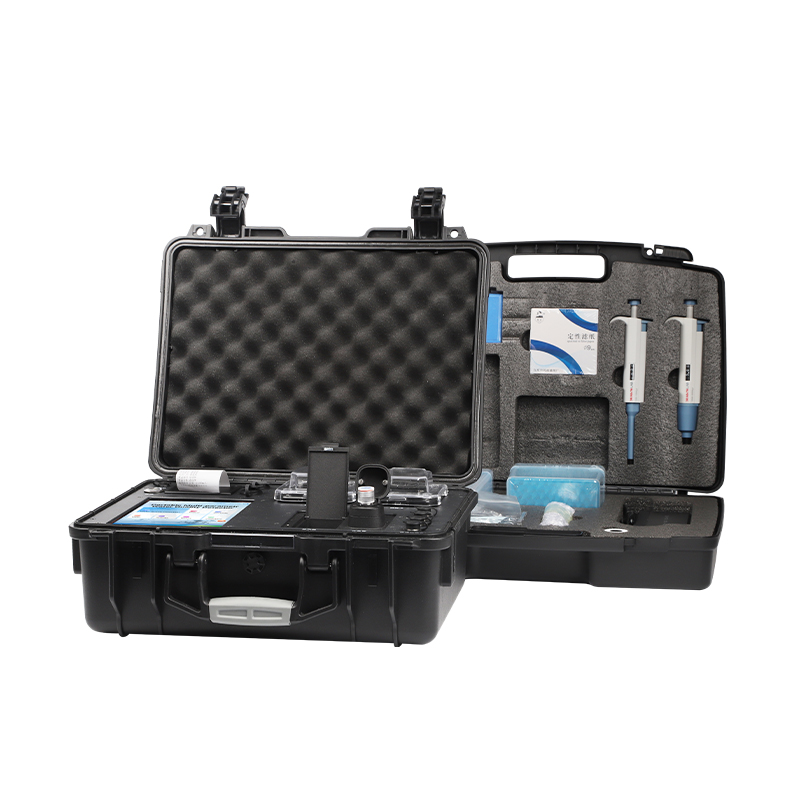
 +86 17853698681