

Product Introduction
Wastewater treatment facilities face a fundamental measurement challenge: turbidity levels can span from near-zero in polished effluent to several thousand NTU in raw influent, often within the same daily monitoring routine. Conventional single-mode turbidity meters struggle to maintain accuracy across this full spectrum, forcing operators to use multiple instruments or accept compromised data at the extremes of the range.
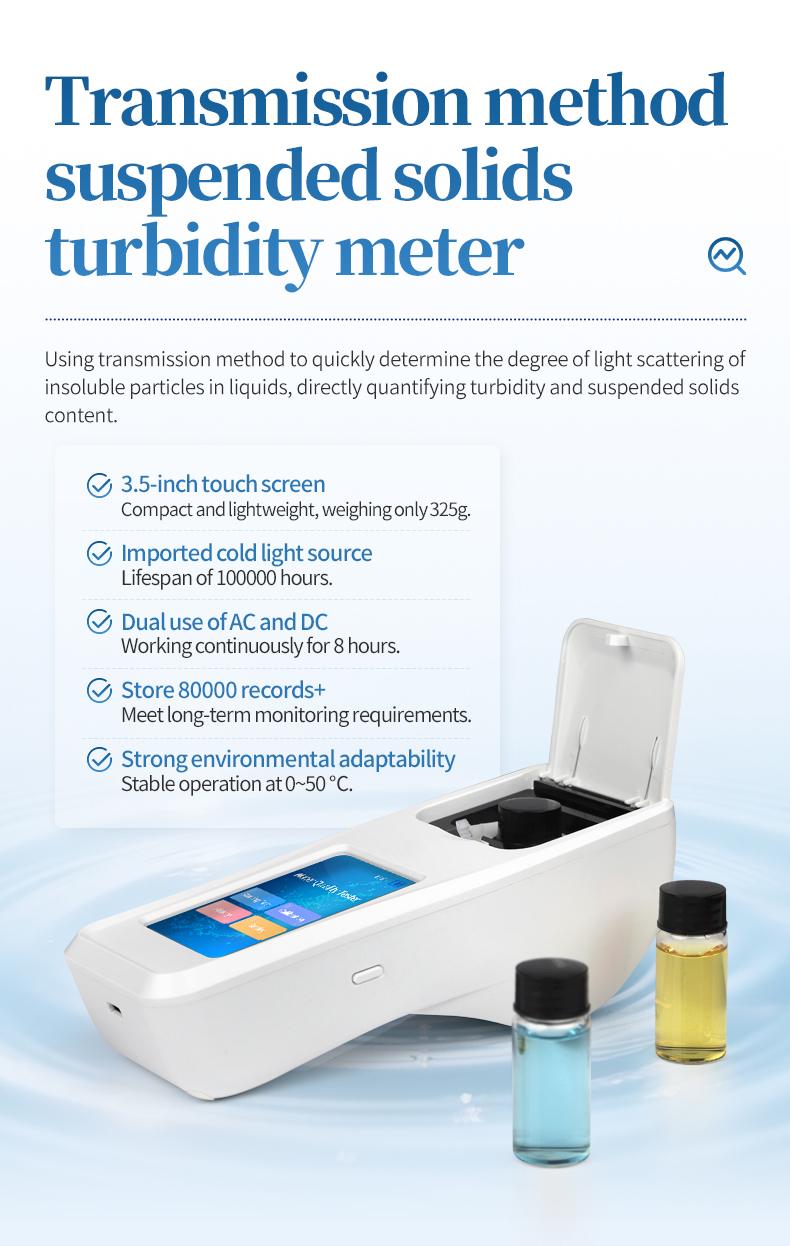
The HM-SXT2 resolves this challenge with its automatic scattered/transmitted light switching capability. In low-turbidity conditions — such as secondary clarifier effluent or tertiary filtration output — the instrument operates in nephelometric (90° scatter) mode for high sensitivity. When turbidity rises above the effective scatter range — as encountered in primary influent, mixed liquor, or storm overflow events — it seamlessly transitions to transmitted light measurement, which detects beam attenuation through the sample for reliable high-turbidity readings. This dual-mode approach delivers accurate results across the full 0–4000 NTU range without manual intervention.
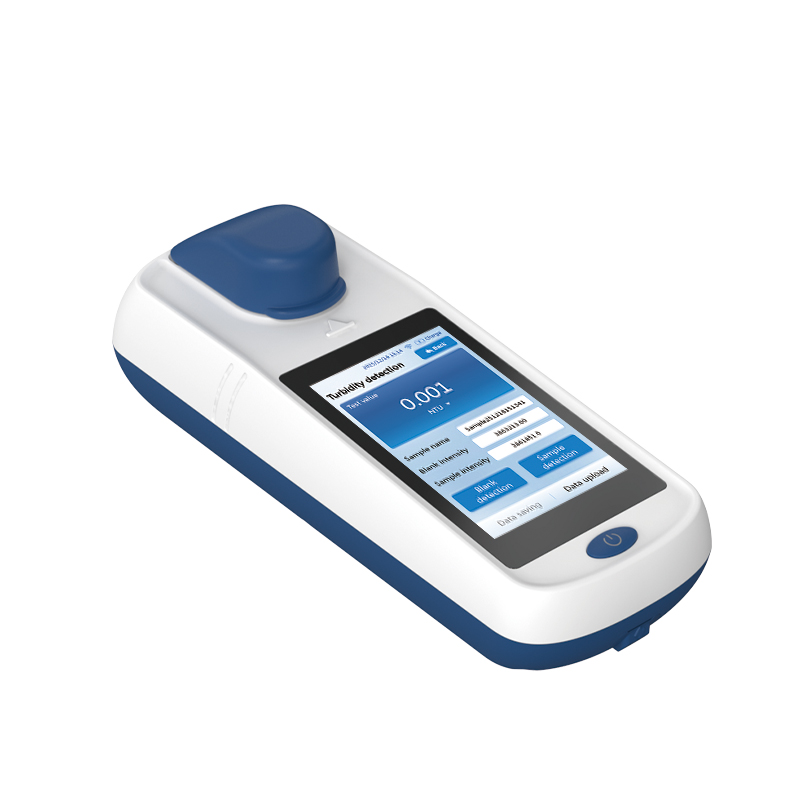
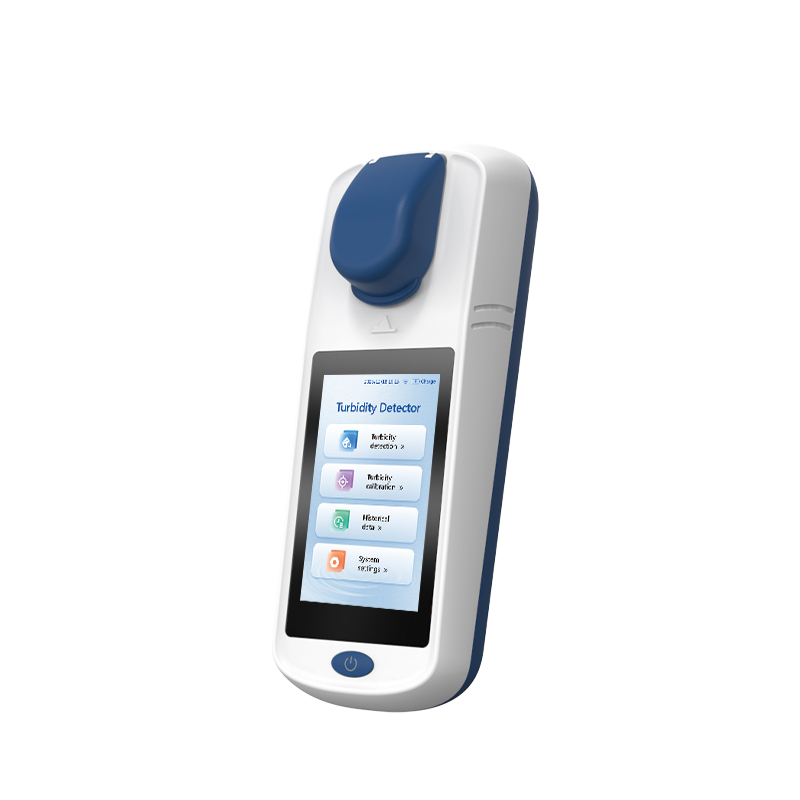
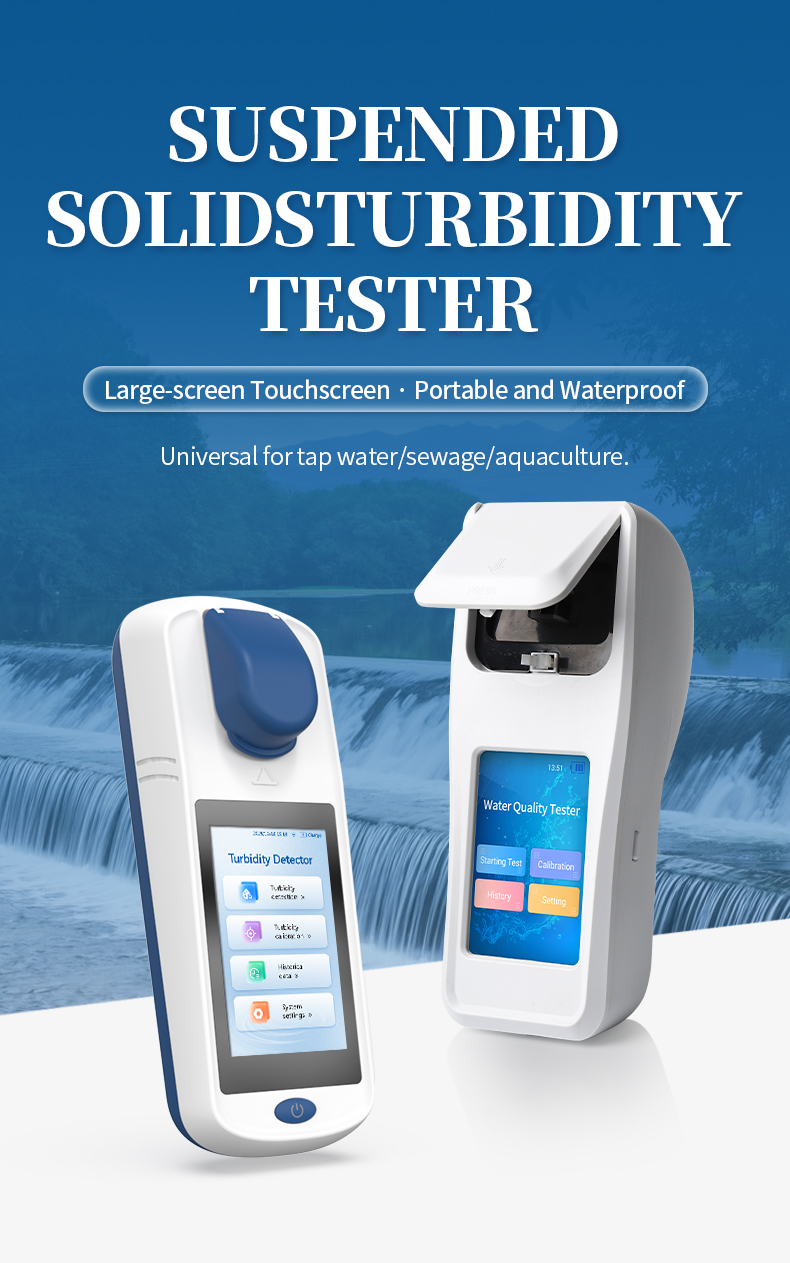
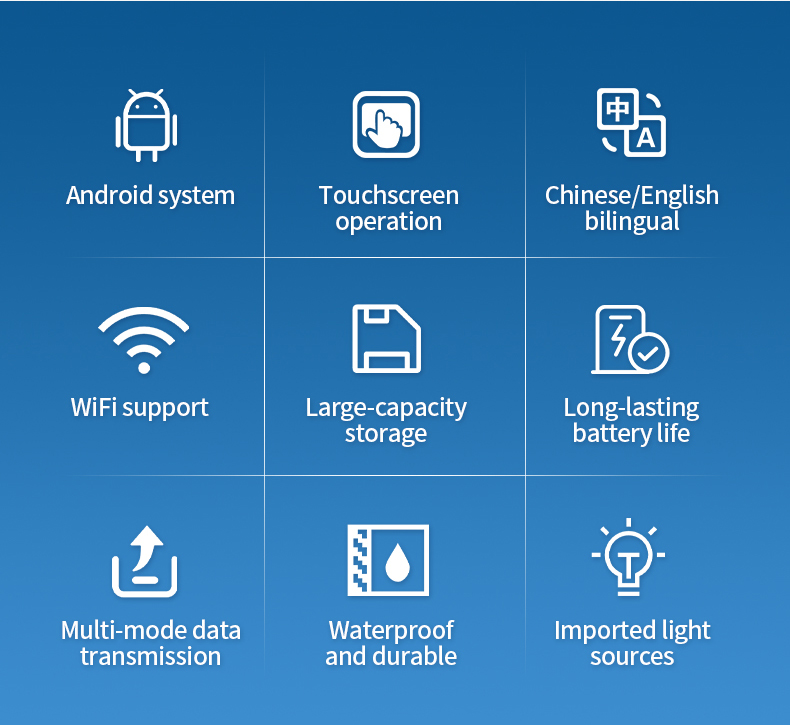
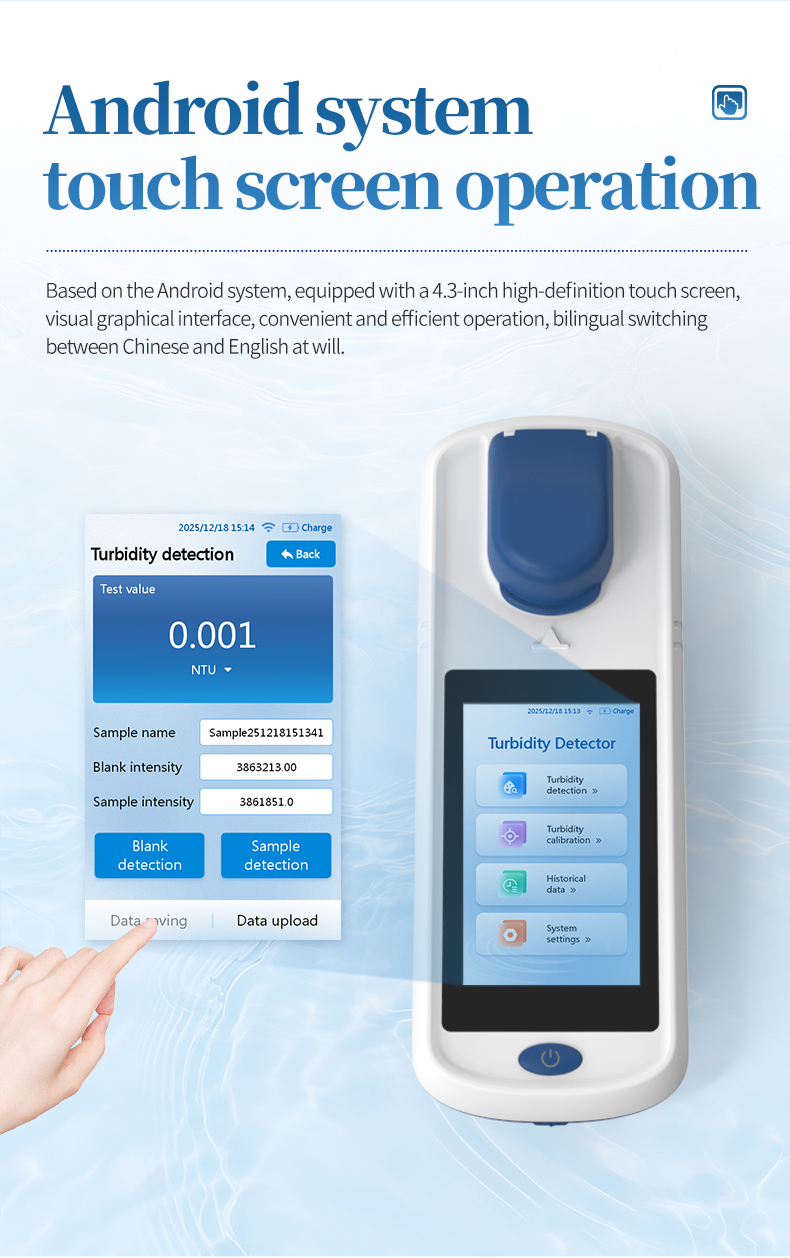
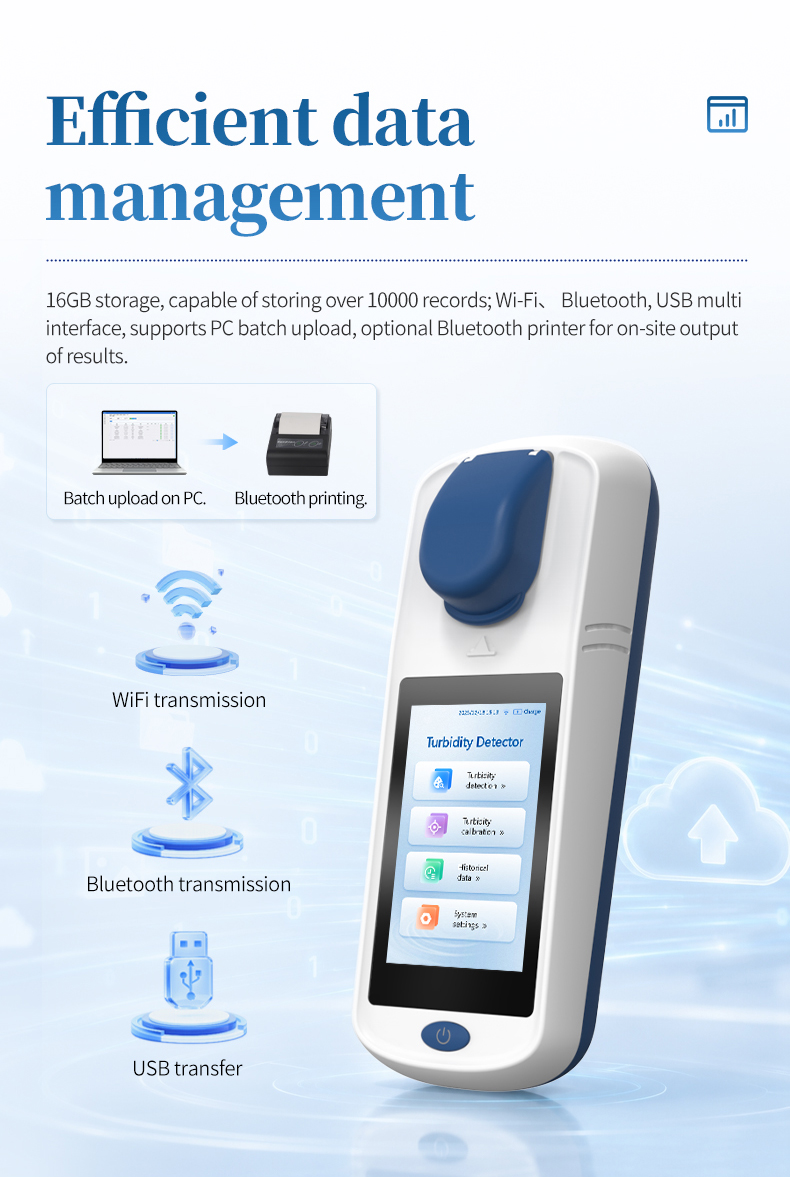
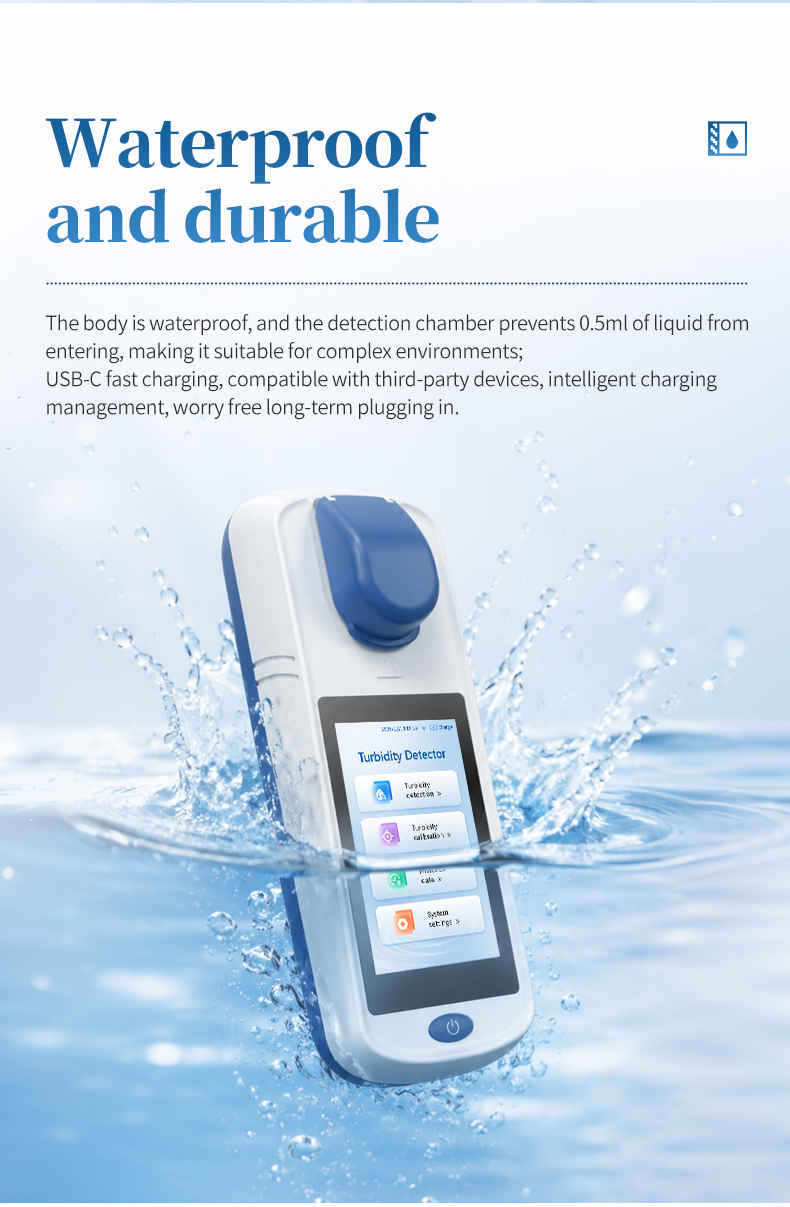
Built for the harsh conditions of wastewater treatment plants, the HM-SXT2 features an IP65-rated enclosure that withstands humidity, dust, and incidental water exposure. The 8000mAh battery powers through extended sampling rounds, and USB-C 5V 2.1A charging (BC2.1 protocol) allows convenient recharging with standard chargers between shifts. The 4.3-inch touchscreen with Android interface provides intuitive operation even when wearing thin gloves, and 16 GB storage accommodates over 10,000 records with Wi-Fi, Bluetooth, and USB data export for compliance documentation.
Applications
Primary influent monitoring: measuring high-turbidity raw wastewater entering the treatment process
Secondary clarifier effluent: verifying settled water turbidity before disinfection
Tertiary filtration output: confirming treated effluent meets discharge permit requirements
Storm overflow events: tracking turbidity spikes during high-flow conditions
Industrial discharge compliance: monitoring process water effluent at manufacturing facilities
Sludge dewatering filtrate: checking return stream turbidity for process optimization
Functional Performance
Automatic scattered/transmitted light switching maintains accuracy across 0–4000 NTU without manual range changes
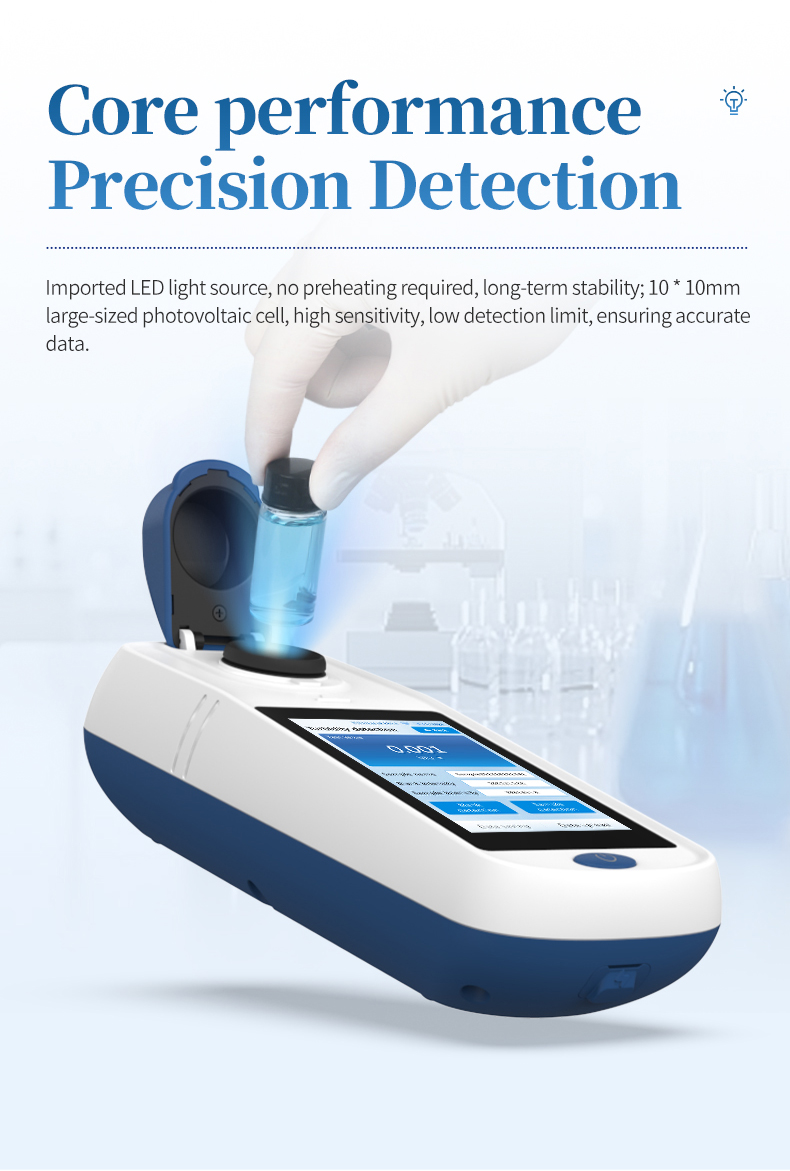
860nm LED source per ISO 7027 eliminates color interference from humic substances in wastewater
0.001 NTU resolution with ±6% indication error and ≤0.5% repeatability for discharge compliance reporting
Zero drift ±0.5% FS/30 min ensures stable measurements during extended plant monitoring campaigns
IP65 protection for operation in humid, dusty treatment plant environments
8000mAh battery with USB-C charging supports full-day field sampling schedules
4.3-inch HD touchscreen readable in varying light conditions at treatment facilities
16 GB storage with wireless and USB data transfer for compliance record management
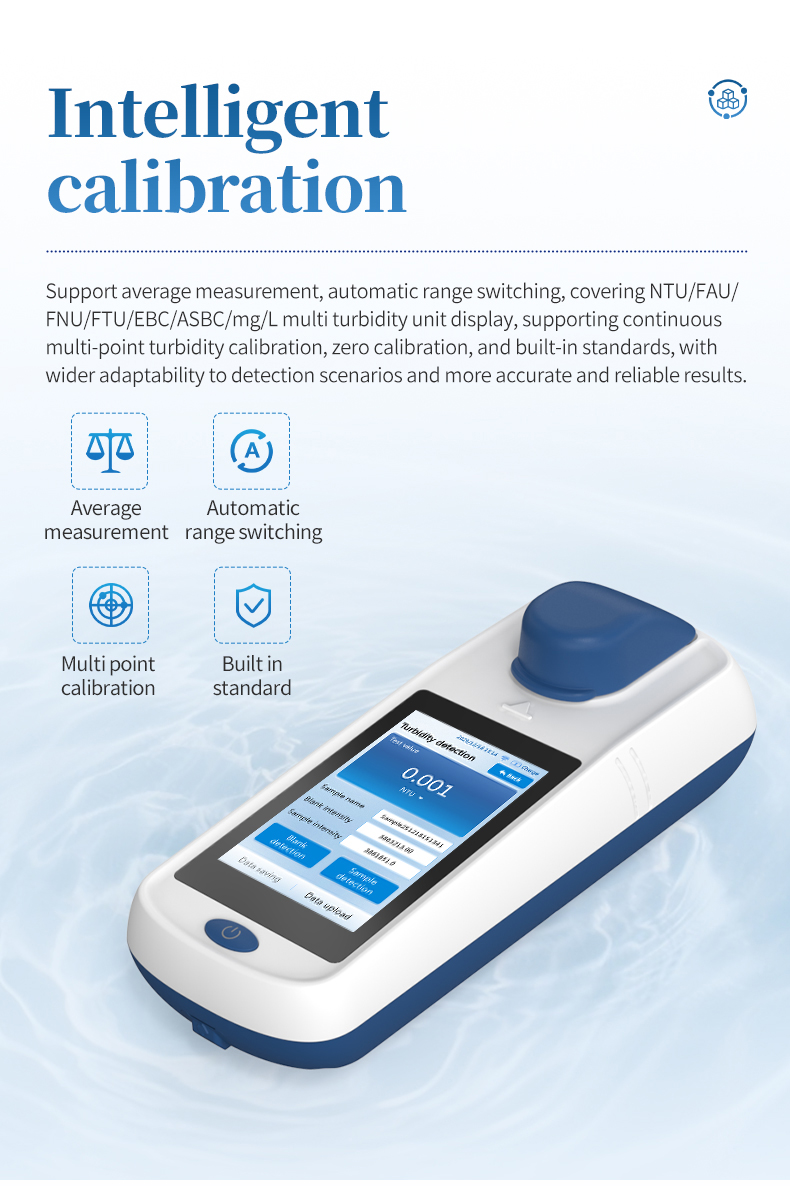
Multi-point and zero-point calibration for field verification against discharge standards
Bilingual interface for diverse plant operating teams
Main Parameters
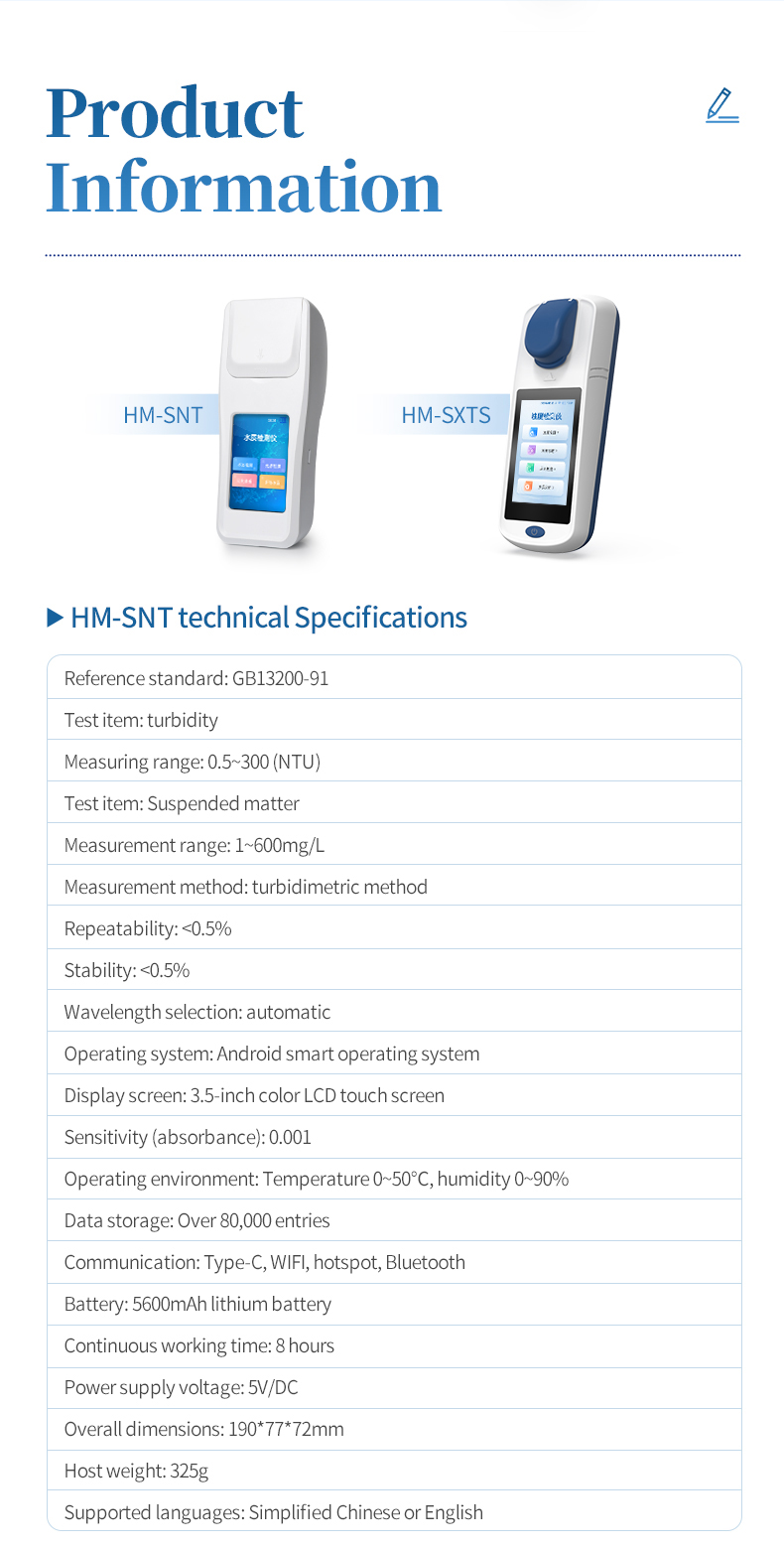
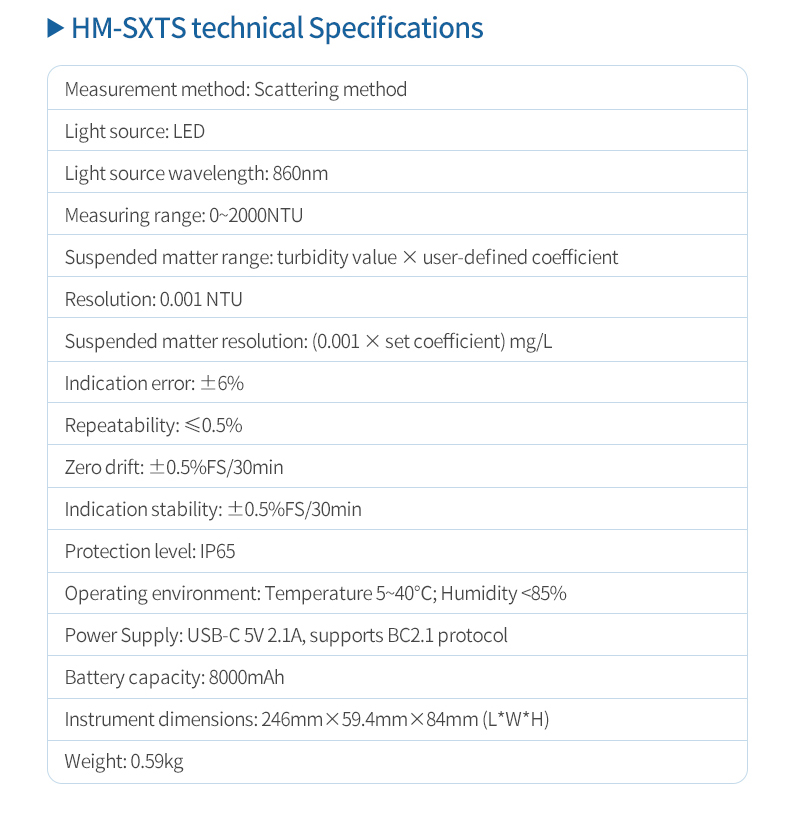
| Parameter | Specification |
|---|
| Measurement Method | Scattered light + Scattered/Transmitted light (auto-switching) |
| Light Source | LED, 860nm |
| Measurement Range | 0–4000 NTU |
| Resolution | 0.001 NTU |
| Indication Error | ±6% |
| Repeatability | ≤0.5% |
Technical Parameters
| Parameter | Specification |
|---|
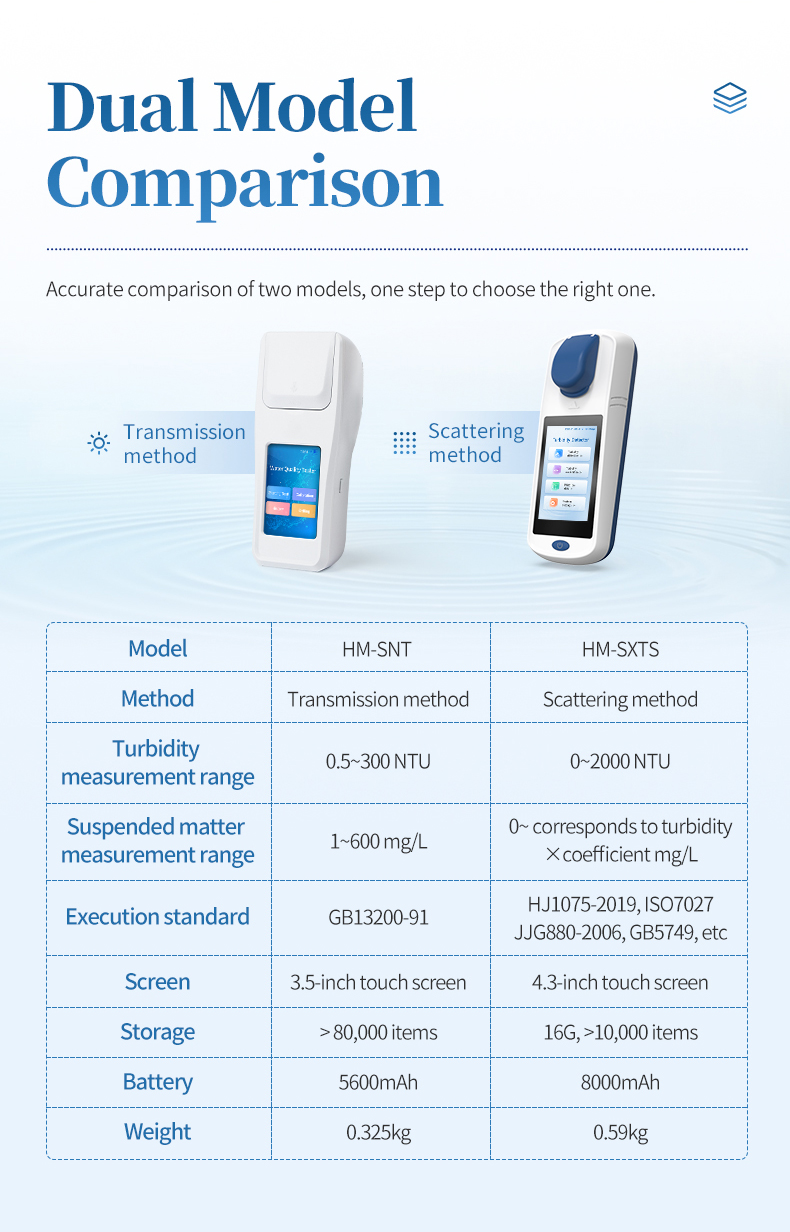
| Model | HM-SXT2 |
| Measurement Method | Scattered light + Scattered/Transmitted light (auto-switching) |
| Light Source | LED, 860nm |
| Measurement Range | 0–4000 NTU |
| Resolution | 0.001 NTU |
| Indication Error | ±6% |
| Repeatability | ≤0.5% |
| Zero Drift | ±0.5% FS/30 min |
| Indication Stability | ±0.5% FS/30 min |
| Protection Rating | IP65 |
| Operating Temperature | 5–40 °C |
| Operating Humidity | <85% RH |
| Power Supply | USB-C 5V 2.1A (BC2.1 protocol) |
| Battery Capacity | 8000 mAh |
| Dimensions | 246 mm × 59.4 mm × 84 mm |
| Weight | 0.59 kg |
| Applicable Standards | HJ 1075-2019, ISO 7027, JJG 880-2006, GB 5749, CJ 3020, GB/T 14848 |
FAQ
Q1: Why does wastewater monitoring require a wider turbidity range than drinking water testing?
A: Wastewater turbidity can vary dramatically within a single treatment facility. Raw influent often exceeds 2000 NTU during storm events or industrial discharge spikes, while treated effluent must typically remain below 10–50 NTU for discharge compliance. A single instrument that covers 0–4000 NTU with automatic mode switching eliminates the need for separate high-range and low-range meters, reducing equipment costs and simplifying the monitoring workflow for plant operators.
Q2: How does the automatic scattered/transmitted light switching work in practice?
A: When the HM-SXT2 measures a sample, it initially uses the 90° scattered light method, which is sensitive at low turbidity. If the scatter signal indicates that the sample turbidity exceeds the effective range of the nephelometric method, the instrument automatically activates the transmitted light channel. In this mode, it measures the attenuation of light passing directly through the sample, which is proportional to particle concentration at higher turbidity levels. The transition happens without operator intervention, producing a continuous accurate reading.
Q3: Can the HM-SXT2 be used for discharge permit compliance monitoring?
A: Yes. The HM-SXT2 complies with ISO 7027 and HJ 1075-2019, which are recognized measurement standards for turbidity determination in wastewater. Its ±6% indication error and ≤0.5% repeatability meet the precision requirements for discharge compliance documentation. The instrument stores over 10,000 timestamped records internally, and data can be exported via Wi-Fi, Bluetooth, or USB for regulatory submission and trend analysis.
Q4: What makes the HM-SXT2 suitable for harsh wastewater plant environments?
A: The IP65 ingress protection rating ensures the instrument is dust-tight and protected against water jets, which is essential in wastewater treatment plants where humidity, splashing, and airborne particulates are common. The 8000mAh battery supports extended sampling campaigns away from power outlets, and the USB-C port with BC2.1 protocol allows charging from standard power banks. The 4.3-inch touchscreen remains operable even with thin glove use common in treatment facilities.
Q5: How does the HM-SXT2 handle color interference in wastewater samples?
A: Wastewater often contains dissolved organic compounds that impart color to the sample. The 860nm near-infrared LED source specified by ISO 7027 is minimally absorbed by dissolved organics, so the instrument measures only true particulate scatter rather than color-induced signal. This provides more accurate turbidity readings in colored wastewater samples compared to broadband visible-light turbidity meters that conflate color and particle scatter.
Q6: What is the advantage of the HM-SXT2 over using two separate turbidity meters?
A: Using two instruments introduces inconsistency between measurement methods, requires double the calibration effort, and increases the risk of data gaps during transitions between low-range and high-range devices. The HM-SXT2's automatic mode switching provides a single, continuous data stream across 0–4000 NTU, uses one calibration procedure, and eliminates the need to carry and manage multiple instruments during field sampling campaigns. This reduces both capital cost and operational complexity.
Q7: How frequently should the HM-SXT2 be calibrated for wastewater applications?
A: Calibration frequency depends on regulatory requirements and the intensity of use. For routine wastewater monitoring, monthly calibration using standard formazin solutions is recommended, with zero-point verification performed before each daily sampling session. The HM-SXT2 also provides built-in calibration standards for quick between-measurement verification. All calibration data is stored internally for traceability during regulatory audits.
Article address:https://www.hmwatertesting.cn/suspended-solids-turbidity-meter/wastewater-turbidity-monitoring.html

 Current
location:
Current
location: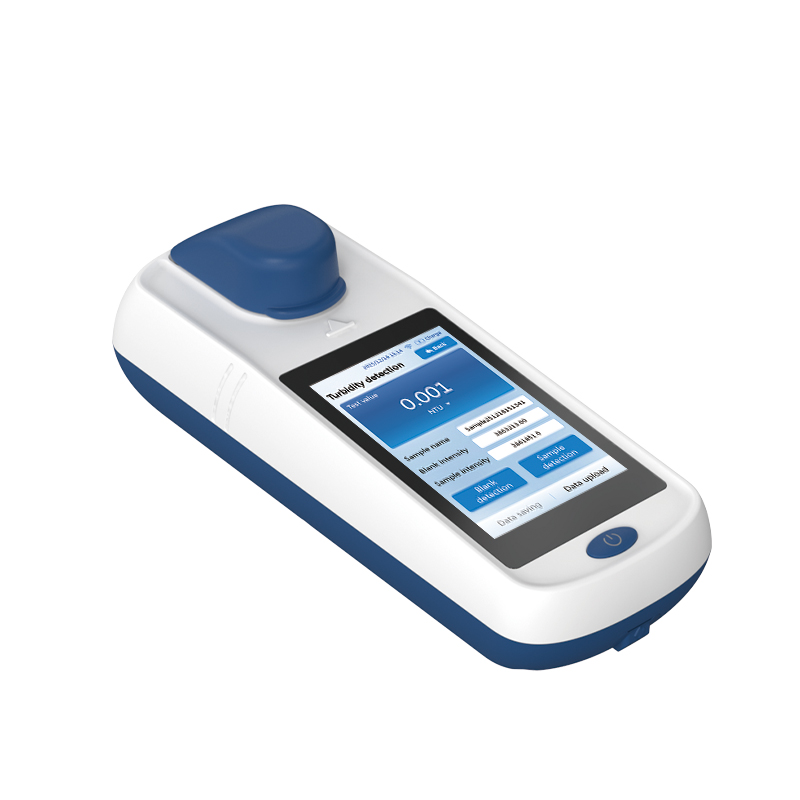
 +86 17853698681