
Product Introduction
Environmental enforcement agencies, municipal water authorities, and engineering survey teams routinely encounter critical bottlenecks during surface water pollution investigations. Conventional regulatory protocols rely predominantly on laboratory-bound graphite furnace atomic absorption spectrometry (GFAAS) or inductively coupled plasma mass spectrometry (ICP-MS). While highly accurate, these conventional approaches require multi-day sample preservation, complex transportation logistics, and aggressive microwave acid digestion, creating severe decision-making delays during acute chemical spills or compliance audits.
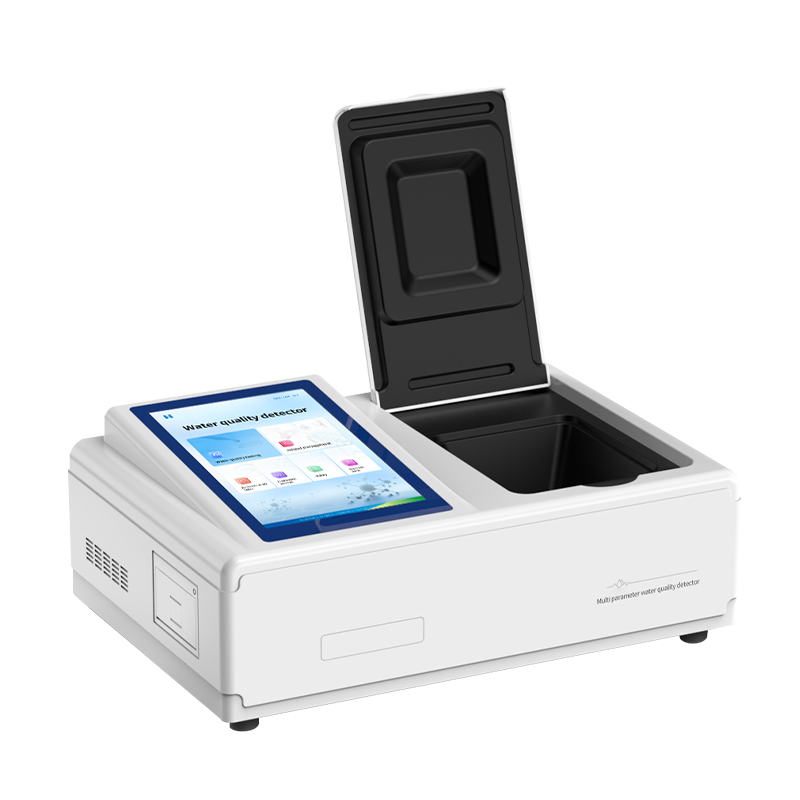
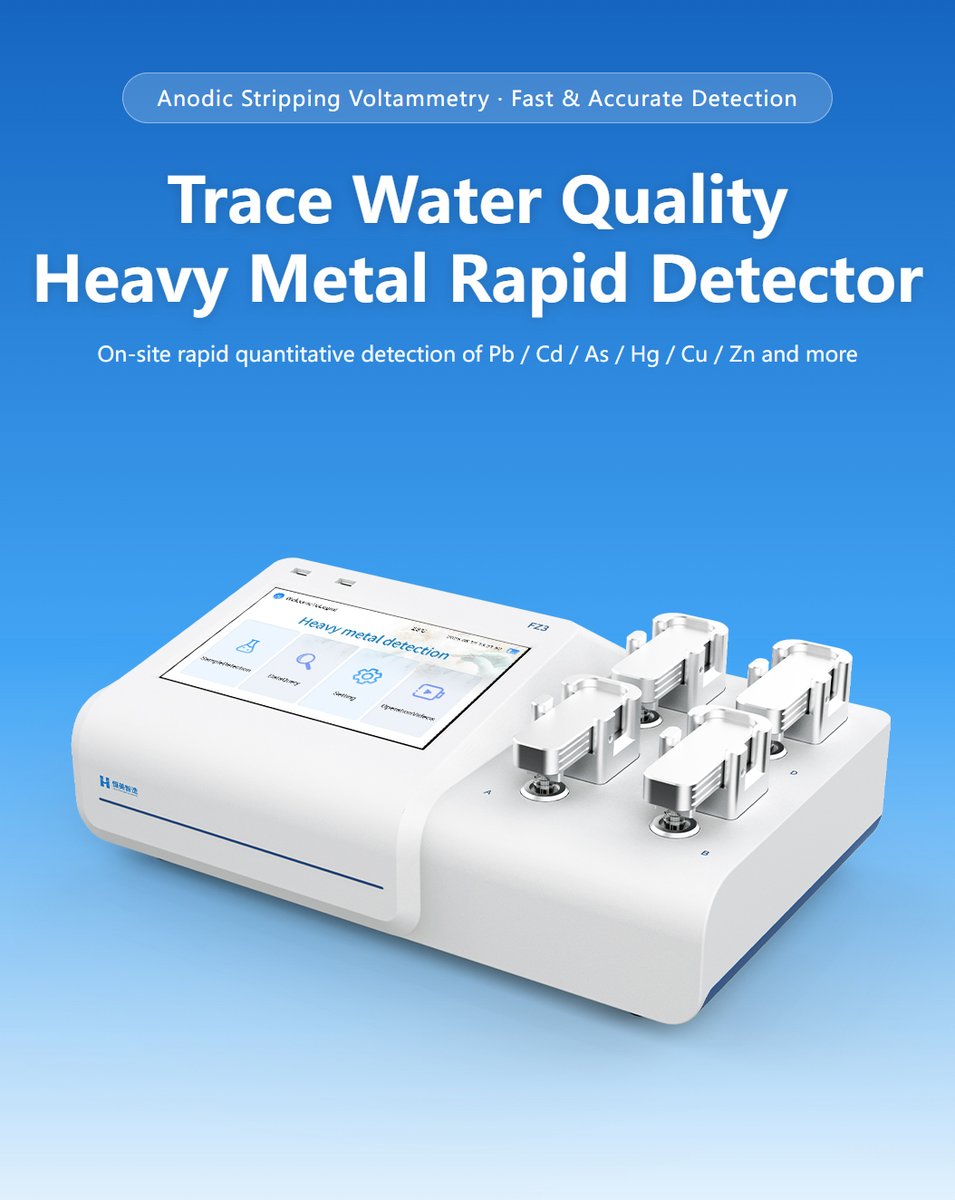
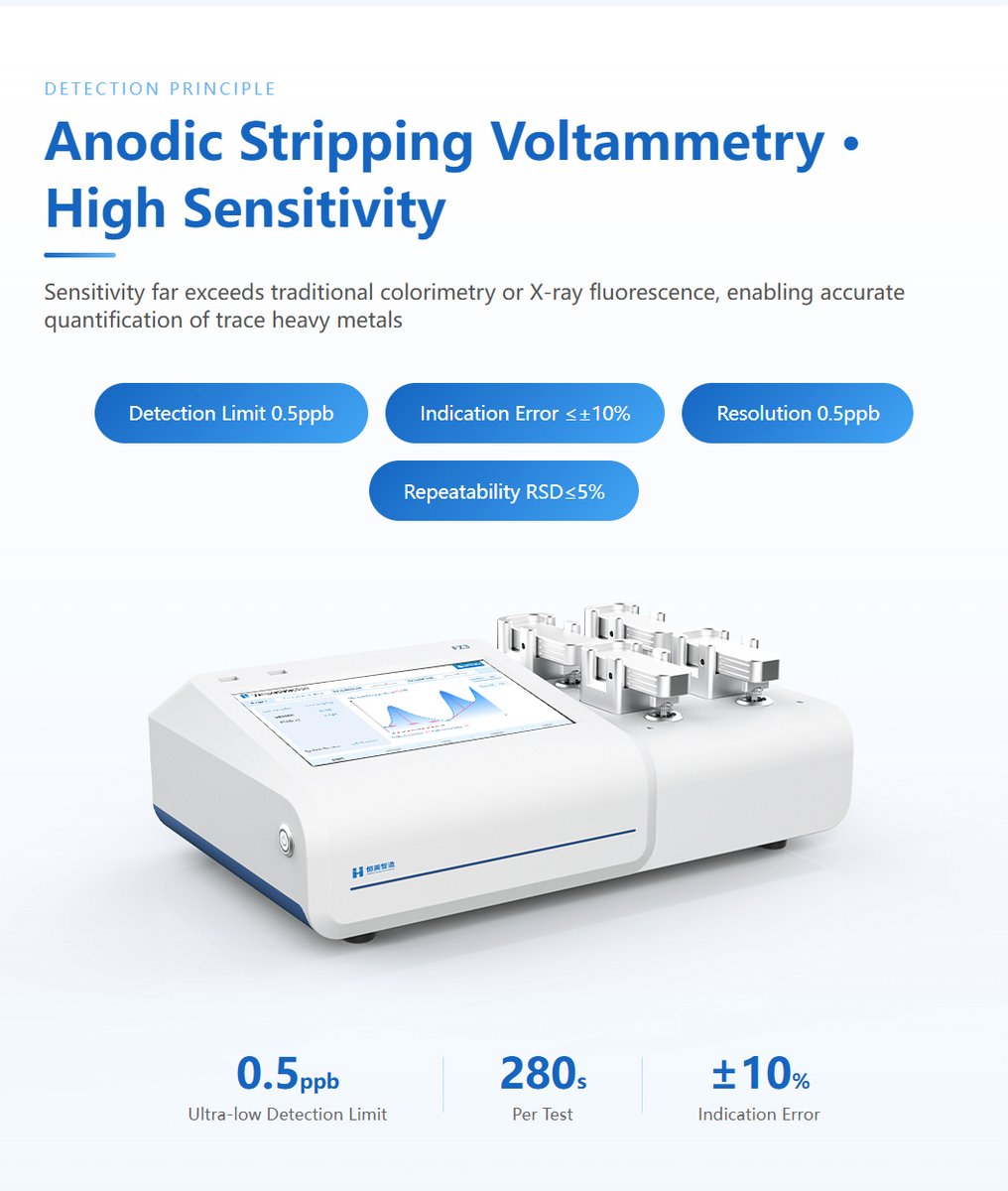
The HM-FZ1-SZ Portable Heavy Metal Analyzer engineered by HM Instruments eliminates analytical delays by delivering regulatory-grade anodic stripping voltammetry (ASV) directly to the water bank. Fully compliant with JJF 2037-2023 metrological standards, HM-FZ1-SZ quantifies dissolved cadmium, lead, and mercury ions at concentrations as low as 0.5 ppb without requiring microwave digestion for clean surface or ground water samples. Built around a single-channel configuration weighing only 4.0 kg, it integrates single-use screen-printed electrodes that bypass the hazardous mercury drops and tedious alumina polishing required by historical polarographs.
Encased in a high-impact field housing with an integrated 7-inch Android interface and 6,000 mAh rechargeable battery, HM-FZ1-SZ empowers field inspectors to perform sample acidification, voltammetric deposition, stripping potential scanning, and thermal report generation in under five minutes. This rapid workflow enables instant delineation of pollution boundaries and verifiable enforcement decisions directly at the point of need.
Applications
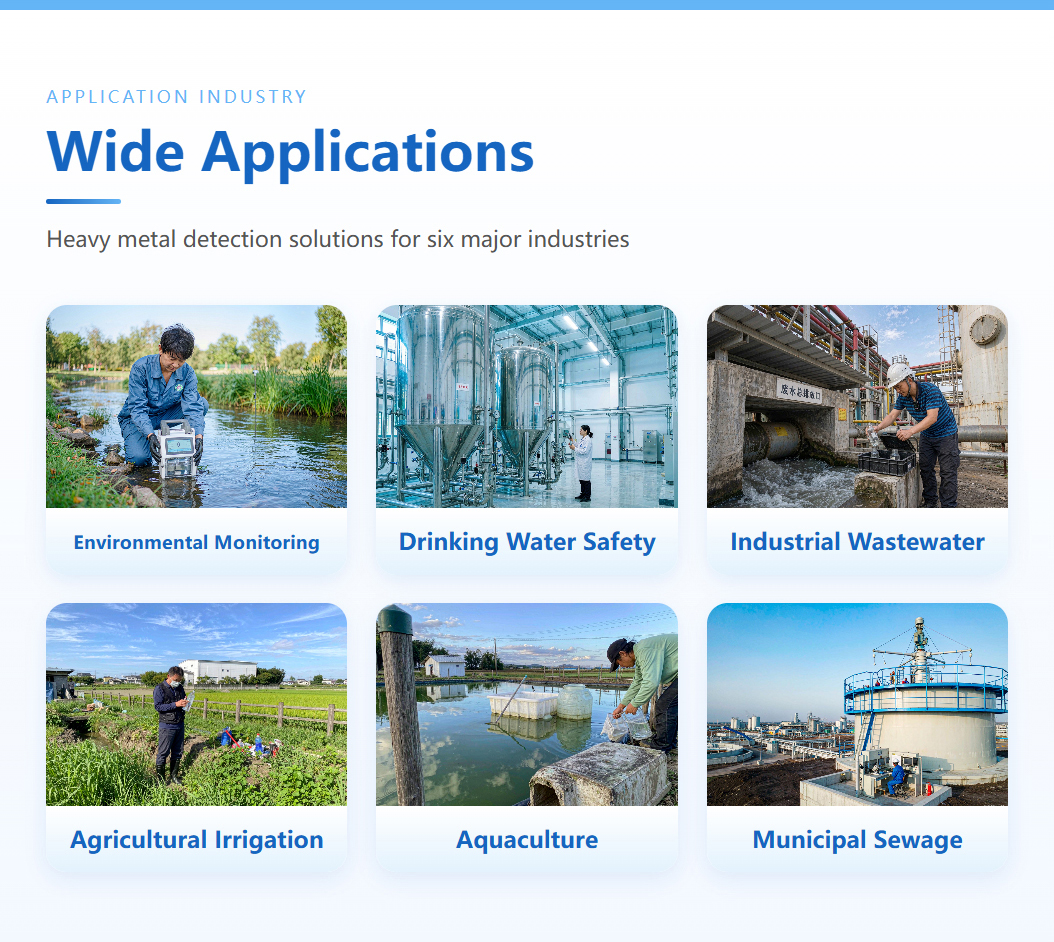
Emergency Environmental Incident Mapping: Rapidly map toxic heavy metal plumes resulting from industrial leaks, chemical transport accidents, or mining tailings collapses.
Rural and Municipal Tap Water Audits: Verify potable water compliance at wellheads and distribution networks in accordance with WHO and national drinking water limits.
Agricultural Drainage and Irrigation Safety: Screen canal water and field runoff to ensure irrigation sources do not introduce cadmium or lead into food crops.
Industrial Discharge Spot-Checks: Provide regulatory teams with unannounced spot-testing capabilities at effluent outfalls without waiting for centralized lab turnaround.
Aquaculture Water Quality Surveillance: Protect sensitive fisheries and fish ponds from toxic trace metal influxes that cause bioaccumulation.
Groundwater Wellhead Baseline Surveys: Conduct immediate localized hydrogeological assessments during environmental baseline investigations.
Key Features & Advantages
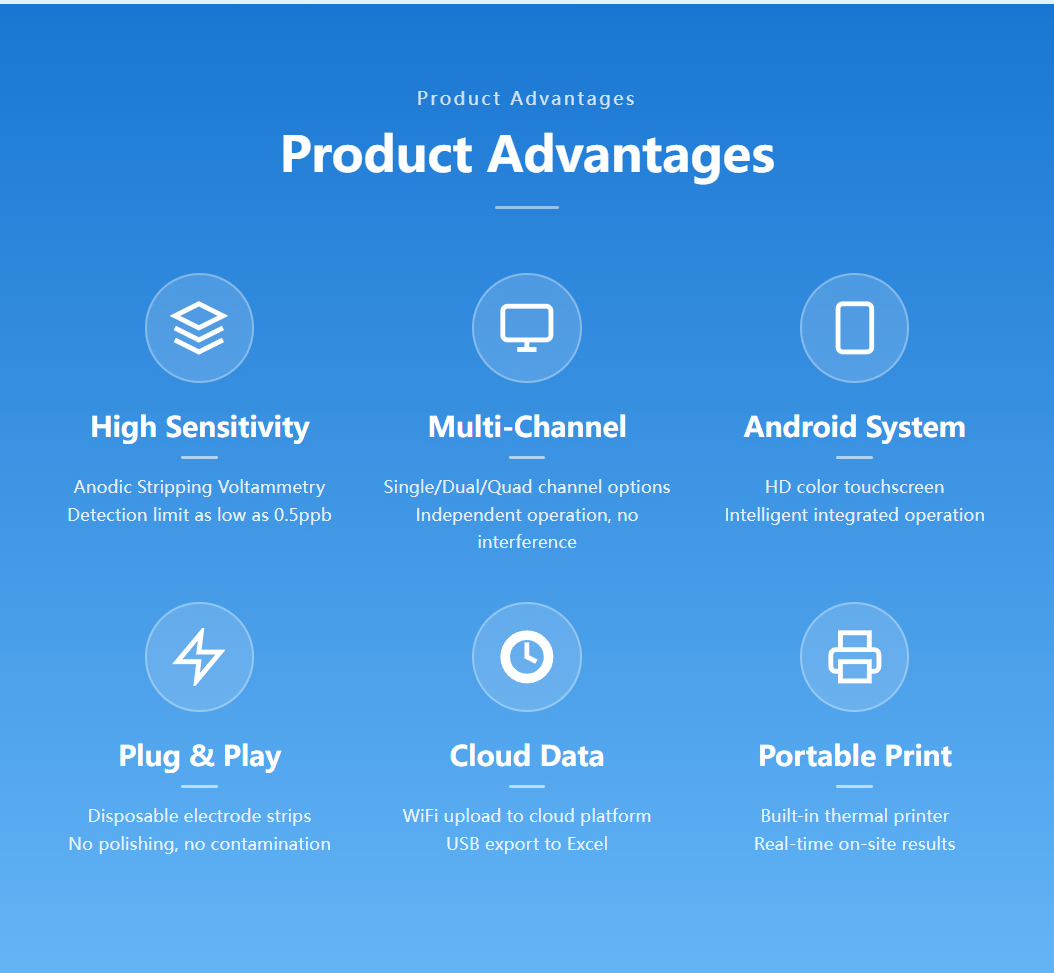
Direct Sample Electrochemical Workflow: Eliminates lengthy nitric acid digestion for clean natural water matrices, cutting total analytical turnaround to 280 seconds per sample.
Regulatory 0.5 ppb Detection Limit: Outperforms field optical test kits by achieving true trace-level sensitivity comparable to benchtop atomic spectroscopy.
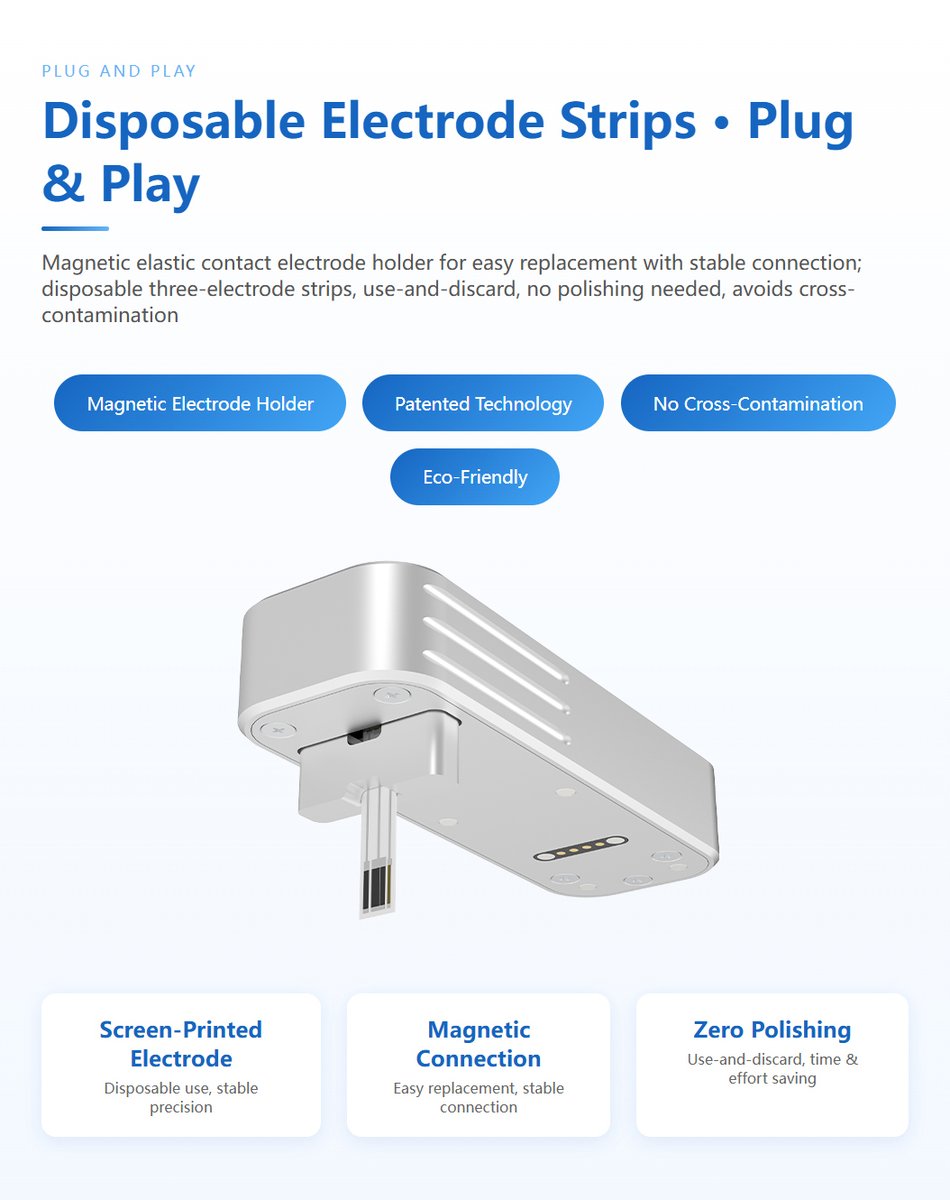
Eco-Friendly Disposable Strips: Utilizes screen-printed three-electrode test chips that eliminate toxic mercury waste and cross-sample carryover completely.
Patented Elastic Magnetic Docking: Magnetic electrode base ensures rapid snap-in replacement while preventing contact oxidation and pin deformation in humid conditions.
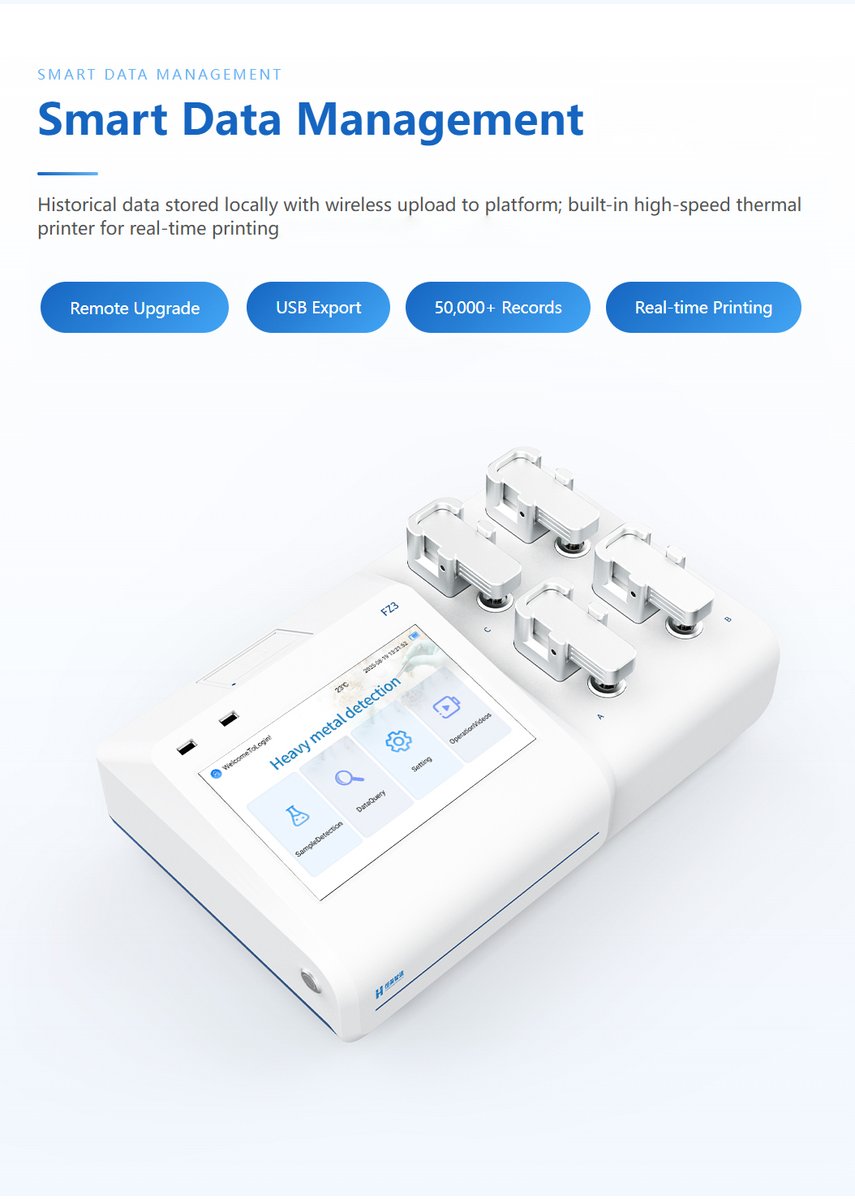
Dynamic Stripping Curve Visualization: Android software displays real-time current-potential voltammograms, giving analysts visual confirmation of peak shape and baseline resolution.
True One-Person Field Portability: Ultra-compact dimensions (320 mm × 190 mm × 250 mm) and lightweight 4.0 kg build ensure fatigue-free transport across rugged field terrain.
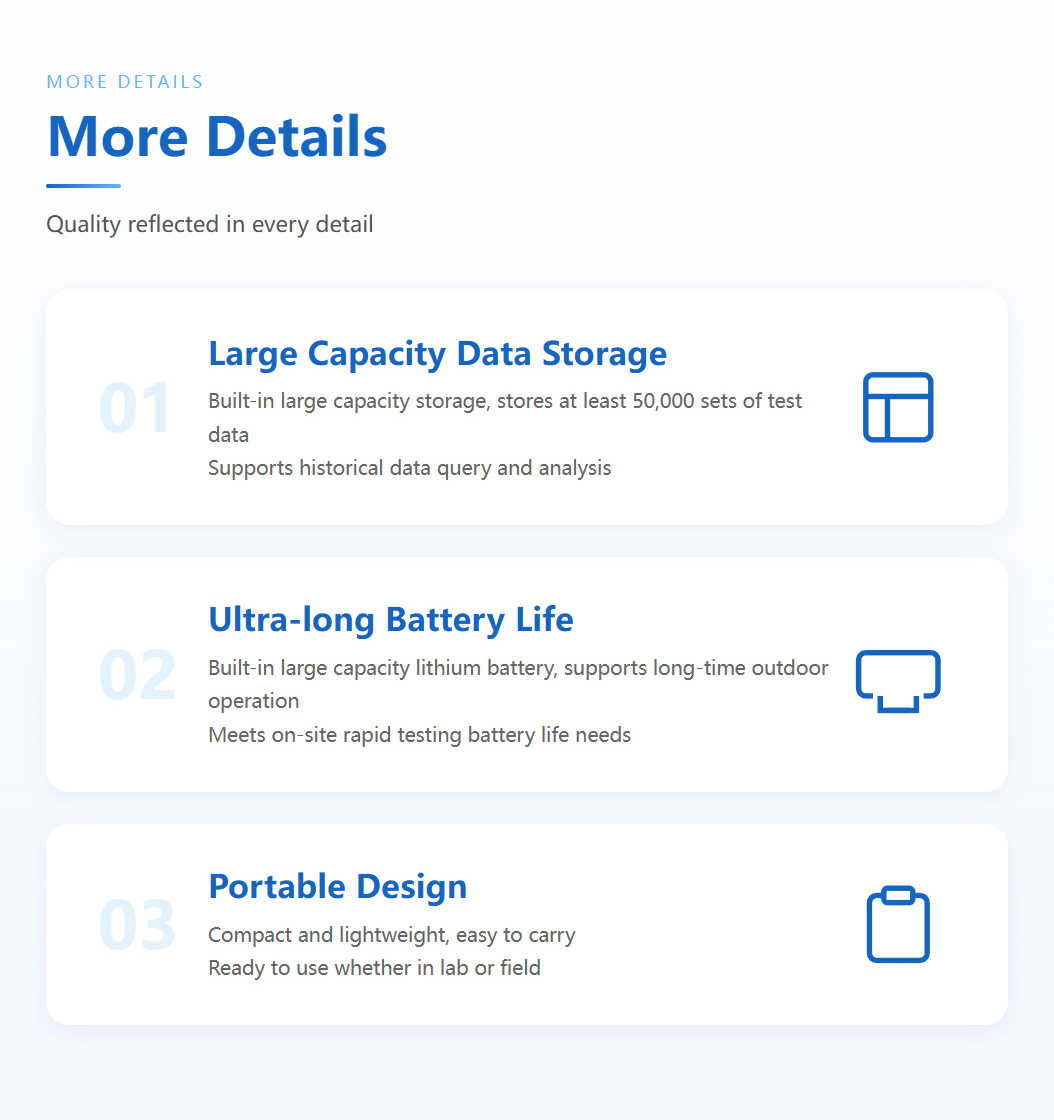
Autonomous Field Power Independence: 6,000 mAh lithium-ion battery system delivers hours of continuous testing without requiring auxiliary generator power.
On-Site Hardcopy Documentation: High-speed integrated thermal printer generates tamper-proof slips containing timestamps, sample identifiers, and calculated ppb values.
Compliant Calibration Framework: Fully aligned with JJF 2037-2023 calibration guidelines with indication error strictly kept within ±10% and repeatability RSD ≤ 5%.
Scalable Testing Library: Ships standard with cadmium and lead methodologies, with rapid firmware extensions for arsenic, mercury, copper, and zinc.
Secure Multi-Protocol Connectivity: Built-in Wi-Fi and USB interfaces enable direct synchronization with regulatory cloud portals and instant export to spreadsheets.
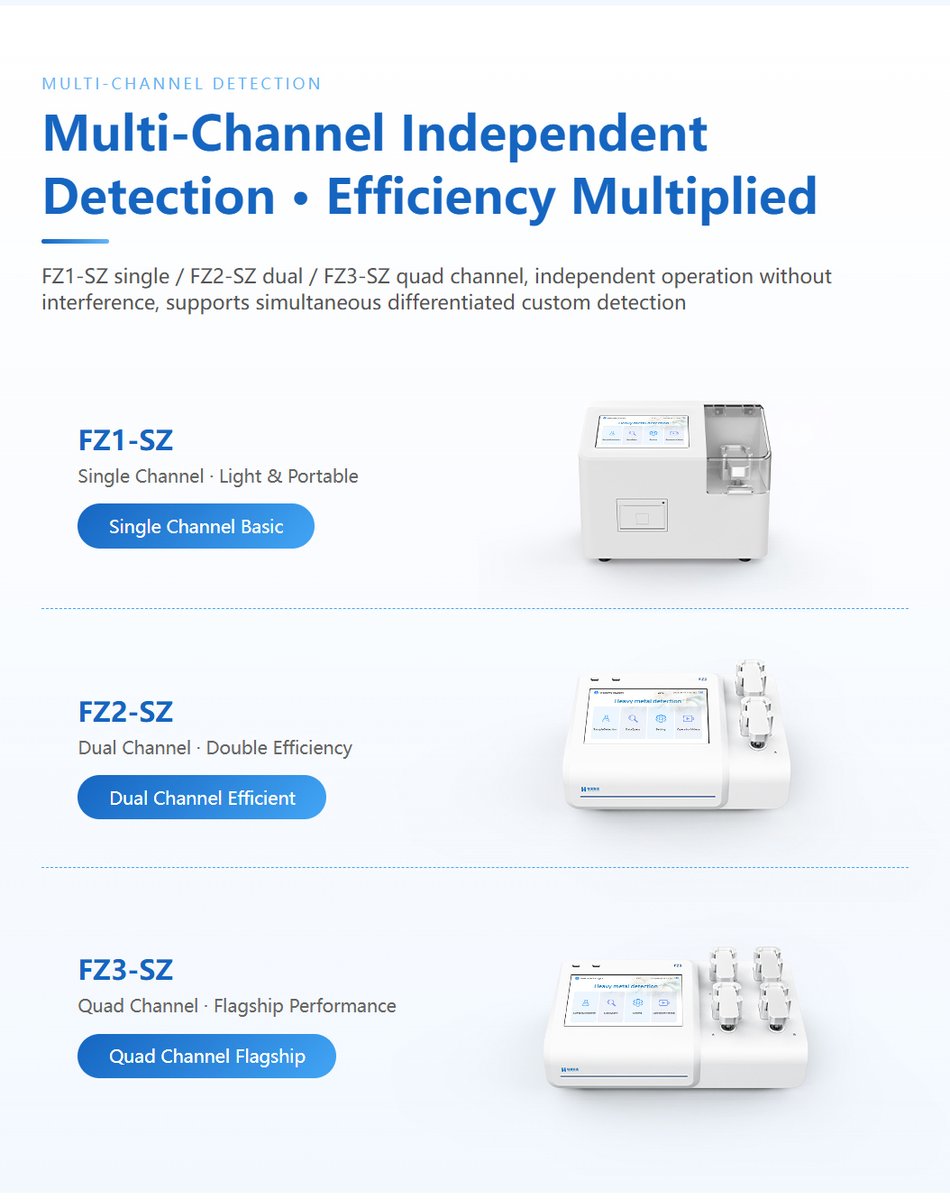
Upgrade Pathway for Higher Workloads: Easily integrated into municipal networks alongside our dual-channel voltammetric heavy metal analyzer for expanded laboratory operations.
Technical Specifications
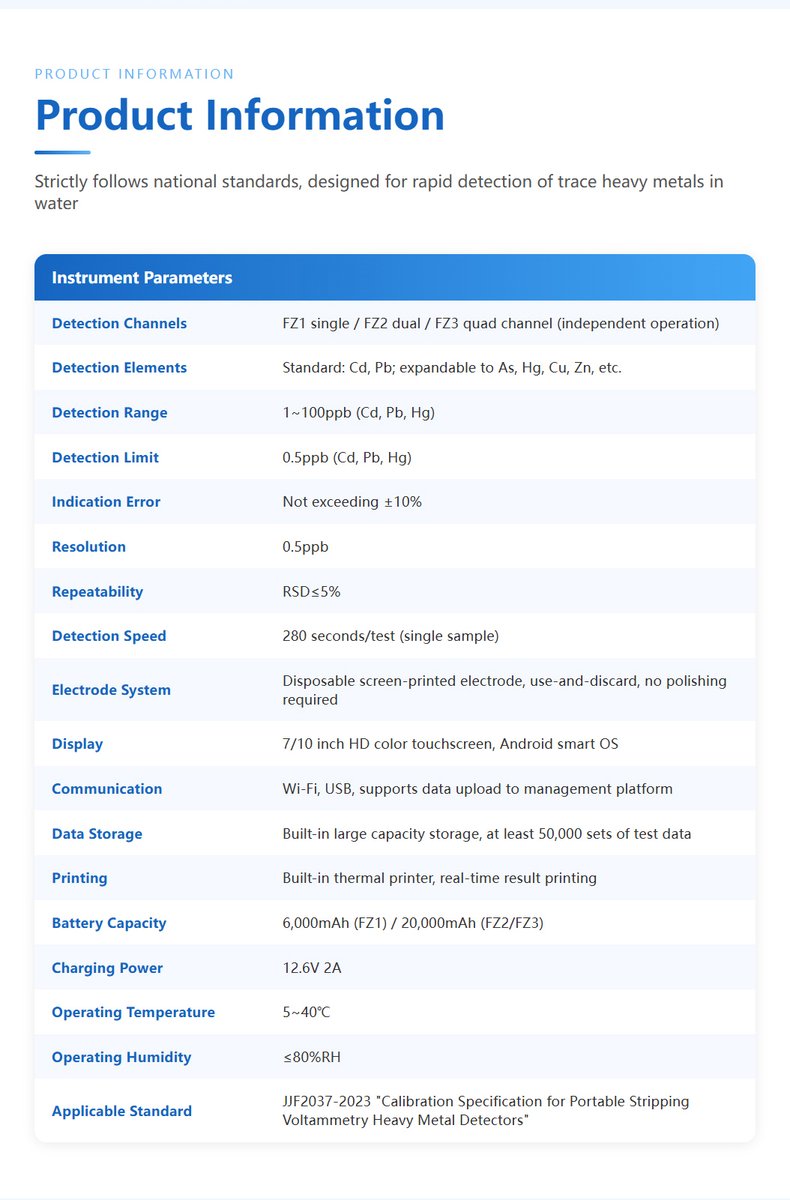
| Specification Item | Technical Parameters |
|---|
| Measurement Methodology | Anodic Stripping Voltammetry (ASV) |
| Analytical Channels | 1 Independent Electrochemical Channel |
| Standard Quantified Elements | Cadmium (Cd), Lead (Pb); Expandable: As, Hg, Cu, Zn, Se, Cr |
| Concentration Range | 1 ~ 100 ppb (Cd, Pb, Hg) |
| Detection Limit (LOD) | 0.5 ppb (Cd, Pb, Hg) |
| Indication Error Tolerance | ≤ ±10% |
| Measurement Resolution | 0.5 ppb |
| Instrument Repeatability | RSD ≤ 5% |
| Measurement Duration | 280 seconds / test (single sample) |
| Electrode Sensor Type | Disposable screen-printed three-electrode strip (zero maintenance) |
| Electrode Fixture | Patented magnetic elastic contact mounting mechanism |
| Operating Temperature & Humidity | 5 ~ 40 ℃; Relative Humidity ≤ 80% RH |
| User Interface | 7-inch HD color touchscreen, Android operating system |
| Connectivity & Upgrades | Wi-Fi, USB, cloud management upload, remote OTA software update |
| Internal Memory | ≥ 50,000 historical test records with search and filter capabilities |
| Integrated Output | Built-in thermal printer for real-time field receipts |
| Internal Power Source | 6,000 mAh rechargeable lithium battery |
| External Input | 12.6 V, 2 A DC charger |
| Physical Footprint | 320 mm × 190 mm × 250 mm |
| Gross Net Weight | 4.0 kg |
| Quality & Compliance Standard | JJF 2037-2023 Calibration Specification for Portable Stripping Voltammetry Heavy Metal Detectors |
FAQ
Q1: How does anodic stripping voltammetry (ASV) achieve 0.5 ppb detection limits without laboratory graphite furnace AAS?
Anodic stripping voltammetry utilizes an electrochemical pre-concentration step that electroplates target heavy metal ions from the bulk solution onto the working electrode at a negative potential. This concentration step multiplies the effective metal density on the electrode surface by several orders of magnitude. During the subsequent anodic stripping phase, an oxidized voltage ramp strips the accumulated metals, generating high-magnitude peak currents proportional to trace ion levels, achieving sensitivity matching atomic absorption without heavy laboratory infrastructure.
Q2: Can raw river or reservoir water samples be tested immediately without microwave acid digestion?
Yes. For surface water, clean tap water, and unpolluted groundwater samples where heavy metals exist primarily in dissolved, free ionic states, simply adding the acidification buffer frees the ions for immediate electrochemical accumulation. Microwave digestion is only mandated when analyzing turbid wastewater containing suspended organic colloids or heavy particulate matter.
Q3: What advantages does the patented magnetic elastic contact electrode seat offer in rugged field environments?
Traditional electrochemical cells rely on rigid mechanical clips or screw terminals that easily suffer from contact oxidation, mechanical fatigue, and alignment errors in the field. The patented magnetic elastic contact seat utilizes magnetic force to self-align and clamp the screen-printed electrode strip firmly against gold-plated elastic pins, ensuring minimal contact resistance, zero pin bending, and reproducible electrochemical measurements.
Q4: How does HM-FZ1-SZ ensure compliance during official environmental regulatory enforcement?
HM-FZ1-SZ is engineered in strict accordance with JJF 2037-2023, the national metrological calibration specification for portable stripping voltammetry instruments. It features built-in standard calibration curves, automated baseline subtraction, and error limits within ±10%. The integrated thermal printer immediately produces on-site hardcopy slips containing complete timestamps, calibration verification, and testing values suitable for evidence documentation.
Q5: When should an environmental team consider upgrading from HM-FZ1-SZ to the HM-FZ2-SZ dual-channel system?
HM-FZ1-SZ is optimized for mobile field screening by individual inspectors where portability (4.0 kg) and single-sample spot audits are primary. If your facility processes dozens of samples daily, requires routine parallel duplicate verification, or needs to run simultaneous lead and cadmium tests on separate channels without changing parameters, upgrading to the HM-FZ2-SZ dual-channel platform doubles your operational throughput.
Expert Review
Article address:https://www.hmwatertesting.cn/qtjc1/field-water-heavy-metal-detector-fz1.html

 Current
location:
Current
location: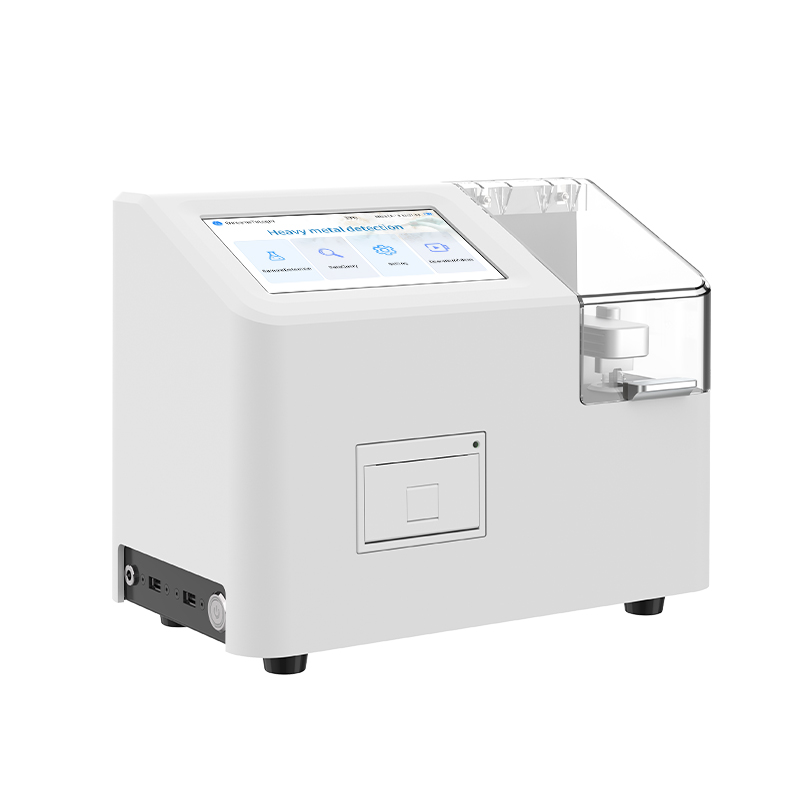
 +86 17853698681