Product Introduction
Heavy metal discharge compliance is a non-negotiable requirement for electroplating facilities, metallurgical plants, mining operations and drinking water treatment stations. Yet the traditional compliance pathway — collecting samples, shipping them to a certified laboratory, and waiting days for ICP-OES or AAS results — creates operational blind spots. By the time results return, non-compliant discharge may have continued for days, exposing the facility to regulatory penalties, environmental liability and reputation damage.
The outsourced testing model also imposes significant recurring costs. A single heavy metal analysis campaign covering multiple elements typically runs $500–$2,000 depending on the laboratory, turnaround time and number of samples. Facilities conducting monthly or weekly compliance checks can spend $6,000–$24,000 annually on outsourced metal testing alone — not including the hidden costs of sample logistics, documentation management and scheduling coordination.
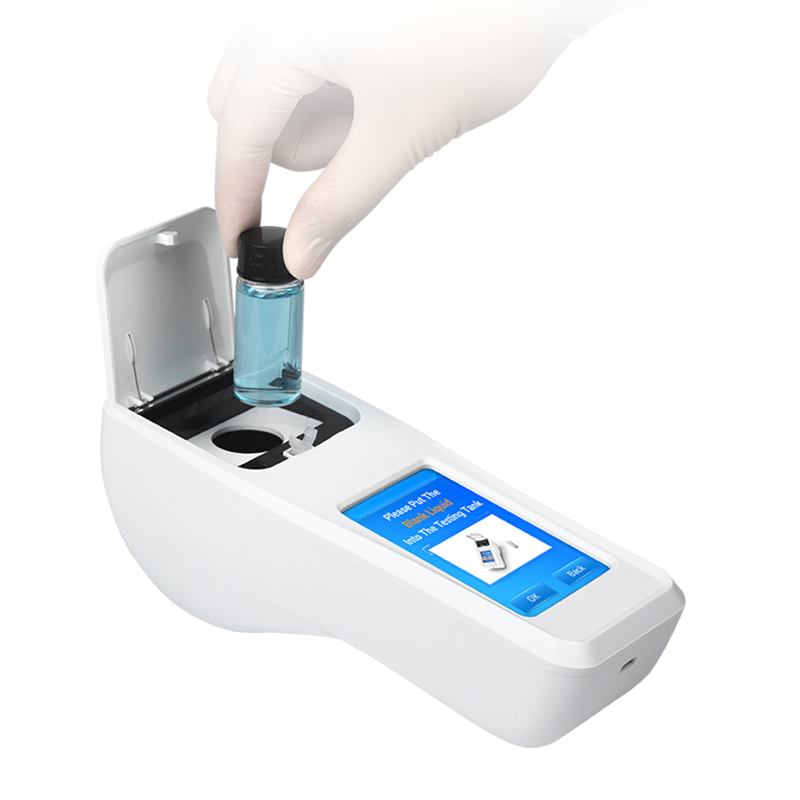
The HM-SZ20 handheld heavy metal water quality detector eliminates these pain points by bringing nine-element metal screening on-site. At $1,400, it provides instant compliance screening for Fe, Cu, Al, Zn, Mn, Ni, Cr, Hg and As using spectrophotometric detection with 0.001 absorbance sensitivity. Electroplating facilities can verify Cr and Ni discharge levels before releasing effluent. Metallurgical operations can track Fe, Mn and As in process water throughout the production cycle. Drinking water utilities can screen source water for As, Hg and other priority metals without waiting for laboratory turnaround.
The instrument does not replace confirmatory laboratory analysis for formal regulatory submissions, but it provides the real-time screening capability that prevents non-compliant discharge events, prioritises samples for laboratory confirmation, and dramatically reduces overall testing costs by eliminating unnecessary outsourced analyses.
Applications
Electroplating and surface treatment. Cr, Ni, Cu, Zn discharge permit compliance — verify effluent metal concentrations before release to municipal sewer or direct discharge.
Metallurgical and mining operations. Fe, Mn, Cu, As process water monitoring — track metal levels throughout beneficiation, smelting and tailings management.
Drinking water supply. As, Hg, Fe, Mn, Al source water safety screening — rapid field assessment of raw water quality at intake points and treatment stages.
Electronic and semiconductor manufacturing. Cu, Ni, Cr wastewater metal assessment — monitor rinse water and etching bath discharge for metal contamination.
Petroleum refinery. Heavy metal effluent testing for environmental compliance — screen cooling water, desalination blowdown and process condensate.
River basin emergency response. Heavy metal pollution rapid screening — deploy at multiple sampling points during contamination incidents for immediate spatial assessment.
Key Features & Advantages
Nine heavy metal elements in one device. Fe, Cu, Al, Zn, Mn, Ni, Cr, Hg and As measured without carrying multiple instruments or switching between dedicated analyzers.
$1,400 replaces $20,000–$80,000 ICP/AAS. Field-level heavy metal screening at a fraction of laboratory instrument cost, making on-site compliance verification financially accessible.
Instant compliance screening. Results available on-site within minutes — no sample shipping, no laboratory queue, no days-long waiting for ICP turnaround.
Eliminates outsourced testing delays and costs. Facilities conducting monthly testing can recover the instrument cost within 2–3 campaigns versus outsourced laboratory fees.
Spectrophotometric detection with 0.001 absorbance. Precise low-concentration metal analysis suitable for discharge permit threshold verification.
Imported cold light source. Up to 100,000 hours operational lifespan ensures long-term measurement stability without lamp replacement.
Automatic wavelength selection. Switch between nine metal parameters without manual filter changes — streamlined multi-element workflow.
Android smart OS with 3.5-inch touch screen. Intuitive interface reduces technician training time; supports method updates via system upgrades.
80,000+ record onboard storage. Document months of heavy metal monitoring data for audit trails and trend analysis without external devices.
Type-C, WiFi and Bluetooth connectivity. Export data to USB drives, upload to cloud monitoring platforms, or print via Bluetooth for immediate compliance documentation.
5,600 mAh lithium battery, 8-hour runtime. Full-shift field deployment across multiple discharge points, sampling stations or monitoring sites.
325 g portable form factor (190 × 77 × 72 mm). Single-hand operation for deployment at confined discharge outlets, sampling wells and remote monitoring locations.
Integrated smart digestor included. 6-chamber, PID ±0.5 °C temperature control for complete on-site sample preparation — no separate digestion equipment needed.
Less than 0.5% repeatability and stability. Consistent results across repeated measurements and extended monitoring campaigns.
Technical Specifications
| Parameter | Specification |
|---|
| Test items | Fe, Cu, Al, Zn, Mn, Ni, Cr, Hg, As (nine heavy metal elements) |
| Detection principle | Spectrophotometric (cold light source + absorbance measurement) |
| Wavelength selection | Automatic |
| Repeatability | <0.5% |
| Stability | <0.5% |
| Sensitivity (absorbance) | 0.001 |
| Sample compatibility | 16 mm (round), 22 mm (round) |
| Operating system | Android smart operating system |
| Display | 3.5-inch color LCD touch screen |
| Light source | Imported cold light source, lifespan up to 100,000 hours |
| Data storage | Over 80,000 records |
| Communication | Type-C, WiFi, Bluetooth |
| Printer | Optional portable Bluetooth printer |
| Battery | 5,600 mAh lithium battery |
| Continuous working time | 8 hours |
| Power supply | 5V/DC |
| Operating environment | 0–50 °C, 0–90% relative humidity |
| Dimensions | 190 × 77 × 72 mm |
| Weight | 325 g |
| Supported languages | Simplified Chinese or English |
| Smart digestor (included) | 6-chamber, PID temperature control ±0.5 °C, max 200 °C, 400 W, 245 × 163 × 192 mm |
FAQ
Q1: Can the HM-SZ20 replace ICP or AAS laboratory analysis for heavy metal compliance?
The HM-SZ20 provides field-level screening that identifies whether discharge concentrations are within permit limits. For formal regulatory submissions requiring certified results, confirmatory laboratory analysis (ICP-OES or AAS) may still be required depending on local regulatory frameworks. However, the HM-SZ20 eliminates the need for routine outsourced testing by providing immediate on-site screening — facilities only send samples to the laboratory when the HM-SZ20 indicates borderline or elevated readings, reducing outsourced testing volume by 70–90%.
Q2: Which nine heavy metal elements can the HM-SZ20 detect?
The HM-SZ20 measures iron (Fe), copper (Cu), aluminium (Al), zinc (Zn), manganese (Mn), nickel (Ni), chromium (Cr), mercury (Hg) and arsenic (As). These nine elements cover the most commonly regulated heavy metals in industrial discharge permits, drinking water standards and environmental quality criteria worldwide.
Q3: Is the HM-SZ20 suitable for electroplating facility discharge monitoring?
Yes. Electroplating operations are one of the primary application scenarios for the HM-SZ20. The device measures Cr, Ni, Cu and Zn — the four metals most commonly regulated in electroplating discharge permits. Operators can verify effluent metal concentrations before releasing wastewater, preventing non-compliant discharge events and the associated regulatory penalties.
Q4: How does the HM-SZ20 compare to outsourced laboratory metal testing?
Outsourced heavy metal analysis typically costs $500–$2,000 per campaign with 3–7 day turnaround times. The HM-SZ20 ($1,400) delivers on-site results within minutes and pays for itself within 1–3 outsourced campaigns. Over 12 months of monthly testing, in-house screening with the HM-SZ20 saves $5,000–$22,000 compared to outsourced ICP analysis while providing immediate compliance visibility.
Q5: Can the HM-SZ20 detect mercury (Hg) and arsenic (As) in drinking water?
Yes. Mercury and arsenic are included in the nine-element detection capability. For drinking water applications, the HM-SZ20 provides rapid source water screening at intake points, treatment stages and distribution system sampling locations. The 0.001 absorbance sensitivity supports detection at the low concentrations relevant to drinking water safety standards.
Q6: What is the payback period versus outsourced ICP testing?
Assuming outsourced multi-element heavy metal testing at $800–$1,500 per campaign, the HM-SZ20 ($1,400) reaches payback in approximately 1–2 campaigns. Facilities testing monthly achieve full ROI within 2 months. Over three years, total cost of ownership including reagents is typically 85–95% lower than equivalent outsourced laboratory testing programs.
Q7: How does heavy metal spectrophotometric detection work?
The HM-SZ20 uses colorimetric reagents that react with specific metal ions in the water sample to form coloured complexes. The instrument measures the absorbance of light passing through the coloured solution at an automatically selected wavelength. Absorbance is proportional to metal concentration according to the Beer-Lambert law. The 0.001 absorbance resolution enables precise quantification at the low concentrations typical of discharge permit limits.
Article address:https://www.hmwatertesting.cn/dcsz3/portable-heavy-metal-detector-electroplating-compliance.html

 Current
location:
Current
location: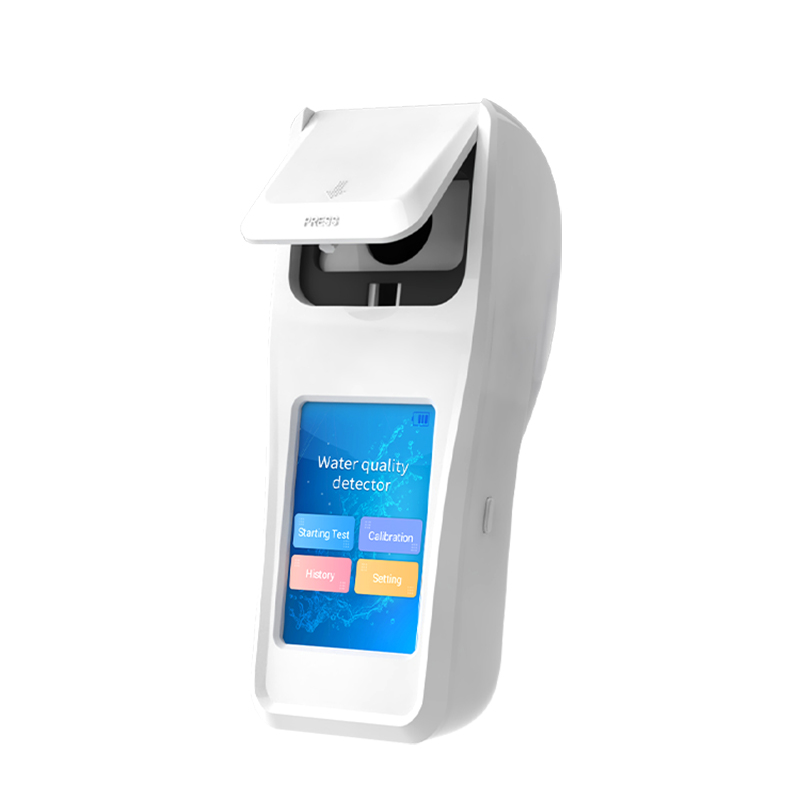
 +86 17853698681