


Product Introduction
Permanganate index, often written as CODMn, is one of the most widely referenced indicators in surface water quality assessment. It measures the amount of oxidizable organic and inorganic matter in water using potassium permanganate as the oxidant, providing a rapid evaluation of organic pollution levels in rivers, lakes, reservoirs, and drinking water sources. Environmental monitoring stations, water utilities, and regulatory agencies rely on CODMn data to classify water quality grades, track pollution trends, and verify compliance with national standards.
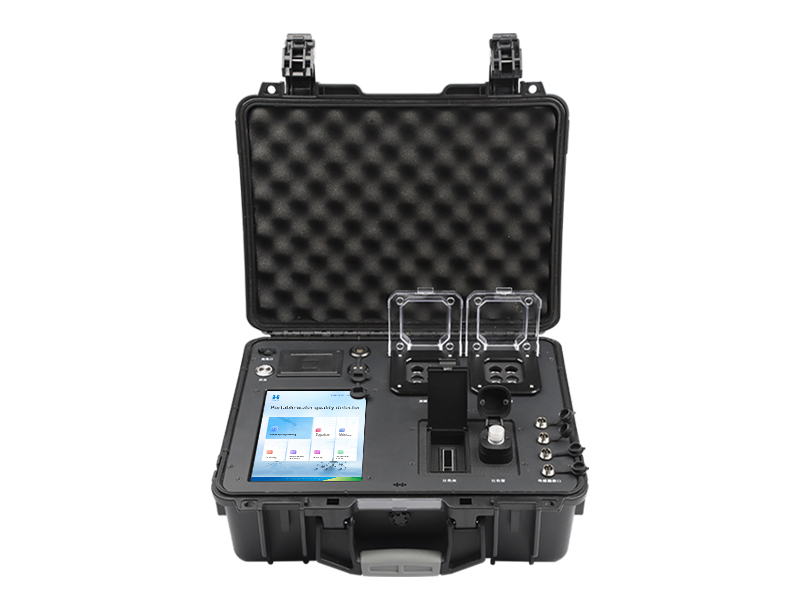
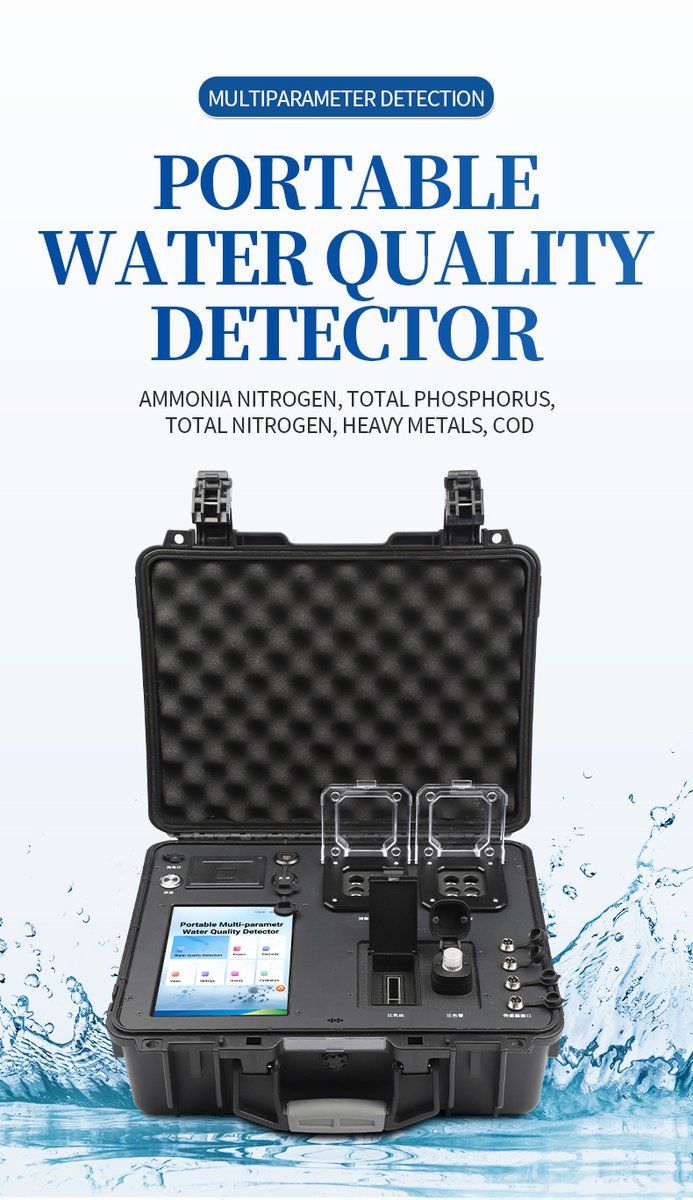
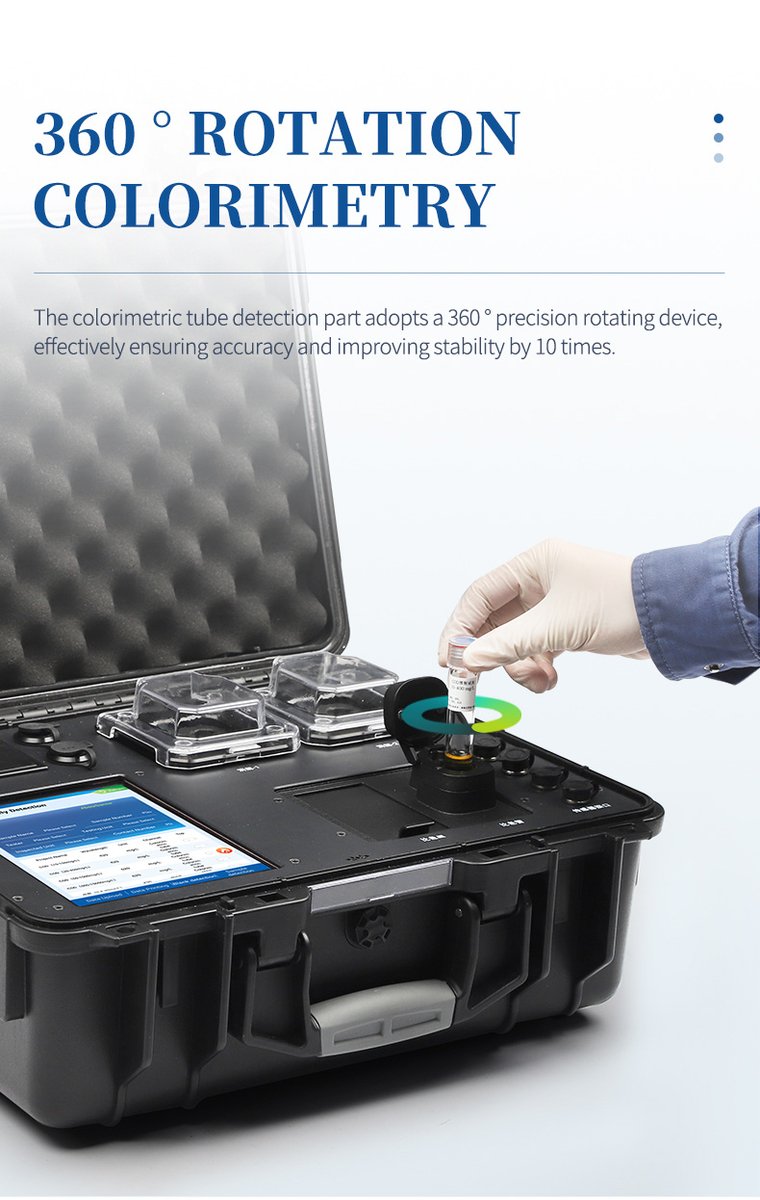
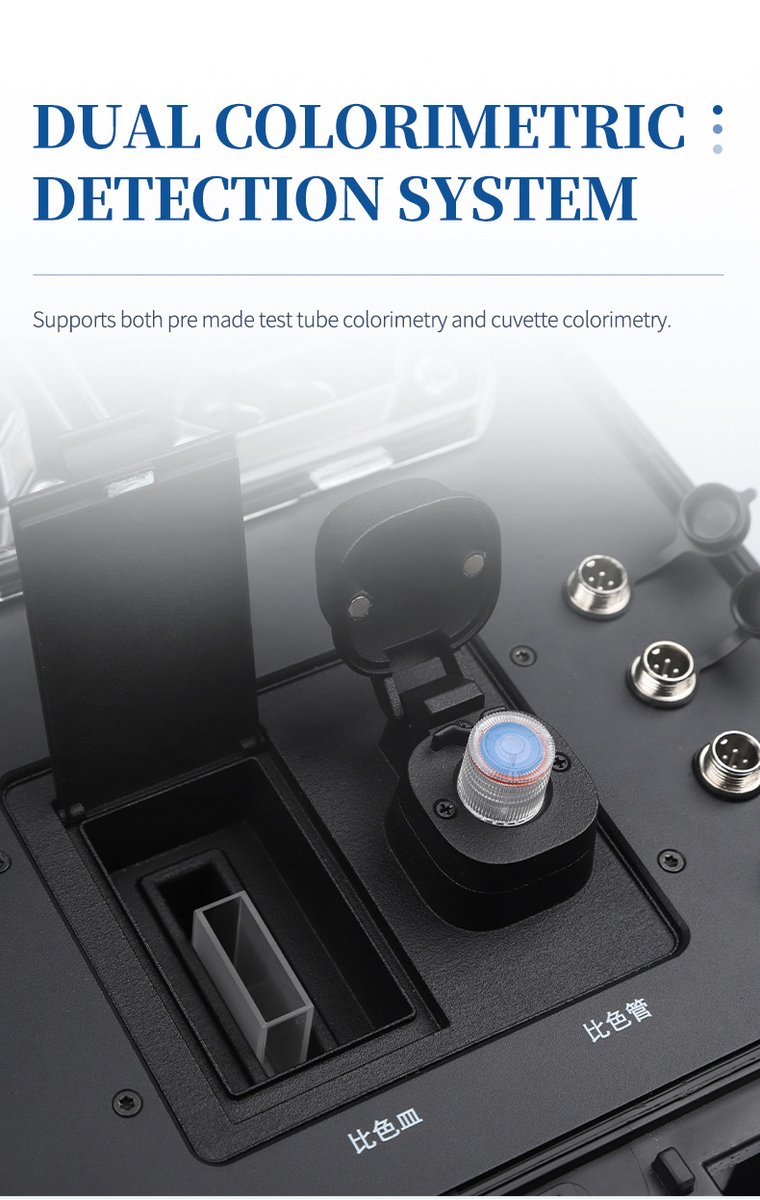
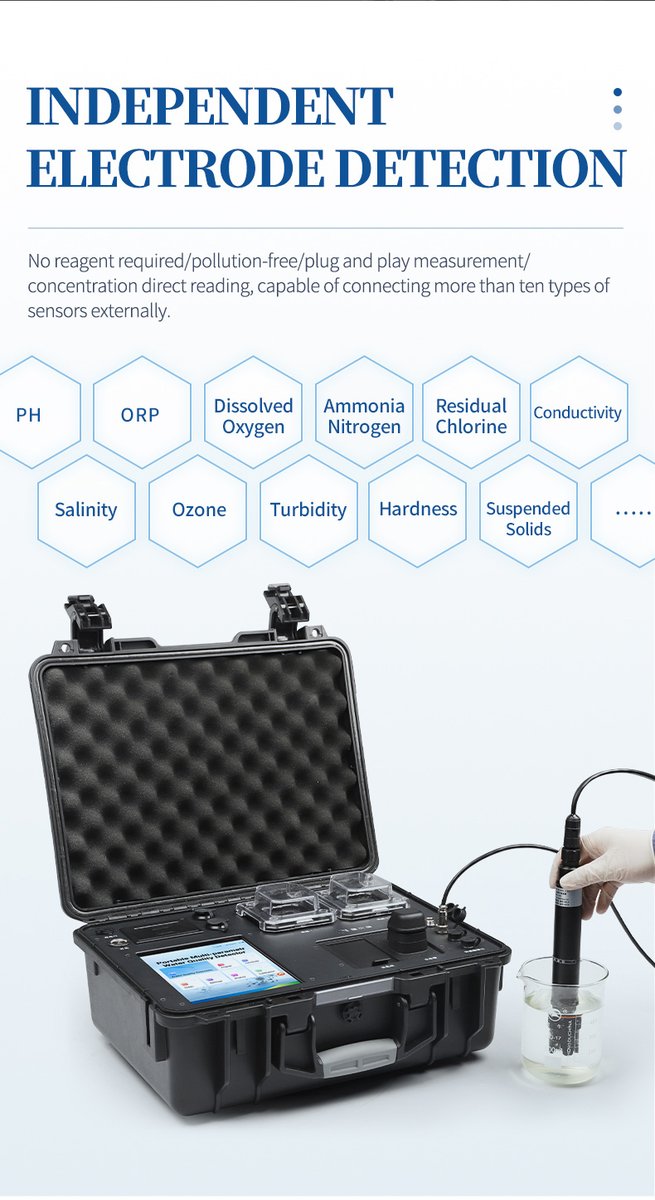
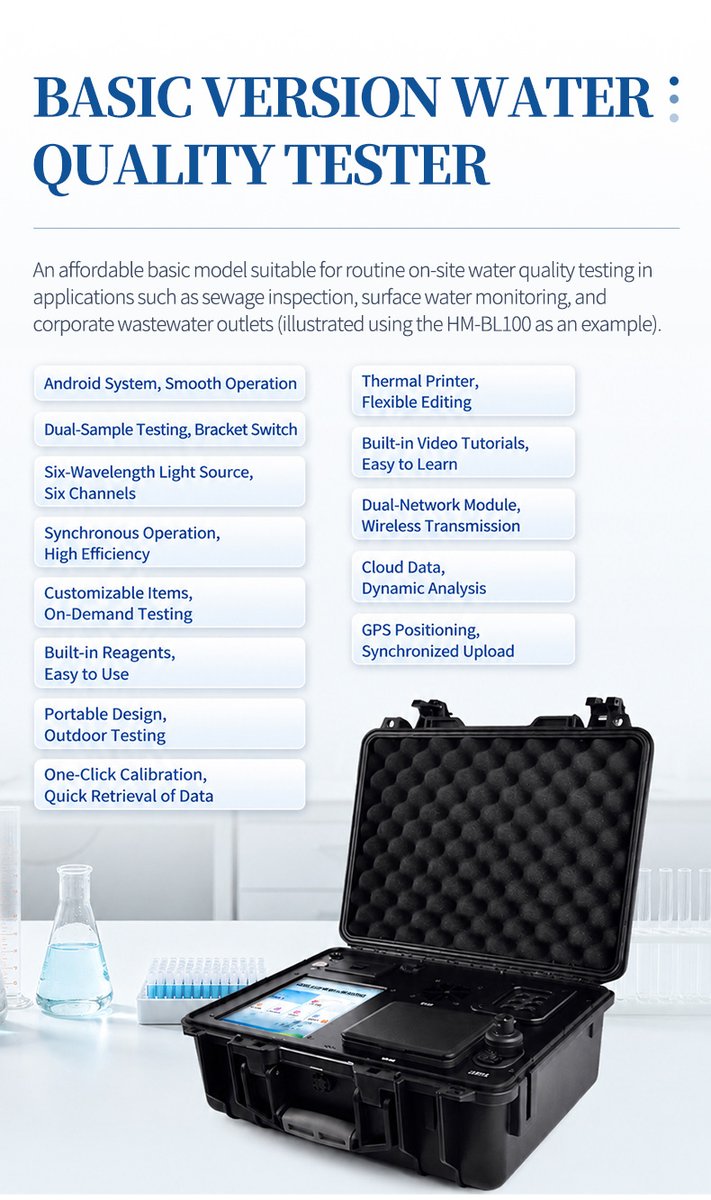
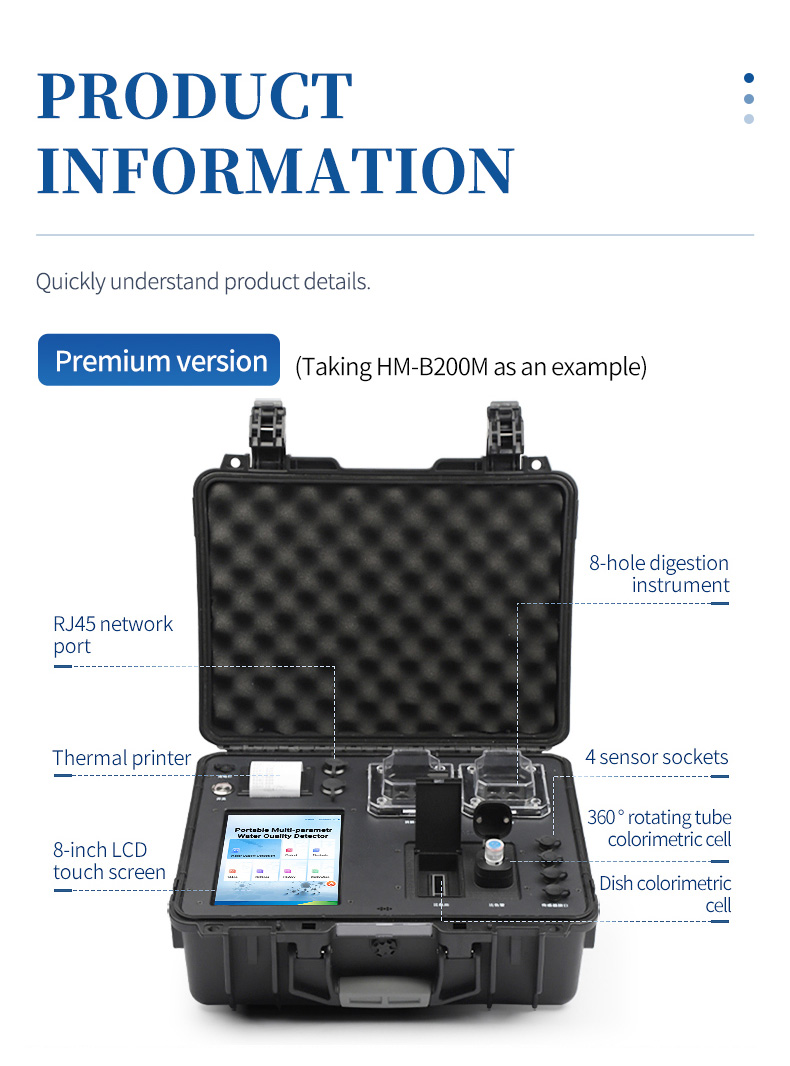
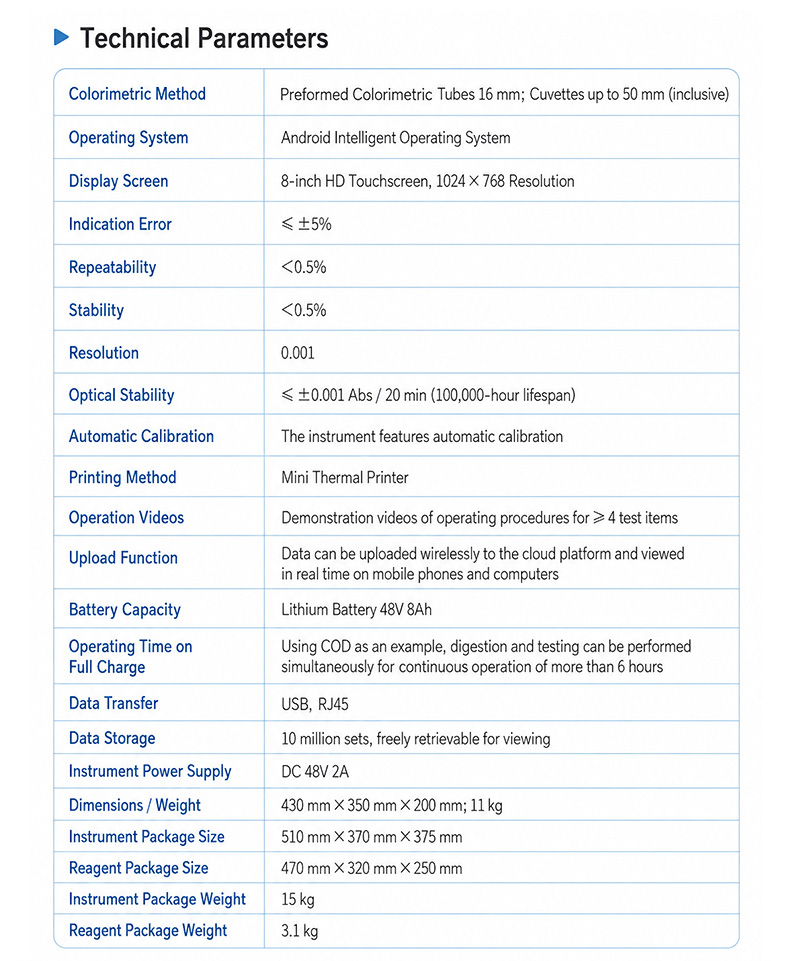
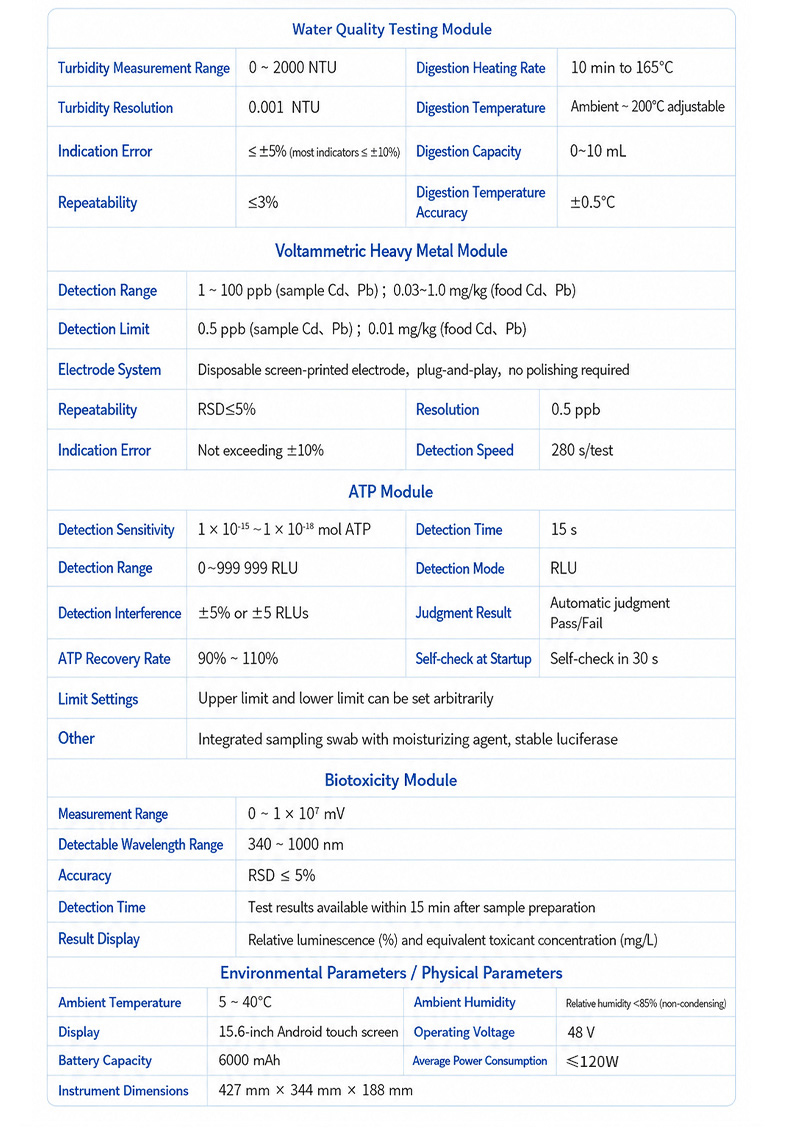
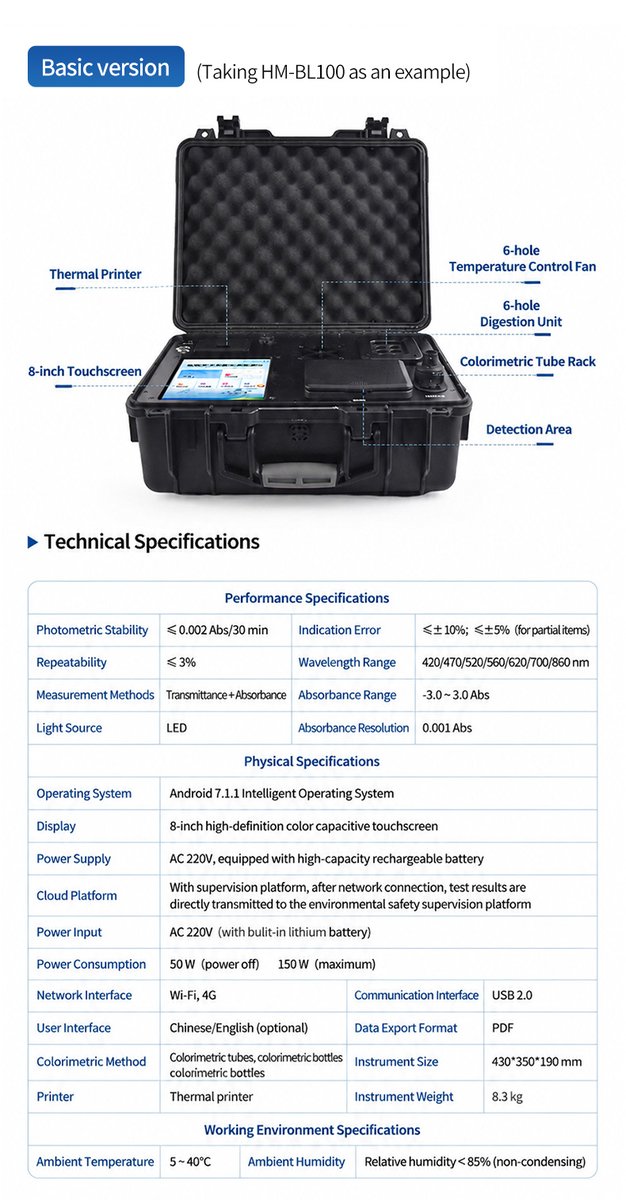
The HM-BCMn is a dedicated portable analyzer built specifically for this task. Instead of fitting a general-purpose instrument with multiple detection modules, the HM-BCMn concentrates its optical system, digestion hardware, and software workflows entirely on permanganate index measurement per GB/T11892-1989. The detection range spans 0.25–25 mg/L (segmented), covering clean to moderately polluted surface water as well as raw drinking water sources. A dual colorimetric system accepts 16mm pre-made test tubes and cuvettes up to 50mm, and a 360° rotating holder keeps readings stable across consecutive samples.
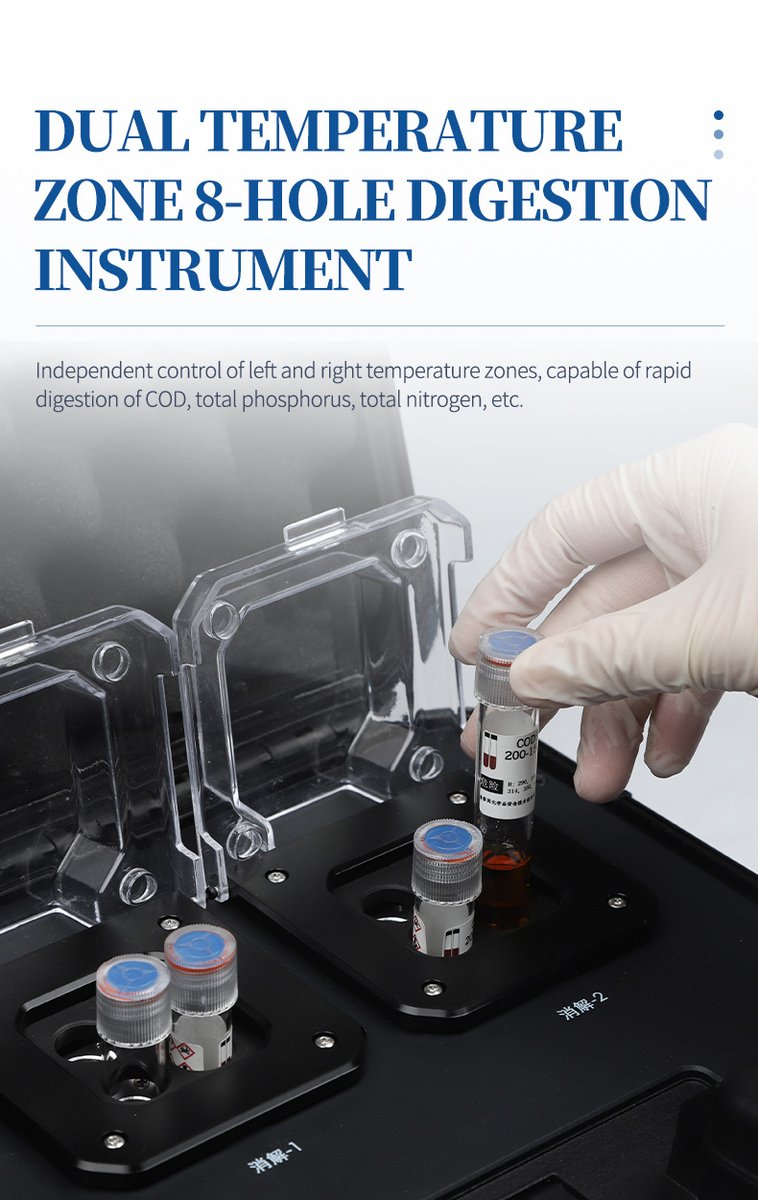
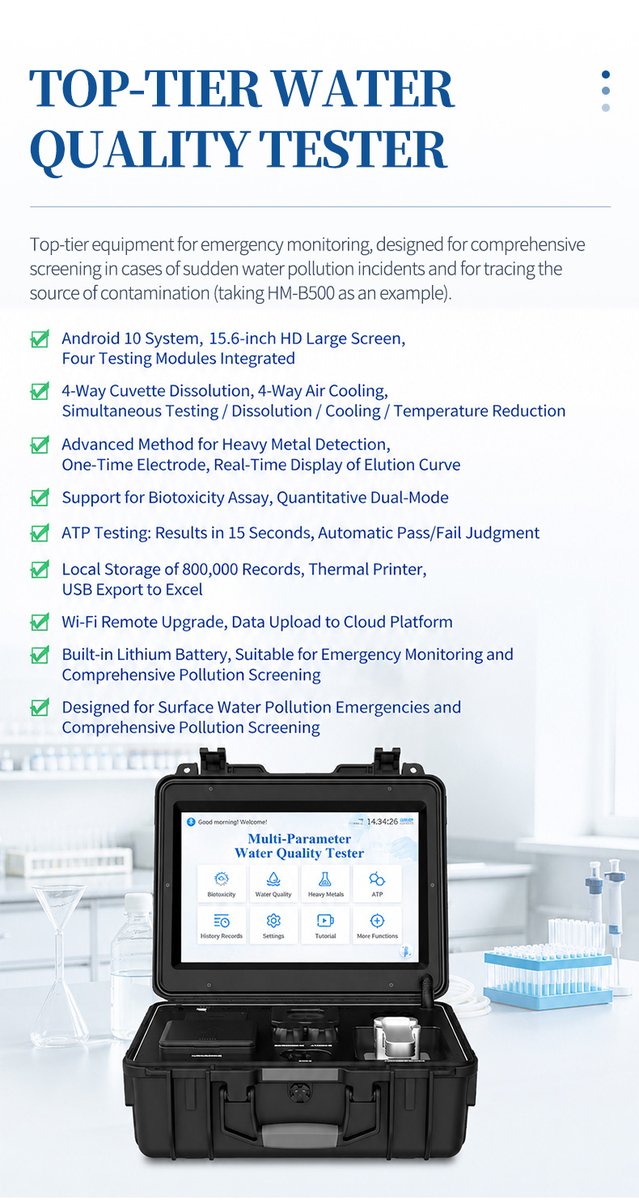
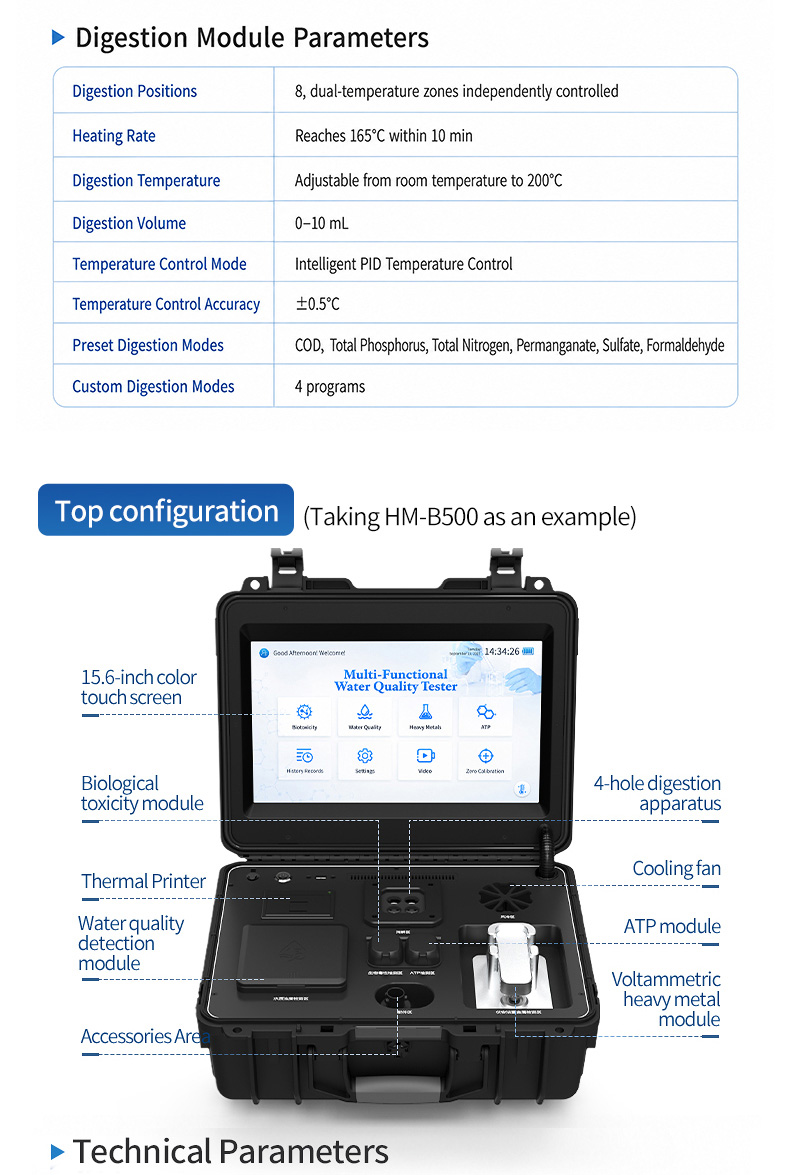
The built-in dual-zone 8-vial digester reaches 165°C within 10 minutes under PID control at ±0.5°C, allowing digestion and colorimetric detection to proceed simultaneously. A 48V 8Ah lithium battery supports over six hours of field operation. All results carry GPS coordinates, and data uploads to the cloud via WiFi, 4G, or RJ45 for real-time mobile and PC viewing. Teams that need multi-parameter analysis beyond CODMn can explore the dual-parameter COD and ammonia nitrogen analyzer in the same product family.
Applications
- Surface Water Quality Monitoring: routine CODMn measurement at rivers, lakes, and reservoirs for water quality grade classification
- Drinking Water Source Assessment: permanganate index evaluation at raw water intake points before treatment
- Environmental Monitoring Stations: field data collection for government-mandated organic pollution surveillance programs
- Watershed Pollution Trend Tracking: longitudinal CODMn data collection to identify pollution sources and seasonal patterns
- Groundwater Quality Screening: organic pollution indicator testing in shallow and deep groundwater monitoring wells
- Educational and Research Institutions: water quality laboratory teaching and field research on organic pollution assessment
- Third-Party Environmental Testing: mobile CODMn sampling across multiple client sites for compliance reporting
- Industrial Effluent Organic Load Screening: preliminary CODMn evaluation before detailed laboratory analysis
Key Features and Advantages
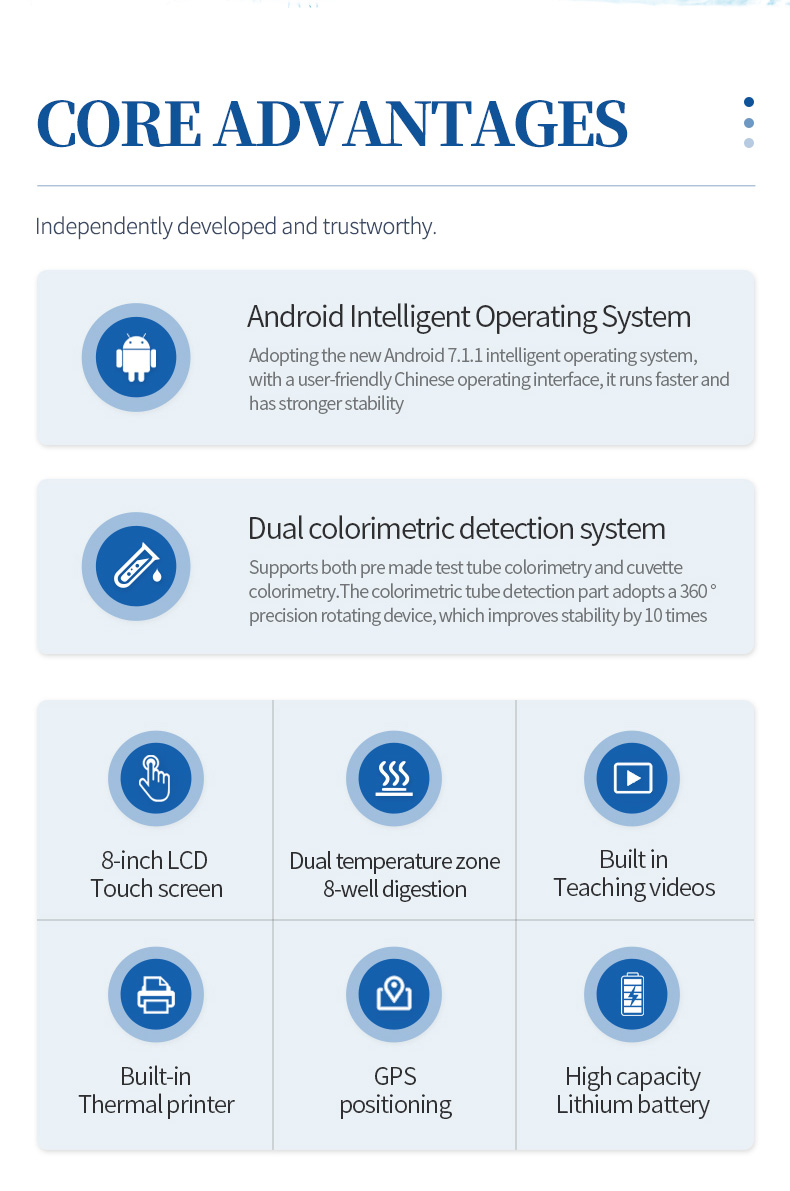
- Purpose-built CODMn analyzer — all detection resources focused on permanganate index accuracy per GB/T11892-1989
- Dual colorimetric system supports 16mm pre-made test tubes and cuvettes 50mm and below
- 360° precision rotating tube holder for stable, repeatable CODMn readings across sample batches
- Built-in dual-zone 8-vial digester with independent temperature control — 165°C within 10 minutes, PID at ±0.5°C
- Six preset digestion programs (COD, total phosphorus, total nitrogen, permanganate index, sulfate, formaldehyde) plus 3 custom modes
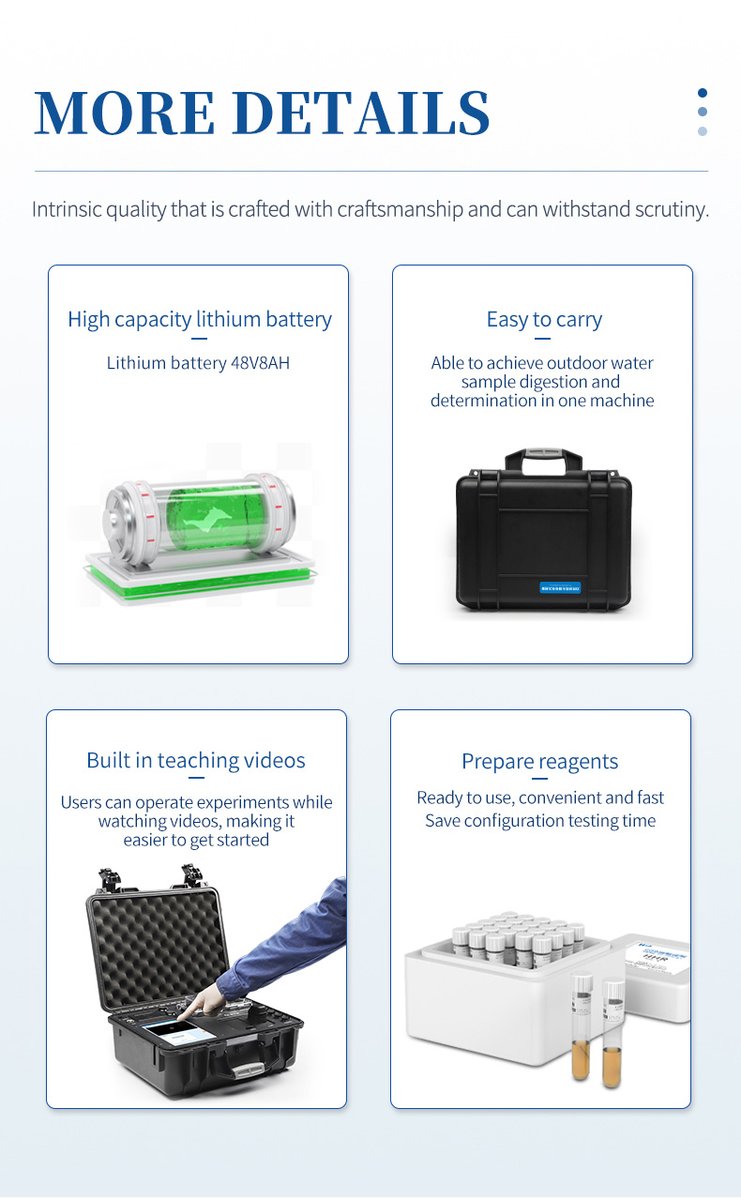
- 48V 8Ah lithium battery sustains 6+ hours of field digestion and detection on a single charge
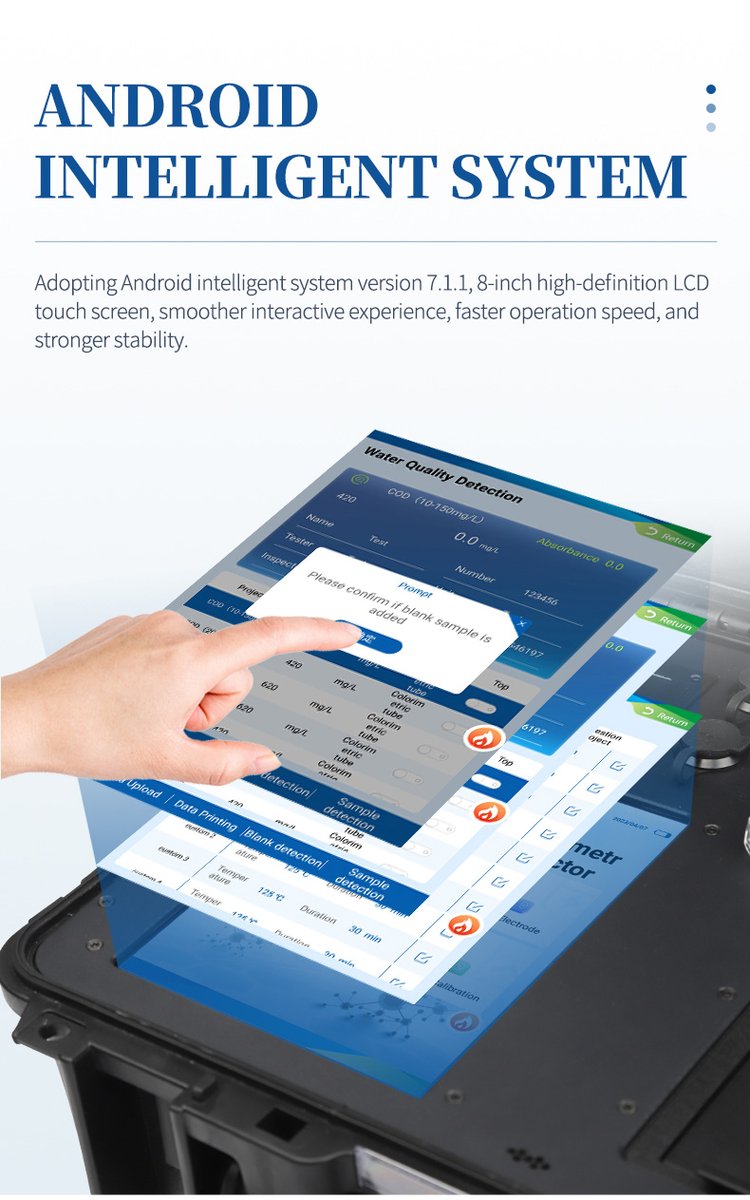
- 8-inch HD touchscreen (1024×768) with Android smart system guiding CODMn testing step by step
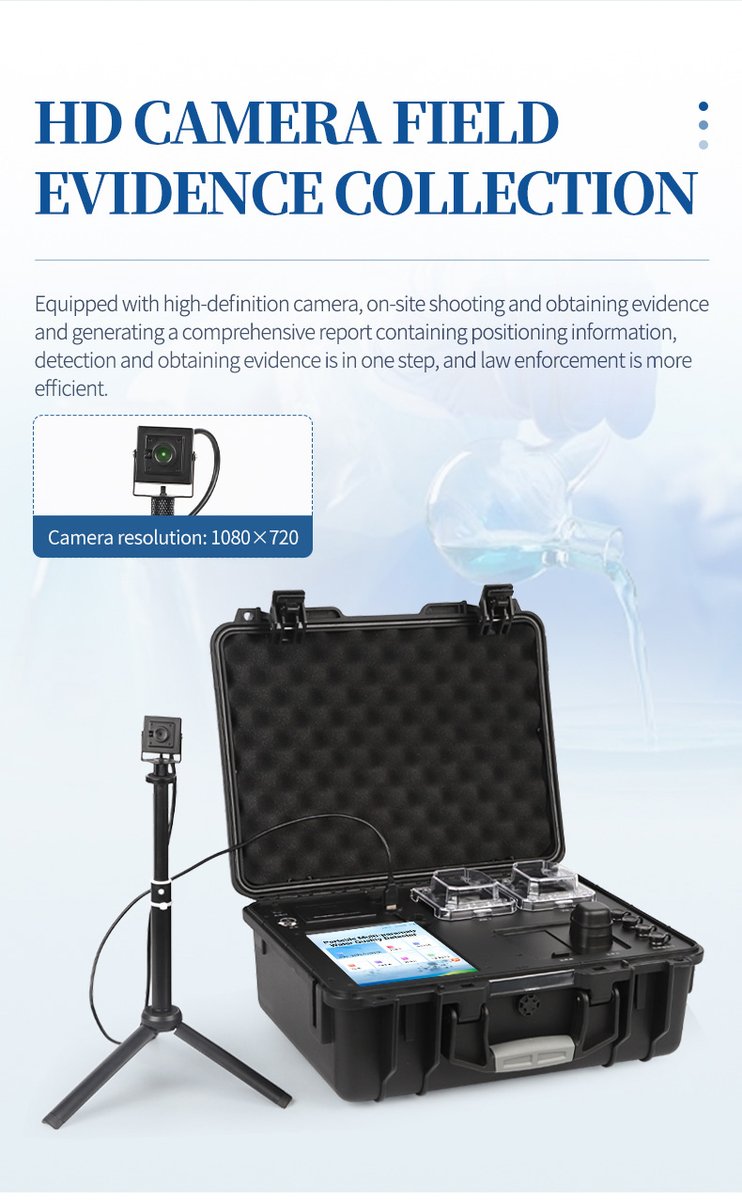
- 10 million data sets storage with GPS positioning — every record includes sampling coordinates
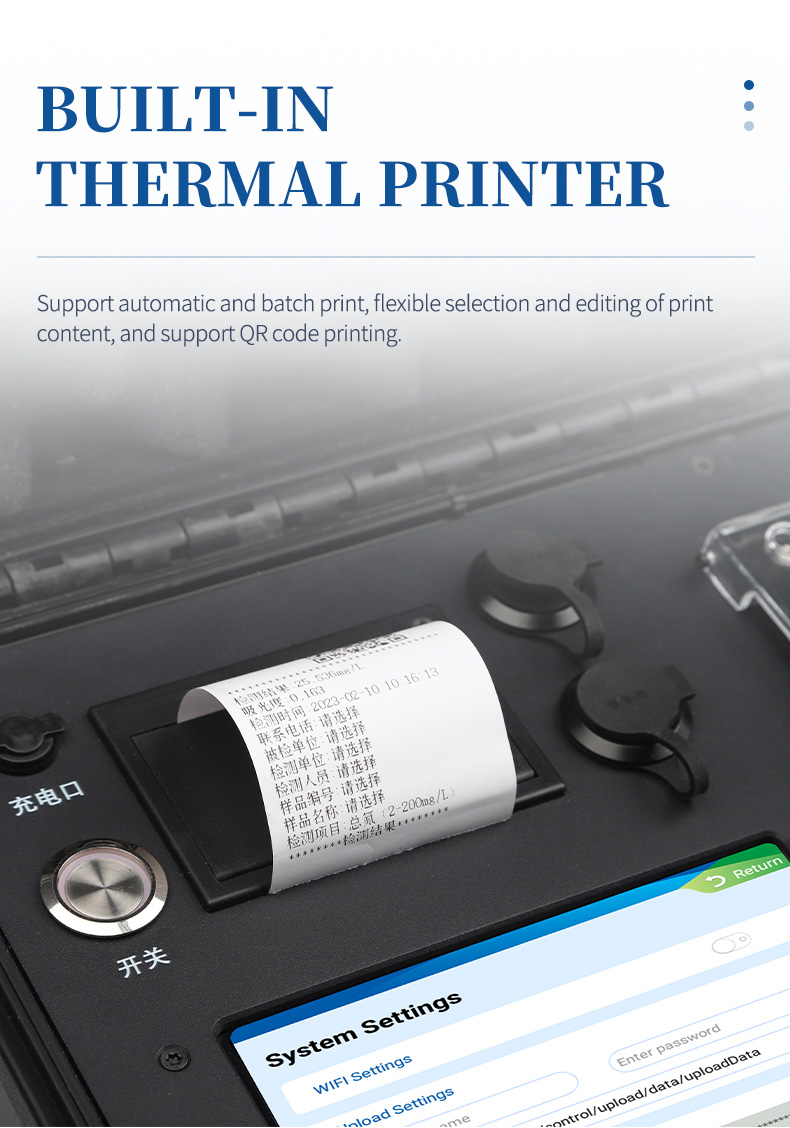
- Cloud upload via WiFi, 4G, or RJ45 with real-time mobile and PC viewing; micro thermal printer with QR codes
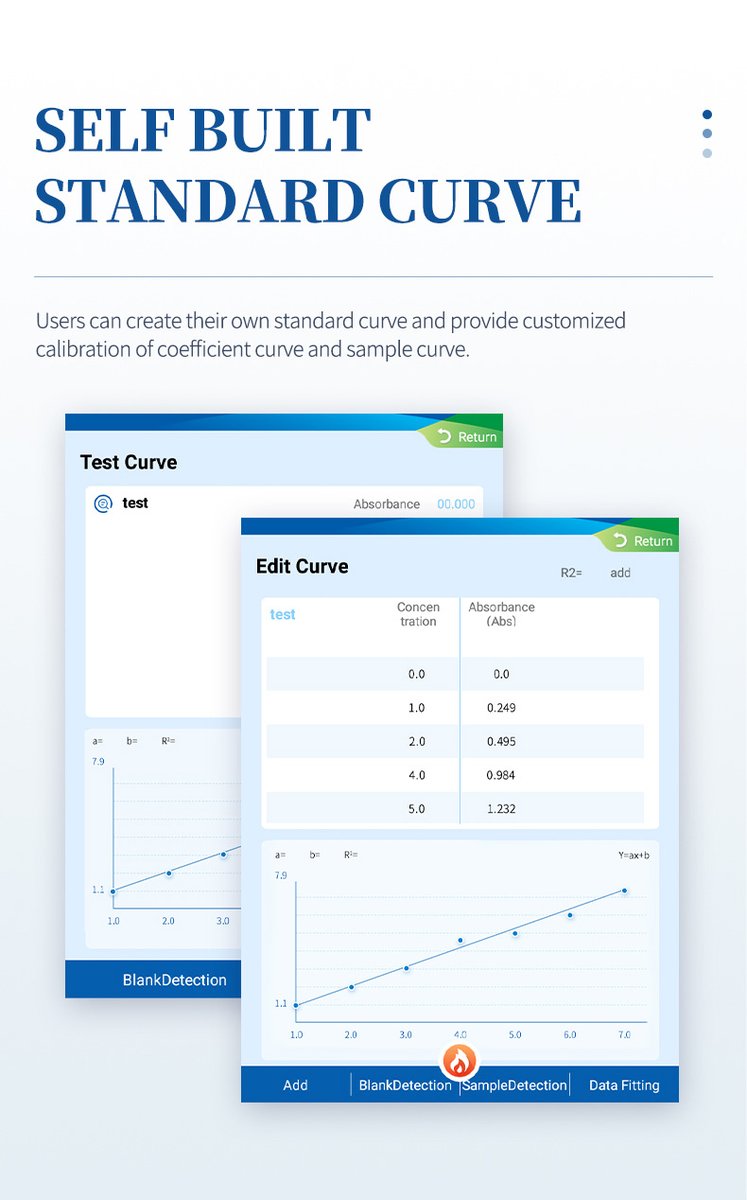
- Custom calibration curves — users can build coefficient and sample curves for CODMn standard verification
- Factory pre-made reagent consumables minimize sample preparation — add water sample to tube and run
- Built-in tutorial videos and top-pin function for quick-access to frequently tested parameters
Technical Specifications
| Specification | Value |
|---|
| Spectrophotometric Parameter | Permanganate Index (CODMn) |
| Detection Range | 0.25–25 mg/L (segmented) |
| Reference Standard | GB/T11892-1989 |
| Sensor Interfaces | N/A |
| Indication Error | ≤ ±5% |
| Repeatability | < 0.5% |
| Stability | < 0.5% |
| Resolution | 0.001 |
| Optical Stability | ≤ ±0.001 Abs/20 min (100,000-hour life) |
| Colorimetric Method | 16mm pre-made test tubes; cuvettes 50mm and below |
| Operating System | Android smart system (7.1.1) |
| Display | 8-inch HD touchscreen, 1024×768 |
| Digestion Capacity | 8 vials, dual-zone independent control |
| Heating Rate | 165°C within 10 minutes |
| Digestion Temperature | Room temperature – 200°C adjustable |
| Digestion Volume | 0–10 ml |
| Preset Digestion Modes | COD, total phosphorus, total nitrogen, permanganate index, sulfate, formaldehyde |
| Custom Digestion Modes | 3 |
| Data Transfer | USB, RJ45, WiFi |
| Data Upload | Wireless cloud upload, mobile and PC viewing |
| Printer | Micro thermal printer |
| Battery | 48V 8Ah lithium, 6+ hours (digestion and detection) |
| Data Storage | 10 million sets, freely retrievable |
| Power Supply | DC48V2A |
| Dimensions | 430 × 350 × 200 mm |
| Weight | 11 kg |
FAQ
Q1: What is permanganate index (CODMn) and why is it important for water quality monitoring?
Permanganate index measures the amount of oxidizable substances in water using potassium permanganate as the oxidant. It is a standard indicator for evaluating organic pollution levels in surface water and drinking water sources. In natural water quality assessment, CODMn is widely used to classify water bodies and track organic pollution trends. Unlike CODCr which uses dichromate and targets industrial wastewater, CODMn is suited for relatively clean natural waters, making it the standard choice for environmental monitoring of rivers, lakes, and reservoirs.
Q2: How does the HM-BCMn differ from a general multi-parameter water quality analyzer?
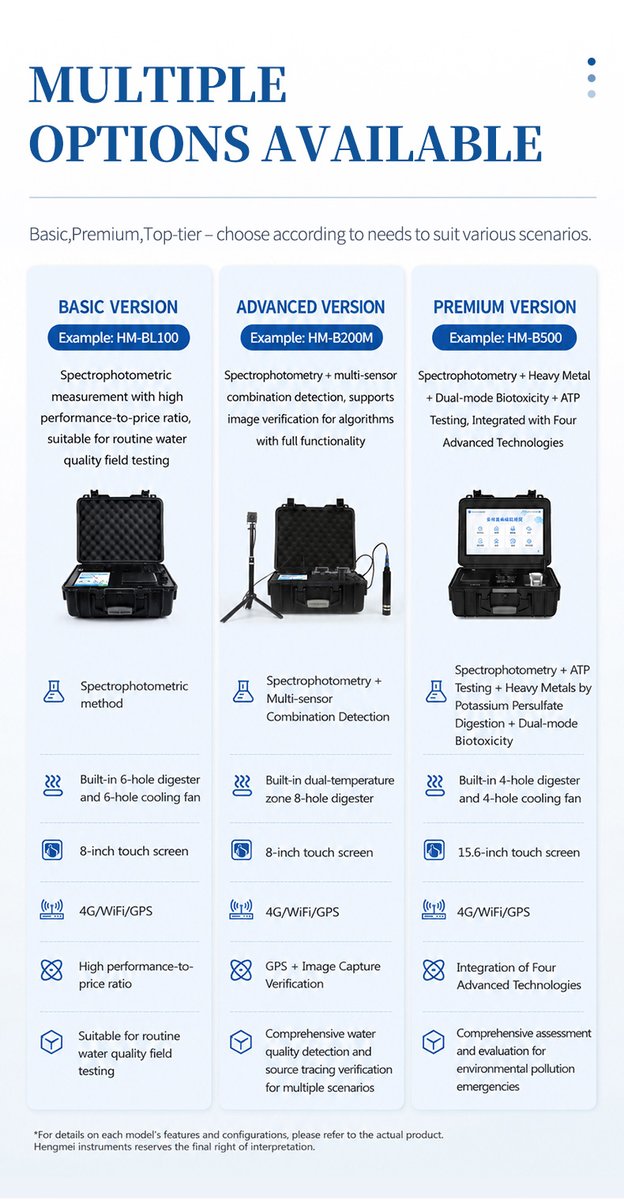
The HM-BCMn is a dedicated single-parameter instrument focused exclusively on permanganate index (CODMn) detection. Unlike multi-parameter analyzers that divide resources across COD, ammonia nitrogen, total phosphorus, and other indicators — along with sensor interfaces — the HM-BCMn dedicates its optical system, digestion workflow, and software entirely to CODMn accuracy. This focused design means no sensor ports, a streamlined interface, and a significantly lower cost point than multi-parameter alternatives. Teams that need broader multi-parameter testing can complement it with a dedicated multi-parameter platform such as the HM-BC Pro in the same product family.
Q3: What detection range does the HM-BCMn cover and which water types can it test?
The instrument covers 0.25–25 mg/L in segmented ranges, following GB/T11892-1989. This range is designed for natural water bodies: clean mountain streams (typically 1–2 mg/L), moderate-pollution rivers (3–6 mg/L), and water sources approaching quality thresholds. It applies to surface water from rivers, lakes, and reservoirs, as well as raw drinking water intake points. For heavily polluted industrial wastewater with higher organic loads, a CODCr method on a multi-parameter analyzer would be more appropriate.
Q4: How does the built-in digester support CODMn field testing efficiency?
The dual-zone 8-vial digester heats samples with independent temperature control on each side, reaching 165°C within 10 minutes. Smart PID control maintains ±0.5°C accuracy, keeping digestion conditions consistent between batches. Six preset programs cover COD, total phosphorus, total nitrogen, permanganate index, sulfate, and formaldehyde, with three custom modes available for site-specific protocols. Because digestion and colorimetric detection run simultaneously, an operator can digest one batch while reading the previous batch — a workflow that significantly shortens per-sample turnaround during multi-site monitoring campaigns.
Q5: How is test data managed and reported in the field?
Every CODMn result is stored with GPS coordinates, timestamp, and sample identification — the instrument holds up to 10 million data sets that are freely retrievable. Data uploads wirelessly to the cloud platform via WiFi or 4G for real-time viewing on mobile devices and PCs, with RJ45 available for wired connections. The built-in thermal printer generates on-site hard copies with QR codes for sample traceability. This workflow eliminates manual transcription errors and provides environmental monitoring teams with defensible, audit-ready records that meet regulatory documentation expectations.
Q6: How long can the HM-BCMn operate on battery during a full day of field monitoring?
The internal 48V 8Ah lithium battery pack supports over six hours of continuous operation with digestion and detection running simultaneously. This covers a typical field monitoring schedule — multiple sampling stops along a river or around a reservoir, with 8-vial digestion batches at each location, colorimetric readings, printed reports, and cloud uploads. When mains power is available at a station office, the instrument runs on DC48V2A input. Careful planning around the 8-vial digestion capacity keeps throughput steady throughout the day.
Article address:https://www.hmwatertesting.cn/cod2/permanganate-index-surface-water-monitoring.html

 Current
location:
Current
location: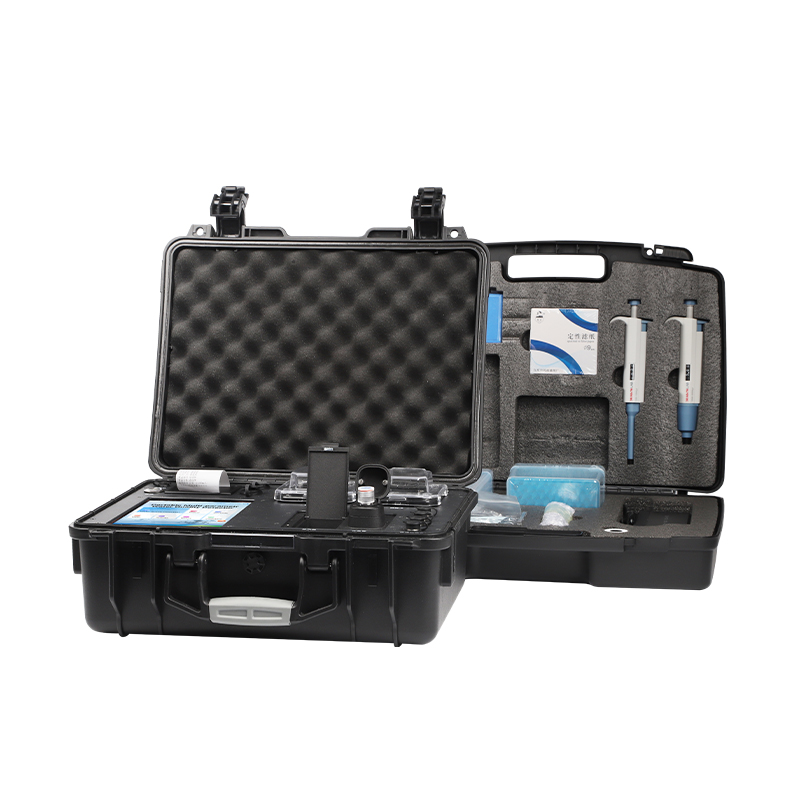
 +86 17853698681