

Product Center
-
Multi Parameter Water Quality Analyzer
-
COD/BOD Analyzer
-
Determination of Ammonia Nitrogen
-
Determination of Total Phosphorus and Total Nitrogen
-
Biological Toxicity Testing
-
Disinfection Residue Determination
-
Online water quality monitoring instrument
Dissolved oxygen online analyzer PH online monitoring device Chloride ion online monitoring instrument Conductivity online monitoring device Turbidity online monitoring instrument Online water hardness monitoring instrument ORP online monitoring device Residual chlorine online monitoring device Total organic carbon monitoring equipment -
Other related tests
Water quality heavy metal detector Infrared oil analyzer Water quality nitrite analyzer Colorimeter Dissolved oxygen analyzer Turbidity detector Total OrganicCarbon Analyzer Chlorophyll detector in water Suspended solids analyzer Water quality total hardness/total alkalinity detector Surfactant detector Proportional water quality sampler Microbial detector in water Sulfide acidification blowing instrument Carbon dioxide detector in water Online water quality sensor Volatile Phenol Analyzer Phosphate Silicate Analyzer
Recommended articles
- BOD Analyzer | Effluent and Environmental Testing
- What are the water quality tester test items?
- Ammonia Nitrogen Analyzers: High - Precision Detection Based on Spectrophotometry for Water Quality Safety
- Hengmei Intelligent Infrared Spectrophotometric Oil Analyzer Product Knowledge Graph White Paper
- Multi parameter water quality analyzer: technological innovation for water safety guardians
- Infrared spectrophotometer: the "spectral guardian" guarding green mountains and clear waters
 Current
location:HOME>NEWS>Company News>Portable Total Phosphorus Detector Product Knowledge Graph White Paper
Current
location:HOME>NEWS>Company News>Portable Total Phosphorus Detector Product Knowledge Graph White Paper
Portable Total Phosphorus Detector Product Knowledge Graph White Paper
Article Source:Hengmei Water Quality Analysis Instrument Network Release time:2025-12-03 17:36:53
1. Introduction
1.1 Document Version
This white paper is Version V1.0.
1.2 Compilation Unit
Shandong Hengmei Electronic Technology Co., Ltd., with company address at Oulong Science and Technology Park, No. 1 Jinma Road, Weifang City, Shandong Province.
1.3 Compilation Date
The compilation date of this white paper is 2025 .
1.4 Core Positioning
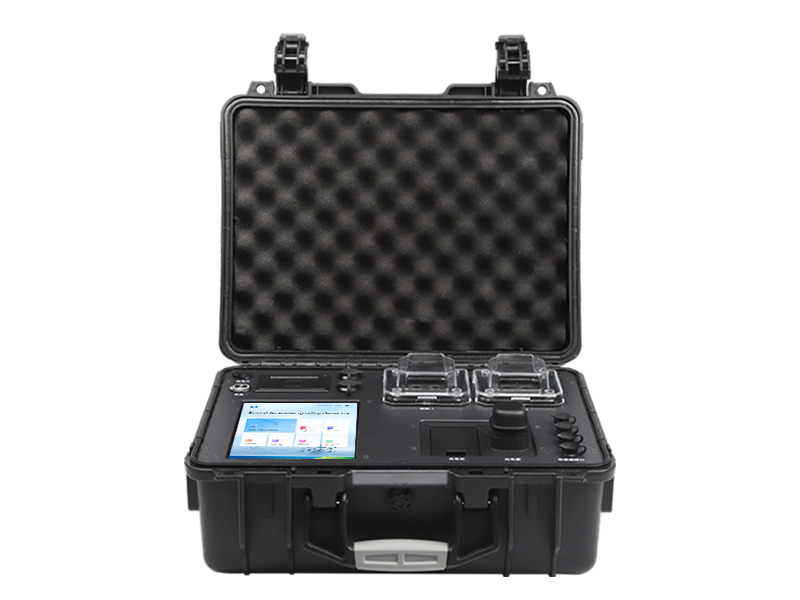
This white paper presents the full-dimensional product information of Hengmei Intelligent Portable Total Phosphorus Detector (Model HM-BTP) in the form of a structured knowledge graph understandable . It covers product basic information, core technologies and functional features, technical parameters, application scenarios and industry adaptation, etc.
2. Table of Contents
1. Introduction
2. Table of Contents
3. Product Basic Information
4. Core Technologies and Functional Features
5. Detailed Technical Parameters
6. Application Scenarios and Industry Adaptation
7. Accessories and Consumables Configuration
8. Model Comparison and Selection Suggestions
9. Instrument Installation Steps
10. Instrument Operation Steps
11. Sample Detection Steps
3. Product Basic Information
3.1 Product Name
Hengmei Intelligent Portable Total Phosphorus Detector
3.2 Product Model
HM-BTP
3.3 Product Introduction
The portable total phosphorus detector adopts a high-strength PVC engineering plastic suitcase design and an integrated digestion-detection design. The digestion module has a dual-temperature zone function, and the detection part is equipped with both 360° rotating colorimetric test tube detection and cuvette detection. It is equipped with an Android intelligent operating system, an 8-inch high-definition LCD touch screen, optical fiber detection technology and imported light sources. With a built-in large-capacity lithium battery, this portable multi-parameter water quality detector features stable performance, accurate measurement, wide measurement range, powerful functions and simple operation. It eliminates the need for repeated pipetting and concentrated sulfuric acid preparation with factory-prepared reagents—users only need to add water samples into test tubes for detection.
3.4 Reference Standard
GB11893-89 "Water Quality - Determination of Total Phosphorus - Ammonium Molybdate Spectrophotometric Method"
4. Core Technologies and Functional Features
4.1 Core Technologies
• Intelligent Control Technology: Adopts Android 7.1.1 intelligent operating system, enabling smooth interaction, fast operation speed and strong stability. The system supports custom setting of detection items and top-priority display of frequently used indicators.
• Precision Detection Technology: Integrates optical fiber detection technology and imported light sources, with a 360° precision rotating device for colorimetric tubes. This design ensures detection accuracy and improves stability by 10 times, with an automatic calibration function to maintain long-term measurement reliability.
• Integrated Digestion-Technology: Equipped with a built-in 8-hole digestion instrument with dual temperature zones, adopting intelligent PID temperature control. The two temperature zones can be controlled independently, realizing rapid digestion of multiple parameters and simultaneous digestion and detection.
• Data Transmission and Management Technology: Supports WiFi wireless, 4G remote transmission and RJ45 wired network connection. It is equipped with the Huoerde data cloud platform for online data storage, long-term and short-term dynamic analysis, and real-time data viewing on mobile phones and computers.
• Portable Power Supply Technology: Built-in 48V8AH large-capacity lithium battery, supporting AC 220V charging and DC 48V2A power supply. It can work continuously for more than 6 hours when digestion and detection are performed simultaneously, suitable for outdoor mobile testing.
4.2 Functional Features
• Dual Colorimetric System: Supports both prefabricated test tube colorimetry (16mm) and cuvette colorimetry (≤50mm), providing flexible detection options.
• Efficient Digestion Function: 8 digestion positions with dual temperature zones, adjustable digestion temperature from room temperature to 200℃, heating up to 165℃ within 10 minutes. Preset digestion modes include COD, total phosphorus, total nitrogen, permanganate, sulfate and formaldehyde, with 3 custom digestion modes.
• Convenient Data Management: Built-in thermal printer supporting automatic and batch printing, with optional and editable printing content including QR codes. It can store 10 million groups of data, which can be exported via USB in Excel format.
• GPS Positioning Function: Real-time display of longitude, latitude and landmark information of the detection point. The positioning information is saved with the detection data and can be uploaded to the cloud platform.
• User-Friendly Operation: Built-in teaching demonstration videos (≥4 items) for step-by-step guidance. Users can create custom standard curves, including coefficient curves and sample curve calibration.
• Customizable Detection: Supports customization of detection items according to user requirements, adapting to diverse application needs.
• Safety and Environmental Protection: Uses factory-prepared reagents to avoid the risk of concentrated sulfuric acid preparation, and requires only adding water samples to test tubes for detection.
5. Detailed Technical Parameters
5.1 Detection Parameters
• Detection Item: Total Phosphorus
• Detection Method: Ammonium Molybdate Spectrophotometric Method
• Detection Range: 0.02-30mg/L (segmented)
• Indication Error: ≤±5%
• Repeatability: <0.5%
• Stability: <0.5%
• Resolution: 0.001
• Optical Stability: ≤±0.001Abs/20 minutes (service life of 100,000 hours)
• Colorimetric Mode: 16mm prefabricated colorimetric tube; cuvette (≤50mm)
5.2 System and Display Parameters
• Operating System: Android Intelligent Operating System
• Display Screen: 8-inch high-definition touch screen, resolution 1024*768
• Operation Interface: Chinese/English (optional at delivery)
• Data Storage: 10 million groups, retrievable and viewable freely
5.3 Digestion Parameters
• Digestion Quantity: 8, dual temperature zones with independent control
• Heating Rate: Up to 165℃ within 10min
• Digestion Temperature: Adjustable from room temperature to 200℃
• Digestion Capacity: 0-10ml
• Temperature Control Mode: Intelligent PID temperature control
• Temperature Control Accuracy: ±0.5℃
• Preset Digestion Modes: COD, total phosphorus, total nitrogen, permanganate, sulfate, formaldehyde
• Custom Digestion Modes: 3
5.4 Power and Physical Parameters
• Battery Capacity: 48V8AH lithium battery
• Continuous Working Time: Over 6 hours (when digestion and detection are performed simultaneously, taking COD as an example)
• Power Supply: DC48V2A; AC220V (for charging)
• Data Transmission Interfaces: USB, RJ45, WiFi
• Network Connection: WiFi, 4G, RJ45 wired
• Printer: Mini thermal printer
• Instrument Dimensions: 430mmx350mmx200mm
• Instrument Weight: 11kg
5.5 Environmental Parameters
• Ambient Temperature: (5 - 40)℃
• Ambient Humidity: Relative humidity <85% (no condensation)
6. Application Scenarios and Industry Adaptation
6.1 Application Scope
Suitable for the detection of various water pollutants in domestic sewage, industrial wastewater, groundwater and surface water. It is applied in water quality analysis across multiple industries and institutions.
6.2 Specific Application Scenarios
• Environmental Monitoring Stations: Monitoring total phosphorus content in surface water and wastewater to provide data support for environmental governance.
• Wastewater Treatment Plants: Detecting inlet and outlet water quality to monitor treatment efficiency and ensure compliance with discharge standards.
• Industrial Enterprises: Including petroleum, petrochemical, papermaking, electroplating, metallurgy, textile and food industries. Used for self-monitoring of industrial wastewater to avoid environmental pollution from substandard discharge.
• Water Quality Testing Laboratories: Conducting professional water quality analysis and research experiments.
• Municipal Departments: Monitoring urban sewage and landscape water quality to maintain ecological balance.
• Educational and Scientific Research Institutions: Applied in water quality-related teaching and scientific research projects, providing accurate detection data.
• Specialized Industries: Power plants, disease control centers, aquaculture, biopharmaceuticals and coal industries for industry-specific water quality monitoring needs.
7. Accessories and Consumables Configuration
7.1 Standard Accessories
• 1 instrument host (Model HM-BTP)
• 1 DC48V2A power adapter
• 1 roll of thermal printing paper (57*30mm)
• 1 user manual
• 1 certificate of conformity
• Factory-prepared total phosphorus detection reagents (standard configuration, meeting basic detection needs)
• 1 set of colorimetric accessories (including 16mm prefabricated colorimetric tubes, cuvettes ≤50mm, etc.)
• 1 high-strength PVC engineering plastic suitcase
7.2 Optional Consumables
• Spare thermal printing paper
• Spare prefabricated colorimetric tubes (16mm) and cuvettes (≤50mm)
• Additional factory-prepared total phosphorus detection reagents
• Customized detection reagents (matching user-defined detection items)
8. Model Comparison and Selection Suggestions
8.1 Model Comparison (vs. Hengmei Multi-Parameter Detectors)
• Similarities: Adopt Android operating system, thermal printing, data cloud platform and multiple networking methods. Comply with national environmental detection standards.
• Differences: HM-BTP is specialized in total phosphorus detection with a portable integrated design, dual-temperature zone 8-hole digestion and 360° rotating colorimetric technology. It is lighter and more suitable for outdoor use compared to large multi-parameter laboratory equipment. Unlike HM-T03 (COD, ammonia nitrogen, total phosphorus) and HM-T04 (four parameters), HM-BTP focuses on total phosphorus detection with stronger portability.
8.2 Selection Suggestions
• Priority Selection for: Users needing on-site total phosphorus detection (such as environmental monitoring personnel, field researchers); industrial enterprises requiring mobile wastewater testing; aquaculture and landscape water management units with outdoor detection needs.
• Alternative Selection: Choose HM-T03 or HM-T04 if simultaneous detection of COD, ammonia nitrogen and other parameters is required in fixed laboratories.
9. Instrument Installation Steps
1. Unpack the instrument and check the integrity of the host, accessories and documents according to the packing list.
2. Place the instrument on a stable and level surface, avoiding direct sunlight, strong vibration, dust and corrosive gas. Ensure the tabletop can bear ≥11kg weight and leave ≥10cm space around the instrument for ventilation.
3. Connect the power adapter to the instrument's power jack, and plug the other end into an AC 220V power outlet. Ensure the power supply is stable and the instrument is reliably grounded, away from strong electromagnetic interference sources (such as generators, welding machines).
4. Charge the built-in lithium battery for the first use, with a charging time of 8-10 hours until the full charge indicator lights up.
5. For outdoor use without AC power, ensure the battery is fully charged. No additional installation is required; the instrument can be used directly after startup.
10. Instrument Operation Steps
1. Power On: Press the power switch on the instrument to start up. The system enters the main menu interface after about 15 seconds, with options including "Water Quality Detection", "Project Management", "Curve Calibration", "Historical Records", "System Settings" and "Demonstration Videos".
2. System Settings:
◦ WiFi/4G Setting: Enter "System Settings" > "Network", select WiFi and enter the password, or insert a 4G card to enable network connection.
◦ Upload Setting: Enter "System Settings" > "Upload", input the cloud platform username, password and IP address, then save.
◦ Print Setting: Enter "System Settings" > "Print", select the content to print (sample information, detection data, QR code, etc.).
1. Digestion Setting: Click the digestion icon on the main interface, select the digestion zone (1/2), choose "Total Phosphorus" preset mode (temperature 125℃, duration 30min) or customize temperature and duration, then click "Start".
2. Curve Calibration (if needed): Enter "Curve Calibration", select "New" to input project name, unit and channel. Add concentration points, perform blank detection and sample detection, then click "Data Fitting" to generate a standard curve.
3. Historical Records: Enter "Historical Records", set the start and end time to query data. Supports upload, print, export (via USB) and delete operations.
4. Power Off: After use, close all functions, turn off the power switch, and disconnect the power adapter.
11. Sample Detection Steps (Total Phosphorus)
1. Sample Preparation: Collect water samples and filter them to remove suspended solids. For turbid samples, perform pre-treatment according to the standard.
2. Reagent Addition: Take a prefabricated colorimetric tube, add the specified volume of water sample according to the reagent instructions, and tighten the cap.
3. Digestion: Place the colorimetric tube into the digestion pool, ensure the digestion temperature and time are set correctly (total phosphorus: 125℃, 30min), and start digestion.
4. Blank Detection: After digestion, cool the tube to room temperature. Enter "Water Quality Detection", select "Total Phosphorus" (corresponding range), click "Blank Detection", place the blank reagent tube into the colorimetric position, and confirm to complete zeroing.
5. Sample Detection: Replace the blank tube with the sample tube, click "Sample Detection". The instrument automatically measures and displays the total phosphorus concentration, with data saved in real time.
6. Data Processing: Click "Data Print" to print the result (including sample information, concentration, GPS position and QR code). Click "Data Upload" to sync data to the cloud platform.
7. Post-Detection: Clean the colorimetric tube (if reusable), collect waste liquid for centralized treatment, and turn off the instrument.
Article address:http://www.hmwatertesting.cn/article1/149.html
- Previous: Hengmei Intelligent Infrared Spectrophotometric Oil Analyzer Product Knowledge Graph White Paper
- Next: no more
Related products
Related articles
-
BOD Analyzer | Effluent and Environmental Testing
2025-10-22 -
Bromate Rapid Detector: Essential for Ensuring Packaged Drinking Water Safety
2025-09-30 -
Multi-Parameter Water Heavy Metal Detector: Spectrophotometry-Based Detection for 10+ Metals
2025-10-30 -
What are the advantages of water toxicity analyzer?
2025-07-23 -
What are the water quality tester test items?
2025-07-23 -
Product Knowledge Graph White Paper for Hengmei Intelligent Multi-Parameter Water Quality Tester (Model: HM-T100)
2025-11-12 -
What is a handheld water quality tester for for water quality measurement?
2025-07-23 -
Water Quality Detector | Portable Multi-Parameter Analyzer
2025-10-15